

A City of Magic, Memories, and Meaning
Date: 22nd March 2024
Madrid welcomed us at 8:28 a.m., unfolding its marvellous charm right from the station. A local explained the city’s transport card system—flexible passes for 24 hours, trip-based recharges, or longer durations. After comparing options, we chose a card with a set number of trips, something we hadn’t explored in Barcelona but promised ourselves to use next time. Our hostel, Newton Guesthouse, was warm and inviting, with clean spaces and a vibrant hostel culture. Arriving early, we stored our bags, freshened up in the washroom, and stepped out to discover the city.
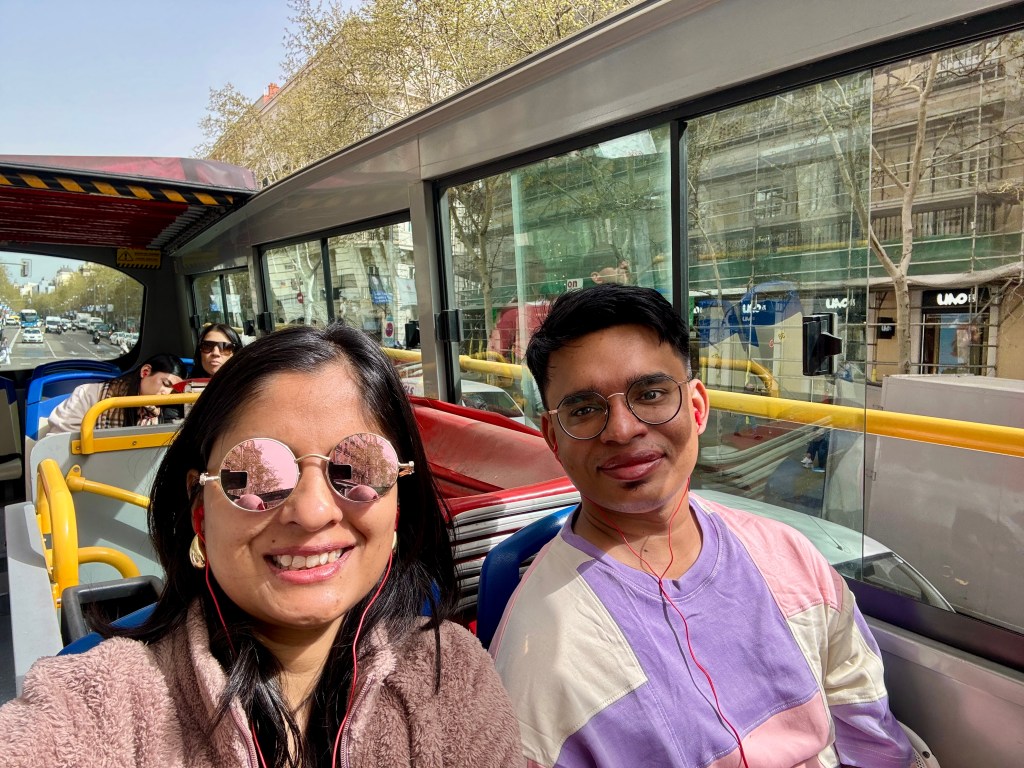
Since Madrid is vast, we chose the Hop-On Hop-Off bus, the perfect way to get a sweeping view of the city before diving deeper. The ride unfolded like a moving gallery of history, politics, art, and modernity.
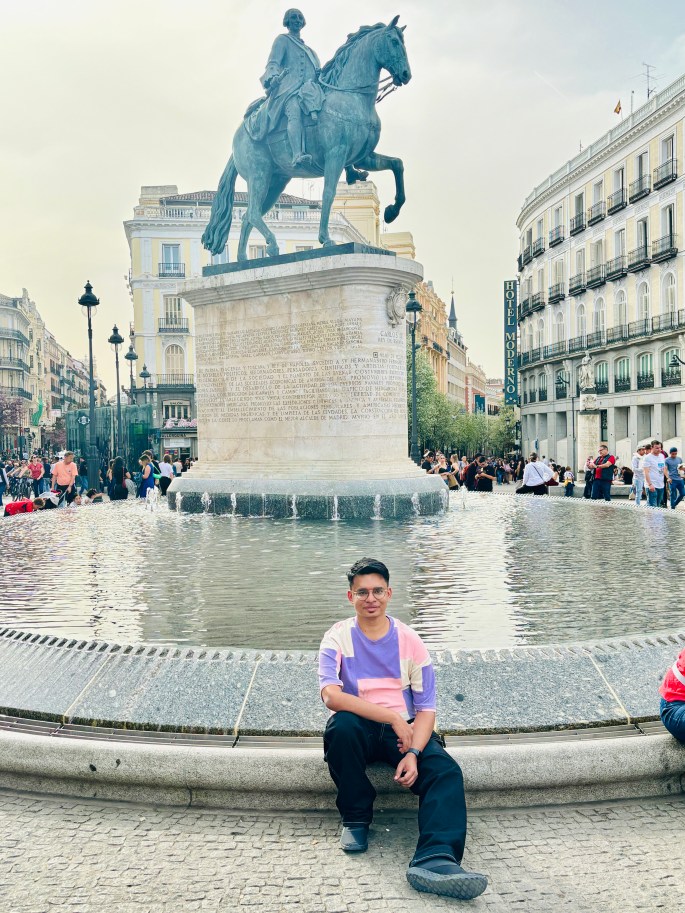
- Puerta del Sol – King Charles III Statue – This equestrian statue of King Charles III stands proudly in Puerta del Sol, one of Madrid’s busiest squares. Charles III is remembered as the “best mayor of Madrid” for his reforms and modernization of the city in the 18th century. The fountain and lively plaza around the statue make Puerta del Sol a vibrant hub, and it’s also the symbolic “kilometer zero” of Spain’s radial road system.
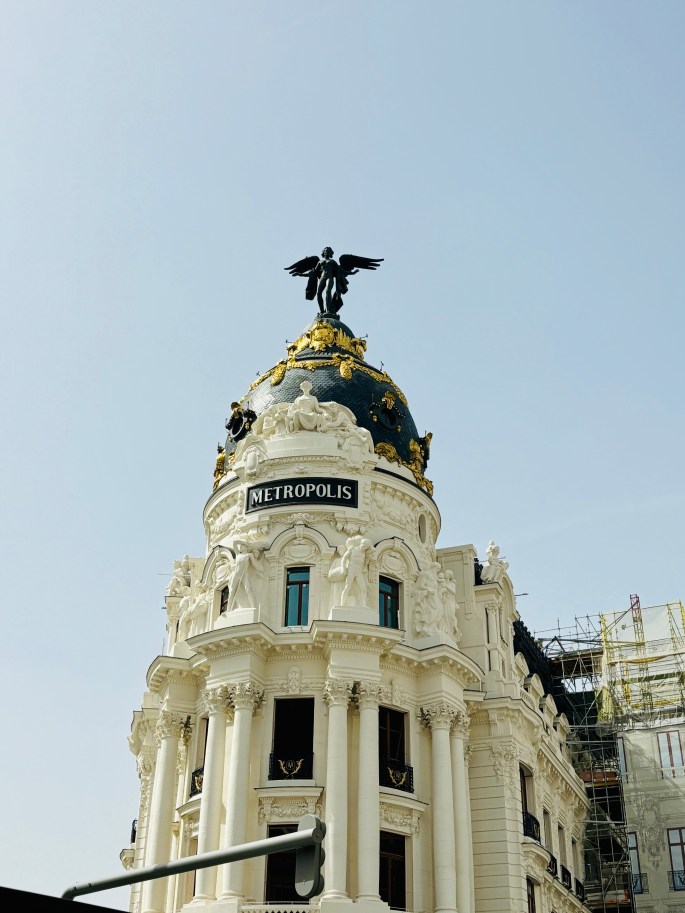
- Metropolis Building – The ornate Beaux-Arts style building with the black dome and golden accents is the Metropolis Building, one of Madrid’s most photographed landmarks. Located at the corner of Gran Vía, it’s a symbol of the city’s elegance and architectural grandeur. The winged statue atop the dome makes it instantly recognizable.
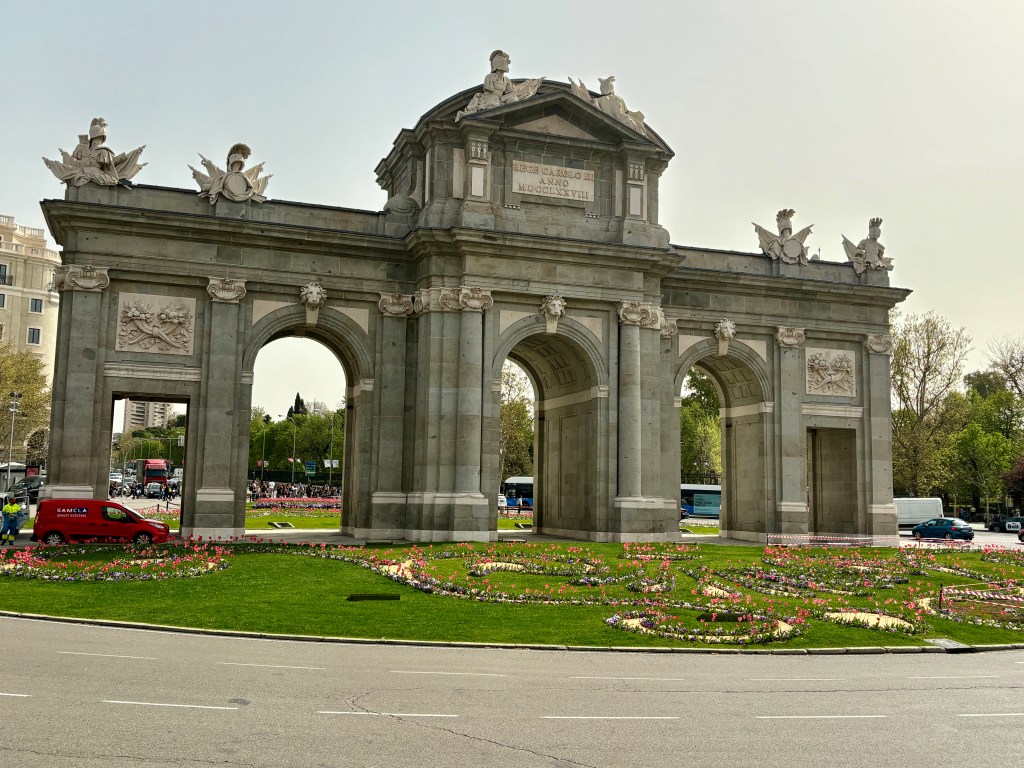
- Puerta de Alcalá – A neoclassical triumphal arch near Retiro Park, with five arches and sculptural details commissioned by King Charles III in 1778. Located near Retiro Park, it’s a symbol of the city’s history and grandeur, and the bus route makes sure you don’t miss it.
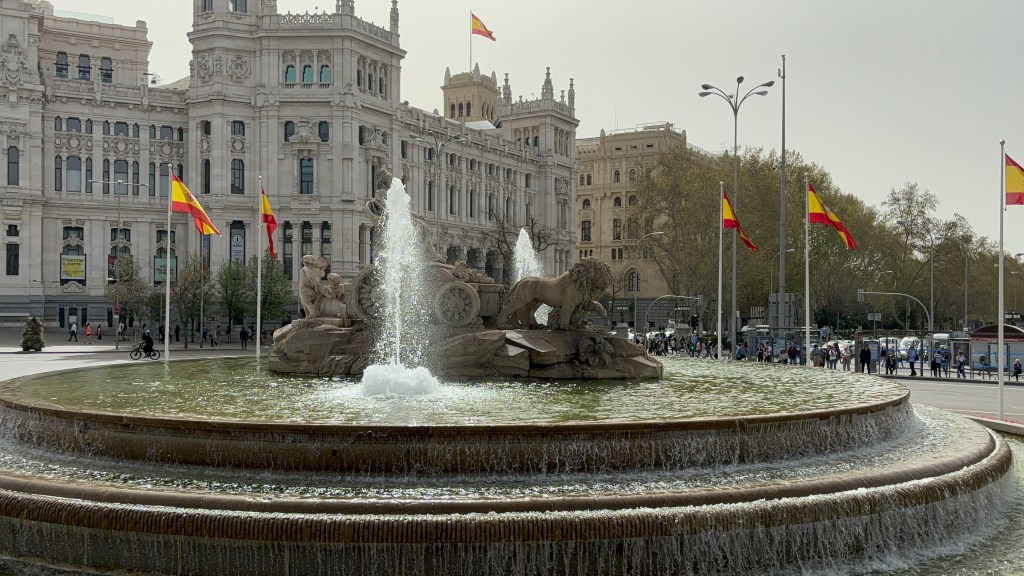
- Plaza de Cibeles & Palacio de Cibeles – One of Madrid’s most iconic squares, at its center is the Cibeles Fountain, with the Roman goddess Cybele riding a chariot pulled by lions. Around it stands the grand Palacio de Cibeles, now the City Hall. The fountain is a symbol of Madrid, often associated with Real Madrid football celebrations. On the bus tour, this is a highlight stop because it blends history, art, and modern city life.
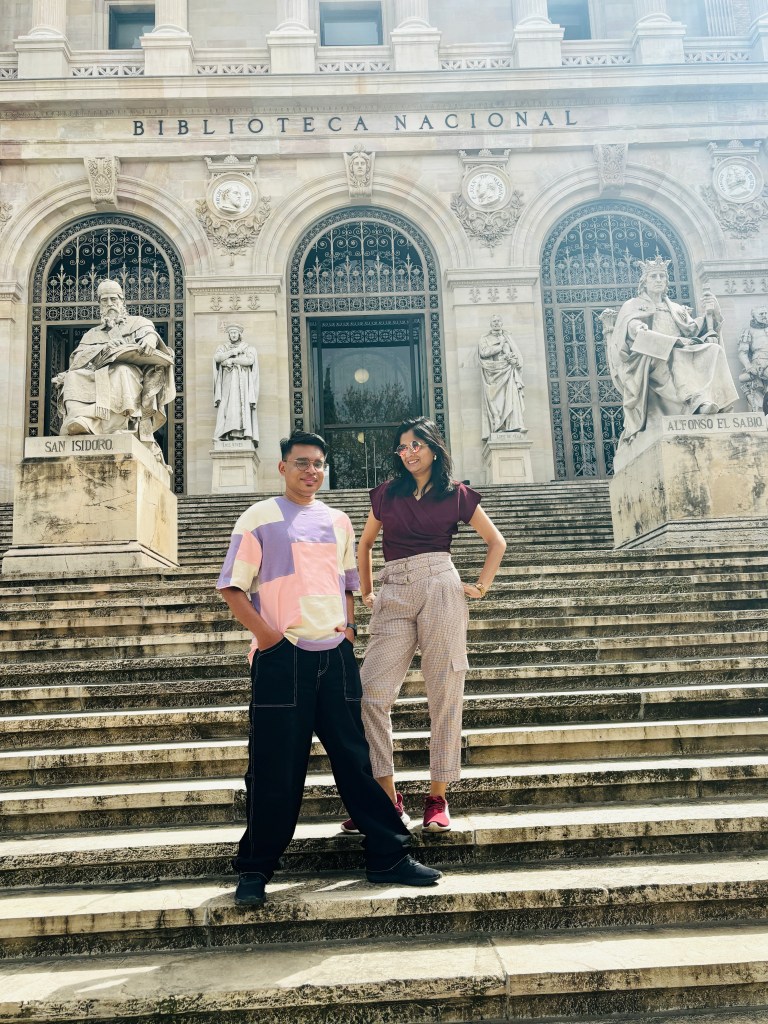
- Biblioteca Nacional (National Library) – The grand building with statues of San Isidoro and Alfonso el Sabio is the National Library of Spain. It’s one of the most important cultural institutions in the country, housing centuries of manuscripts, books, and archives. The neoclassical façade and statues reflect Spain’s intellectual heritage. Passing here on the bus connects you to Madrid’s scholarly side.
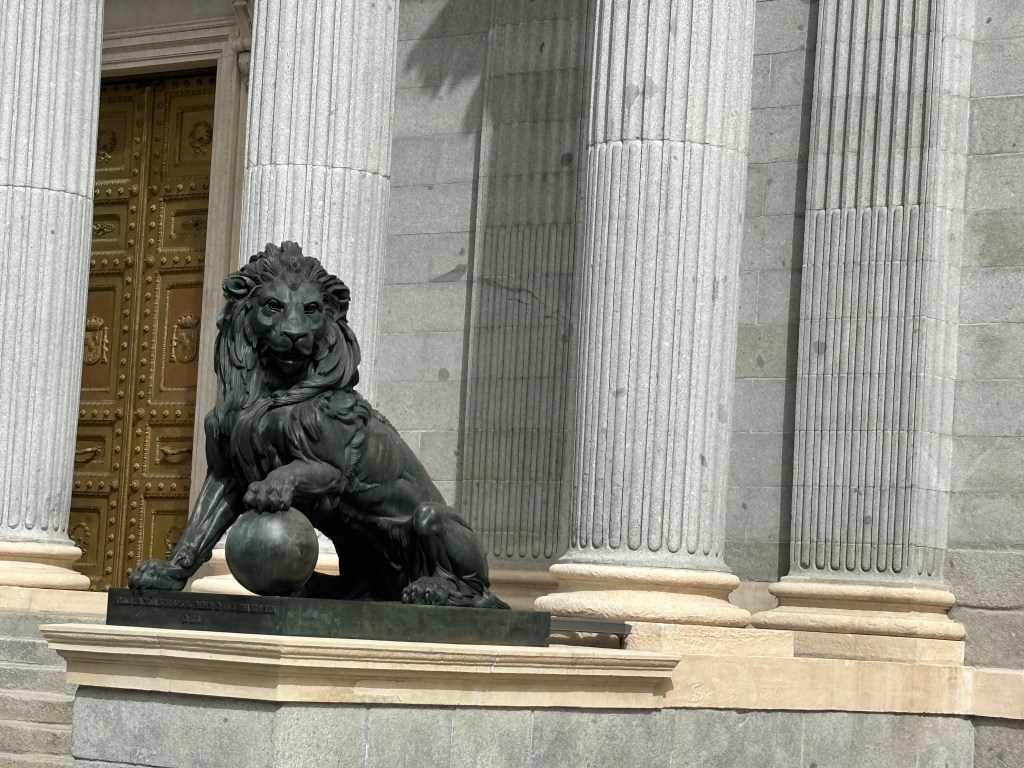
- Congreso de los Diputados – The bronze lion statue in front of the neoclassical building is part of the Congress of Deputies, Spain’s lower house of parliament. The lions are famous symbols of strength and guardianship. Interestingly, they were cast from bronze taken from cannons captured in the War of Africa in 1860. Passing here on the bus gives you a glimpse of Spain’s political heart and its architectural grandeur.
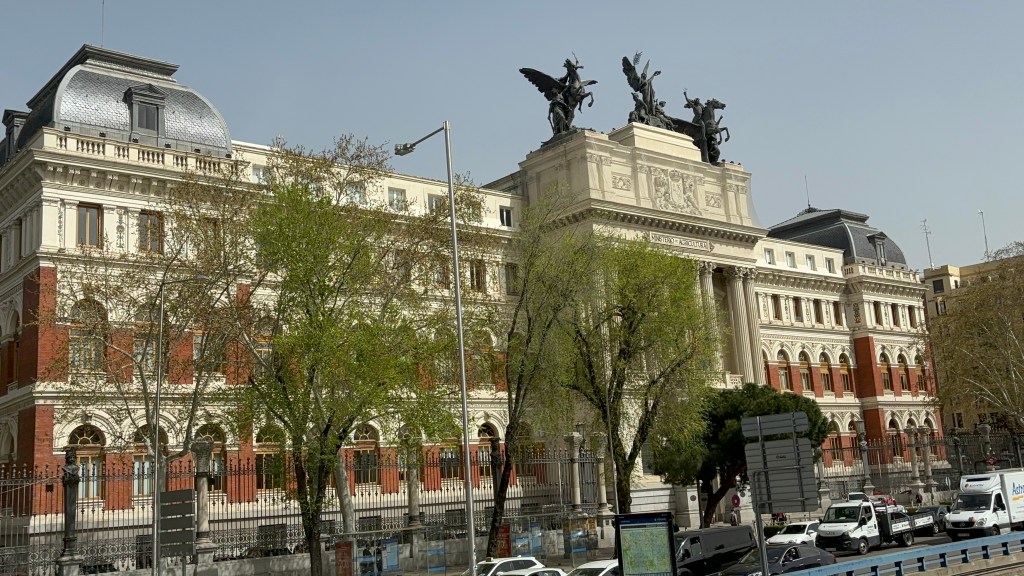
- Ministerio de Agricultura – The ornate building labeled Ministerio de Agricultura (Ministry of Agriculture) is another architectural gem. With its red brick, white stone detailing, and dramatic statues of winged figures and horses on top, it’s one of Madrid’s most striking government buildings. The Hop-On Hop-Off bus route often passes here, showcasing the grandeur of Spain’s administrative heritage.
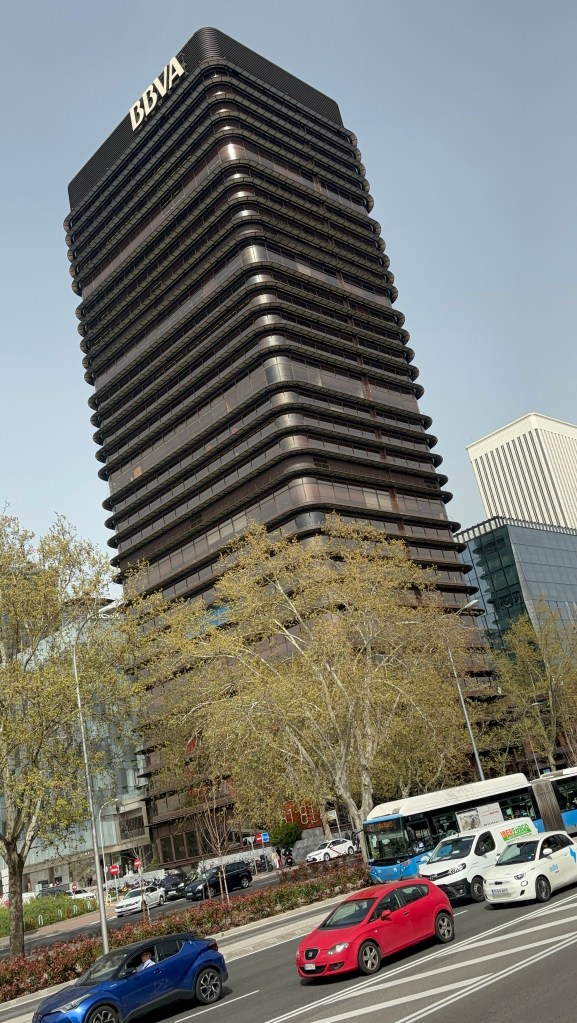
- BBVA Building – It represents Madrid’s financial and business side, contrasting with the historic architecture in the city center. Passing by it on the bus route gives you a sense of how Madrid balances tradition with modernity.
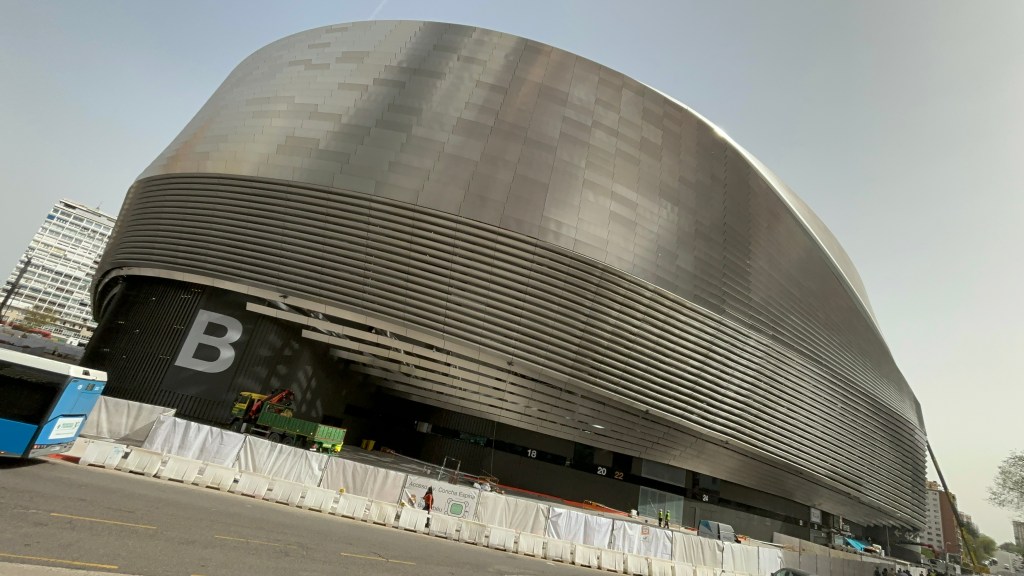
- Santiago Bernabéu Stadium – Home of Real Madrid, a global icon of football, currently being transformed into a futuristic arena.
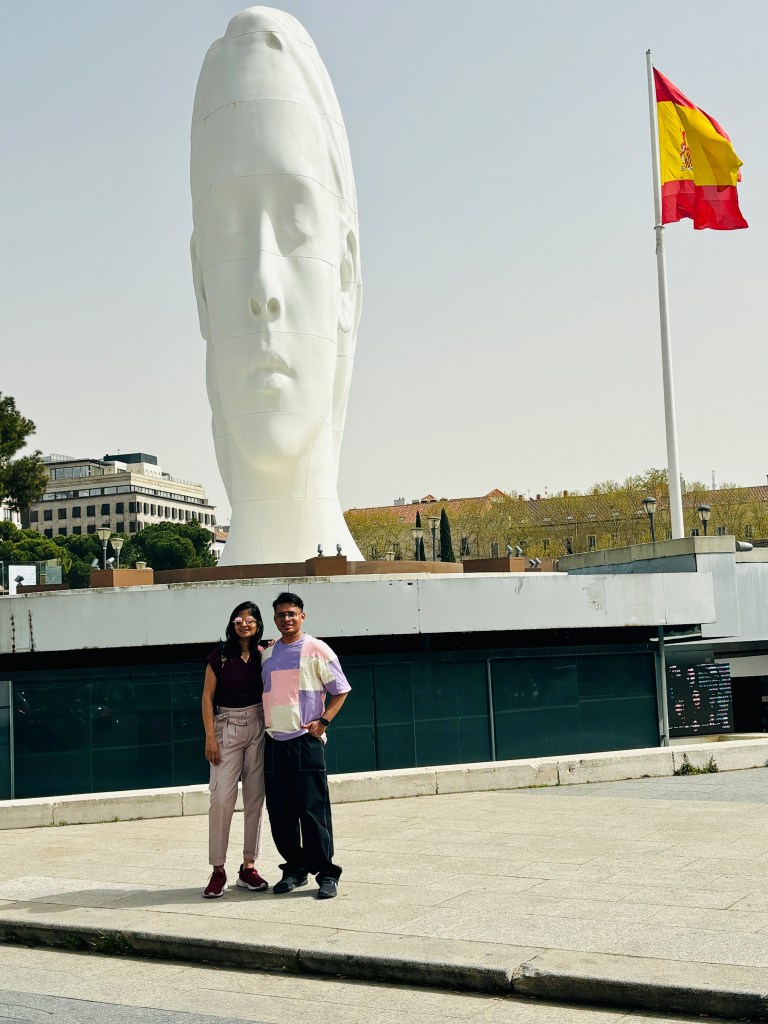
- Julia Sculpture (Plaza de Colón) – The large white segmented head with closed eyes is “Julia”, a modern sculpture by Jaume Plensa. It stands prominently near Plaza de Colón and symbolizes serenity and reflection amidst the bustle of the city. It’s striking because it contrasts Madrid’s historic monuments with contemporary art, showing the city’s evolving identity.
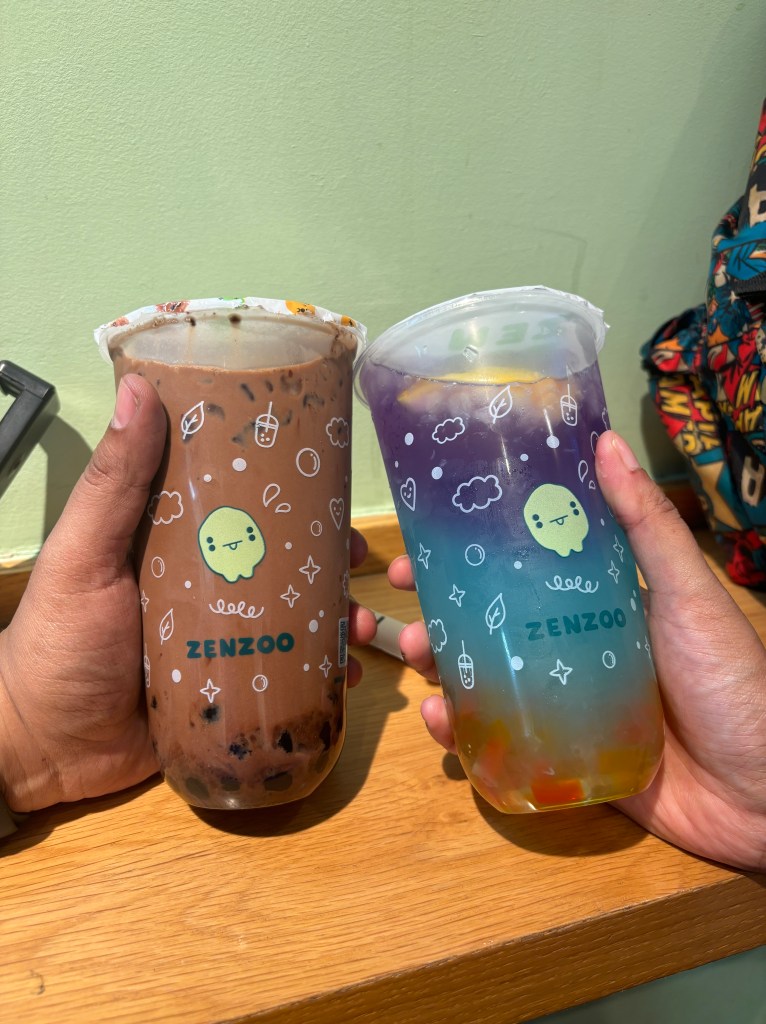
The bus gave us not just convenience but also context—Madrid’s past, present, and future unfolding in one ride. By lunchtime, we had completed both lines, enjoyed a hearty meal, and even treated ourselves to bubble tea. But the real highlight awaited us at Plaza del Sol—a GuruWalk tour that would leave a lasting imprint on our hearts.
Xavier and the Art of Reawakening
We joined a Guru Walk tour that afternoon, led by a man named Xavier—who turned out to be a piano teacher, theatre artist, and musician with a storyteller’s soul and the presence of a quietly confident protagonist. He walked us through Puerta del Sol, the streets fanned out like arteries from the city’s not-quite-center, and through the cobbled veins of old Madrid with an energy that made us forget our fatigue.
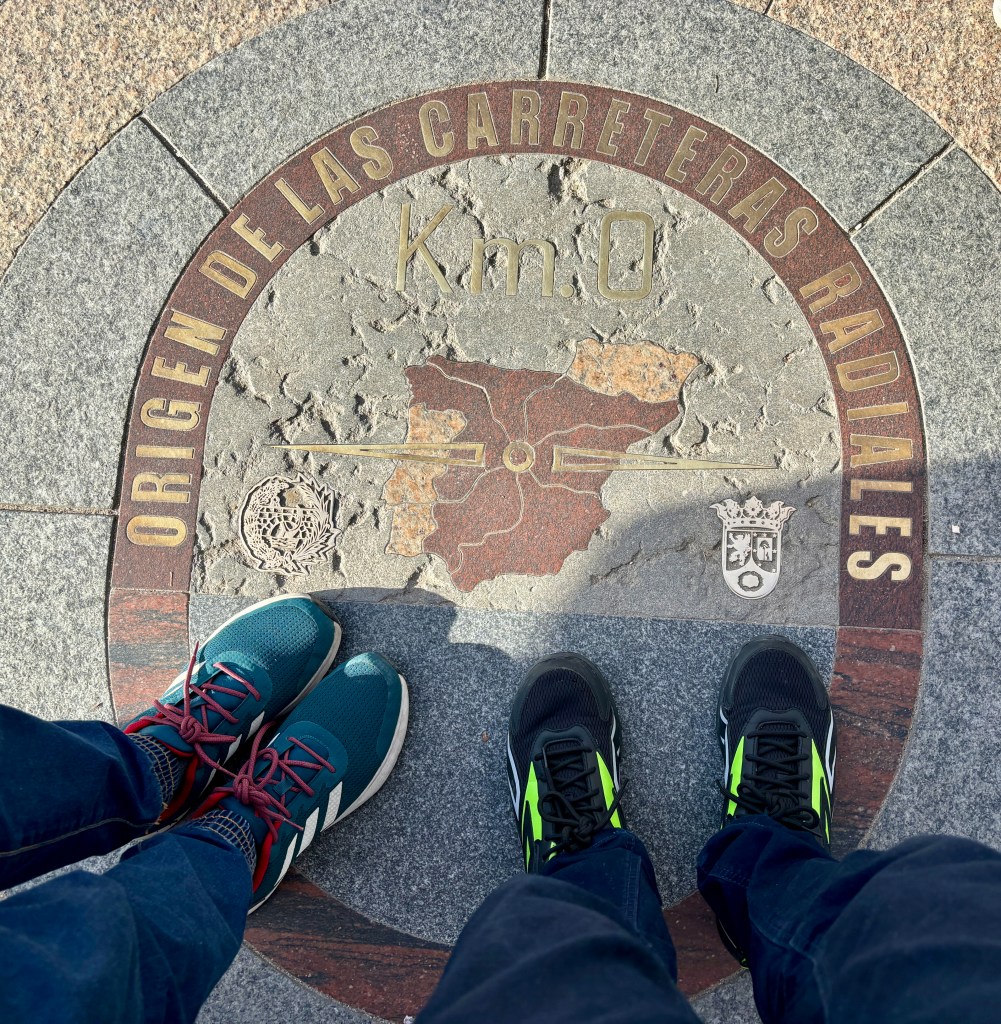
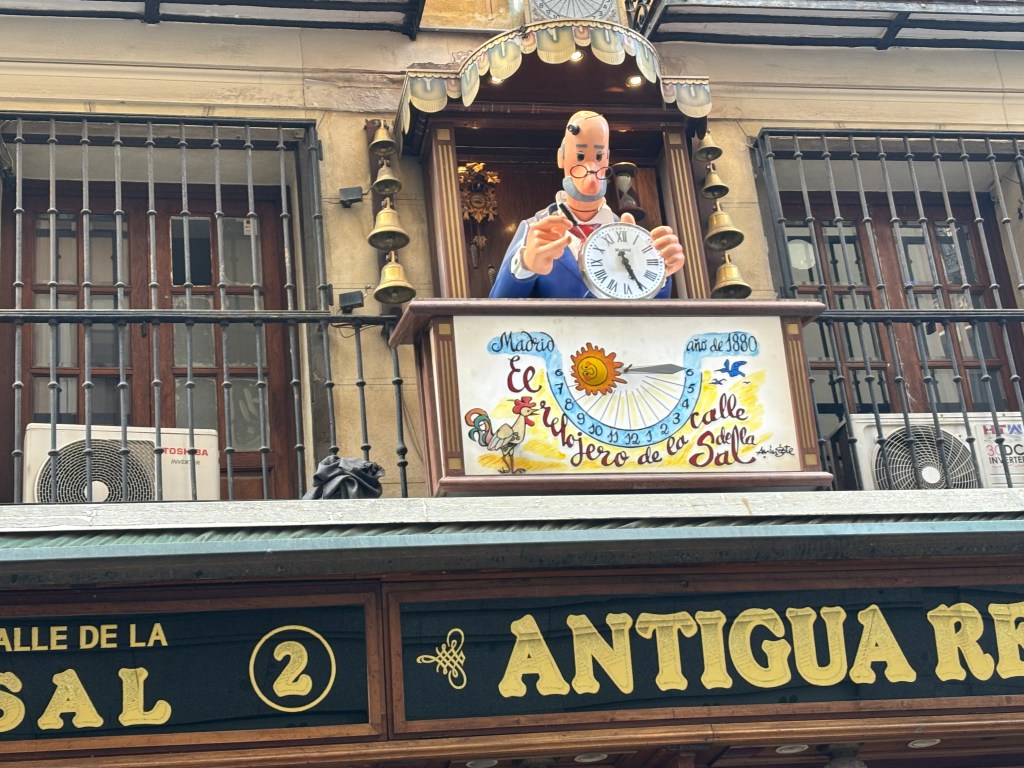
At Puerta del Sol, he stopped us at the Km 0 plaque, the symbolic origin of Spain’s radial road network. Nearby, he pointed out the whimsical Reloj del Viajero on Calle de la Sal—a quirky clock from 1880 that embodies the spirit of travelers and the passage of time. We continued into the grand expanse of Plaza Mayor, framed by symmetrical facades and towers, with the bronze equestrian statue of King Philip III at its heart.

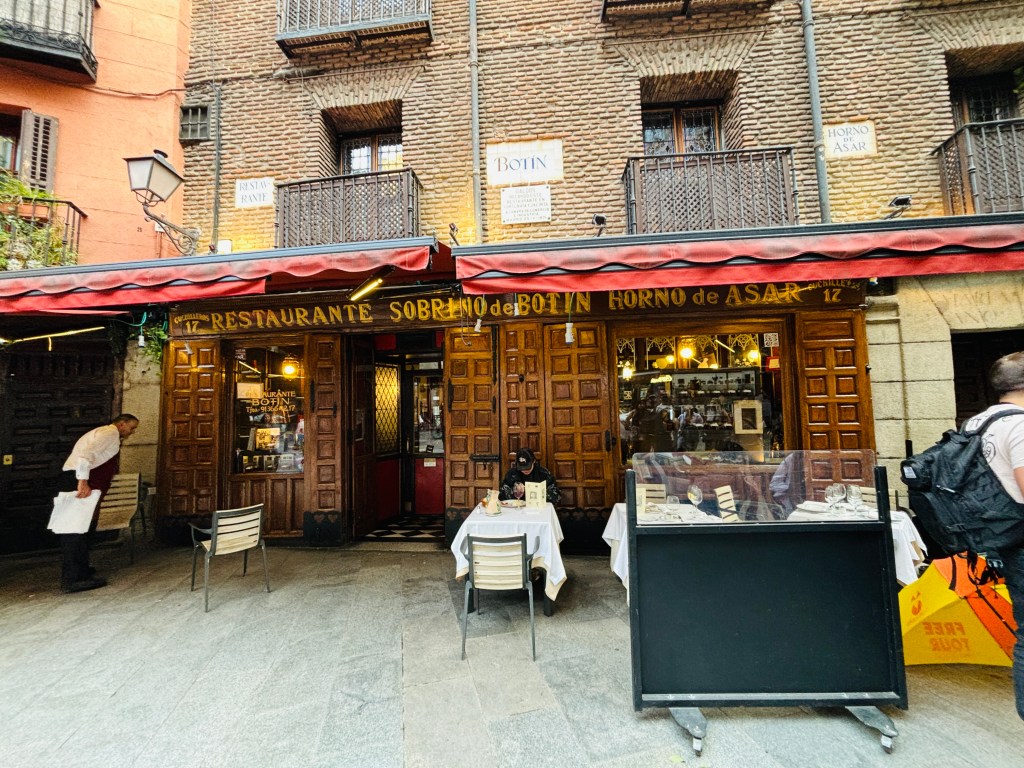
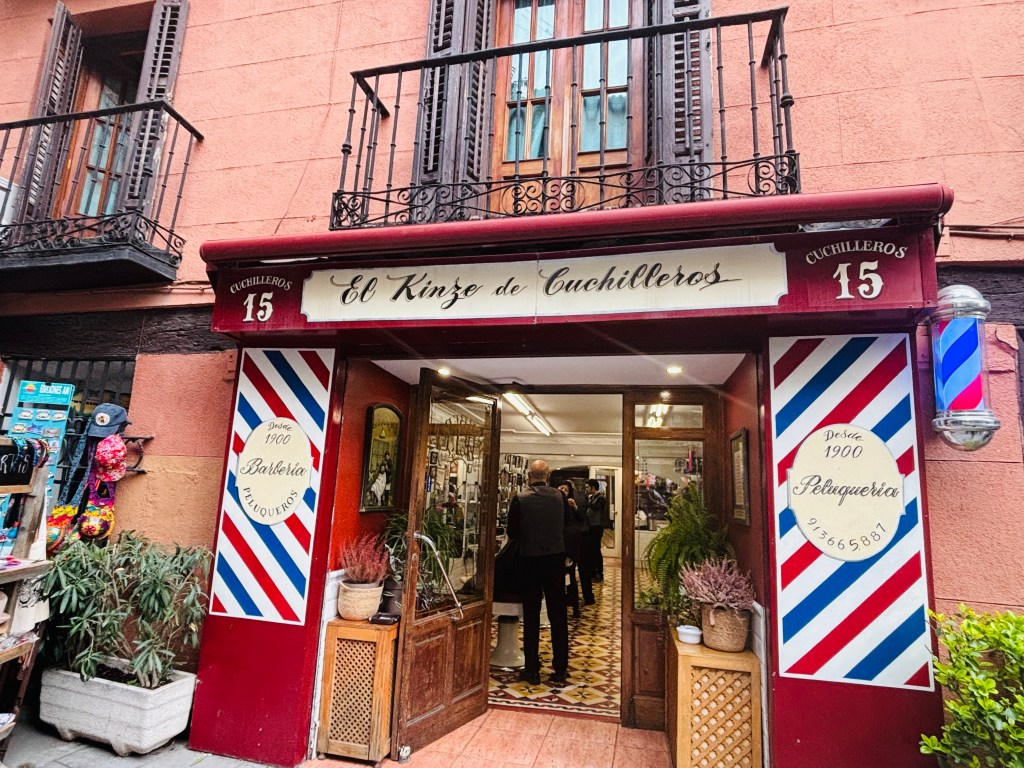
From there, Xavier led us down Calle de Cuchilleros, where history hides in plain sight. We paused at Restaurante Sobrino de Botín, recognized as the oldest continuously operating restaurant in the world, its oven burning for centuries without pause. Just a few steps away stood El Kinze de Cuchilleros, a traditional barbershop with red-and-blue poles. Xavier explained how barber shops once doubled as wound-healers, stitching injuries when doctors weren’t available—a detail that made us see the poles in a whole new light.
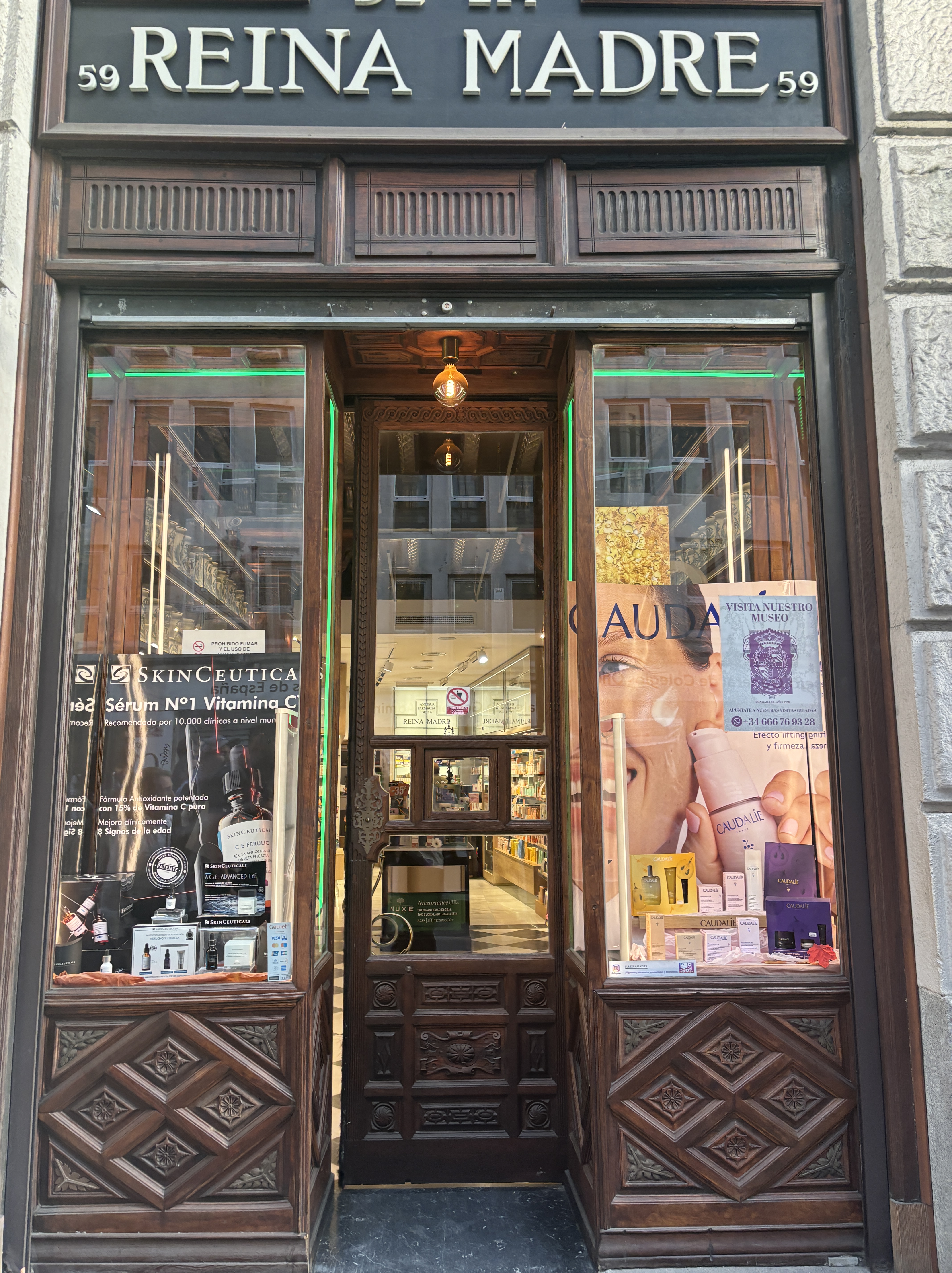
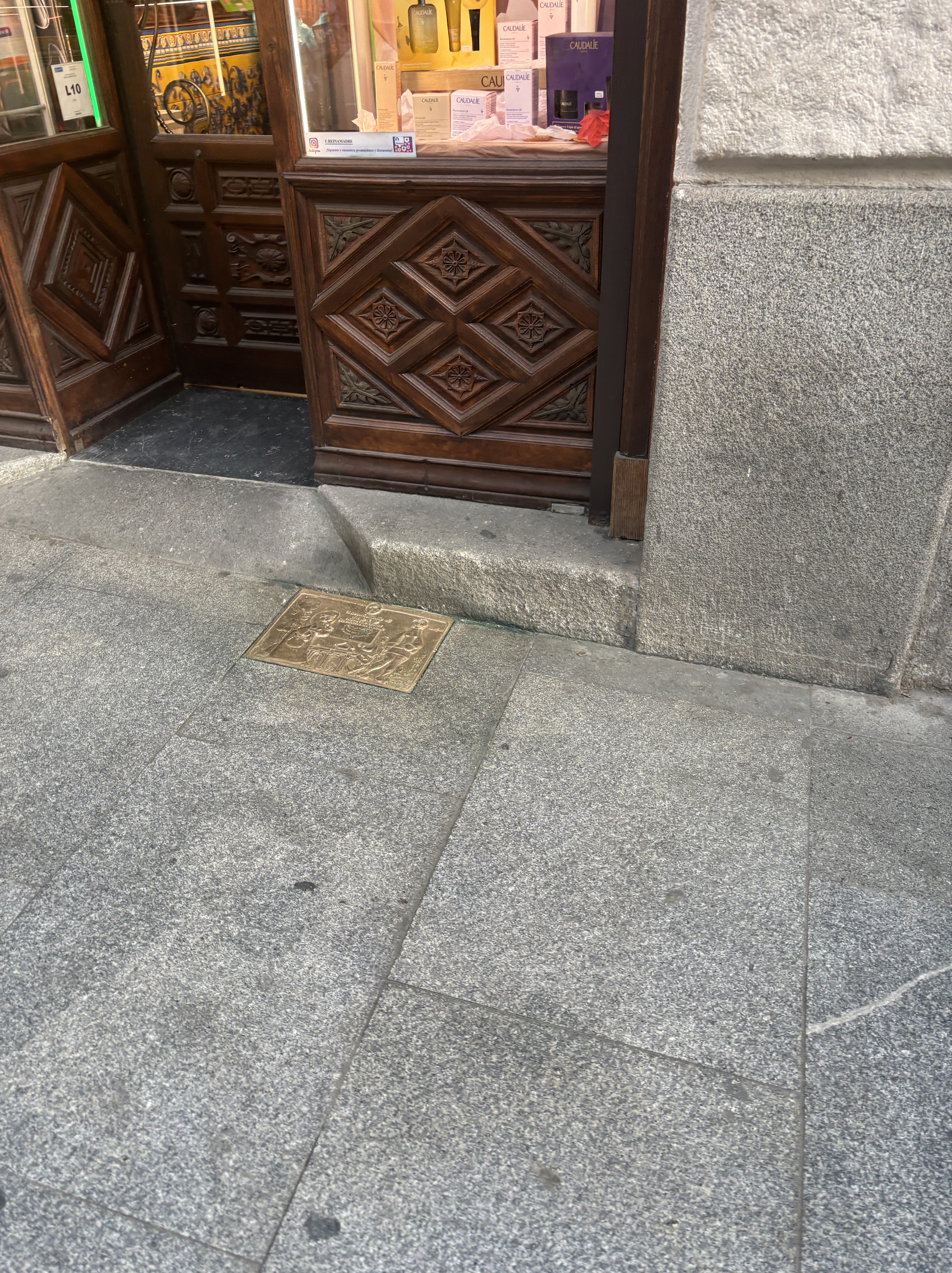
Further along, he pointed out Reina Madre, a shop with ornate wooden paneling and shelves of skincare products. It wasn’t just about what they sold—it was about the tradition of century-old businesses marked by plaques, proof of Madrid’s living heritage. In fact, Xavier showed us one such brass plaque embedded in the pavement outside a storefront, a marker that silently testified to the longevity of businesses that had survived more than a hundred years.
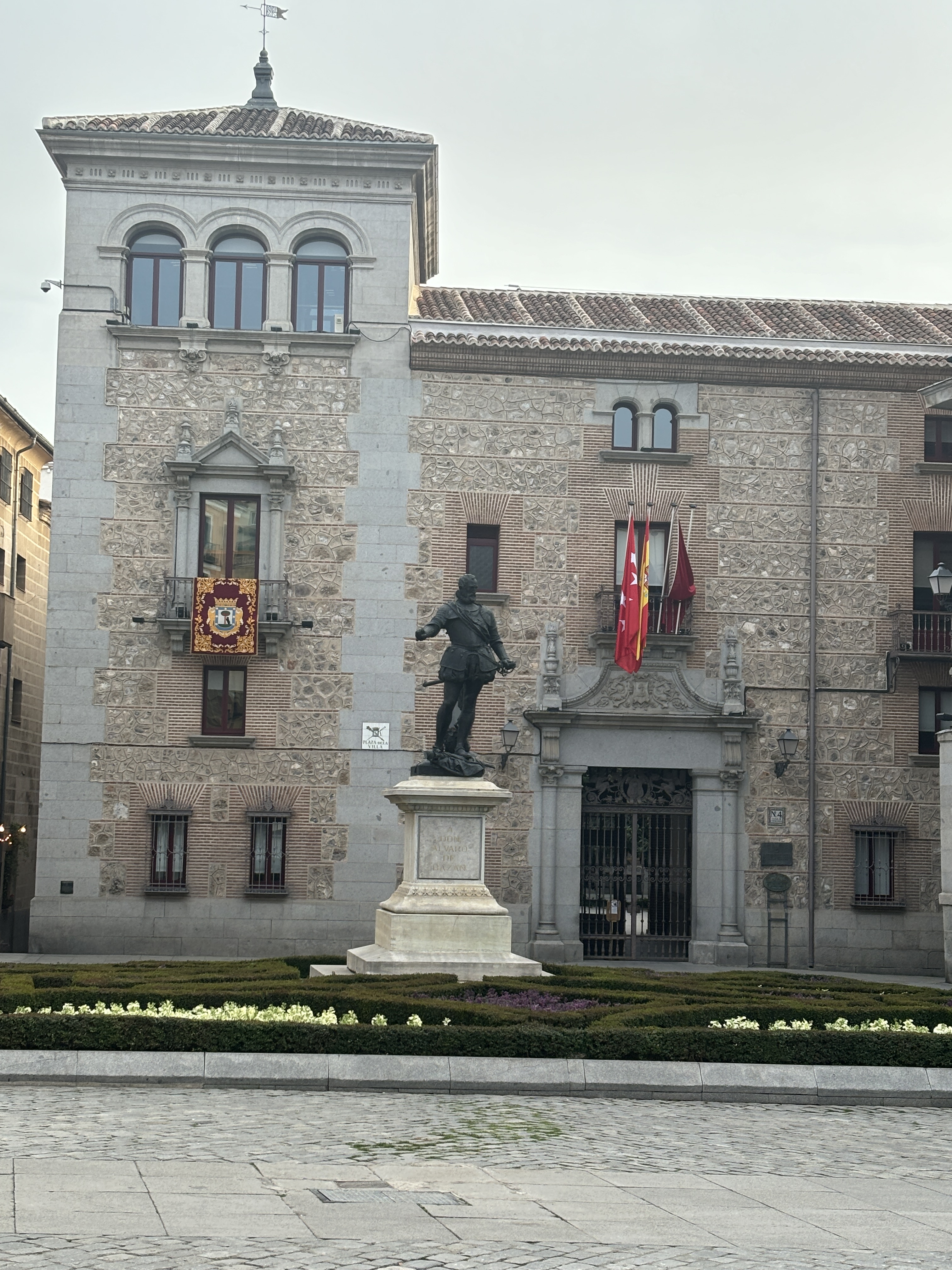
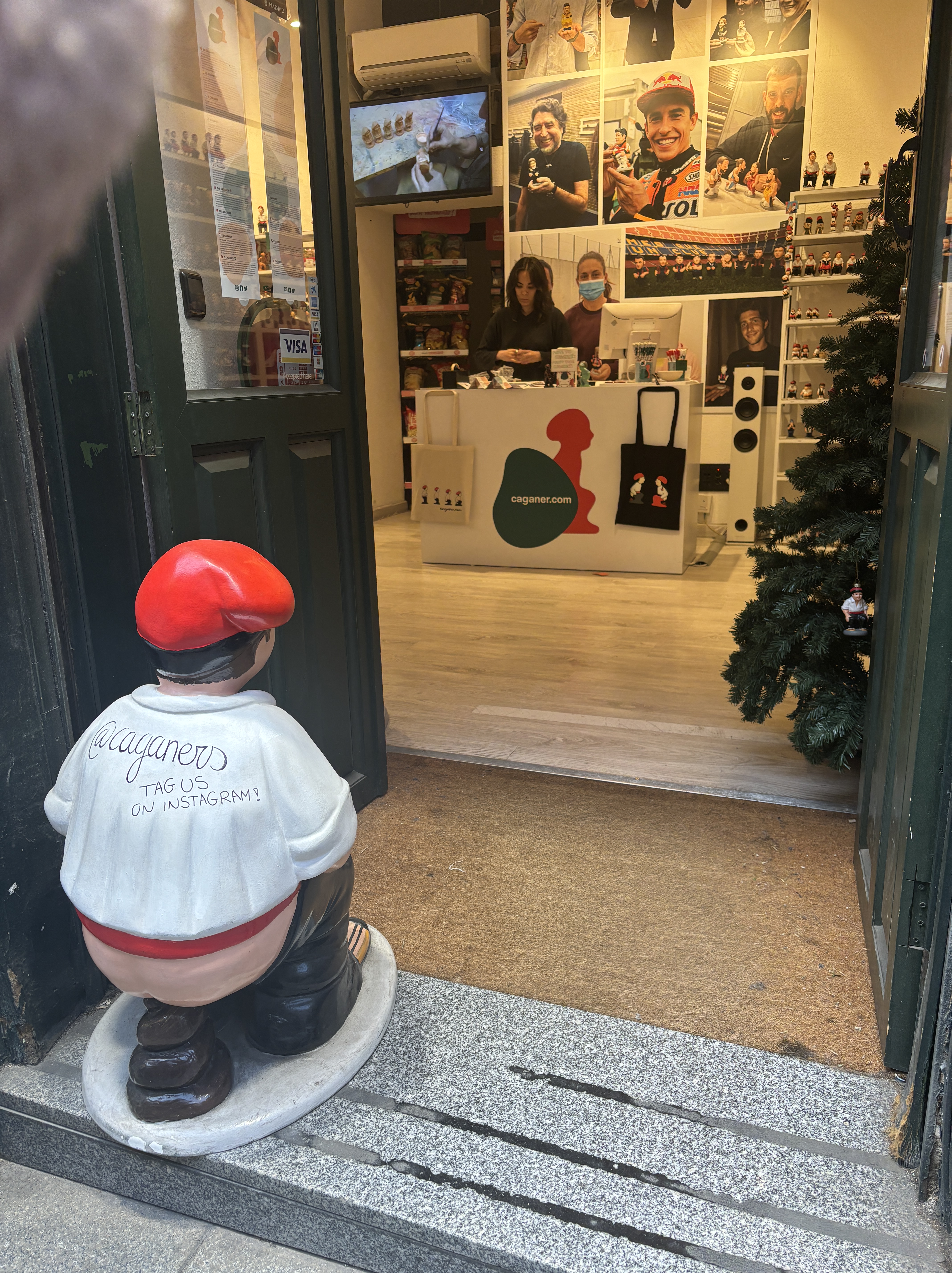
We also passed a historic building with flags and a statue of a man holding a sword, its stonework and gardens reflecting Madrid’s political and cultural pride. And then, in a lighter moment, Xavier introduced us to the quirky Caganer shop, filled with figurines of the famous Catalan nativity character in humorous poses. The name “El Caganer” literally means “the pooper”. The Caganer, by creating faeces, is fertilizing the Earth. It was a reminder that Spanish culture is not only about grandeur and tradition, but also about humor and playfulness woven into everyday life.
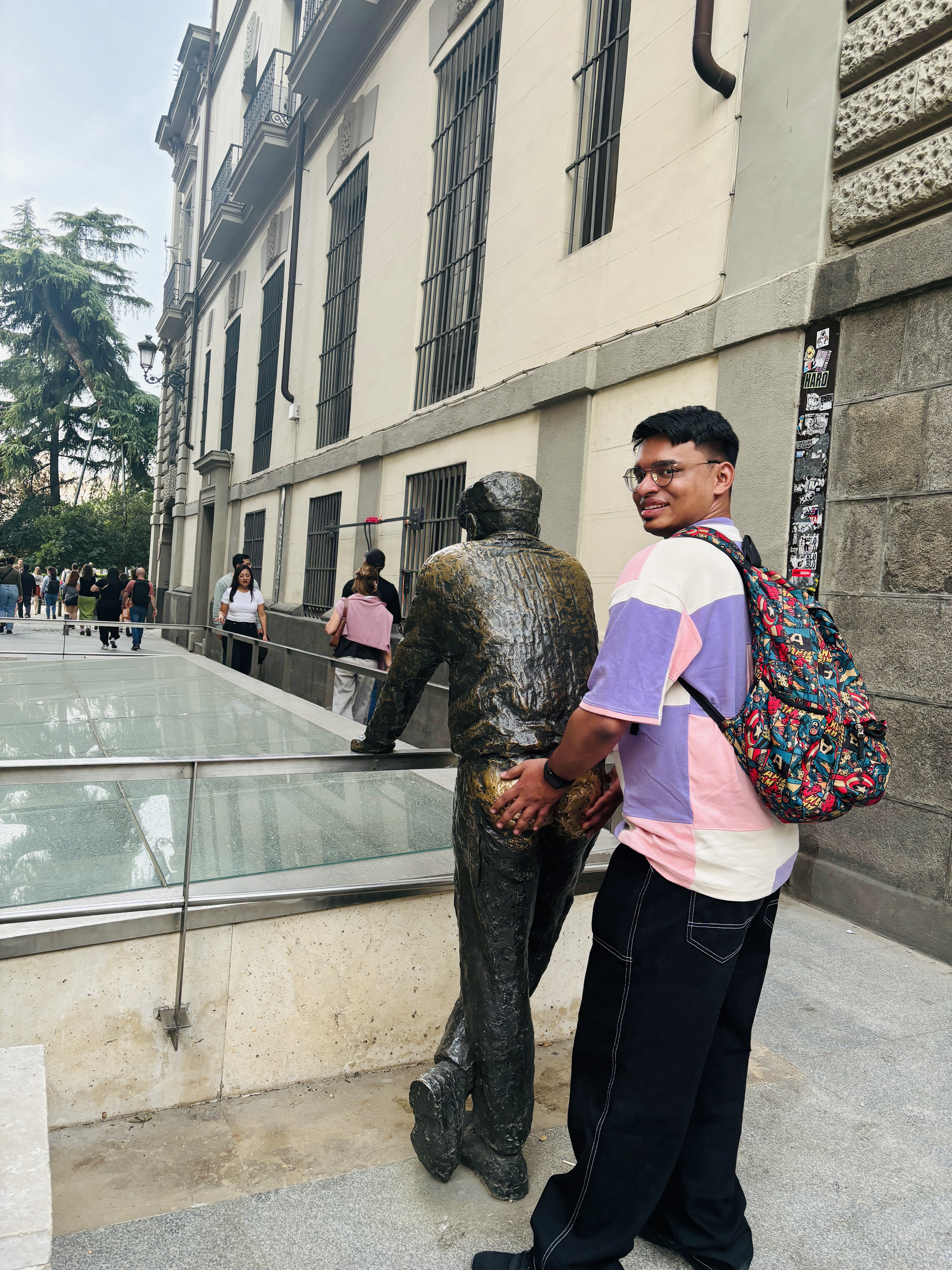
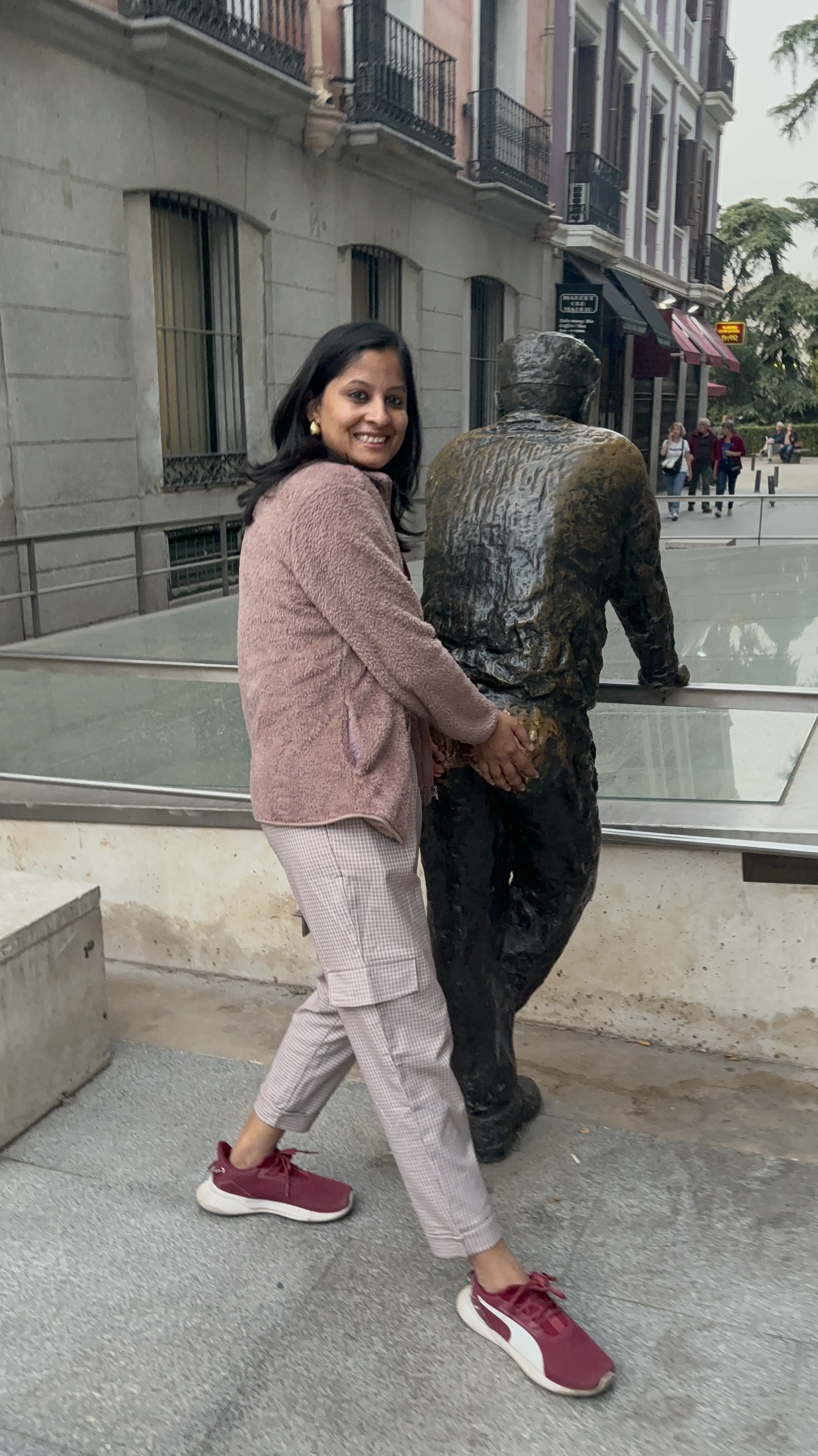
At one stop, we even encountered a bronze statue polished by countless playful hands, where visitors often pose with laughter.El Vecino Curioso, or “The Curious Neighbor,” is a bronze of a middle-aged gentleman created by sculptor Salvador Fernández Oliva in 1999. He appears to be leaning on a railing and looking down at the archeological remains of Santa María de la Almudena, the first church to be built in Madrid. The statue is anchored directly to the sidewalk, without a base.
Unfortunately, only a few remnants of the original church survived after it fell victim to the construction work on Calle de Bailén in 1868. What’s left is visible through a protective glass case, into which this curious neighbor peers. The statue’s underside is polished from the many times it has been touched. Some say this is out of habit, others think it brings good luck. The statue has spent several decades in the same place, practicing the national sport of pensioners: “watching the works.”
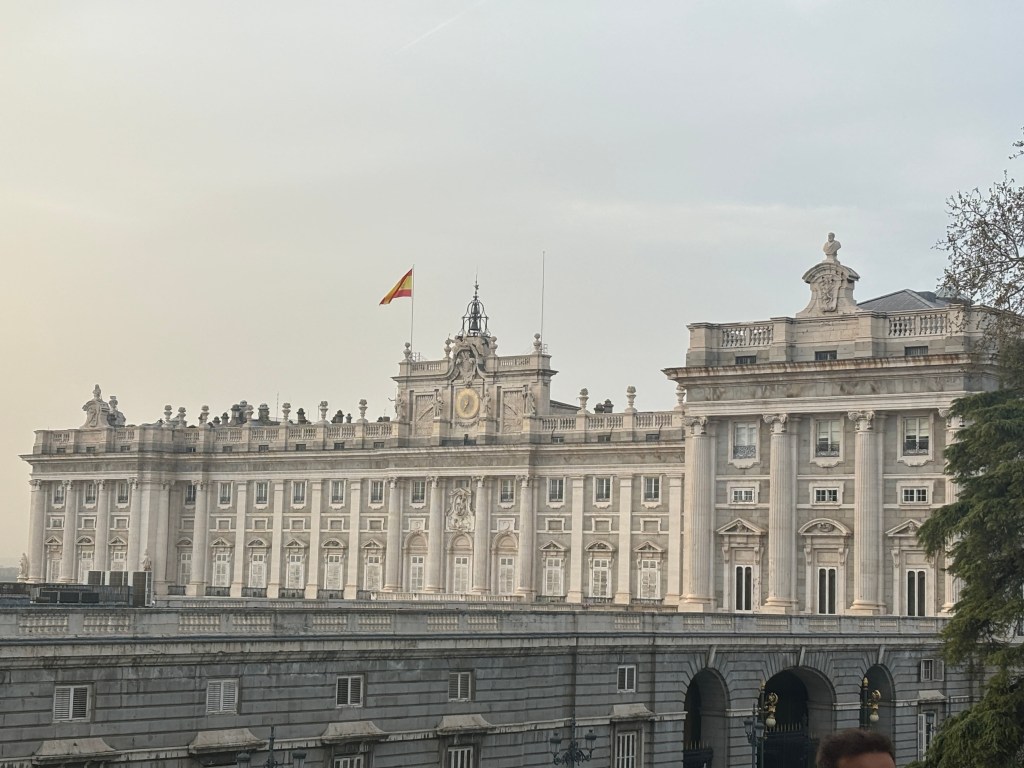
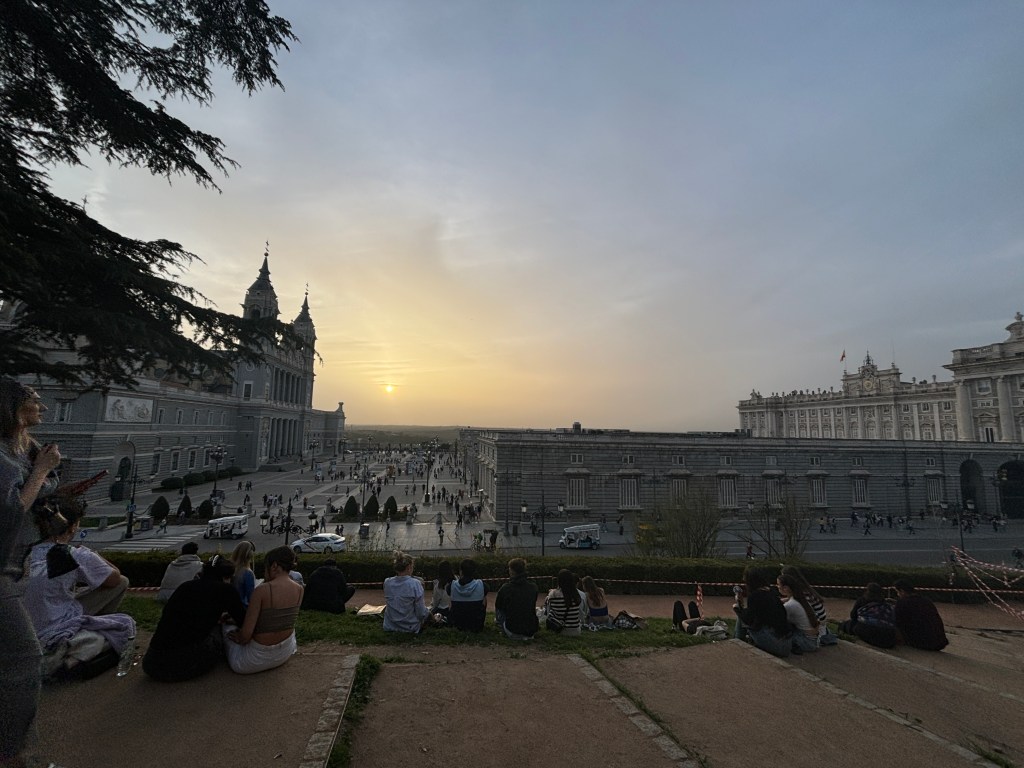
Finally, as the tour drew to a close, Xavier led us toward the Almudena Cathedral, its dome and towers glowing in the sunset. From the hilltop, we looked out across the Royal Palace and Almudena together, the rooftops bathed in golden light, while locals and tourists sat on the grassy terraces enjoying the view. It was the perfect ending—Madrid’s grandeur softened by the warmth of dusk.
The way he spoke—about Madrid’s history, its superstitions, long-lost empires, the plates outside century-old shops, and tiles that told time—was electric. We heard about the Hemingway Hotel dilemma (so many cafés claiming his legacy, others proudly saying “This is not Hemingway’s”, the world’s oldest restaurant with a century-old oven still burning, and even a story about how barber poles once represented their ability to stitch wounds, back when doctors weren’t available.
He painted history with humor and precision, weaving in tales of Roman sewer systems, royal traditions like raising flags to signal the King and Queen’s presence, and the quiet legacy of beliefs and churches scattered across the city’s spirals.
But it wasn’t just the stories. It was how they made us feel.
For two hours, I forgot I was tired. It felt like sipping a mug of black coffee brewed with purpose. Even now, when I think of Madrid, I think of Xavier. His passion stirred something restless in me, tugging at that quiet, persistent question—What is my passion? How do we find it, and more importantly, how do we keep living in service of it?
It was one of those rare moments when a tour guide becomes a mirror—reflecting back your own unfinished thoughts with clarity.
We ended the tour at sunset on a hilltop, golden light washing the rooftops below. Harshit gently suggested we take a picture with Xavier, but I hesitated. I wanted the memory to stay soft-edged, not frozen. Some people aren’t meant to be saved in pixels—they linger better in passing thoughts.
Before parting, we took his recommendations for food and Seville, his hometown. Then we walked back toward our hostel, quiet, thoughtful, and a little changed.
Date: 1st April 2024
Final Trains, Money Heist Moments & Sweet Goodbyes
Our last day in Europe began in the quiet stillness of dawn—so early that the streets of Seville were still asleep. With no buses or trams running at 5 AM, we booked our very first Uber in Europe. It felt like a small milestone, a modern convenience marking the start of a day that already carried a sense of finality. The ride through empty streets was surreal—lamps flickering against cobblestones, shutters closed tight, the city holding its breath while we slipped away toward the station.
We arrived well ahead of time, but just as boarding began, travel reminded us of its unpredictability. One of our bags was flagged as oversized. The language barrier made the situation frustrating, and the staff’s curt attitude didn’t help. After a few tense exchanges, we had no choice but to pay extra. It soured the mood briefly, a reminder that even adventures have their hiccups. But we shook it off—after all, this was our last European sunrise, and we weren’t going to let bureaucracy steal it.
By 10 AM, Madrid welcomed us back like an old friend. We returned to our familiar hostel, freshened up, and grabbed breakfast before setting out for something we had been anticipating for weeks—the Money Heist trail. Walking through the filming locations of La Casa de Papel felt surreal. The Bank of Spain, the rooftops, the plazas—they weren’t just backdrops anymore, they were living spaces we could touch, walk through, and breathe in. Every corner carried echoes of the Professor’s plans, every façade felt like a memory from the screen suddenly made real.
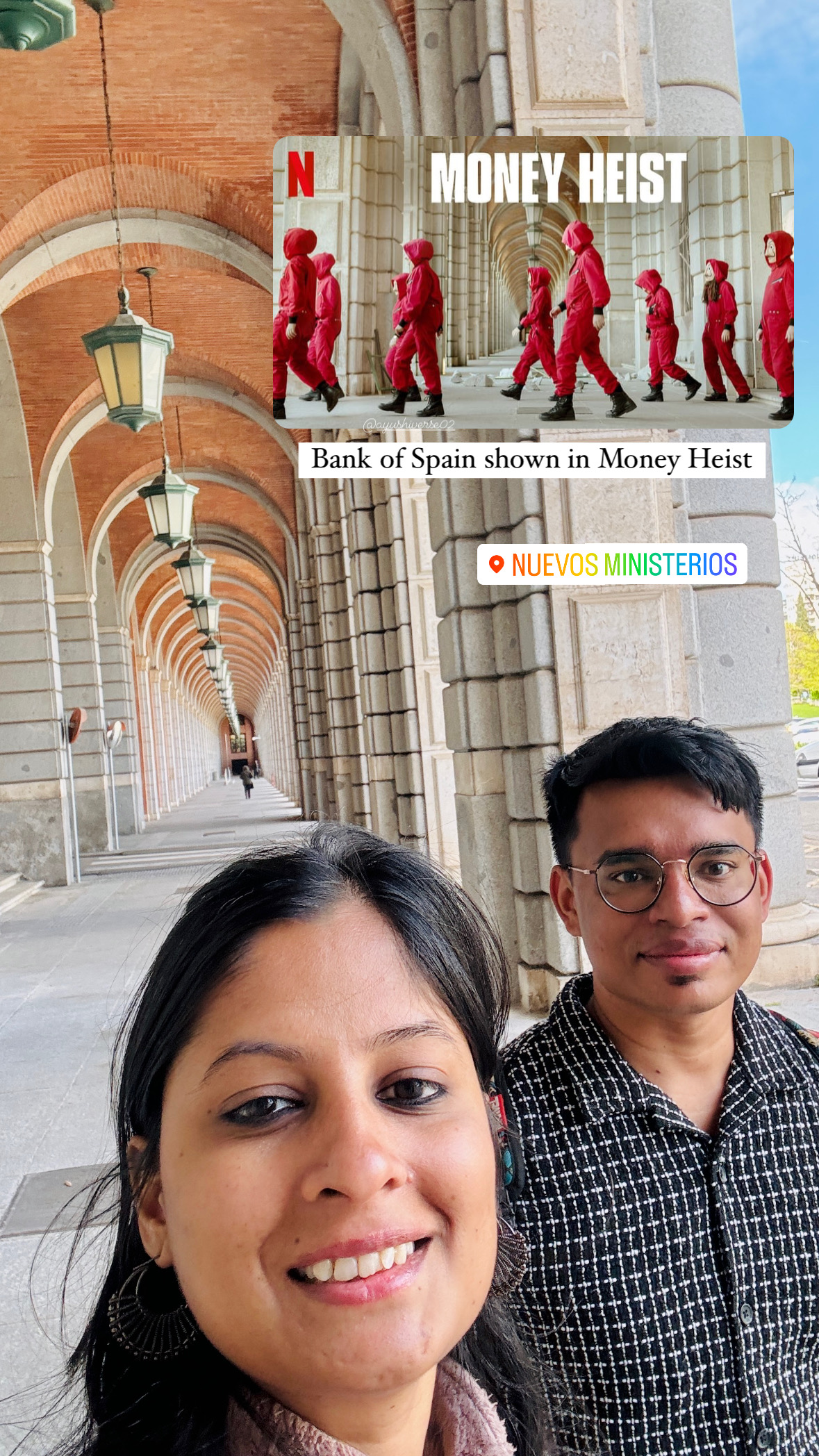
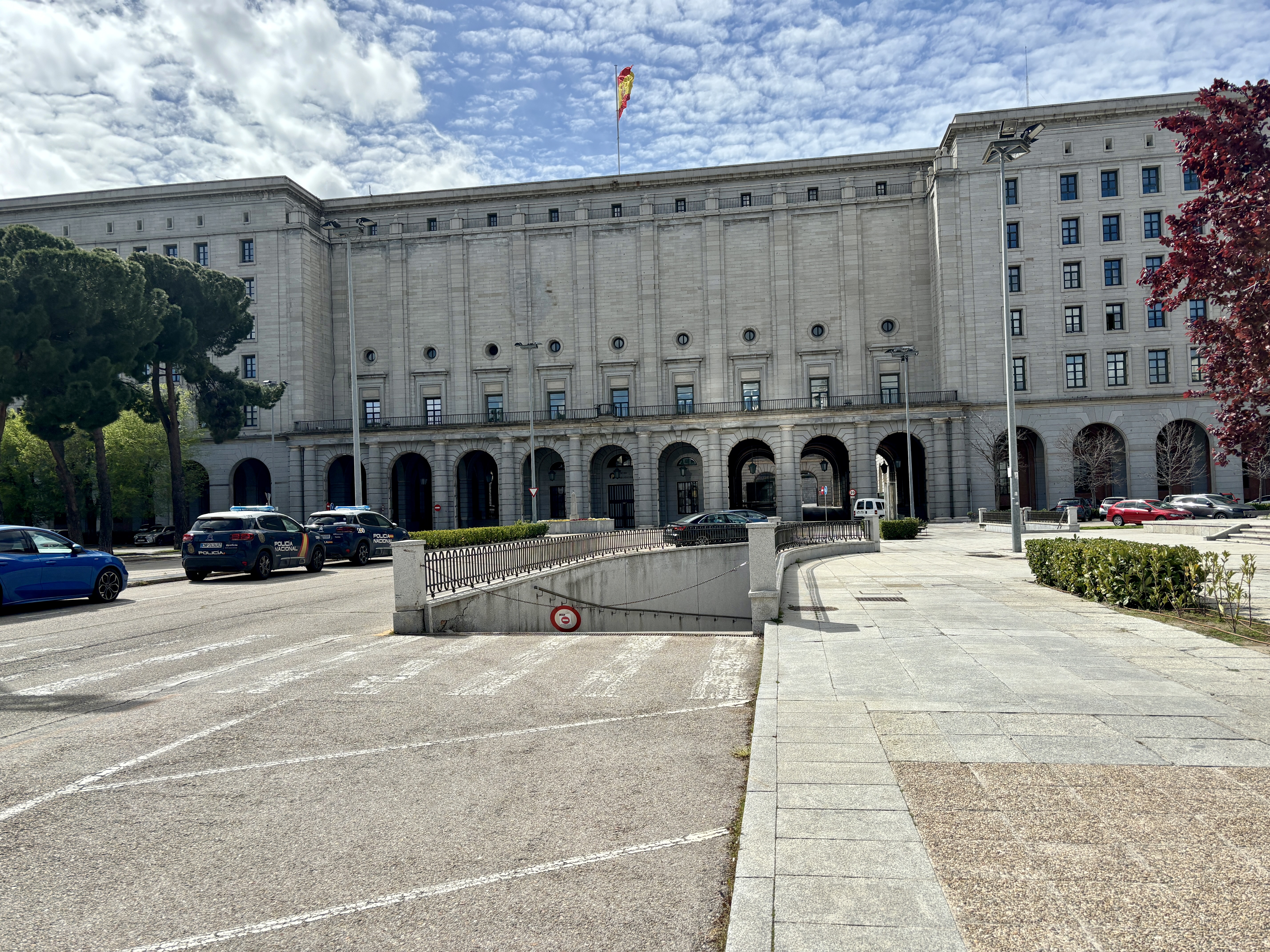
The day unfolded with a mix of fandom and farewell. We strolled through Madrid’s central park, letting its greenery soften the edges of the city. We wandered aimlessly like locals, revisited the epicenter plaque at Puerta del Sol, and let the city’s vibrant pulse sink into us one last time. Madrid wasn’t just a stopover anymore—it had become a place layered with stories, both fictional and personal.
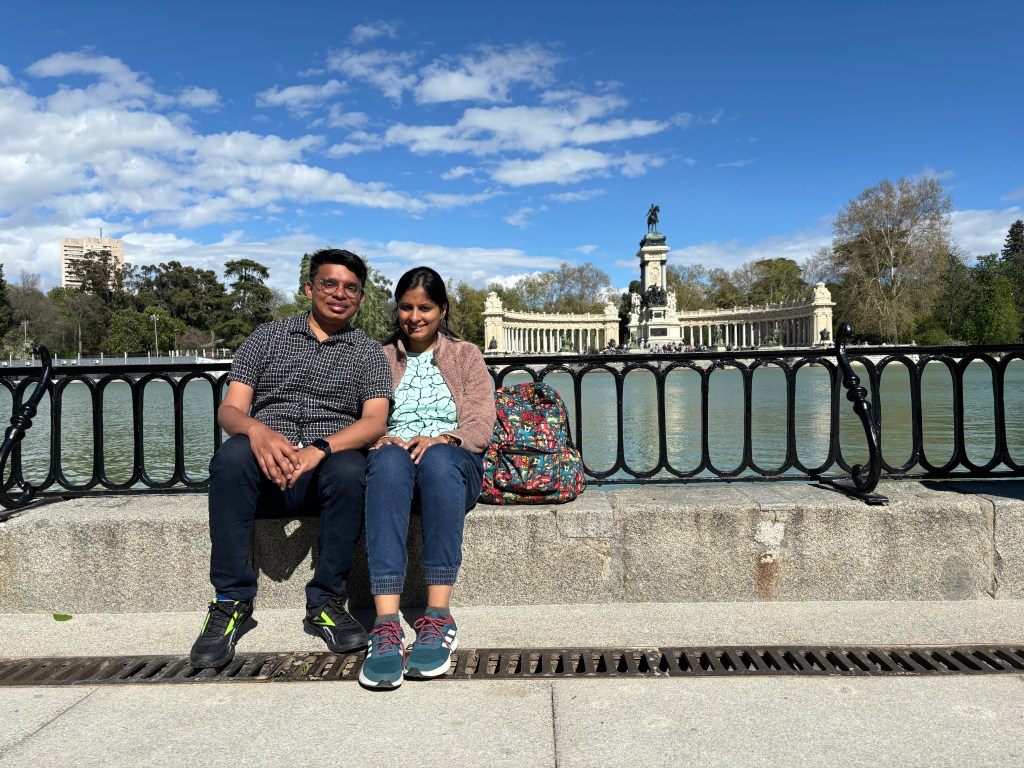
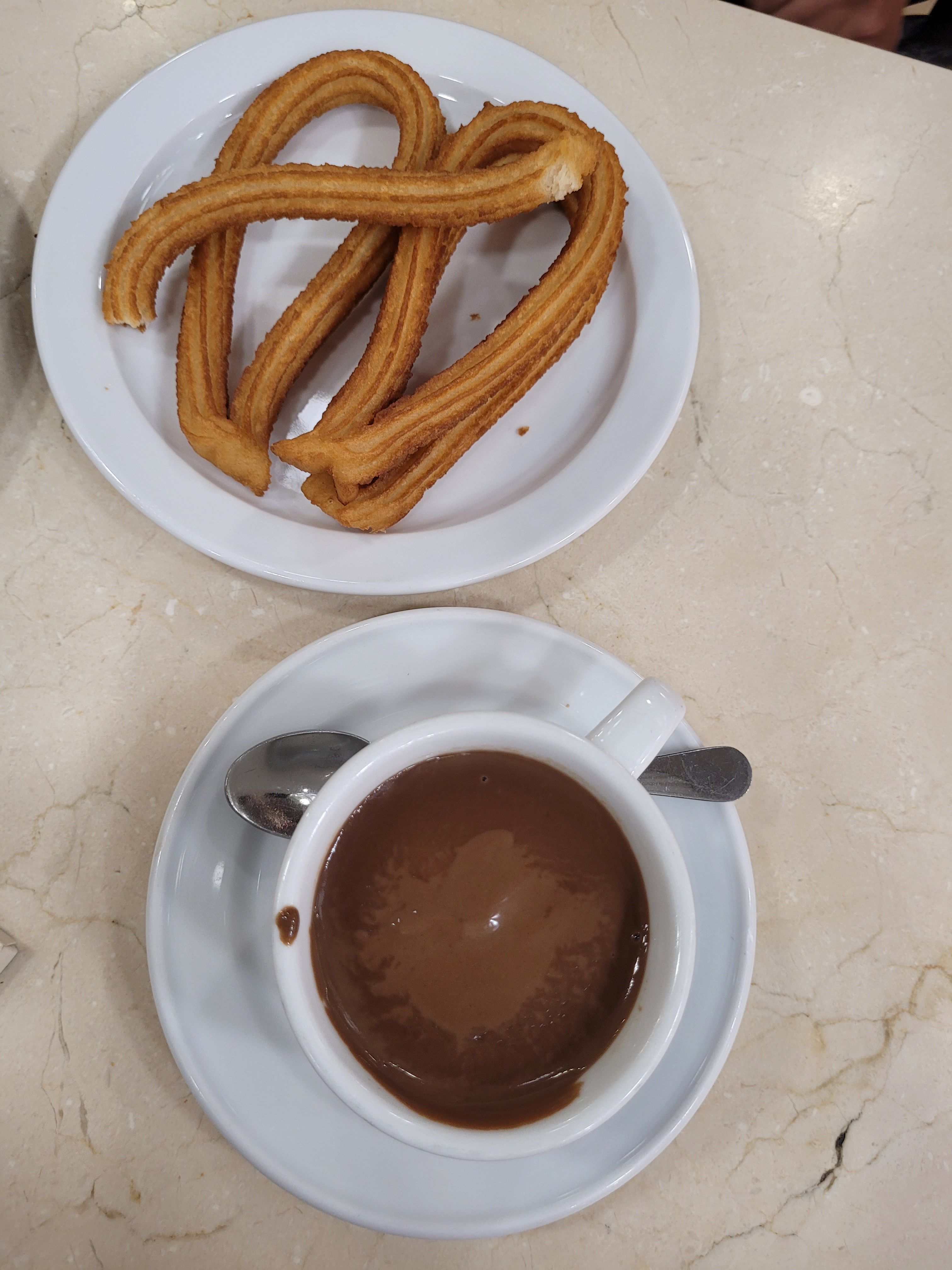
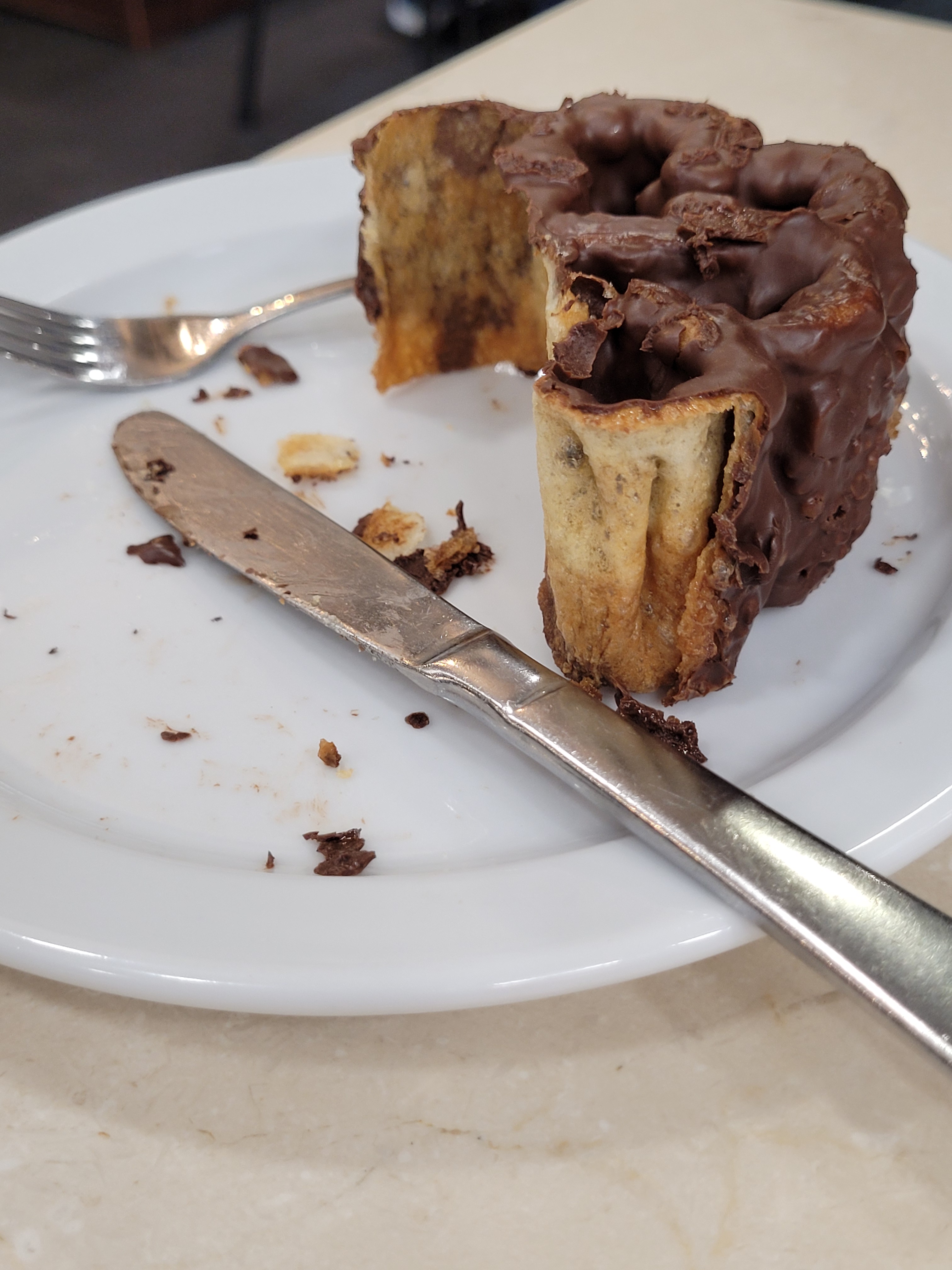
As evening settled, we treated ourselves to a final Spanish dinner, savoring every bite as though it were a ritual. And then came dessert—churros dipped in thick chocolate, flaky pastries, and sweet indulgences that felt like a farewell kiss from Spain itself. It was a gentle, delicious closure to a journey that had given us more than just sights—it had given us memories, questions, and a deeper sense of connection.
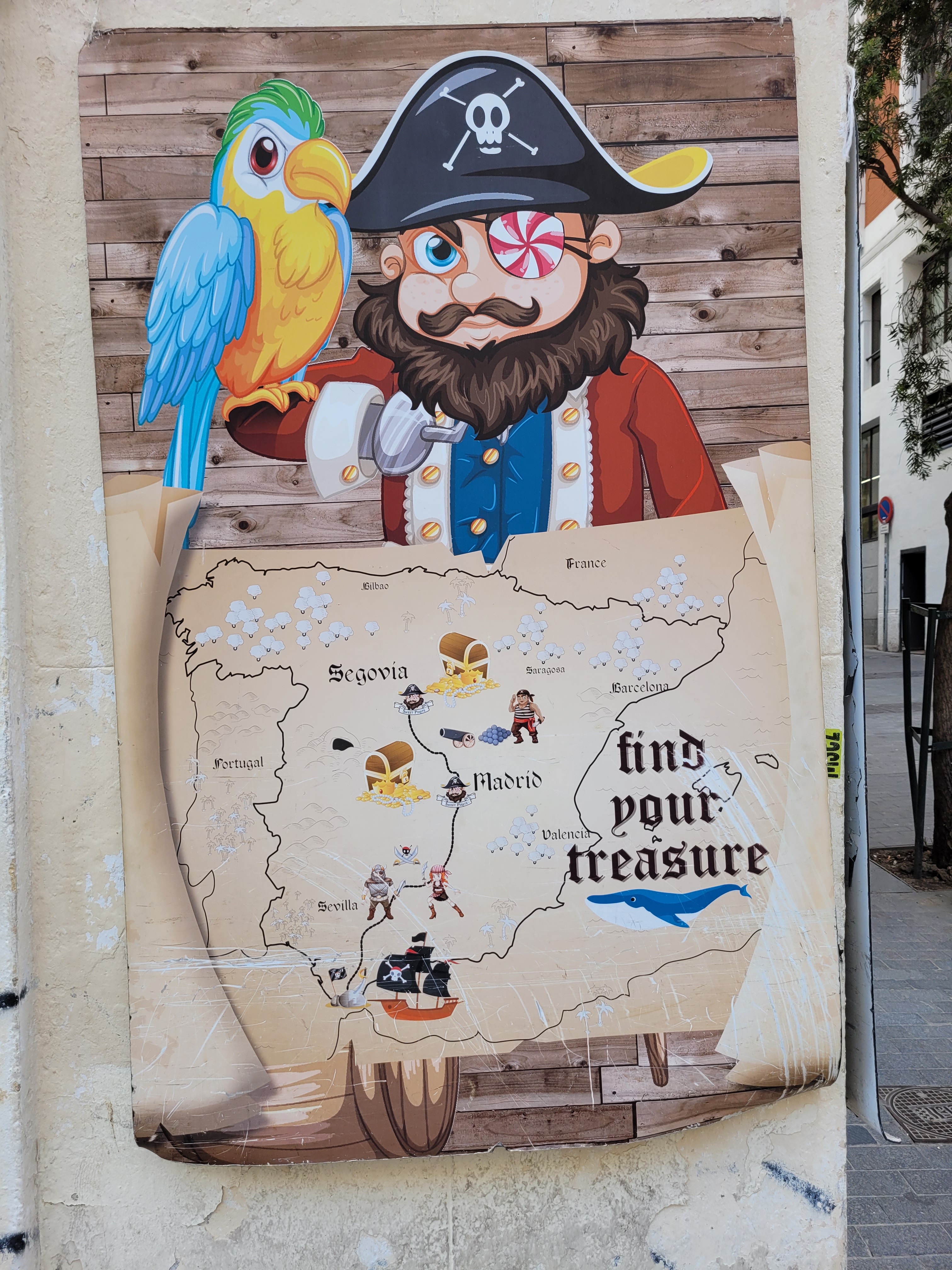
Must-Visit Places in MADRID
If you ever find yourself in Madrid, here are some incredible spots to explore:
- Puerta del Sol – Symbolic heart of Madrid.
- Plaza Mayor – Historic square with cafés and performers.
- Royal Palace of Madrid – Stunning architecture and ceremonial traditions.
- Prado Museum – Masterpieces by Velázquez and Goya.
- Retiro Park – Green escape with lakes and sculptures.
- Gran Vía – Shopping, theatres, and nightlife.
- Sobrino de Botín – The world’s oldest restaurant.
- Local Food – Tapas, churros with chocolate, and cocido madrileño.
 From Office Blues to Worldly Views