

30th March 2024
Rainy Goodbyes & Easter Celebrations
Our bus from Faro to Seville was scheduled for 10 AM. The walk to the station wasn’t long, but every step carried the weight of farewell—we were leaving Portugal with backpacks full of memories and hearts still lingering in its rhythm. Just as we settled into our seats, the skies opened up. Rain poured down in sheets, drumming against the bus windows. It felt poetic, as though Portugal itself was reluctant to let us go, sending us off with a watery embrace.
We reached Seville around 2 PM, and the journey wasn’t quite over yet. Our apartment lay a little outside the city center, so another hour passed before we arrived. But the moment we stepped inside, fatigue melted away. Our host welcomed us warmly into her pristine white apartment—everything spotless, glowing with care. Three curious cats padded around, eyeing us like new characters in their territory. She shared tips on where to catch an authentic flamenco performance and what corners of the city deserved our attention. It felt less like checking into a rental and more like being received into someone’s home.
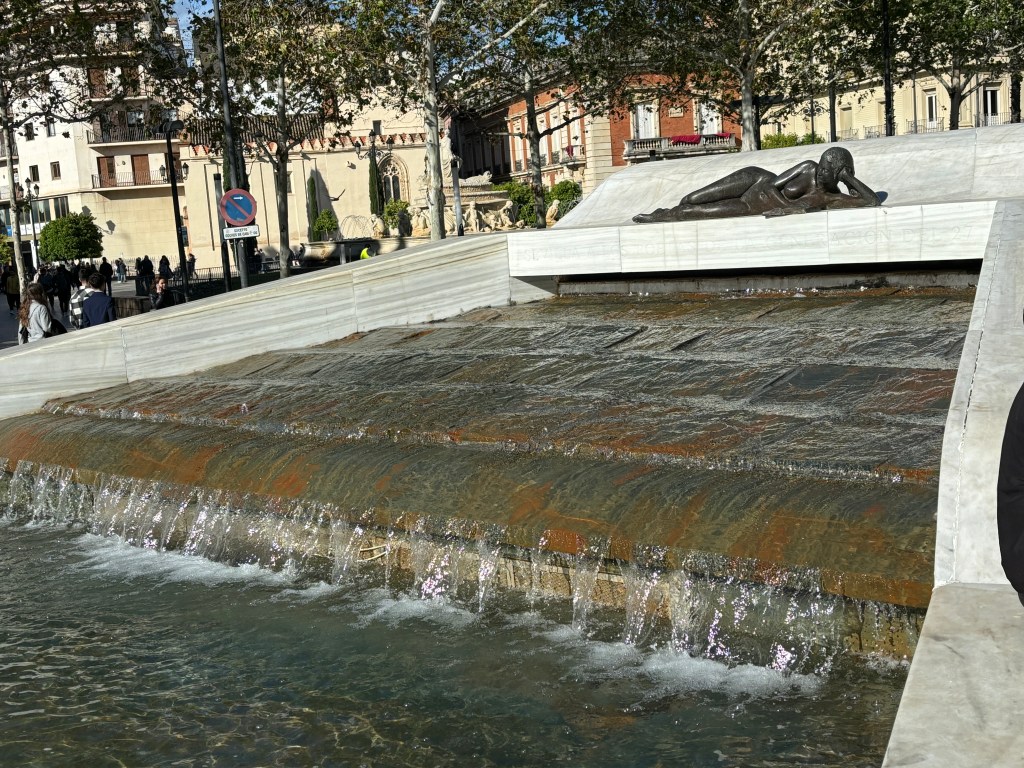
Before reaching the cathedral, we paused at a striking fountain crowned by a bronze sculpture of a reclining woman, naked yet serene, reading a book. The water cascaded down stone steps beneath her, turning the scene into something both contemplative and playful—a reminder that Seville’s art isn’t confined to galleries, but woven into its public spaces. It was a curious, unexpected encounter, and it set the tone for the city’s blend of history and creativity.
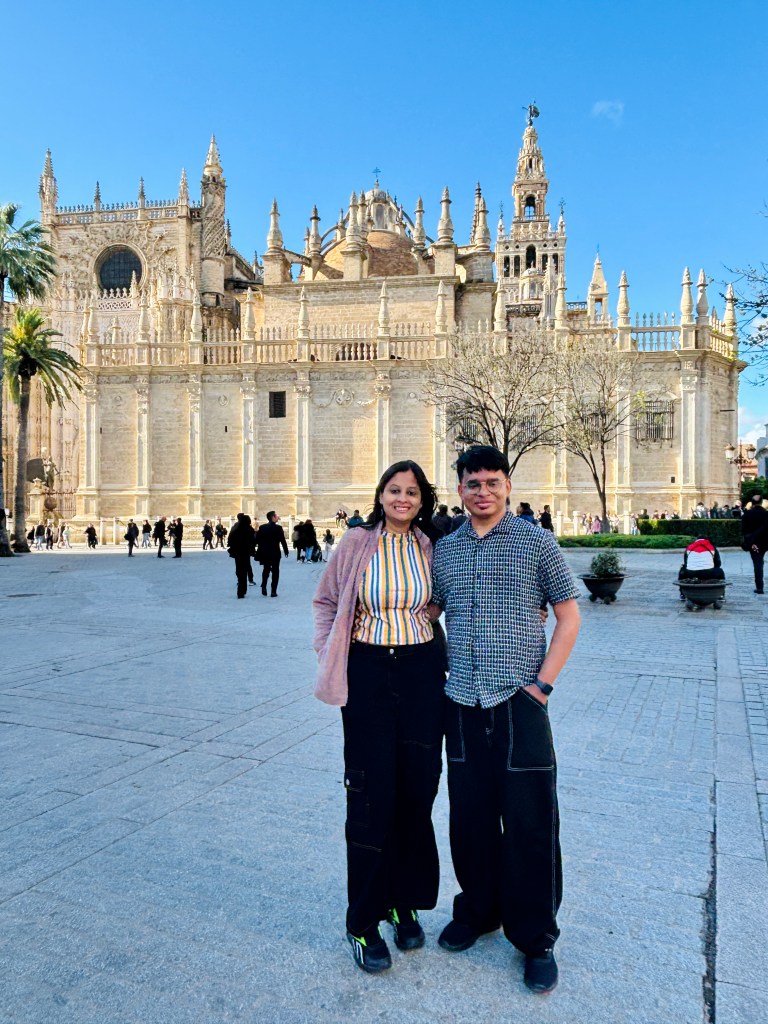
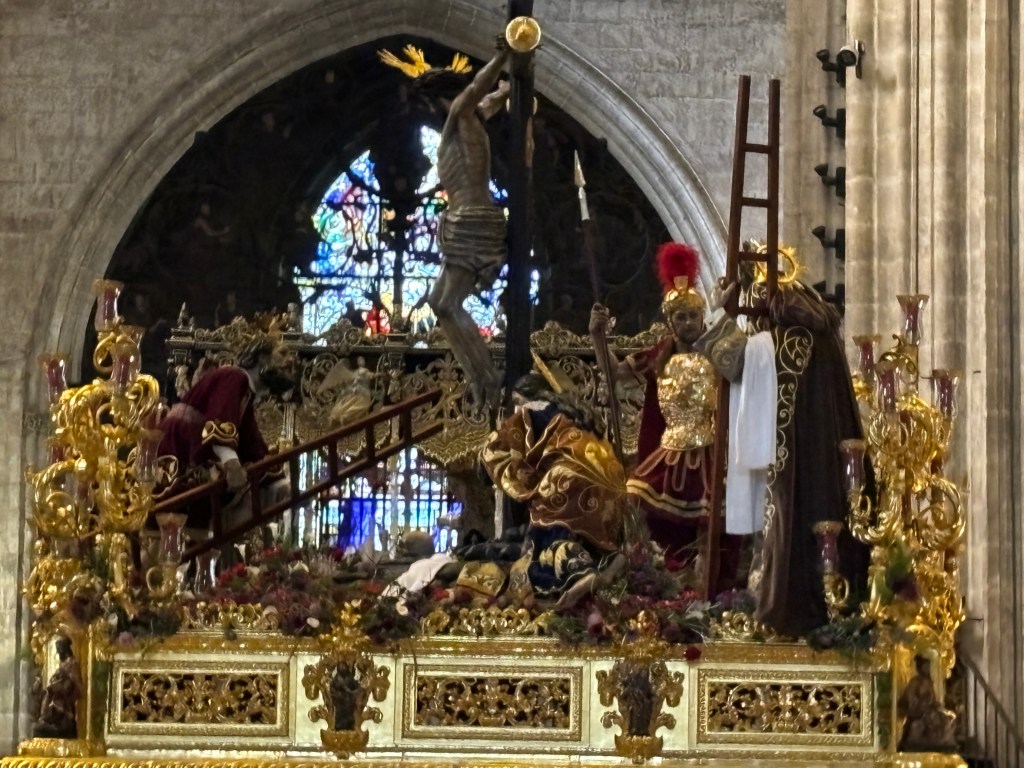
From there, we made our way to the Seville Cathedral, its towering Gothic presence surrounded by a sea of people. The cathedral is not only one of the largest in the world but also a UNESCO World Heritage Site, built on the site of a former mosque. Its sheer scale is overwhelming—ornate stone carvings, massive arched windows, and the famous Giralda bell tower, which once served as a minaret, rising proudly above the skyline. Inside, the cathedral houses treasures of art and faith, including the tomb of Christopher Columbus. On Easter evening, however, the focus was outside: the pasos (religious floats) carried through the streets, candles flickering, incense drifting, and brotherhoods in traditional robes moving with solemn rhythm. Witnessing the Crucifixion float, richly decorated with gold and lifelike figures, felt like stepping into centuries of devotion and craftsmanship.
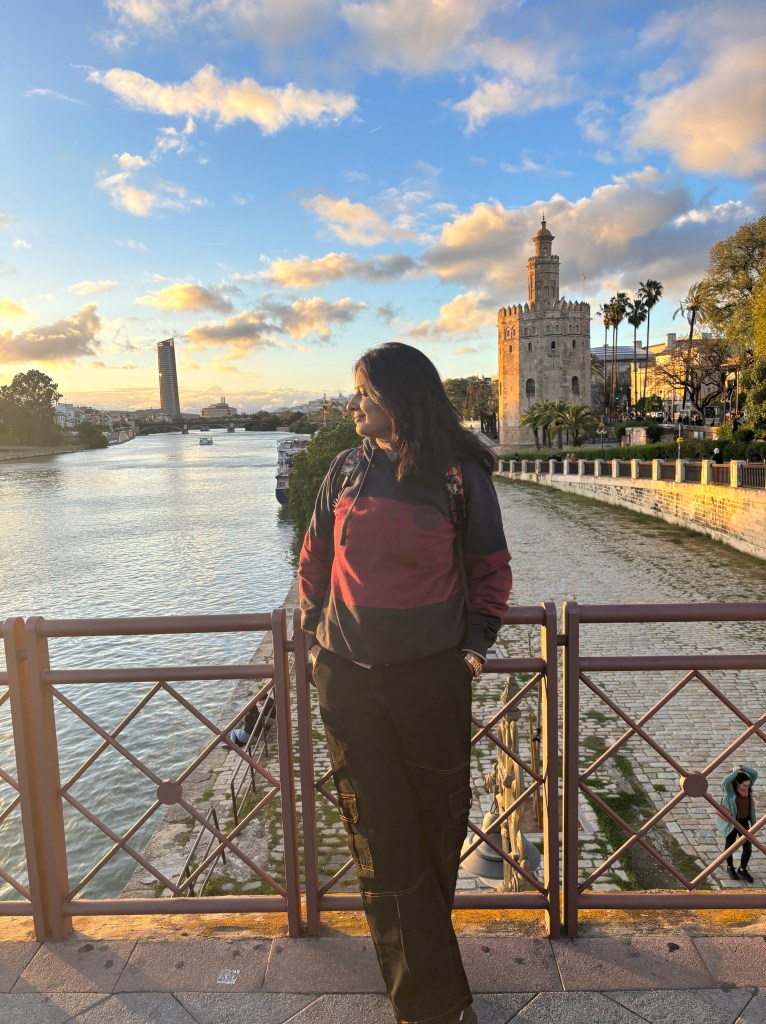
After leaving the cathedral and wandering through the festive streets, we made our way toward the Torre del Oro, the iconic golden tower that once guarded Seville’s riverfront. Crossing the bridge nearby, we paused for photos with the tower rising behind us and the Guadalquivir River flowing steadily below. It was one of those moments where history and everyday life blended seamlessly—the medieval watchtower standing as a reminder of Seville’s maritime past, while the modern city bustled around it.
After soaking in the atmosphere, we let the city guide us. A light drizzle began, softening the edges of the cobbled streets and turning them into shimmering pathways. Seville’s orange trees glistened under the rain, their fragrance mingling with the damp air. We wandered aimlessly, letting the city’s rhythm carry us, until hunger led us to a cozy spot for dinner. The table quickly filled with dishes that looked promising:
- Nachos – a generous plate layered with melted cheese, ground meat, tomato sauce, and herbs. It was hearty and flavorful, the kind of dish made for sharing.
- Burger – beautifully presented on a slate board, stacked with a juicy patty, melted cheeses, fresh arugula, tomatoes, and a crispy fried element. It looked gourmet, almost too pretty to eat, and though rich, it was far better than the disappointing burger we’d had earlier in Toledo.
- Creamy Salad – a traditional-style mix of diced potatoes, carrots, peas, pickles, and mayonnaise, topped with olives. Comforting and filling, it carried that festive, homely touch that made it feel like a Spanish twist on familiar flavors.creamy salad, nachos and a perfect burger.
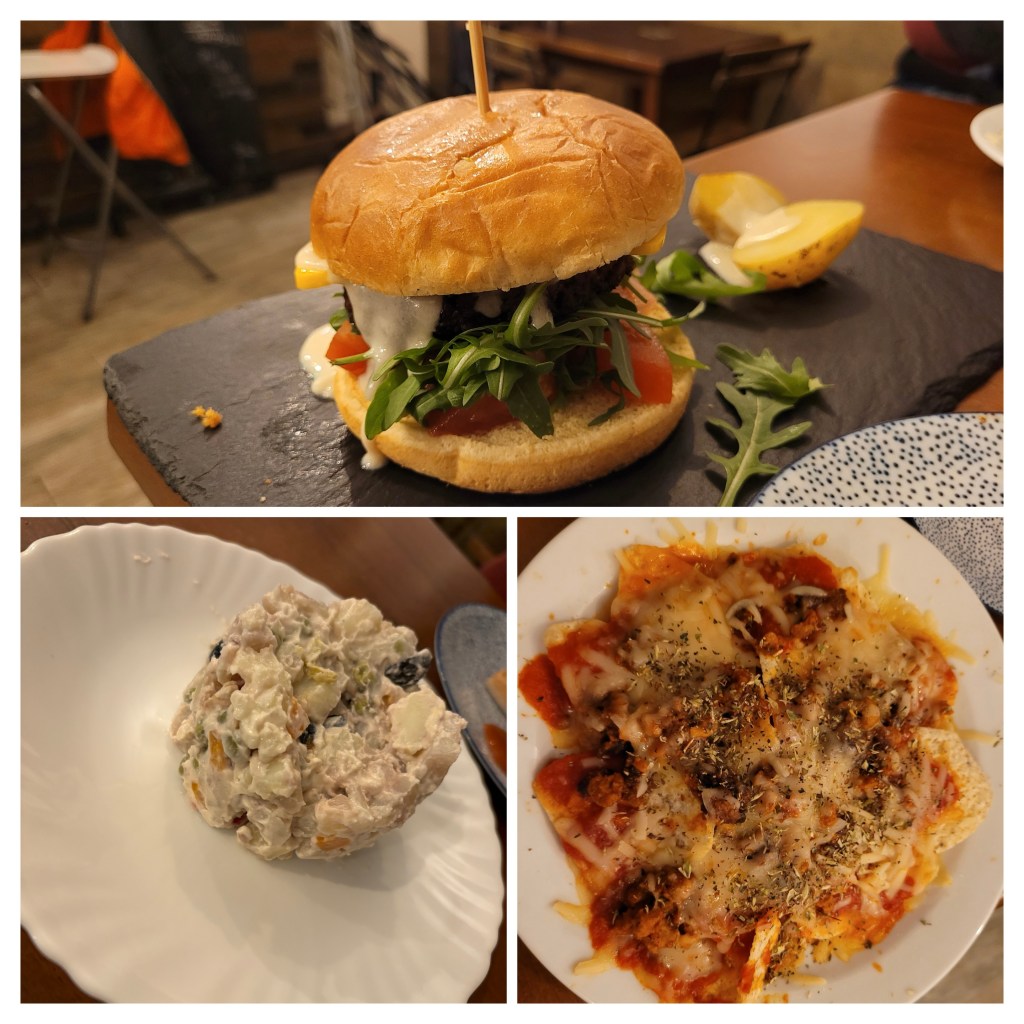
Dinner was a mix of indulgence and curiosity, each dish adding its own note to the day’s rhythm. With full stomachs and tired legs, we headed back to our Airbnb, where the quiet of the apartment and the company of our host’s cats felt like the perfect close to a day spent between rain, celebration, and history.
31st March 2024
Stories in Stone & the Soul of Flamenco
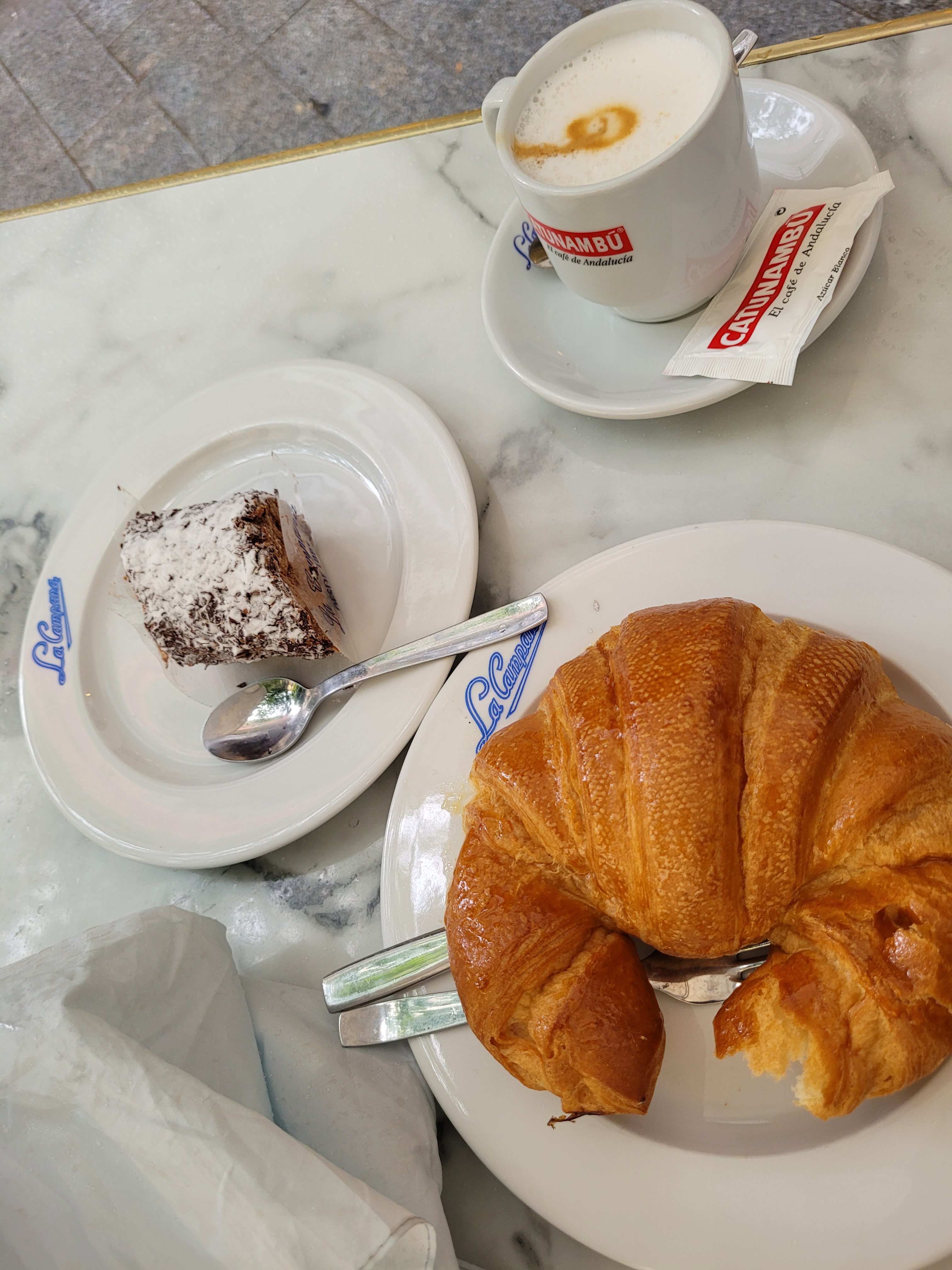
We started the morning with a quick coffee and dessert at La Campana, a historic pastry shop that has been serving locals since the 19th century. Sweet energy in hand, we joined our Guruwalk tour, led by a guide recommended by someone we met in Madrid. He was engaging, full of fascinating insights, and made the city’s history come alive.
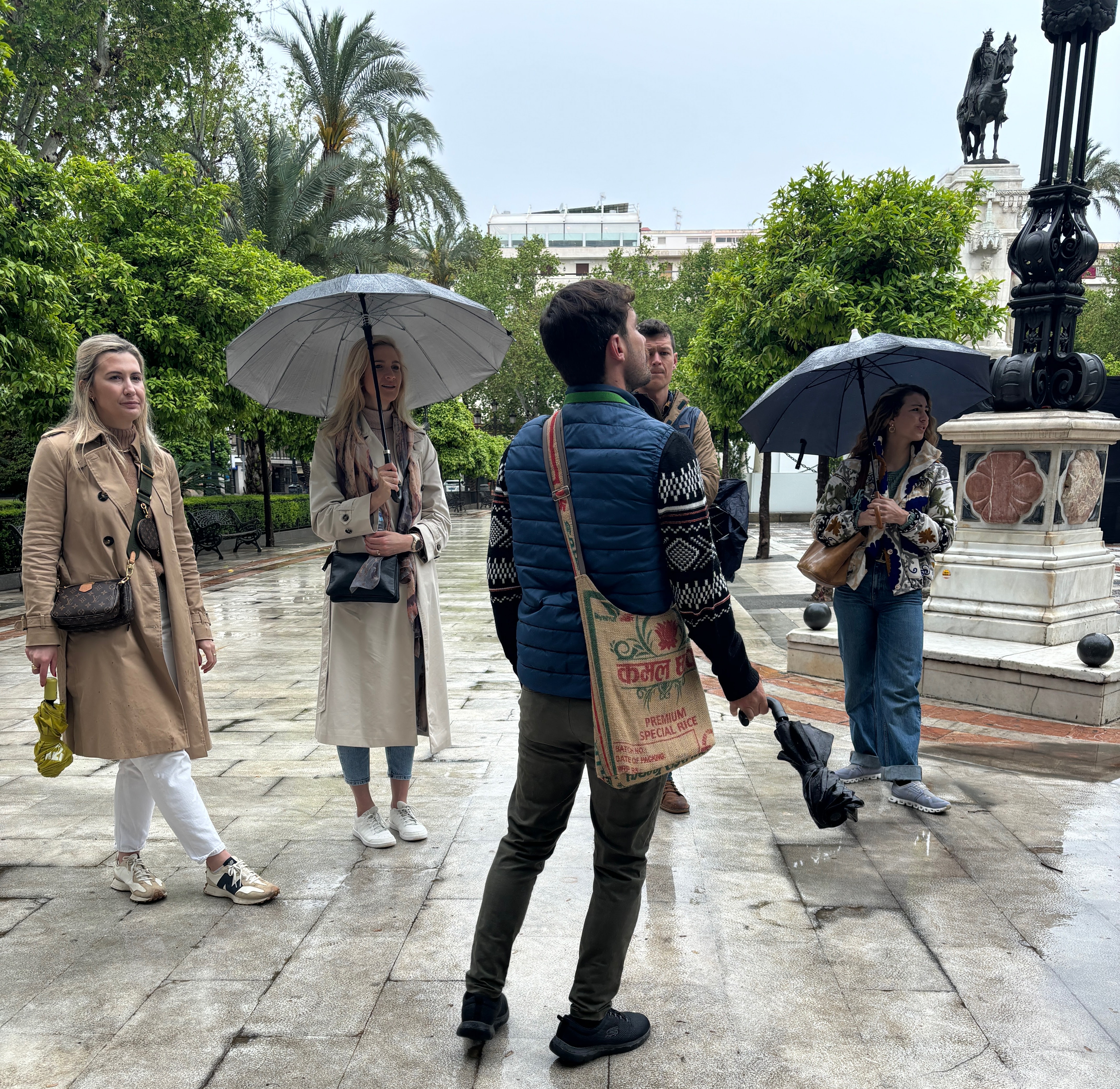
As we walked, Seville unfolded in layers of architecture and stories:
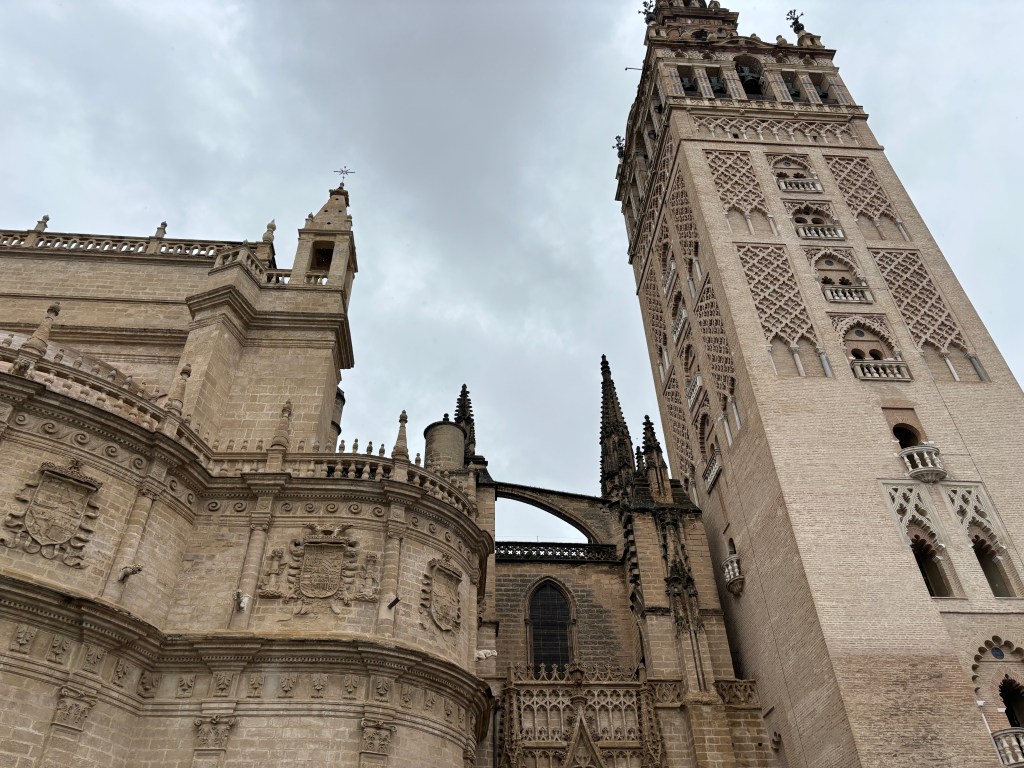
- The Giralda & Seville Cathedral – The Giralda tower, once a minaret during the Moorish period, now rises as the cathedral’s bell tower, blending Islamic and Christian styles in one breathtaking structure. The cathedral itself, one of the largest Gothic churches in the world, stood as a symbol of Seville’s wealth and devotion, its intricate carvings and rose windows dazzling against the sky.
- The Archbishop’s Palace & Baroque Facades – Just beside the cathedral, the Archbishop’s Palace and nearby ornate government buildings showcased Seville’s Baroque grandeur. Elaborate stonework, statues, and decorative balconies reminded us how power and faith intertwined in the city’s past.
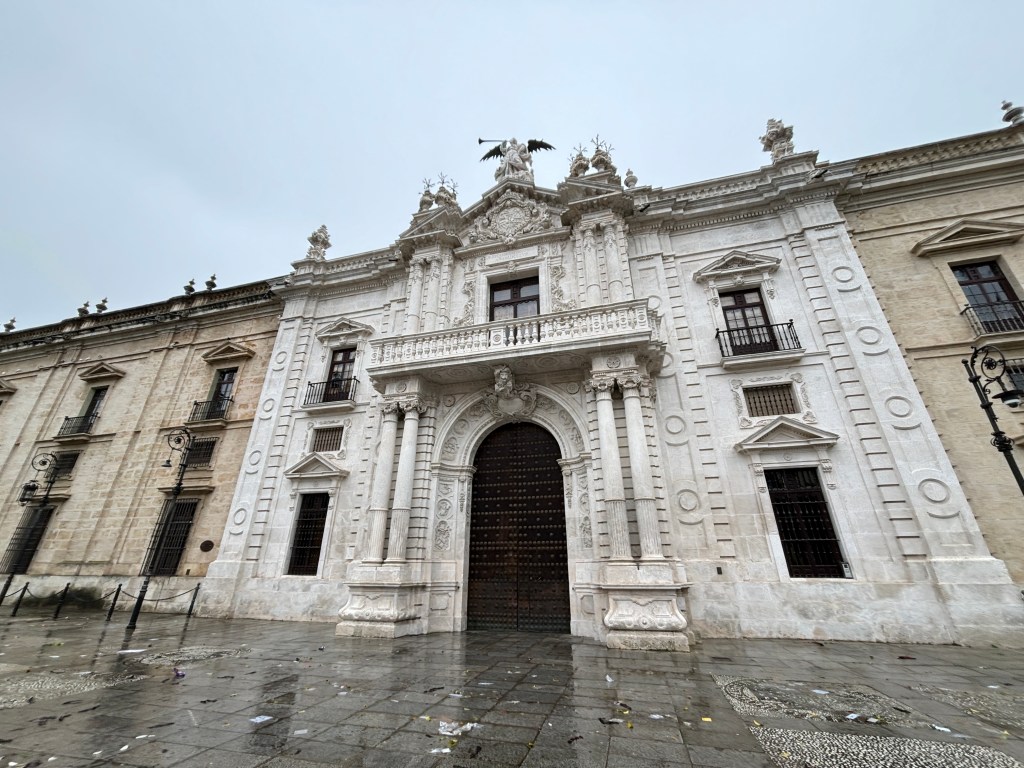
- The Old Tobacco Factory – Our guide pointed out the imposing building that once housed Europe’s largest tobacco factory. It’s now part of the University of Seville, but centuries ago it was the center of Spain’s tobacco trade, employing thousands of workers and inspiring stories like Bizet’s Carmen.
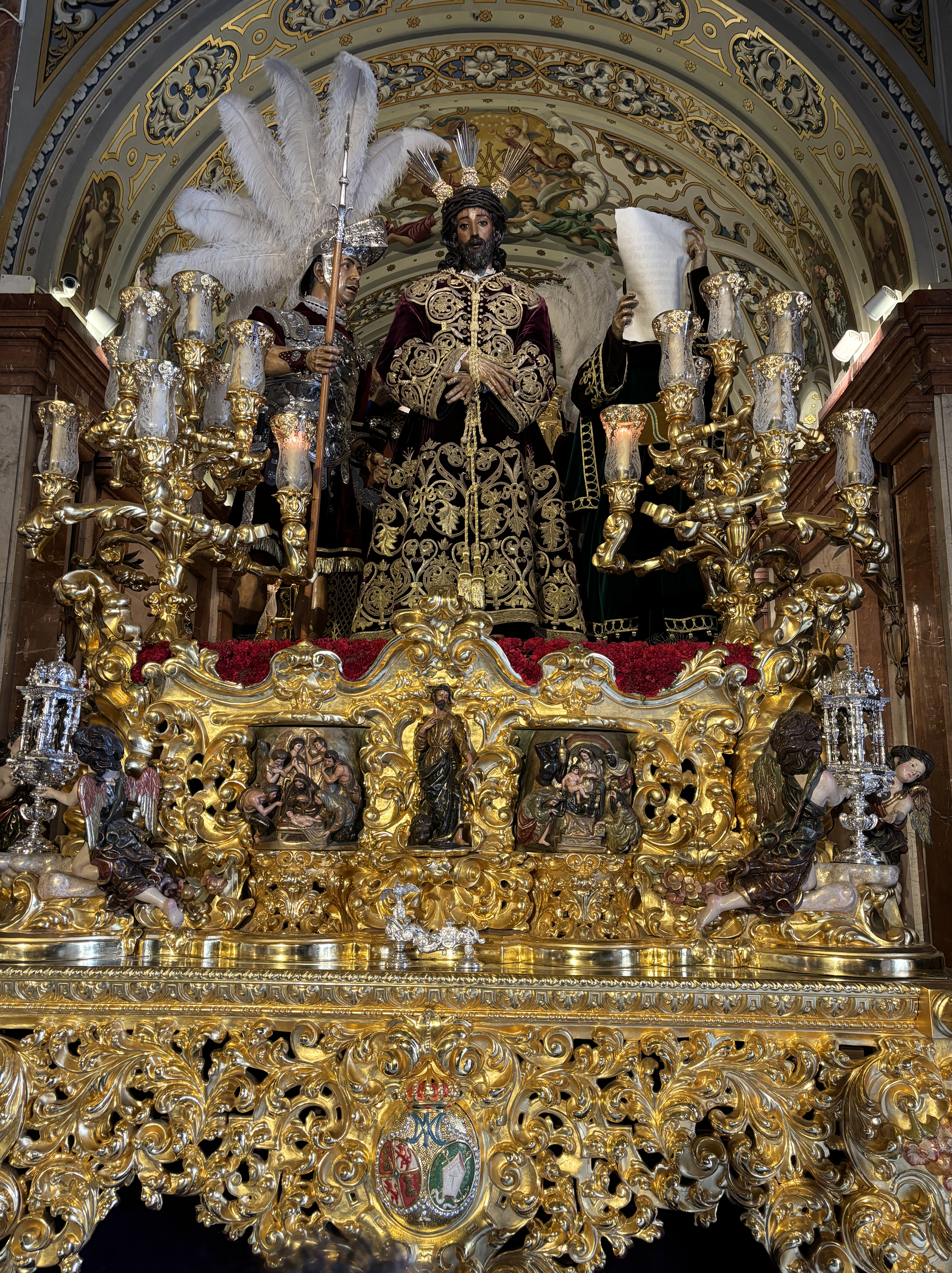
- Semana Santa Traditions – Along the way, we learned about the rituals of Holy Week. Brotherhoods carry pasos (floats) through the streets, some depicting scenes like the Crucifixion, richly decorated with gold and lifelike figures. The guide explained how incense, music, and devotion transform the city during Easter, making it one of the most important celebrations in Spain.
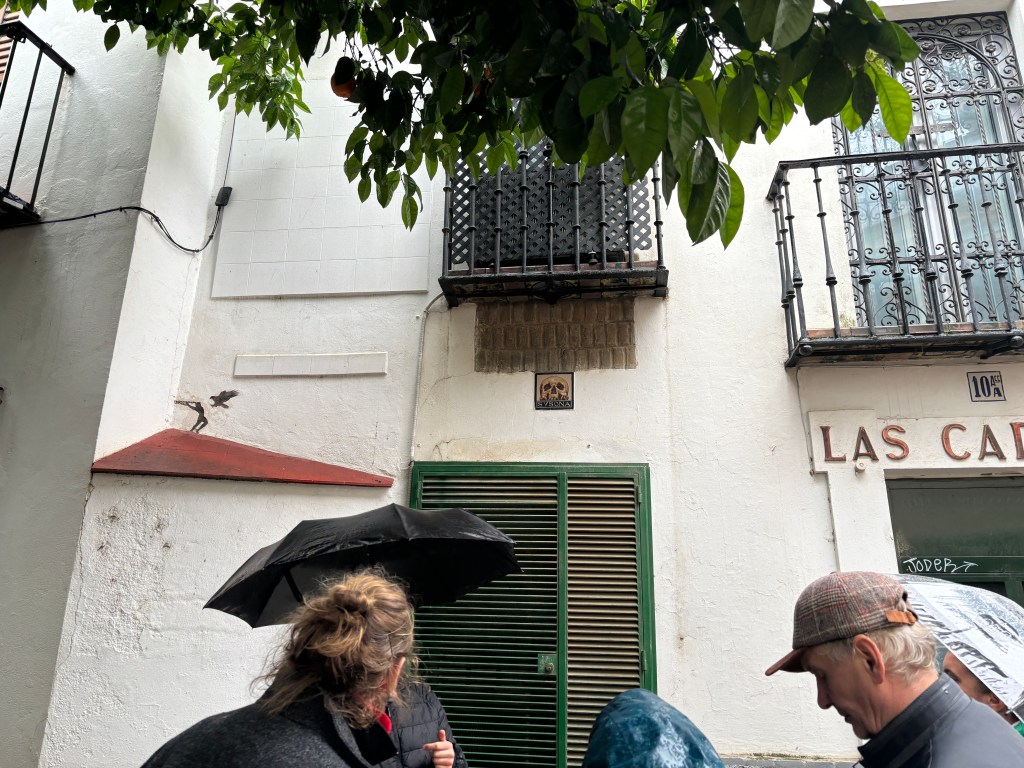
- The Legend of Susona Ben-Suson – In the narrow lanes of Barrio Santa Cruz, we stopped before a modest white façade marked with a tile showing a skull and crossbones. Here, our guide told us the haunting story of Susona, the daughter of a wealthy converso family who betrayed her father’s plot against the Inquisition to her Christian lover. Her confession led to executions, including her father’s, and she lived the rest of her life in remorse. Before her death, she asked that her skull be displayed on her home as a warning of betrayal. For centuries, it hung there, and today the tile keeps her story alive. Standing in front of that wall, listening to the tale, felt like stepping into Seville’s darker, more fragile past—a sharp contrast to the grandeur of the Cathedral and the joy of Easter processions.
- Voyages to India & Beyond – Standing near the river, he spoke of the historic voyages that left Seville and Lisbon, connecting Spain and Portugal to India and the wider world. It was fascinating to hear how these journeys shaped trade, culture, and even the food we eat today.
Every story made me want to revisit our own history with fresh eyes, seeing the threads that connect continents and centuries. By the end of the tour, Seville felt less like a city of monuments and more like a living museum—its streets echoing with faith, commerce, and art.After the tour, we went for a vegan lunch and continued exploring the city—visiting churches, observing prayers, and climbing the Seville Tower for panoramic views. The city was alive, yet peaceful. Every corner had a story, every street a rhythm.
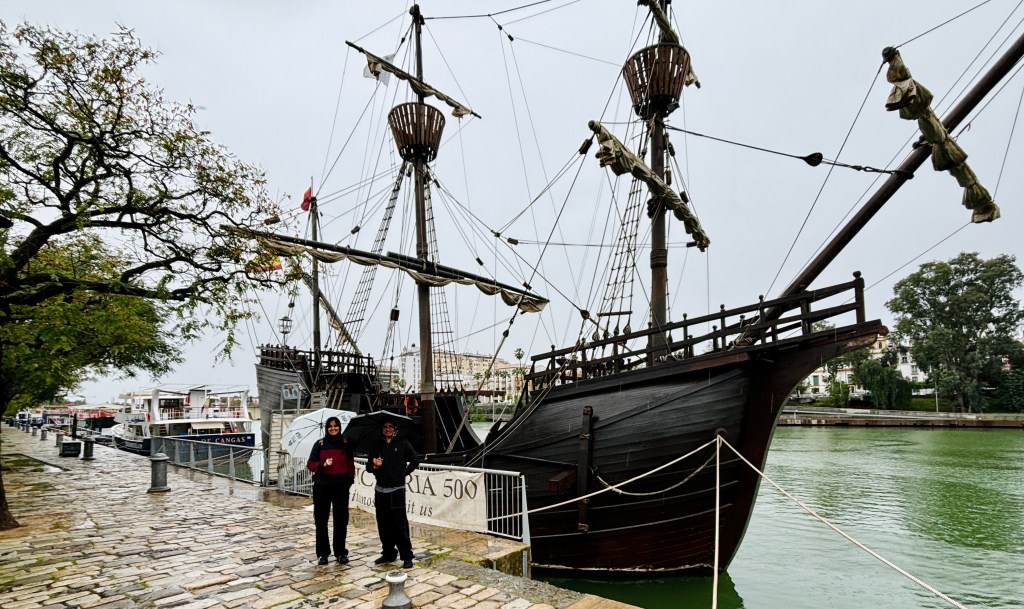
After exploring Seville’s historic core, we wandered toward the riverfront near the Torre del Oro, the “Golden Tower” that once guarded the city’s port. Its name comes from the golden shimmer it cast on the water centuries ago, when it was part of the city’s defensive walls. Today, it stands as a proud reminder of Seville’s maritime past, watching over the Guadalquivir River where ships once set sail for the New World. Nearby, we found a replica of the Nao Victoria, the first ship to circumnavigate the globe, commemorating the 500th anniversary of Magellan and Elcano’s voyage. Standing before its towering masts and rigging, with rain falling softly, felt like stepping back into the age of exploration.
By then, hunger had caught up with us, so we stopped for lunch at a cozy spot that served vibrant, flavorful dishes:
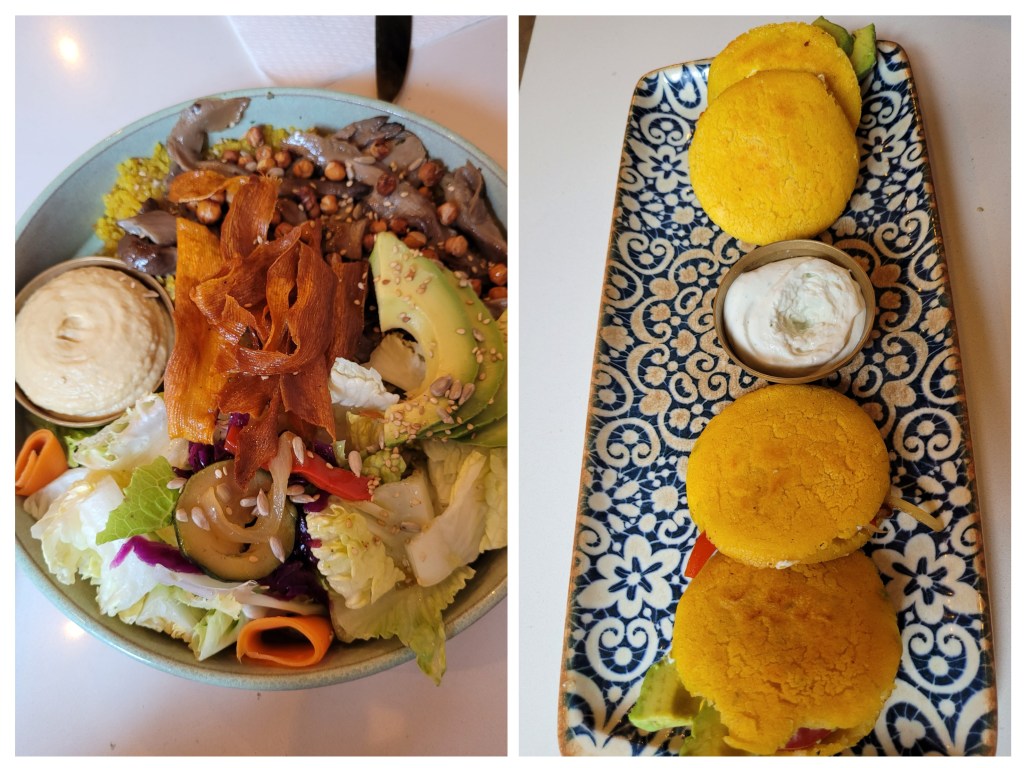
- Vegan Bowl – A colorful mix of avocado slices, roasted chickpeas, sautéed mushrooms, shredded cabbage, carrot ribbons, cucumber, and a creamy hummus dip. Sprinkled with seeds and topped with crispy vegetable chips, it was as nourishing as it was beautiful—a rainbow of textures and flavors in one bowl.
- Arepas – Cornmeal patties filled with avocado and fresh vegetables, served on a decorative plate with a creamy dip in the center. Soft yet hearty, they carried a Latin American flair that felt both comforting and adventurous.
Lunch was a perfect balance—healthy, satisfying, and full of character. With the river and Torre del Oro nearby, it felt like we were tasting Seville’s global spirit, a city shaped by voyages, trade, and cultural exchange.
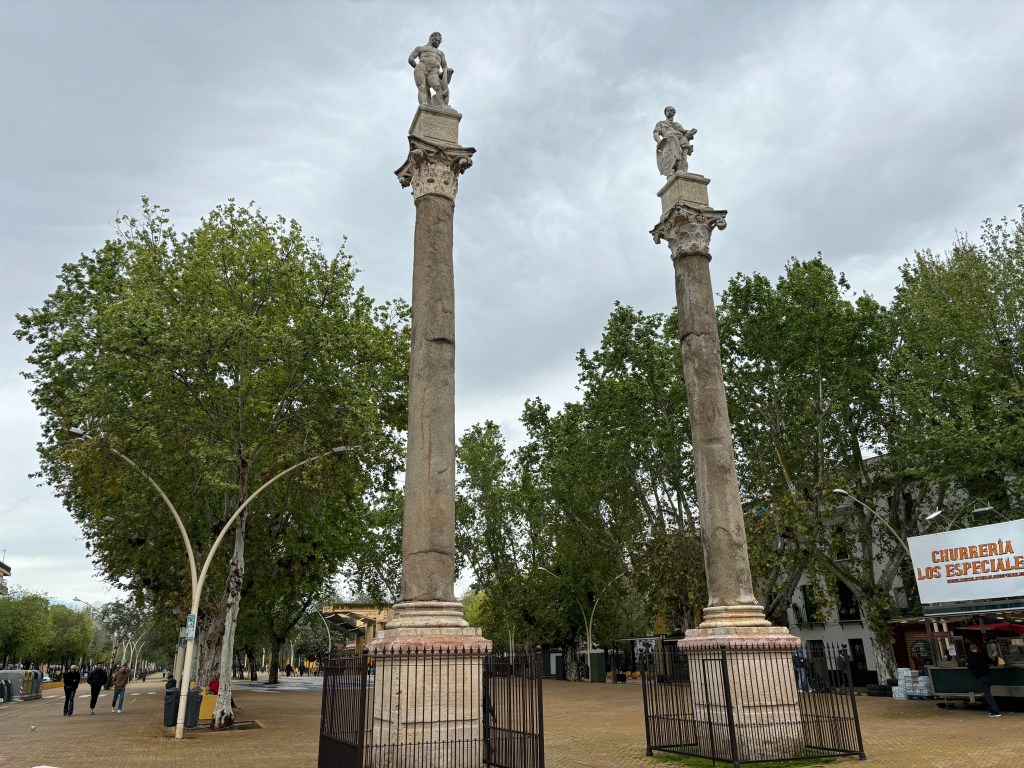
With lunch behind us, we continued exploring Seville, letting the city reveal more of its character. We came across two towering stone columns topped with statues, standing proudly in an open plaza. These are known as the Columns of Hercules, a historic landmark dating back to the 16th century. They symbolize Seville’s connection to classical mythology and its role as a gateway to exploration. The plaza around them was lively, with trees, food stalls, and people strolling—an everyday rhythm unfolding around monuments that have watched centuries pass.
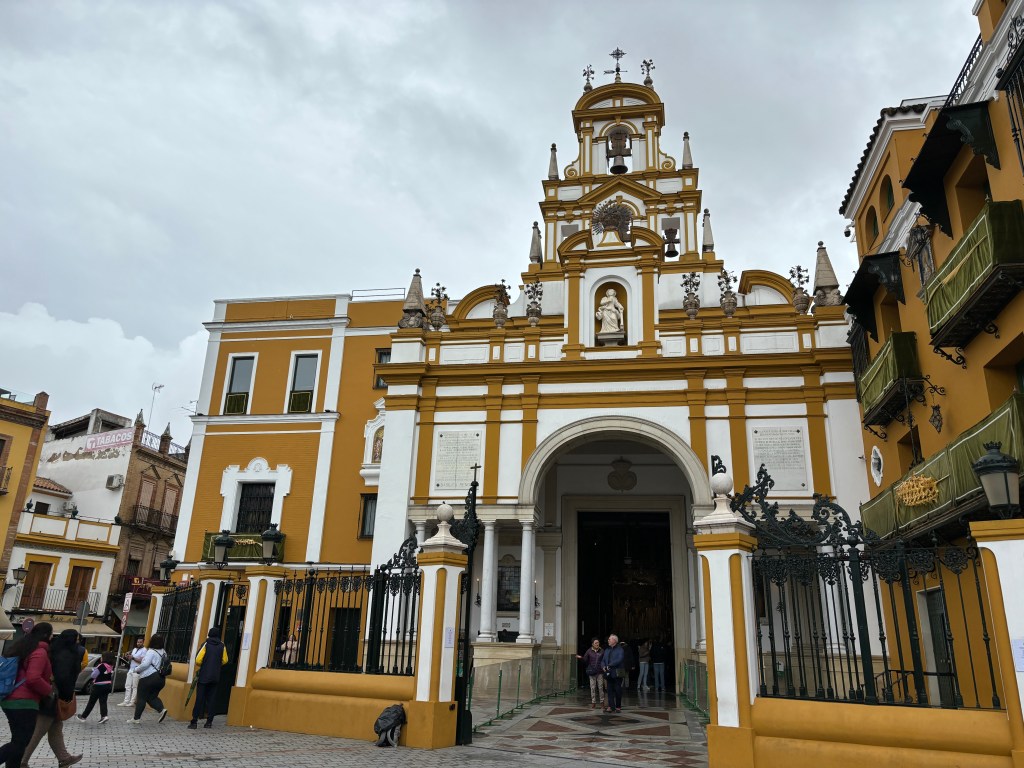
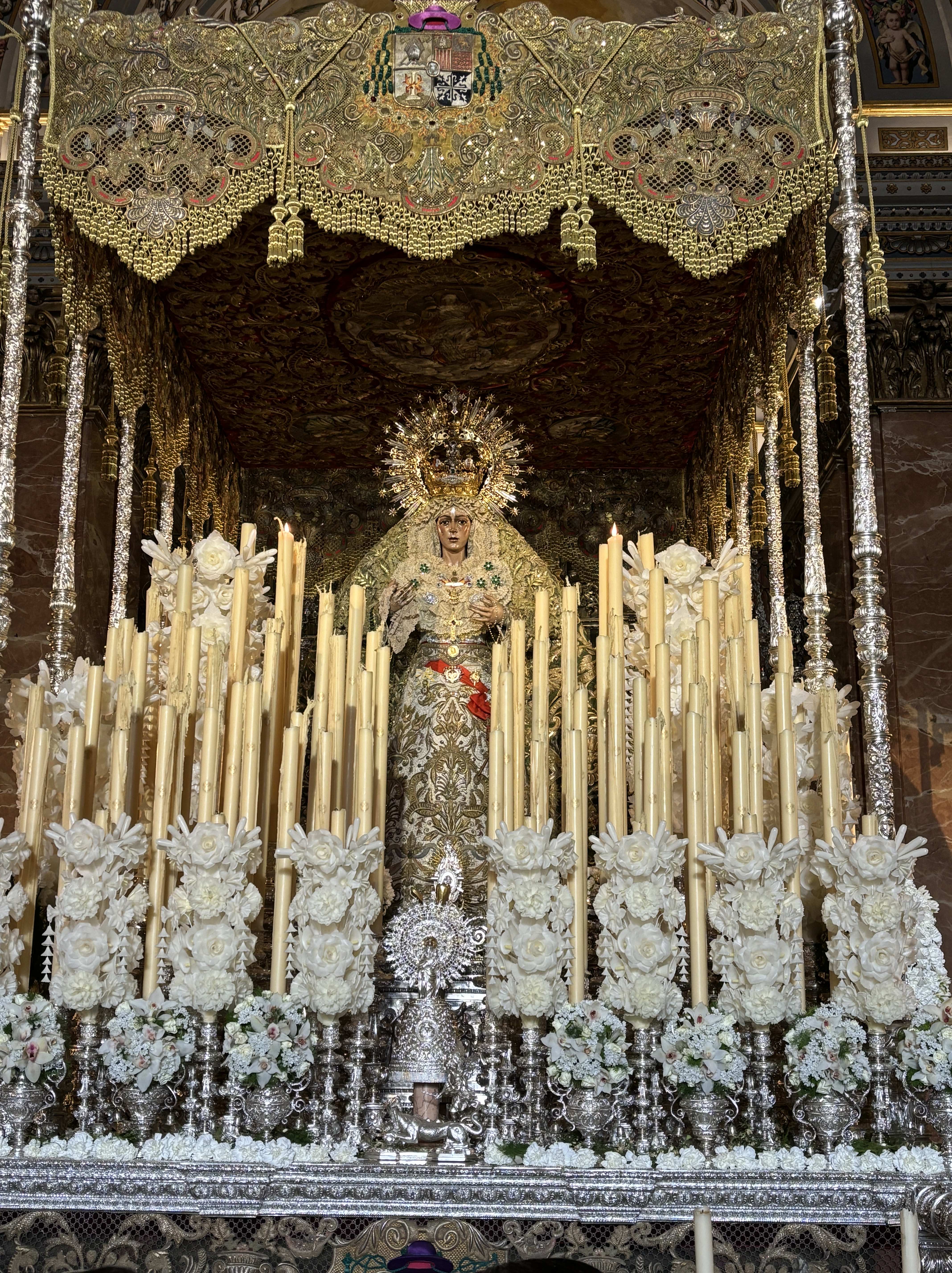
Our walk then led us to the Basílica de la Macarena, a striking Baroque-style church painted in white and ochre tones. Its ornate façade, statues, and bell tower immediately caught our eye. Inside, the basilica houses the revered image of the Virgin of La Esperanza Macarena, one of the most beloved figures in Seville’s Semana Santa processions. The devotion here was palpable, and it gave us a deeper sense of how faith shapes the city’s identity.
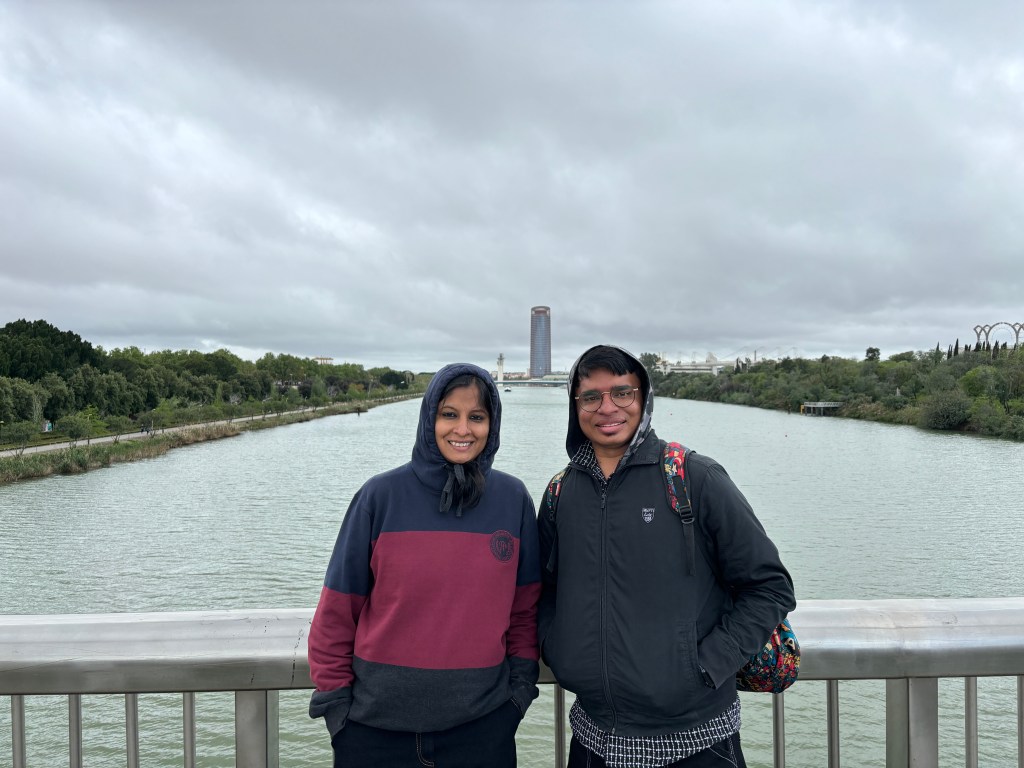
Later, we found ourselves on a bridge spanning the Guadalquivir River, with the modern Torre Sevilla rising in the background. The cloudy sky and cool breeze gave the scene a moody atmosphere, contrasting with the vibrant streets we had just left. Standing there, looking out over the river and the mix of old and new architecture, felt like a quiet pause—a reminder that Seville is a city where history and modernity coexist in harmony.
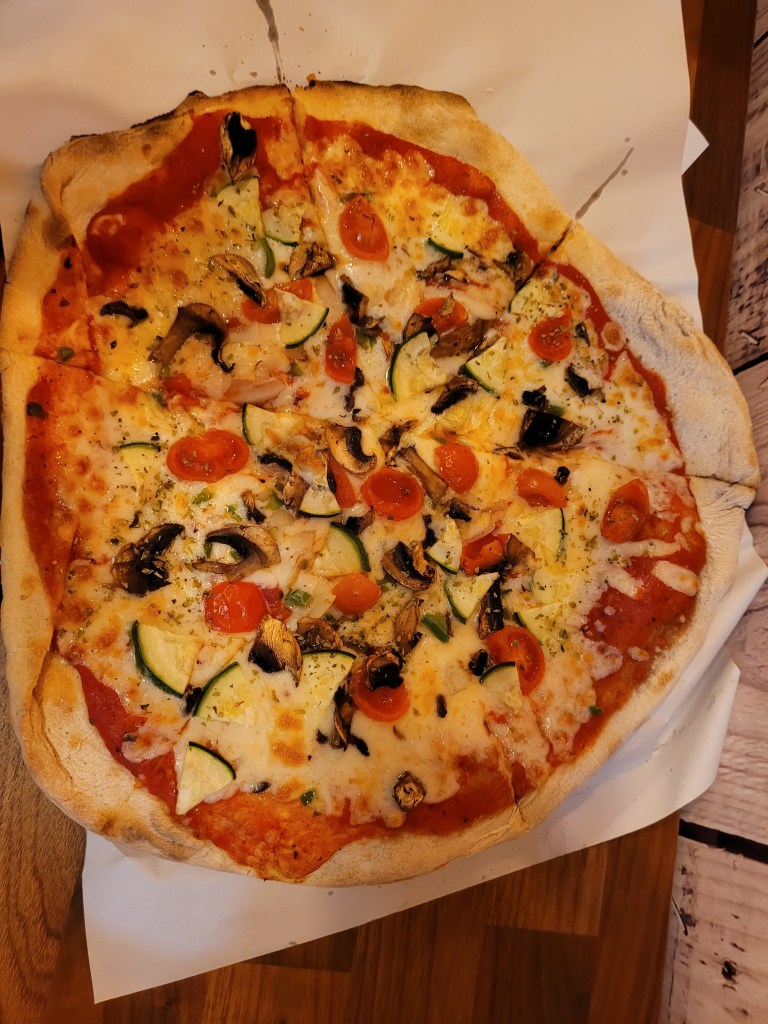
As evening approached, we were early for our flamenco show, so we decided to grab dinner first. The restaurant served us a vegetarian pizza, thin-crusted and colorful, topped with cherry tomatoes, zucchini, mushrooms, and melted cheese. Rustic and fresh, it was the kind of dish that felt both comforting and artisanal—simple ingredients elevated by flavor and presentation. Sharing slices over conversation, we felt the anticipation building for the night ahead.
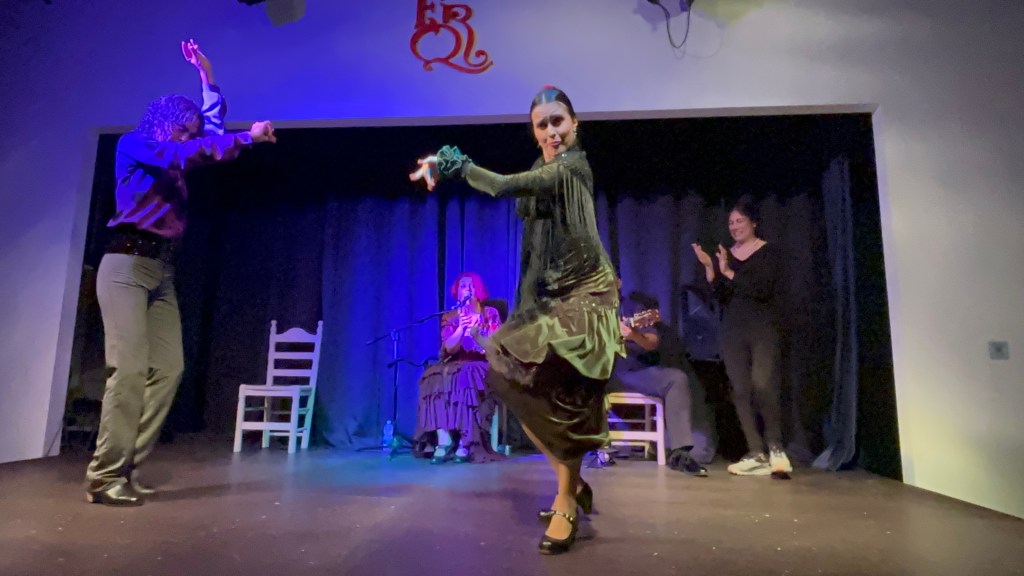
The show had open seating, so we made sure to return early—and it paid off. We secured front-row, center seats, close enough to feel the vibrations of every stomp.
This was our first live flamenco performance, and it was everything we hoped for and more. Flamenco had always intrigued me—especially after seeing it in Zindagi Na Milegi Dobara—but watching it live was electric. The stage glowed under blue and purple lights, and the performers commanded it with raw intensity.
One woman sang with piercing emotion, her voice carrying pain and pride in equal measure. Two dancers moved with fierce precision—the woman in a flowing green dress striking dramatic poses, her hands slicing the air, while her partner mirrored her energy with sharp footwork. Behind them, the guitarist’s strings and rhythmic clapping created a heartbeat that pulsed through the room. We didn’t understand the lyrics, but the emotion transcended language. Passion, sorrow, resilience—it was all there. For two hours, we were spellbound, carried away by a performance that felt less like entertainment and more like a cultural revelation.
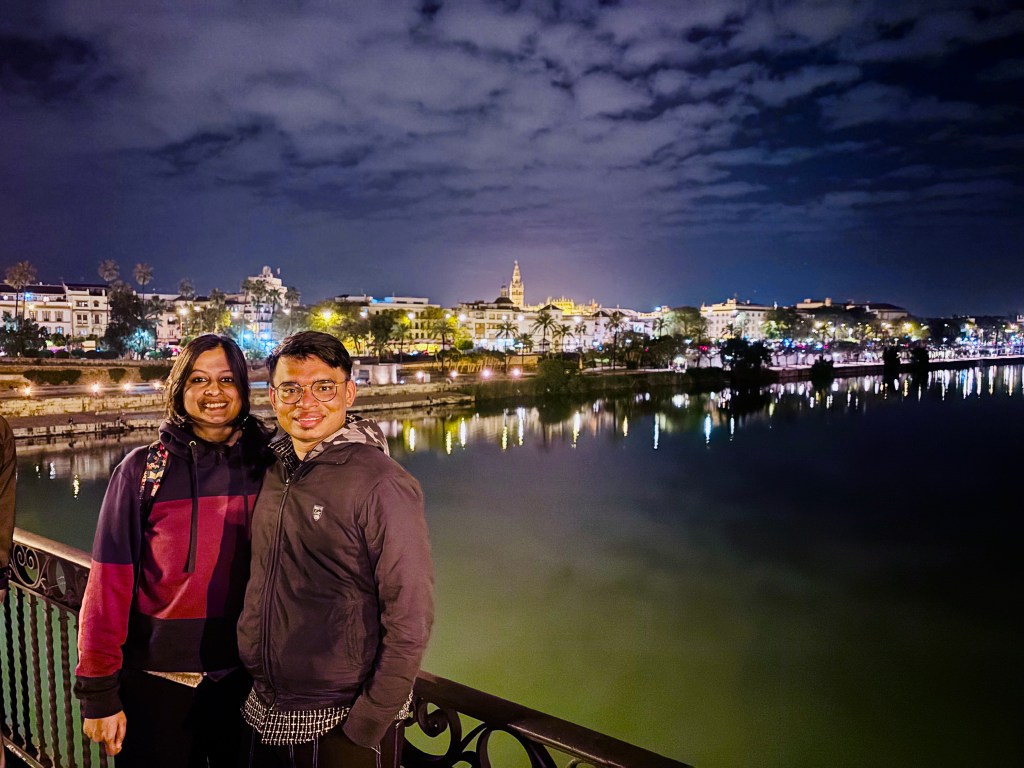
After the show, we stepped back into the cool night air, still buzzing from the energy. We took a quiet stroll through the city, crossing a bridge where the river reflected the golden lights of Seville’s skyline. The historic towers and modern buildings shimmered together in the water, a perfect backdrop to end the day. Standing there, with the city glowing behind us, we felt both exhilarated and at peace.
Finally, we headed back to our apartment to rest—our early morning train to Madrid awaited, but Seville had already left its mark on us.
Must-Visit Places in Seville
If you ever find yourself in Seville, here are some incredible spots to explore:
- Alcázar of Seville: Wander through royal gardens and palaces.
- Seville Cathedral: Marvel at the largest Gothic cathedral in the world.
- Plaza de España: Take in the grandeur of this magnificent plaza.
- Metropol Parasol: Experience modern architecture and great views.
- Barrio Santa Cruz: Get lost in the charming old quarter.
- Torre del Oro: Visit this historic watchtower by the river.
- Flamenco Dance Museum: Immerse yourself in the passion of flamenco.
- Maria Luisa Park: Relax in this beautiful public park.
 From Office Blues to Worldly Views