You don't ease into Tokyo. You land, you blink, and you're already in love. Over seven days — across two stints split by the rest of Japan — this city handed us bullet-train mornings, neon-soaked nights, a near-religious view of Mt. Fuji, the best vegan ramen of our lives, the funniest convenience-store payment incident of our lives — the kind of story we still laugh about in our sleep, but can never quite do justice to in words — and the quiet revelation that a megacity can also be the most ordered place on earth. This is the full diary, from the Mario waving at us in arrivals to a matcha latte at Lawson that turned into an inside joke we'll be telling for years.
Day 1: 17th April
Mario, Ginza & the One-Drink Rule
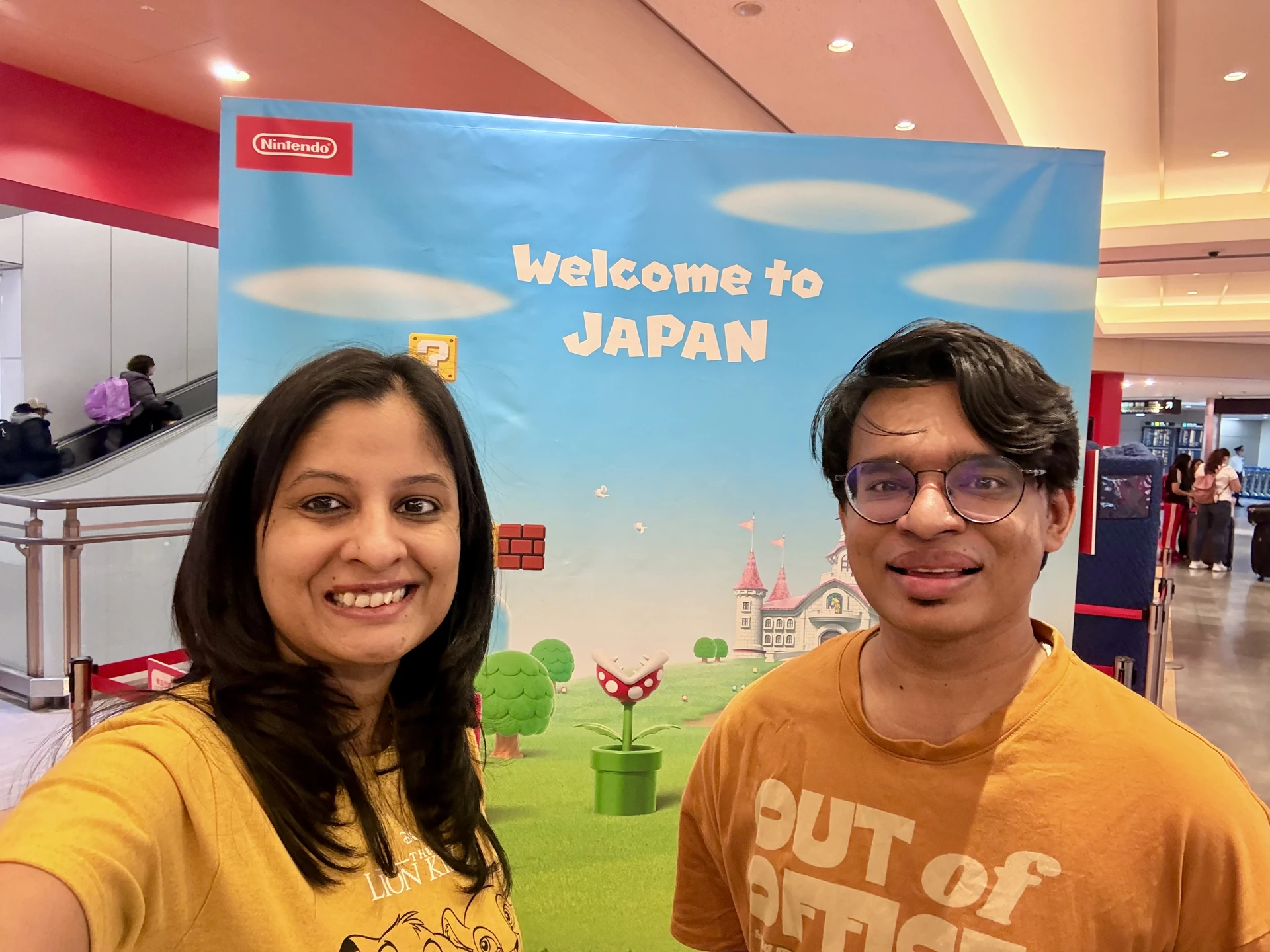
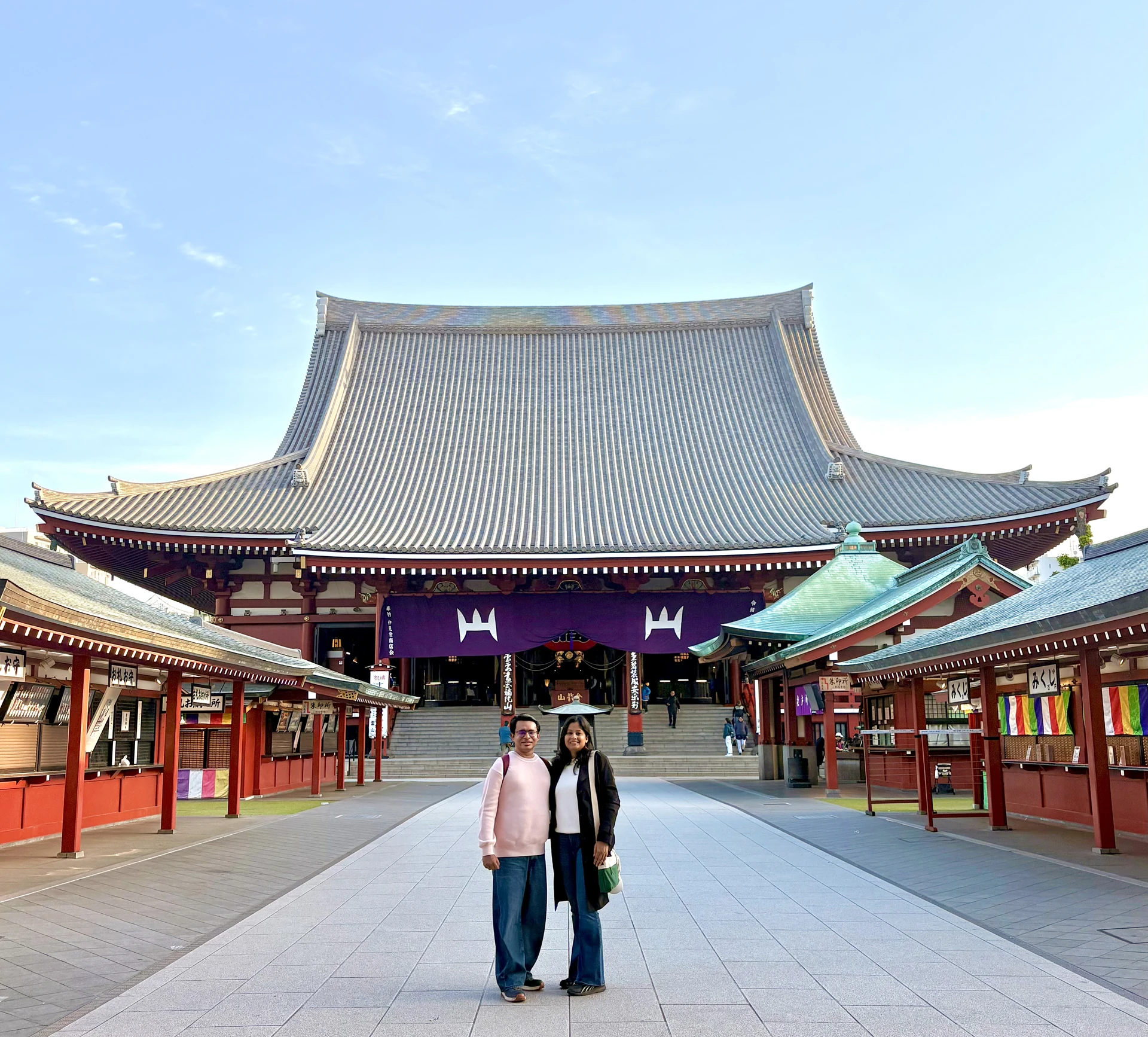
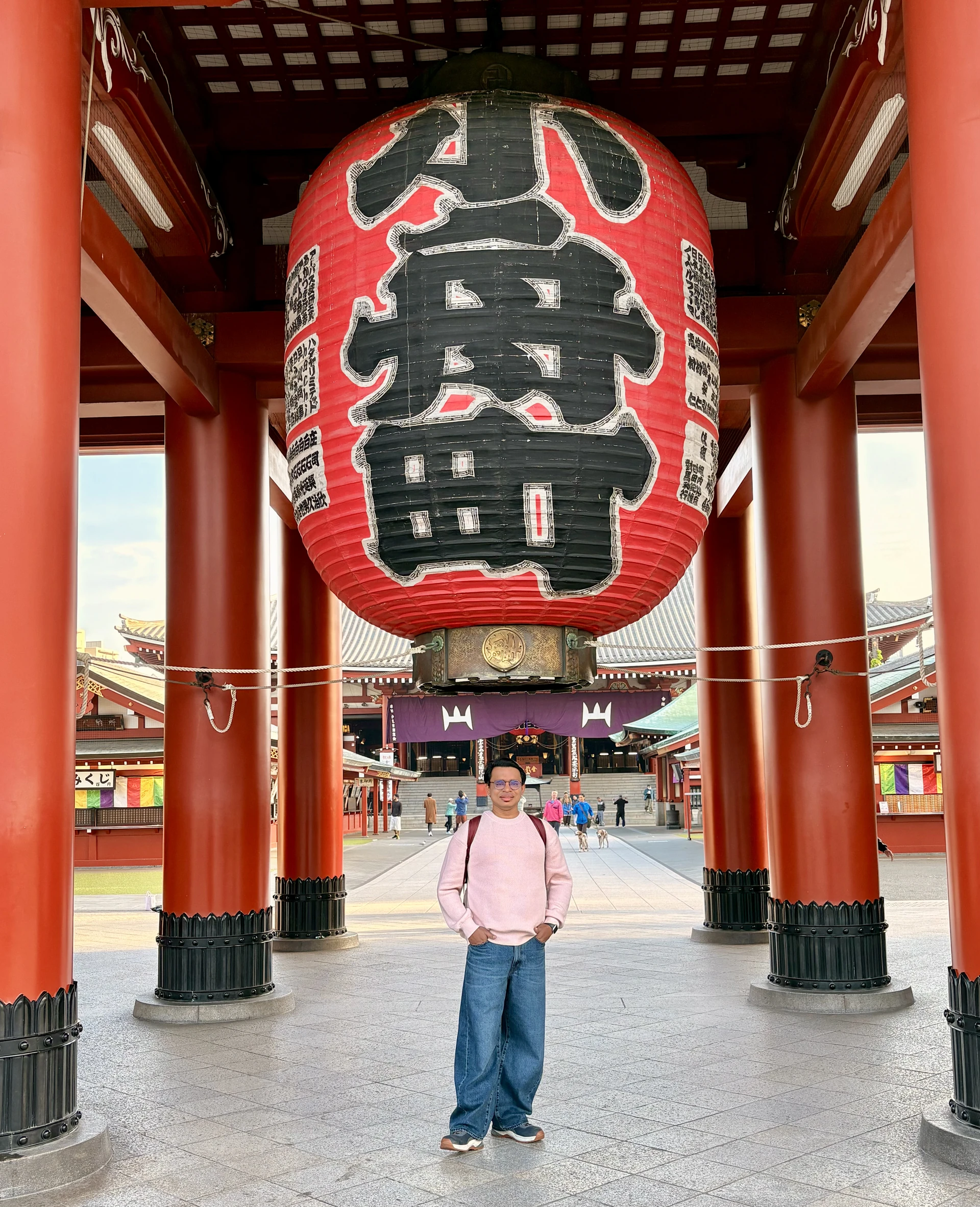
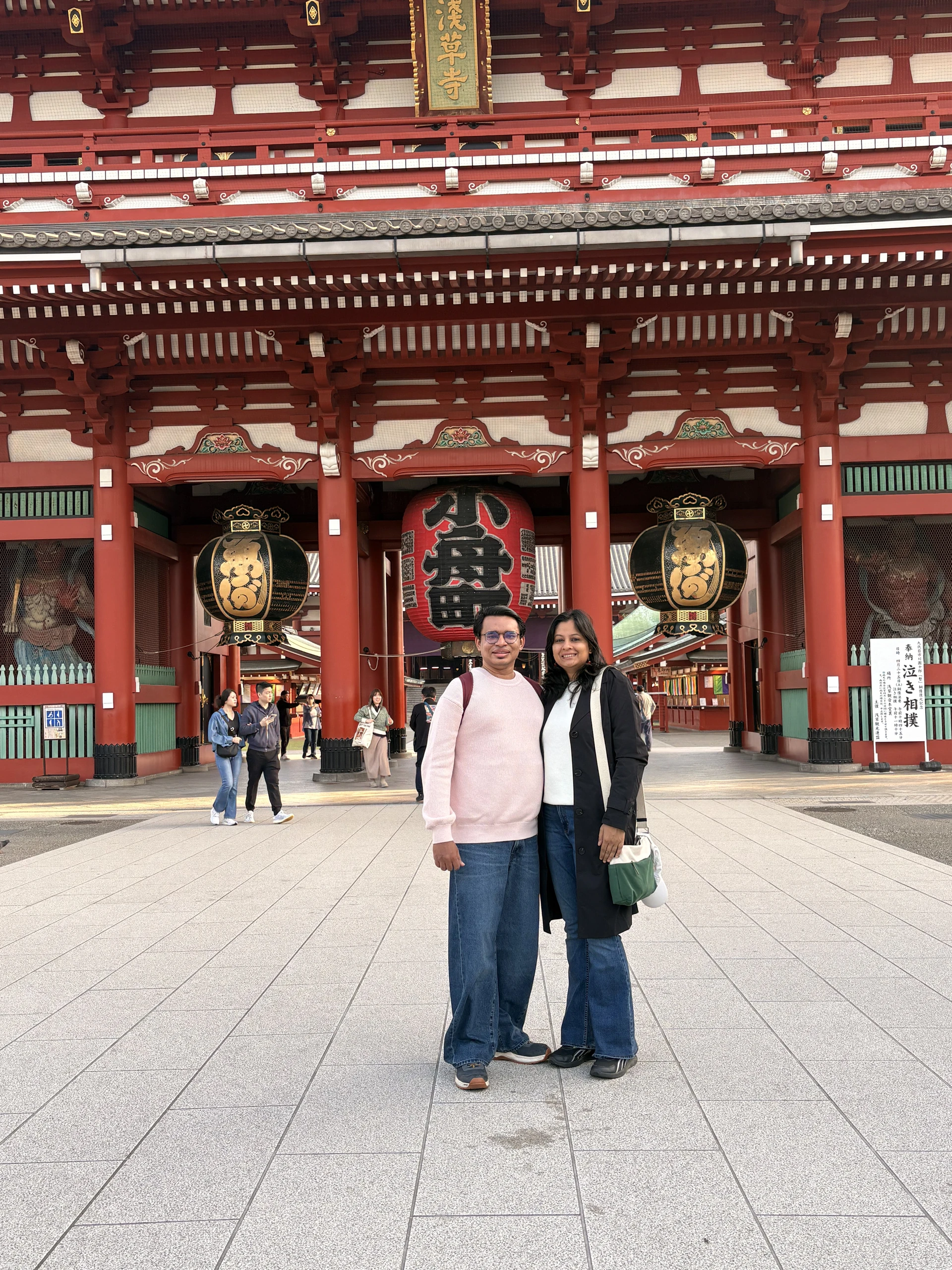
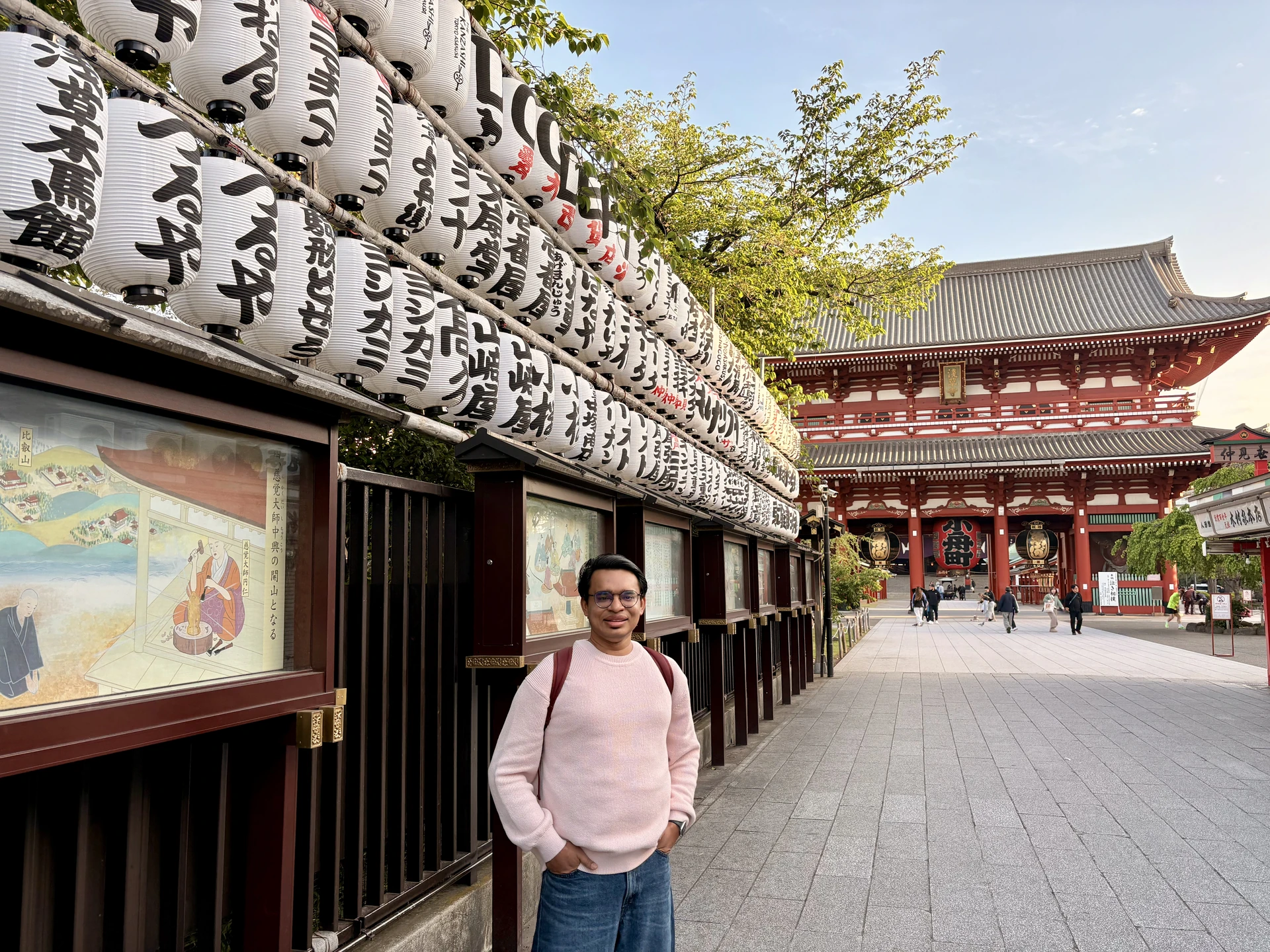
Tokyo introduces itself the way only Tokyo can — with cleanliness, order inside a crowd, an impossible skyline, and a giant Mario waving at us before we'd even cleared customs. After a small dance with route maps and our brand-new Suica cards, we made our way to Hostel Wasabi in Asakusa, and somewhere between the metro and the front door realised we were staying a stone's throw from Senso-ji — a happy accident we'd keep rediscovering all week.
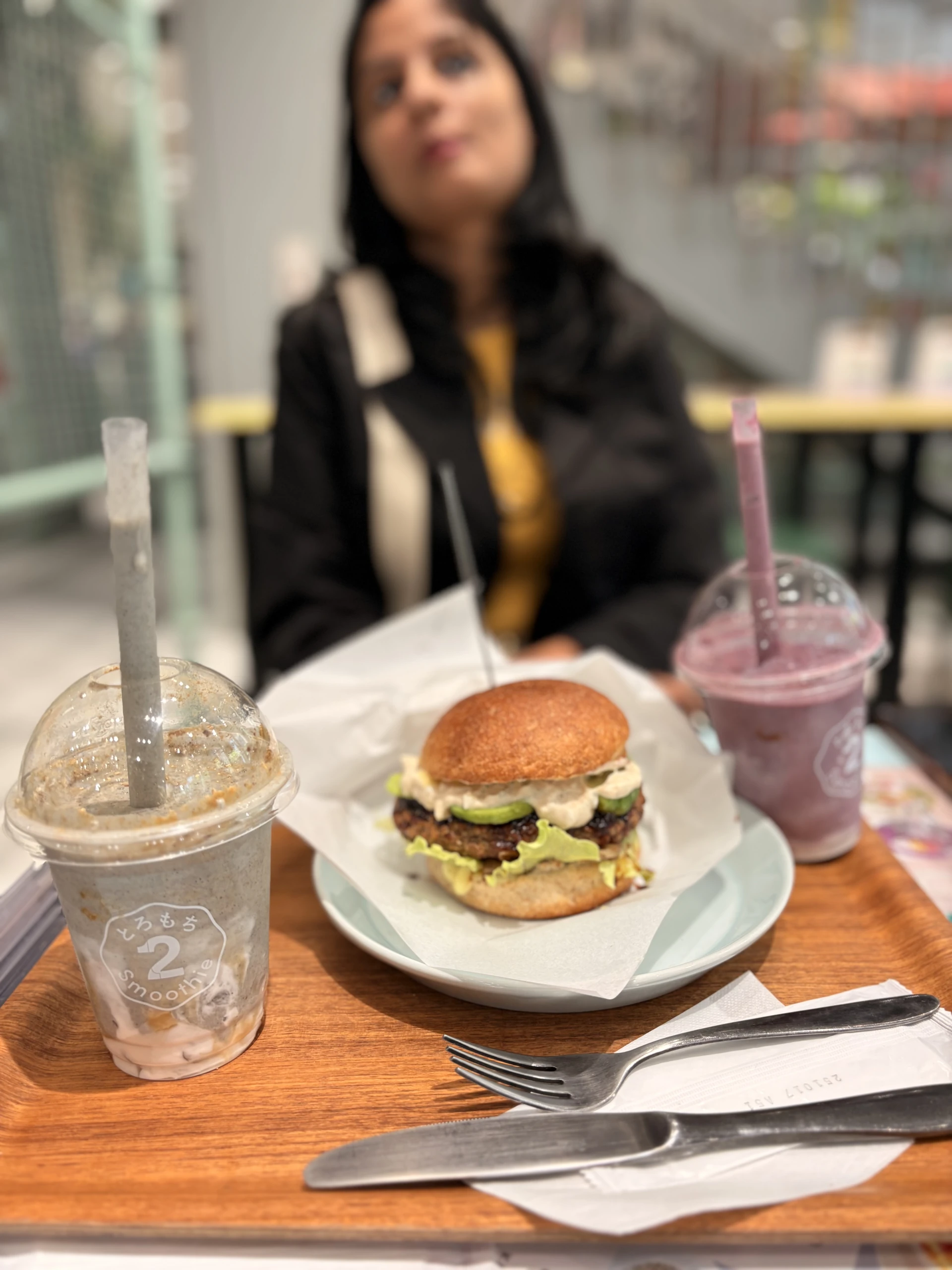
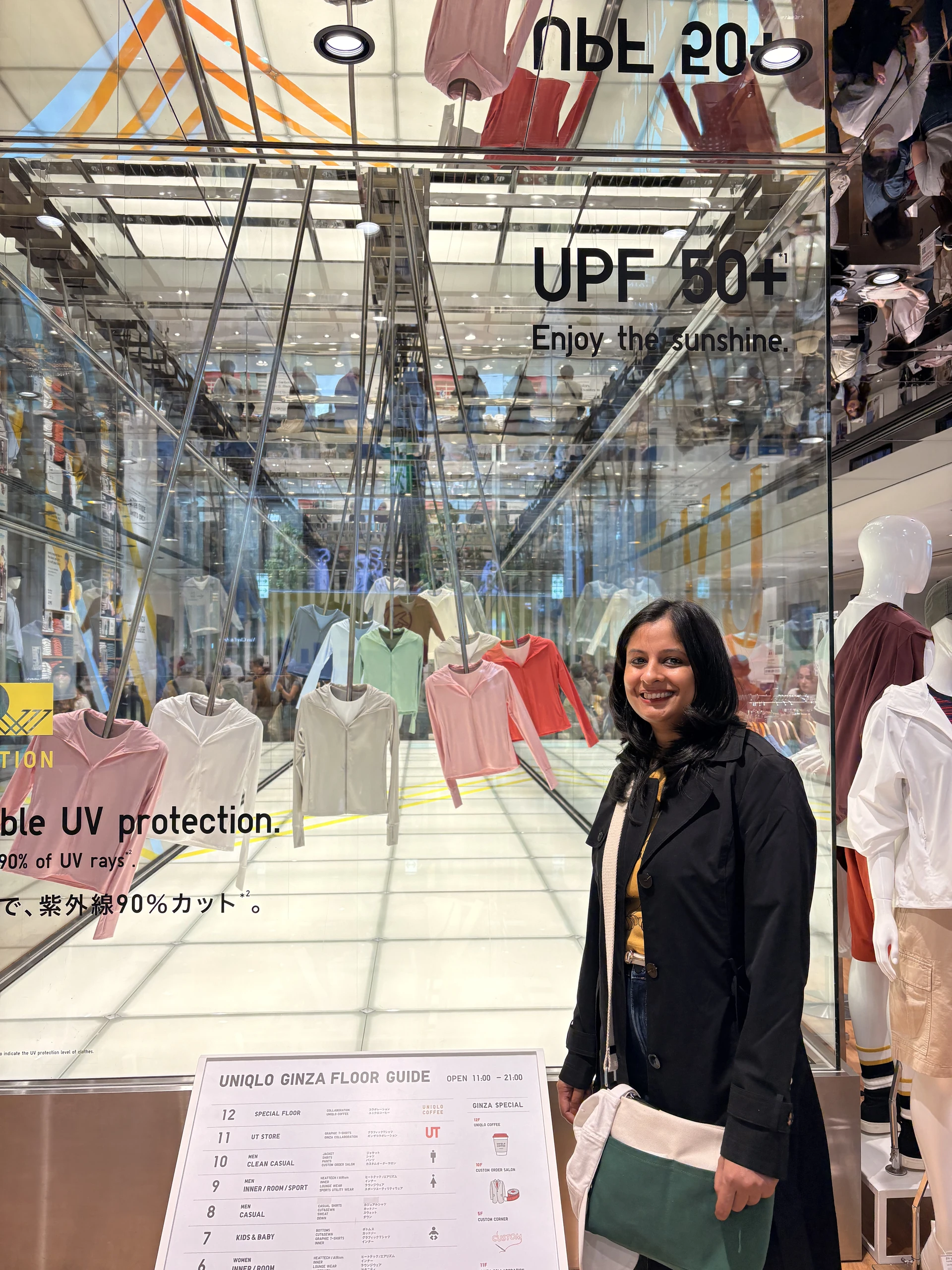
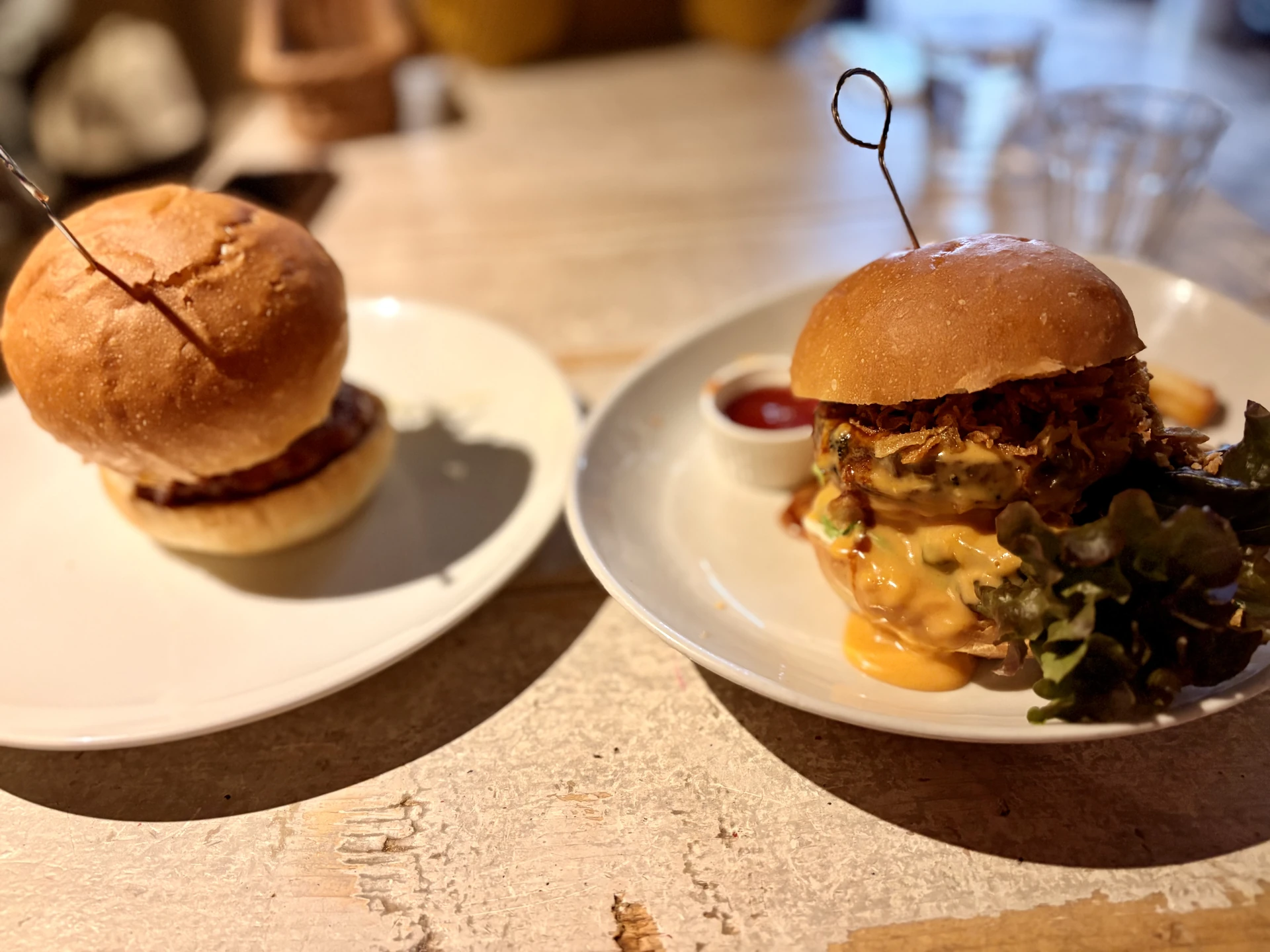
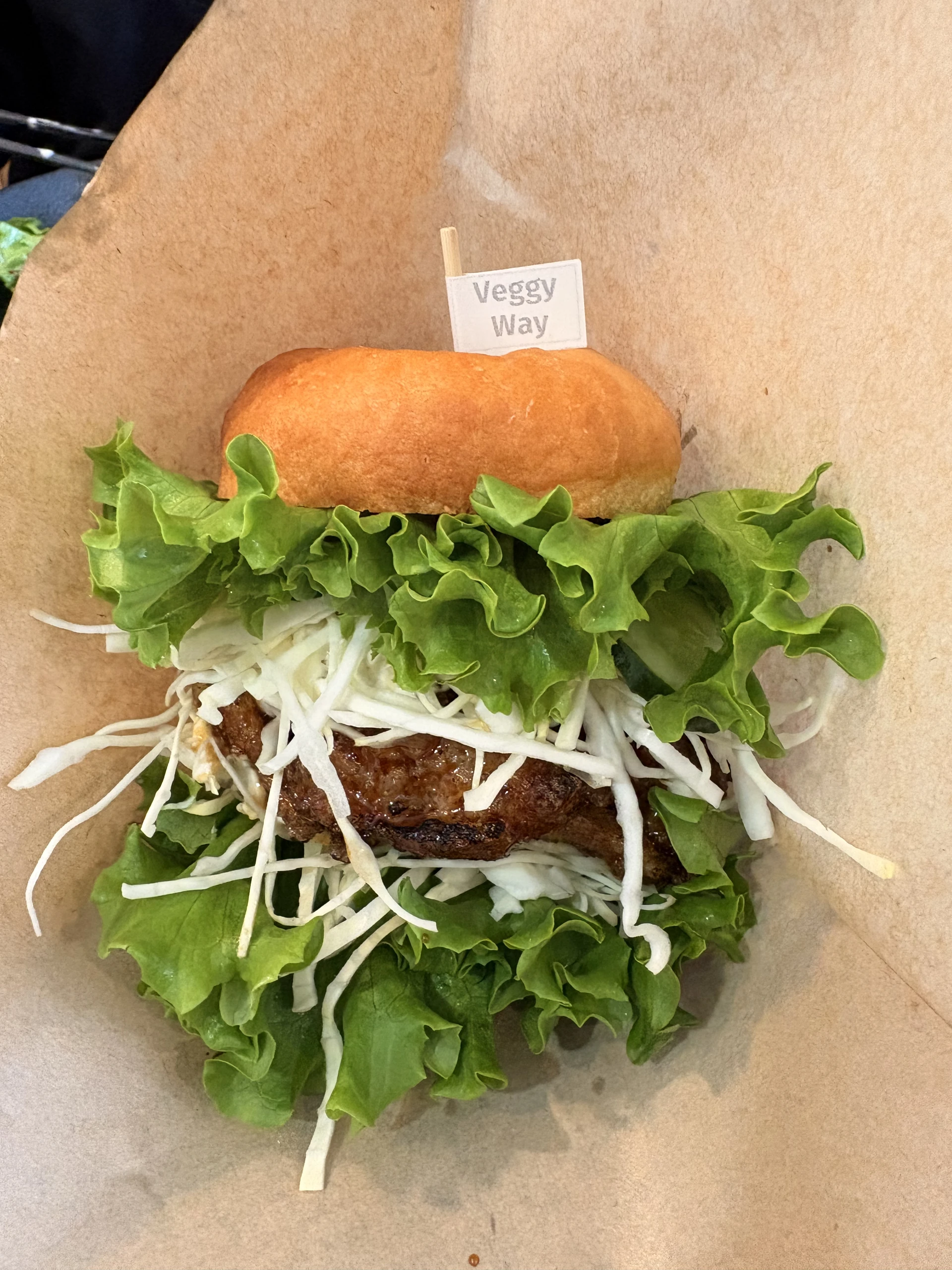
Check-in wasn't until 3pm. We briefly toyed with jumping straight onto the Gotemba Premium Outlets for shoes — three hundred brands at 2.5 hours from Tokyo, the kind of place where Nike, Onitsuka and Asics dreams come true — but it was already too late in the day. Plan B: clothes shopping in Ginza. Brand prices barely shift between Tokyo neighbourhoods, so the flagship strip wins by default, and Uniqlo and GU sat firmly at the top of the list. We ate first, at a vegan café called 2foods, where we split a burger, a smoothie and a Coke, and then walked over to GU, picking up the On Shoes flagship as an unplanned addition to Harshit's mental list along the way. GU was full of clothes we wanted at prices we could actually justify. We promised ourselves Uniqlo too, but by the time we reached its hell-crowded entrance it was 4pm, our long-flight hangover had kicked in, and we surrendered. A taxi back to the hostel, a quick check-in, and out cold.
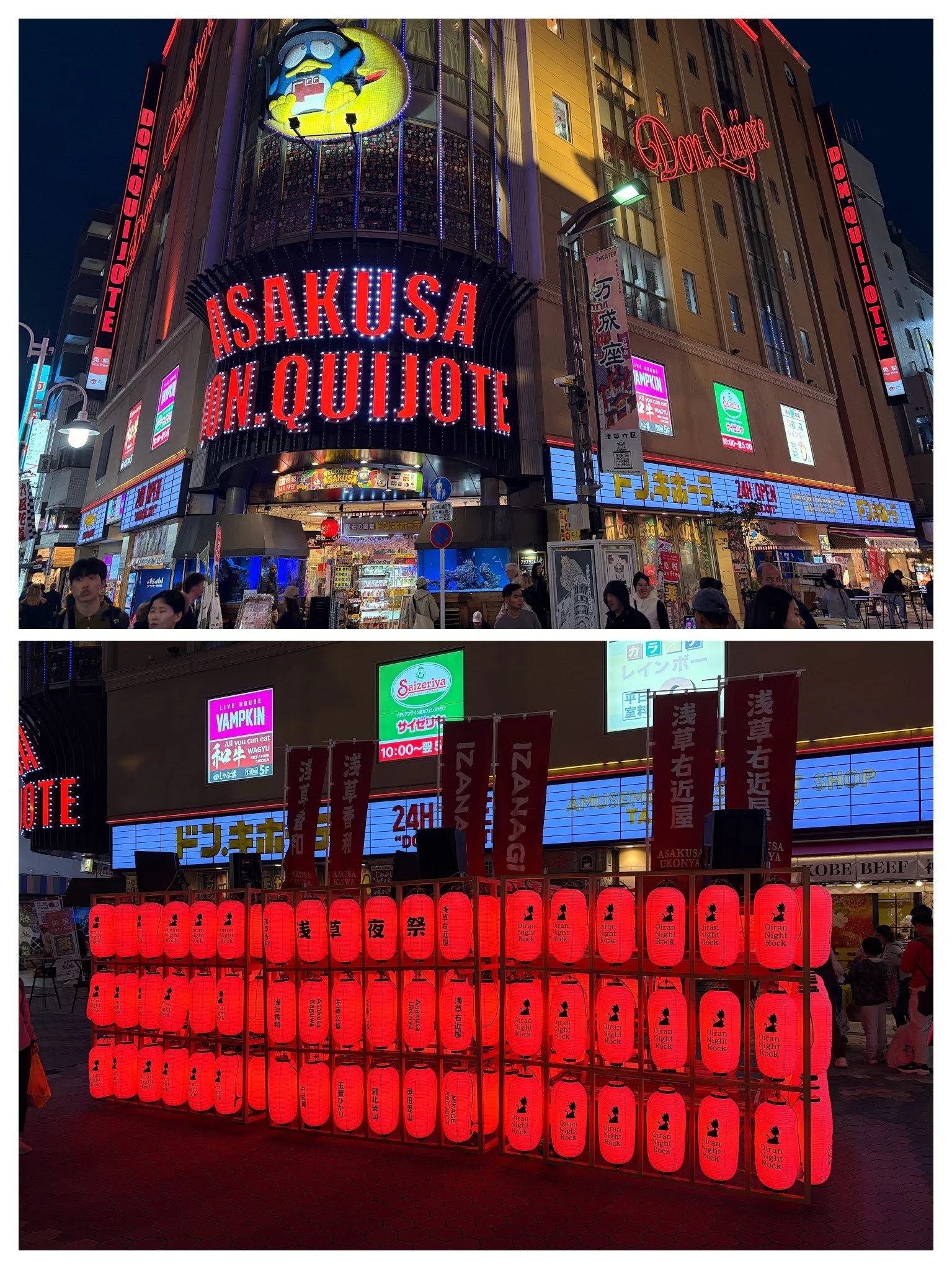
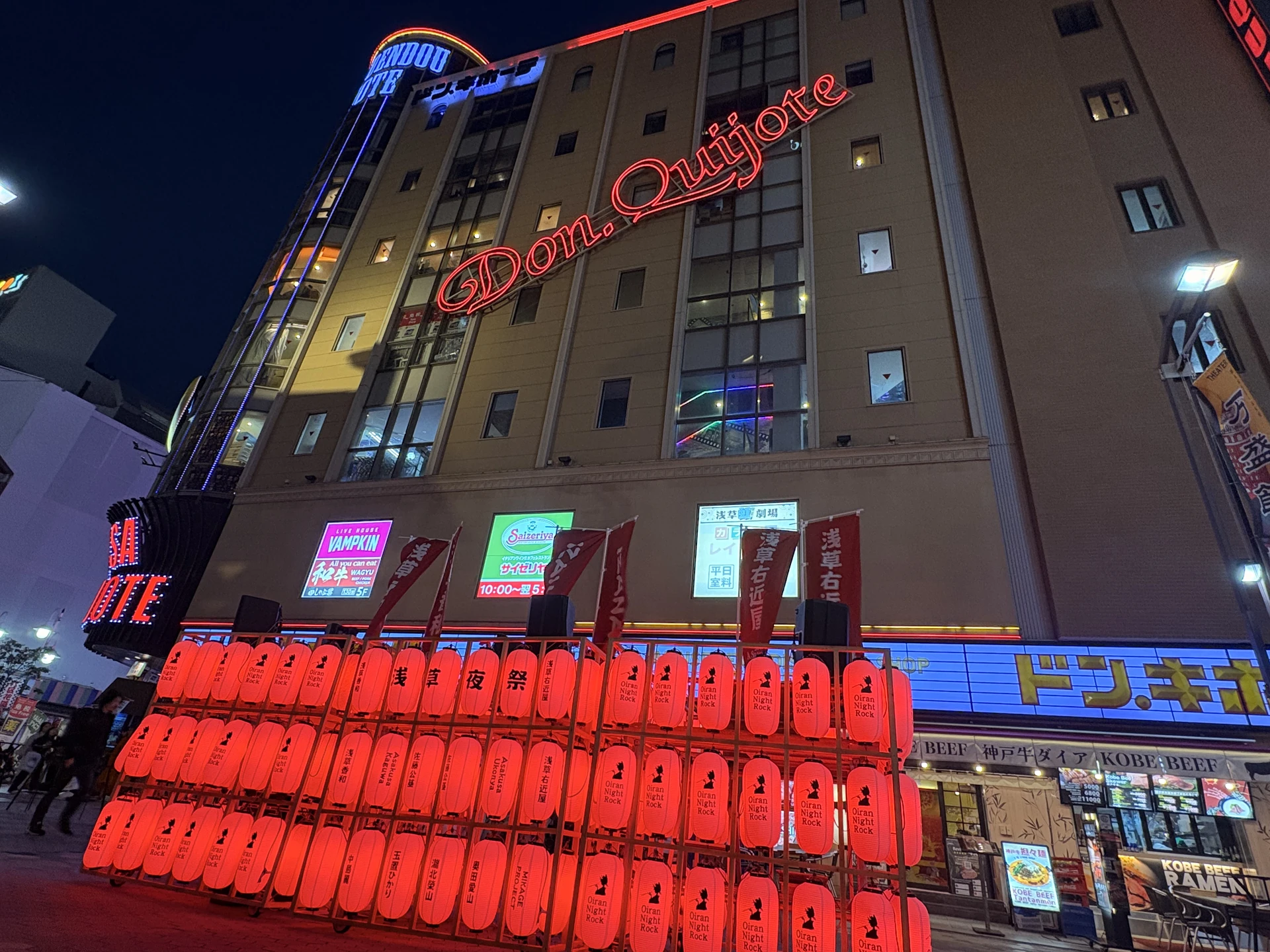
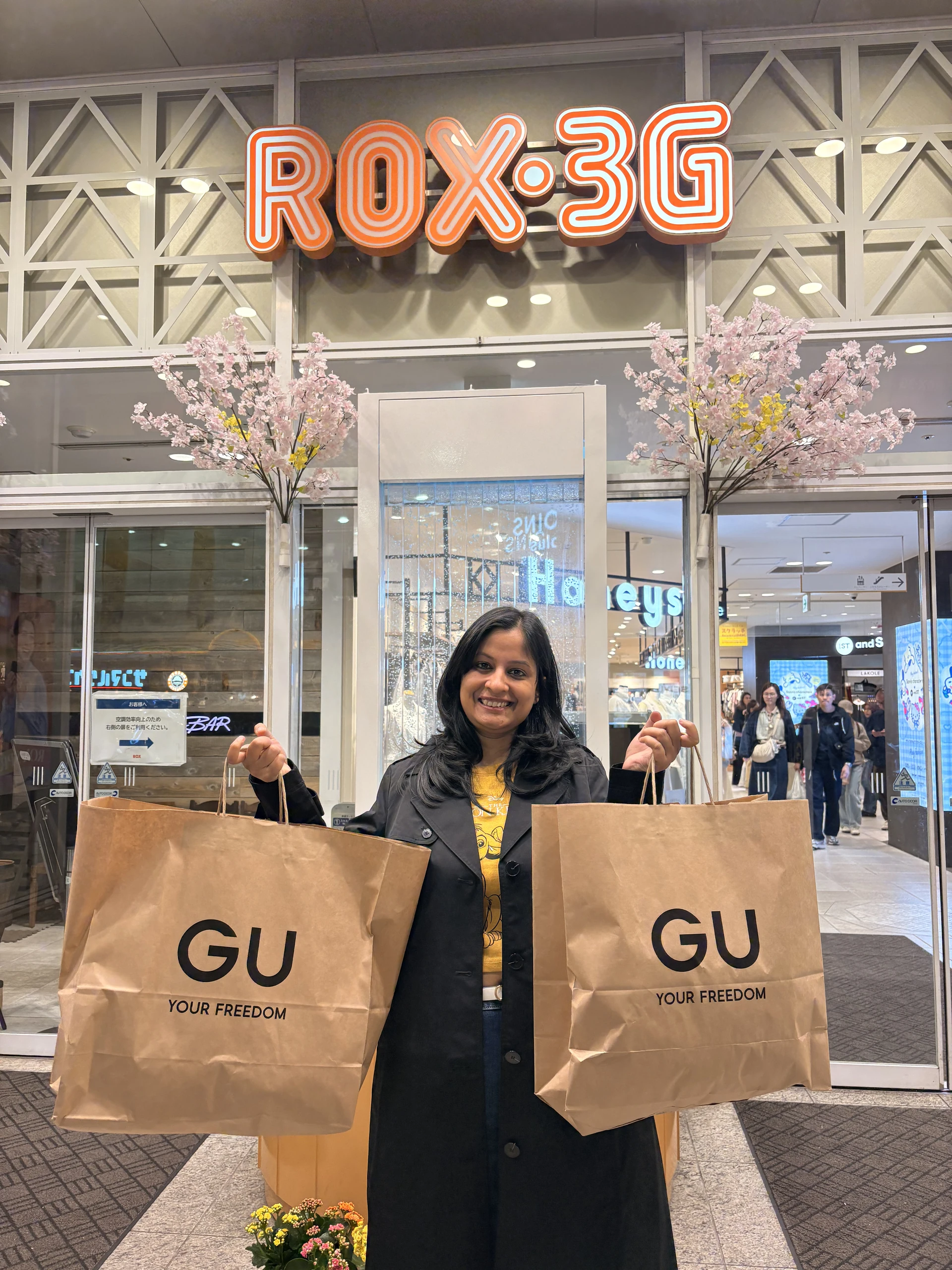
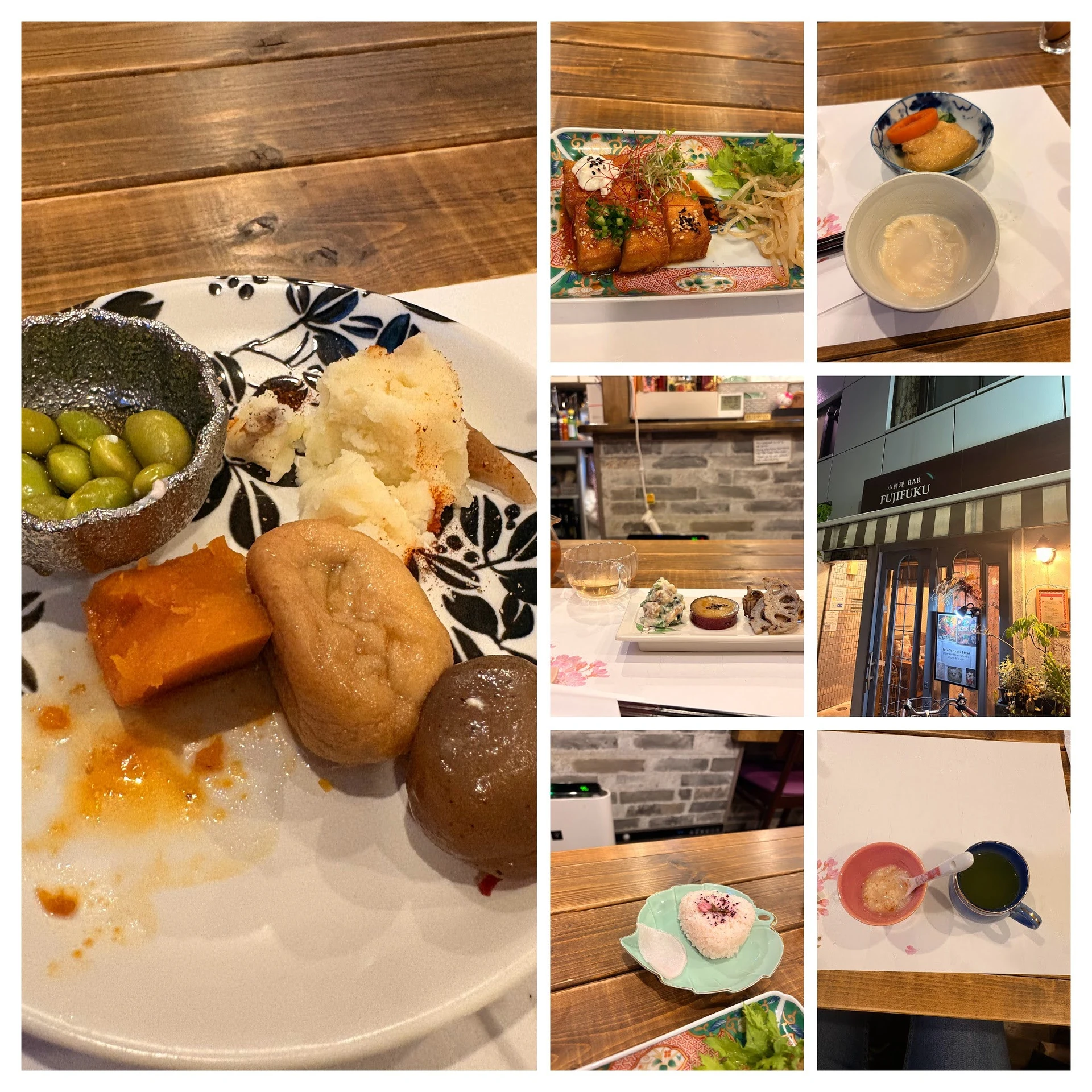
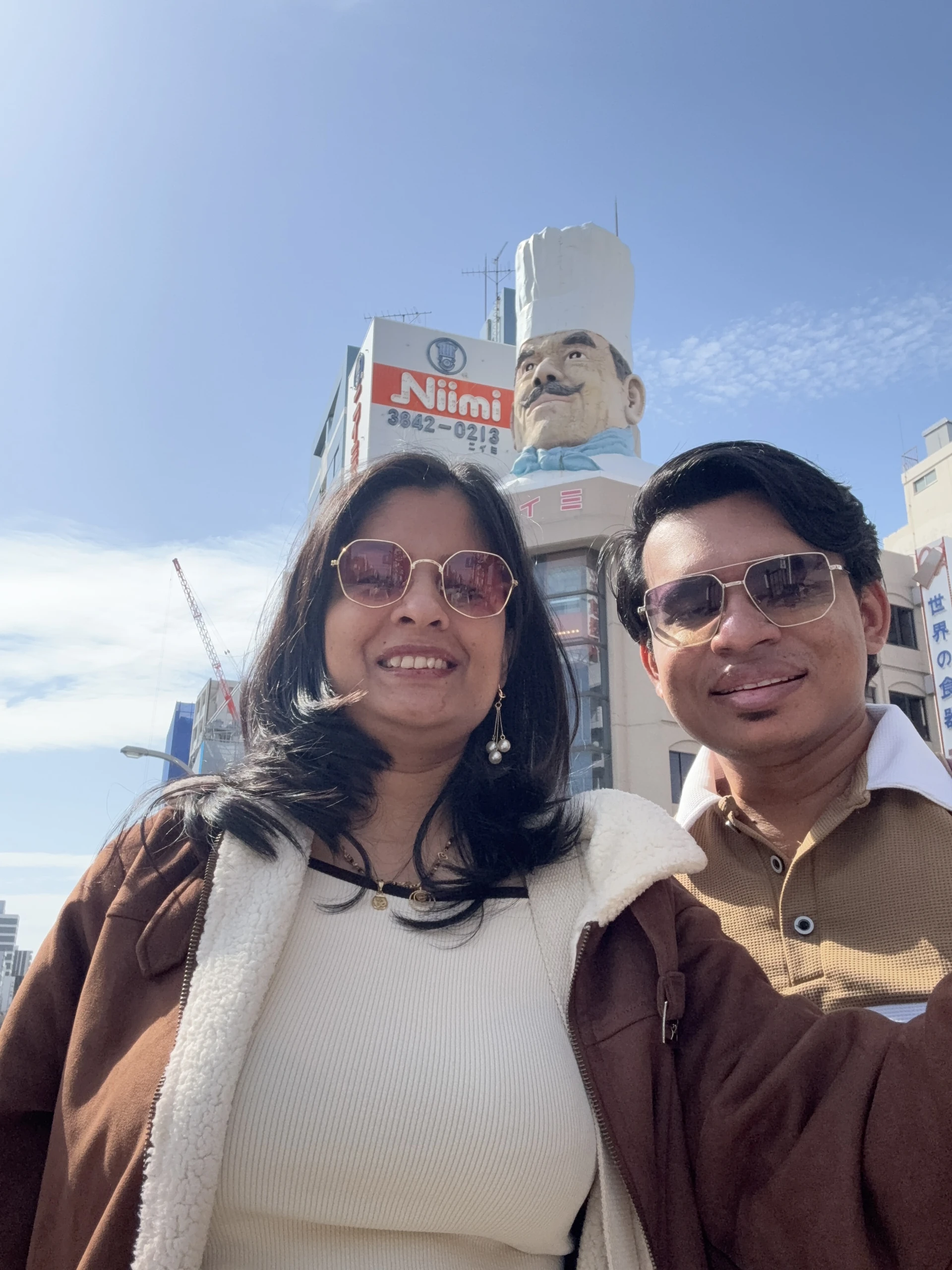
The hostel was exactly as promised: spotless. Harshit got the lower bunk, I got the upper. Two hours of nap and I wanted more — but I forced myself up and shook him awake too, because if we let the jet lag win at 6pm we'd be wide-eyed at 3am. We stepped back out into Asakusa and did one full loop of GU at Rox Mall — three solid hours of shopping in which we will, very deliberately, not be itemising the billing amounts 🙈. We strolled past the famous Donki without going in (it deserves its own day), and on the way back Harshit spotted a tiny vegan Japanese restaurant called Fujifuku.
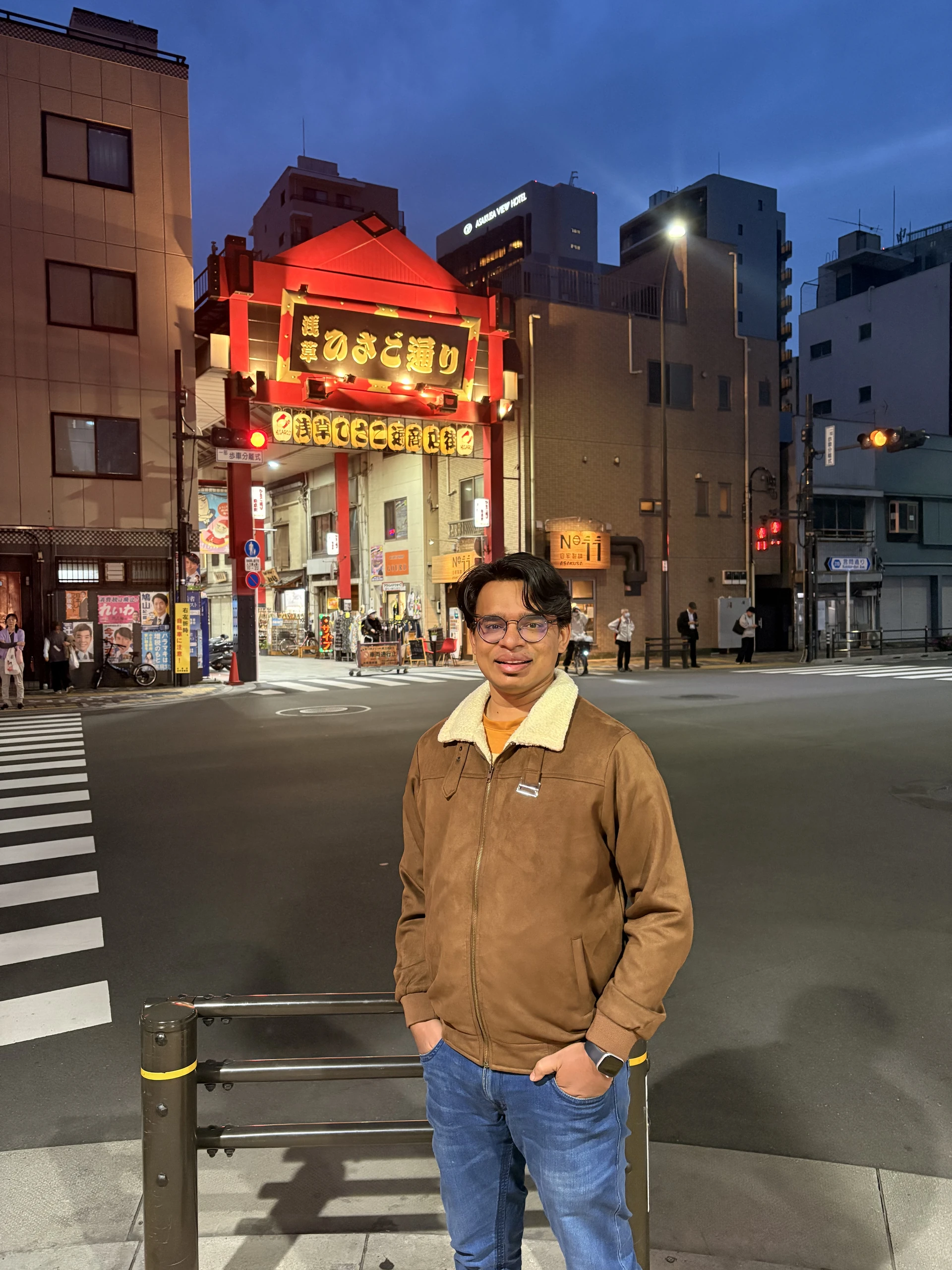
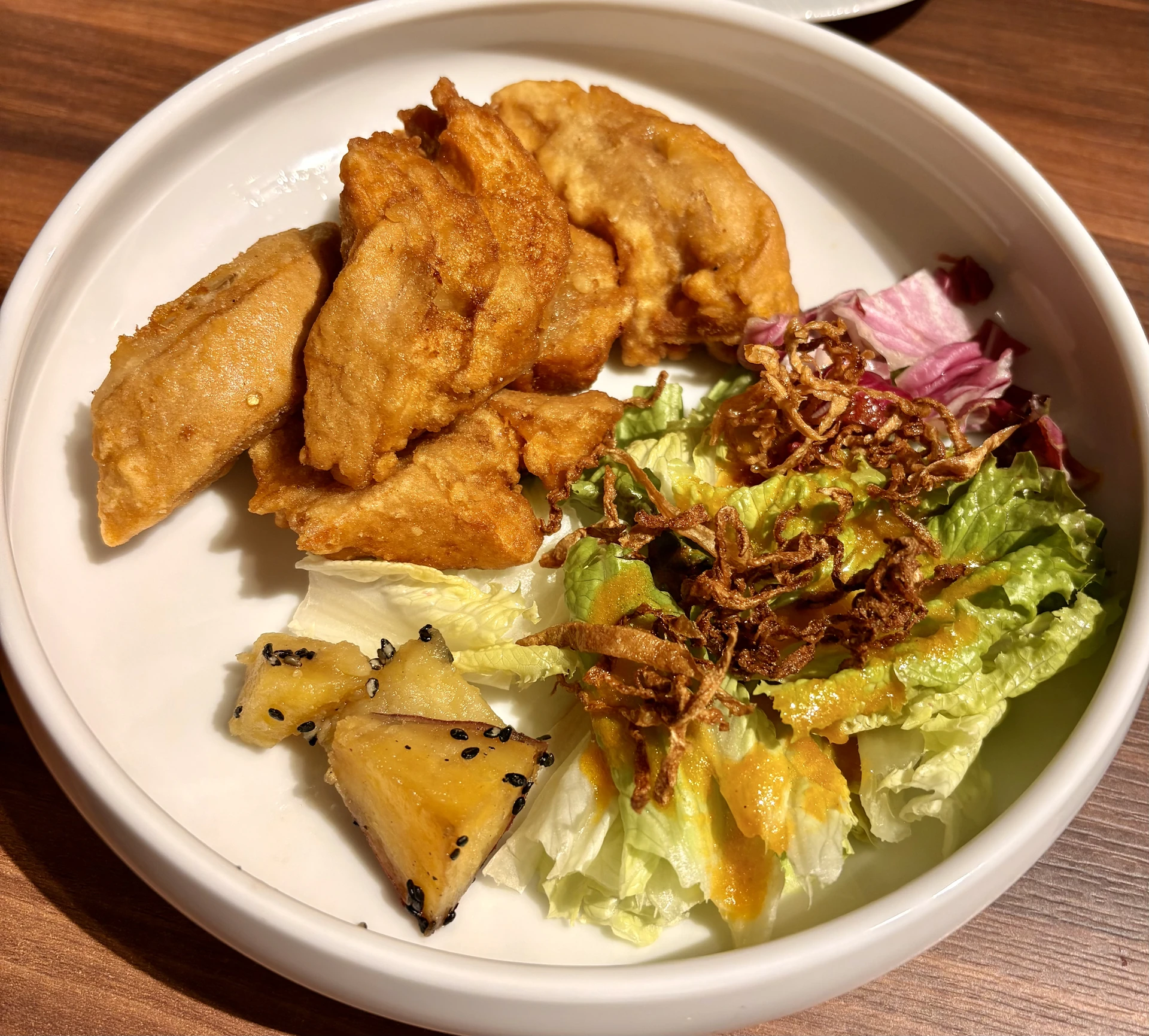
Fujifuku ran on a one-meal, one-drink-per-person rule — apparently common in Japan, but as Indians used to ordering for the whole table, it felt very odd at first 🙈. The restaurant is run by a single owner-chef who personally walks you through every dish in the set course, and by the end of it the oddness was gone and the meal had quietly become one of the warmest of the trip. Back at the hostel we opened our laptops and booked the Willer Bus to Mt. Fuji for the 19th — leaving from Shibuya, with Harshit having done the visibility research the way only Harshit does. The 18th would be Asakusa and Kappabashi Street. Plans set, alarms set, bunks claimed. We slept like babies.
Snapshots from Day 1
Day 2: 18th April
Kappabashi & the Akihabara Vortex
Sweet wind, mild sun — the kind of Tokyo morning that asks you to slow down. We sorted outfits for today and tomorrow in one go because the bunk room was tight, late-night wardrobe negotiations were impossible 😬, and tomorrow was Mt. Fuji — the highlight of highlights, deserving its own clothes. On this trip I'd already decided: no rushing. Sleep properly, wander properly. We were ready by noon — and only by noon.
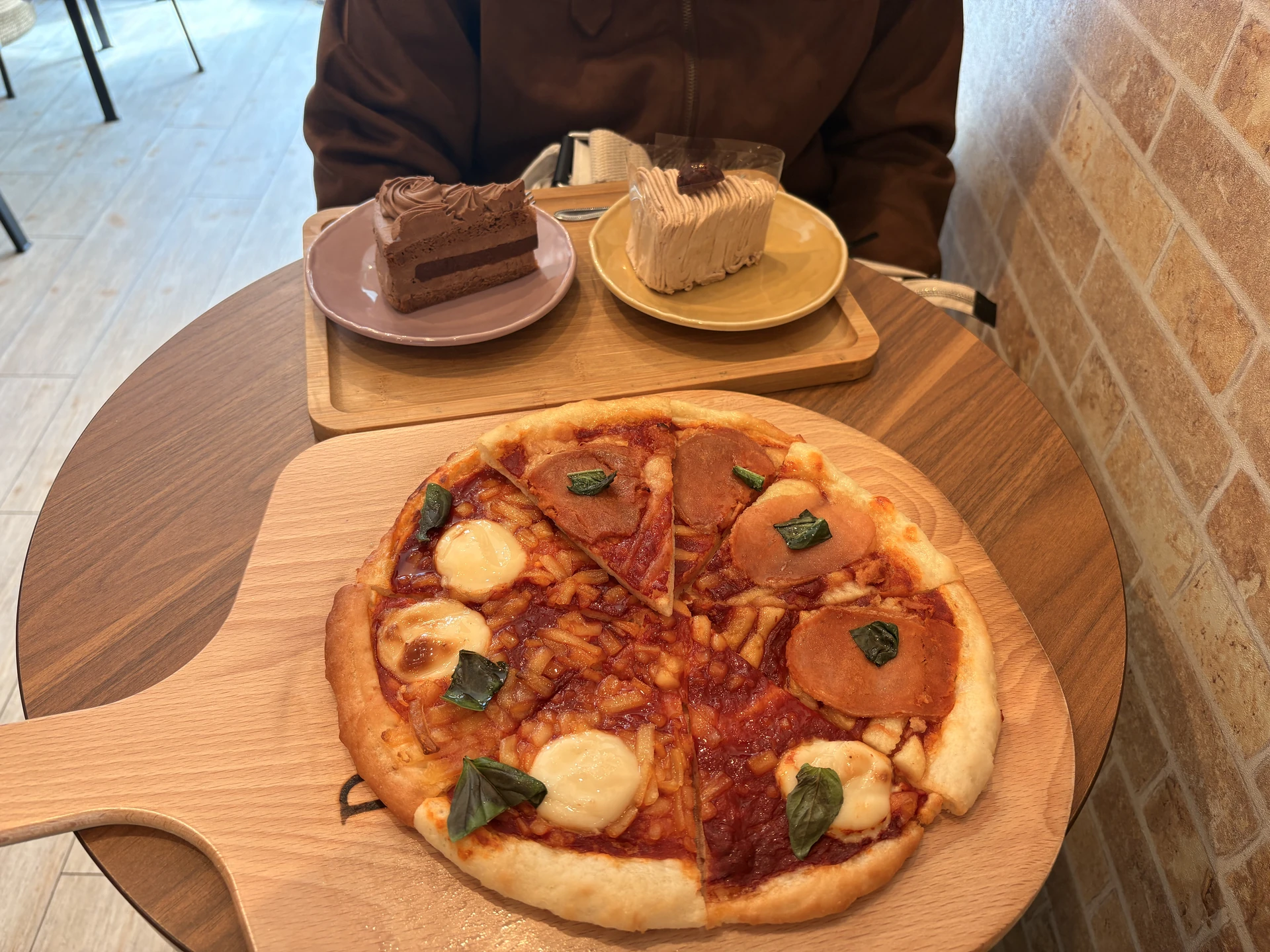
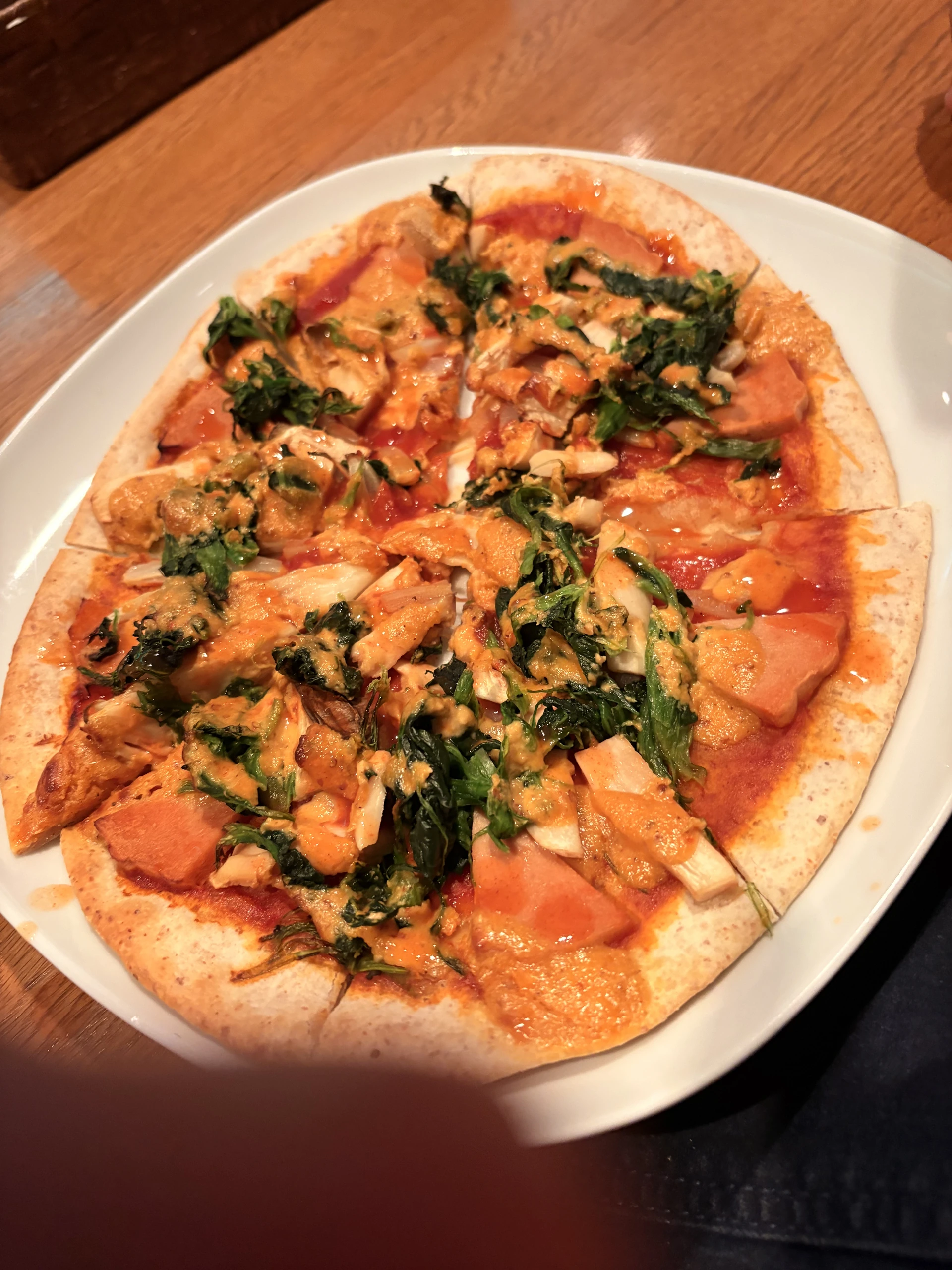
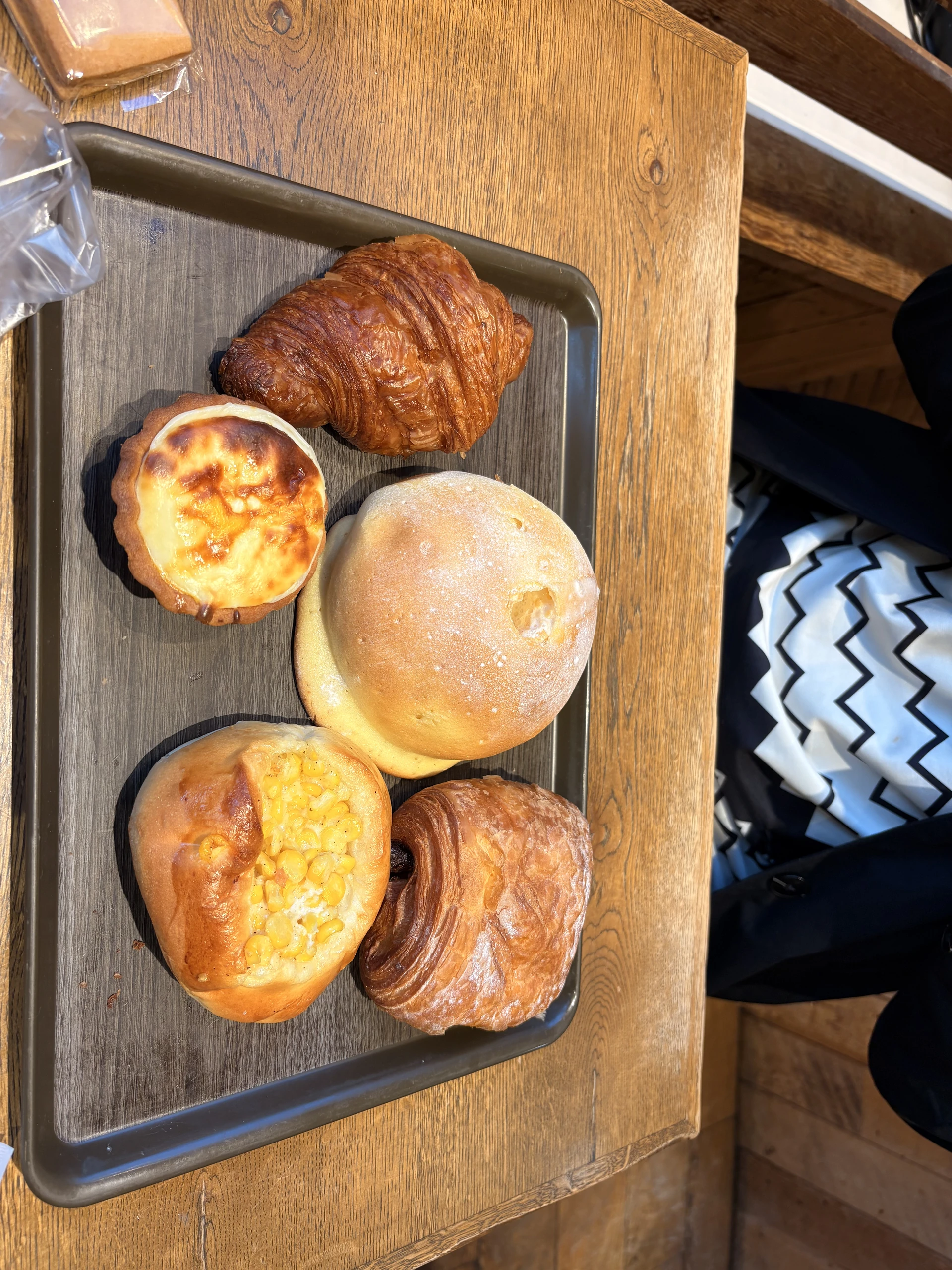
Harshit had found a nearby vegan café for pizza and pastries to start the day, and from there we drifted into Kappabashi, the kitchen street. If you live for ceramics and Japanese knives, it is heaven; for me it was a thirty-minute walk-through where the craftsmanship was undeniable but the prices were not gentle on a traveller's wallet, and we walked out empty-handed.
By 2pm we were in Akihabara. The local hubs, I'd told Harshit, were BIC Camera and Yodobashi — we'd check BIC first, Yodobashi second. Reader, you need days for those two stores. We walked into BIC at 3pm and walked out at 7pm, with Harshit gently complaining the whole way down that I hadn't let him stroll properly and had vetoed half the things he wanted to take home. Eight to twelve floors of electronics, toys, video games, watches, and entire categories of object we didn't know existed. Wallets lighter, hearts heavier. Second round of shopping done.
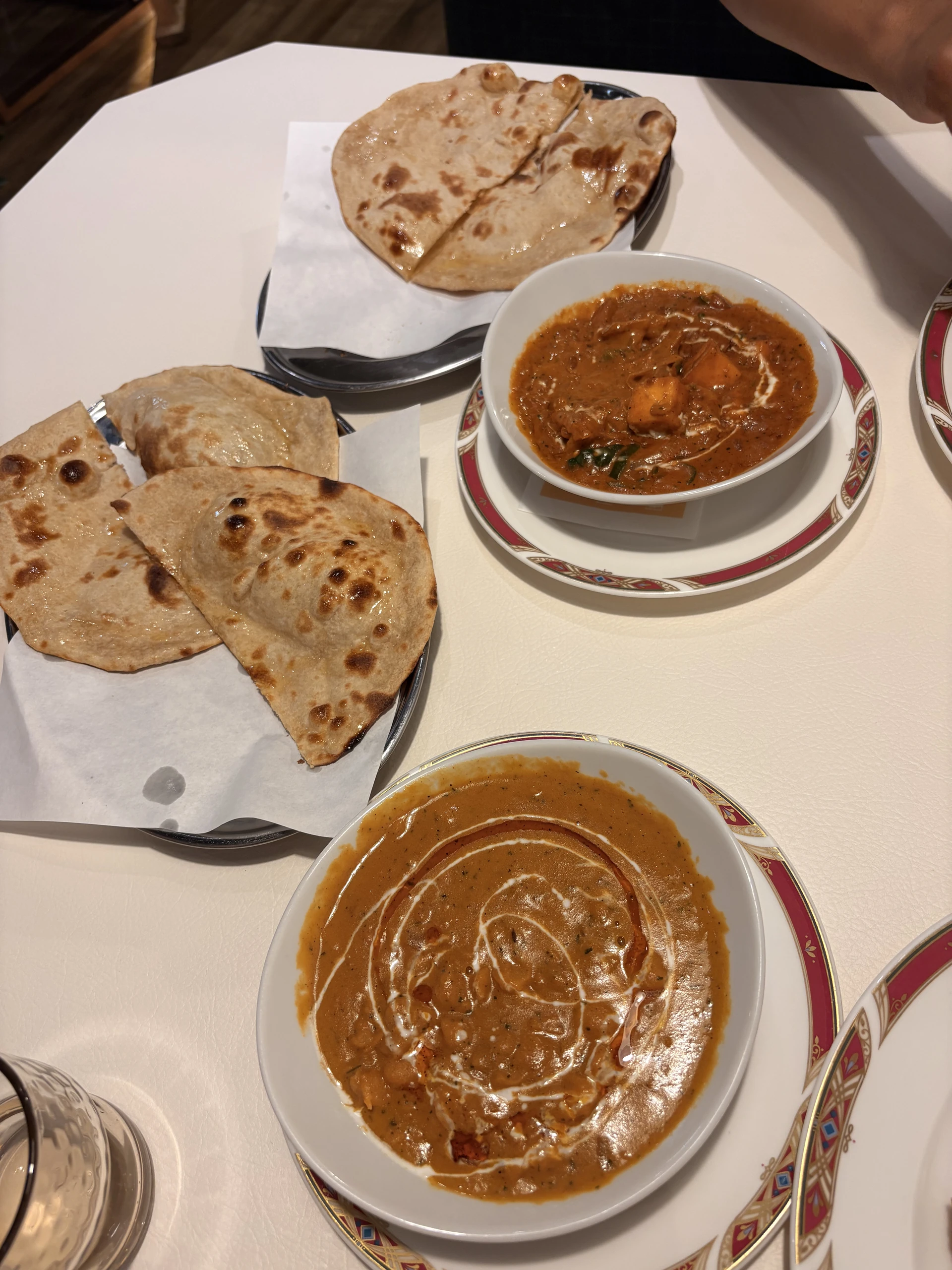
Tired and hungry, we hunted for vegan food in the area and the only viable option turned out to be an Indian restaurant inside Yodobashi. Mid-thali, I made an executive decision: Harshit does not get to re-enter Yodobashi. After BIC, I knew he would buy every single electronic item in that building. Akihabara at night is lit — every Tokyo neighbourhood has its own story, and this one shouts it. Early bus tomorrow. Back to the hostel.
Snapshots from Day 2
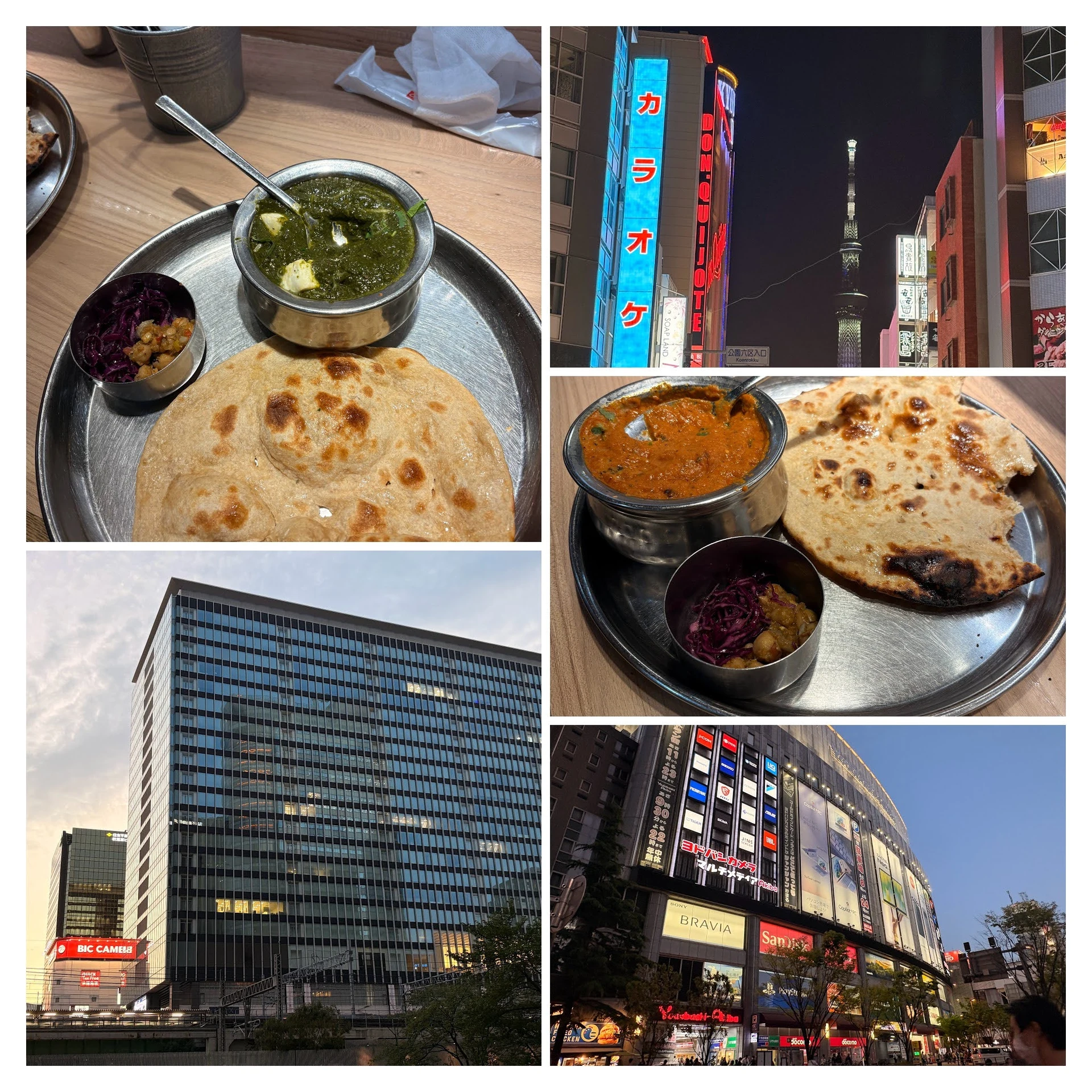
Every area in Tokyo tells a different story. Asakusa whispers of old temples and street snacks. Akihabara screams in neon. Shibuya crosses every culture at once. And somehow the city holds it all together in perfect, ordered coexistence.
Day 3: 19th April
The Mt. Fuji Day
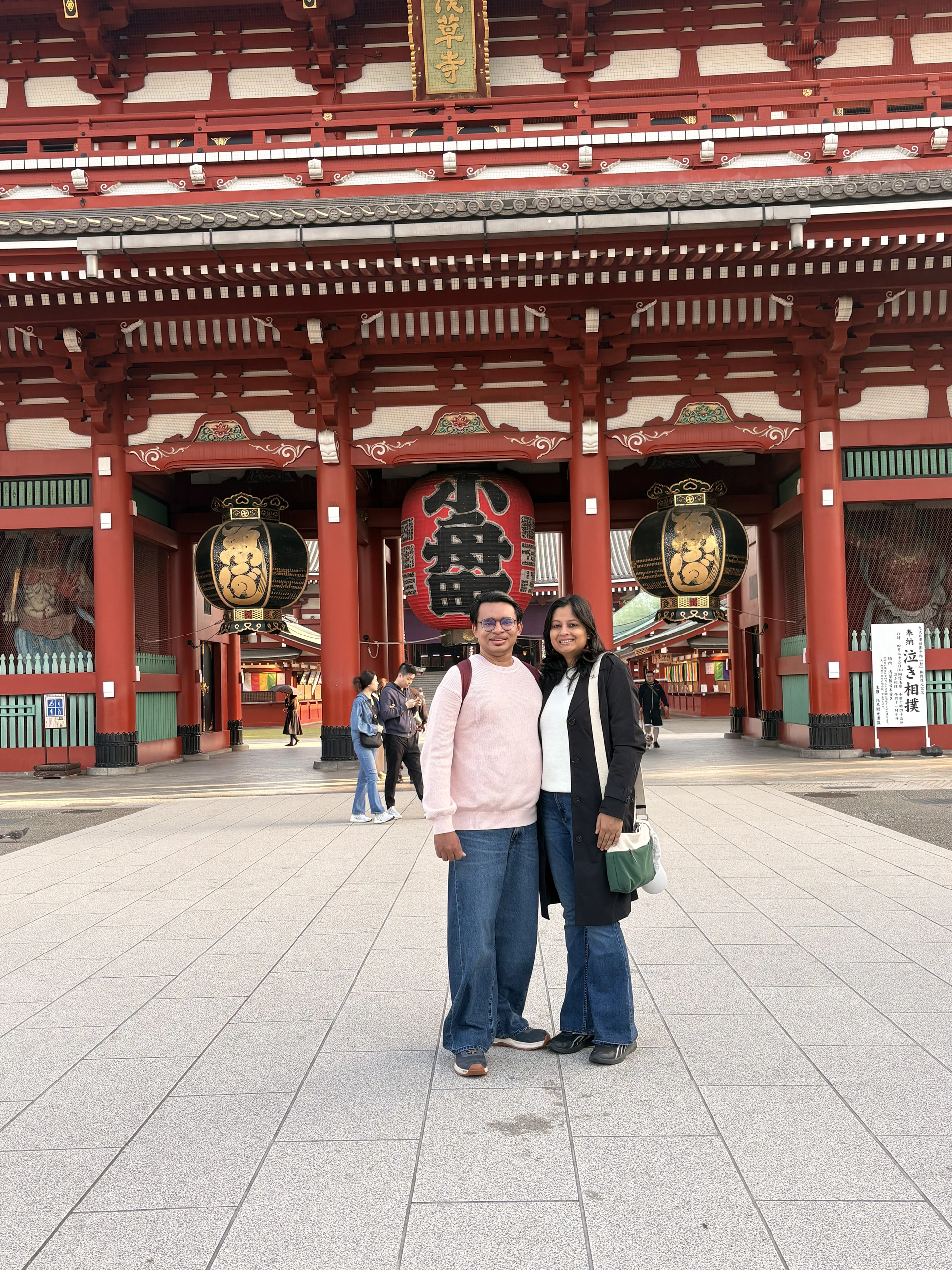
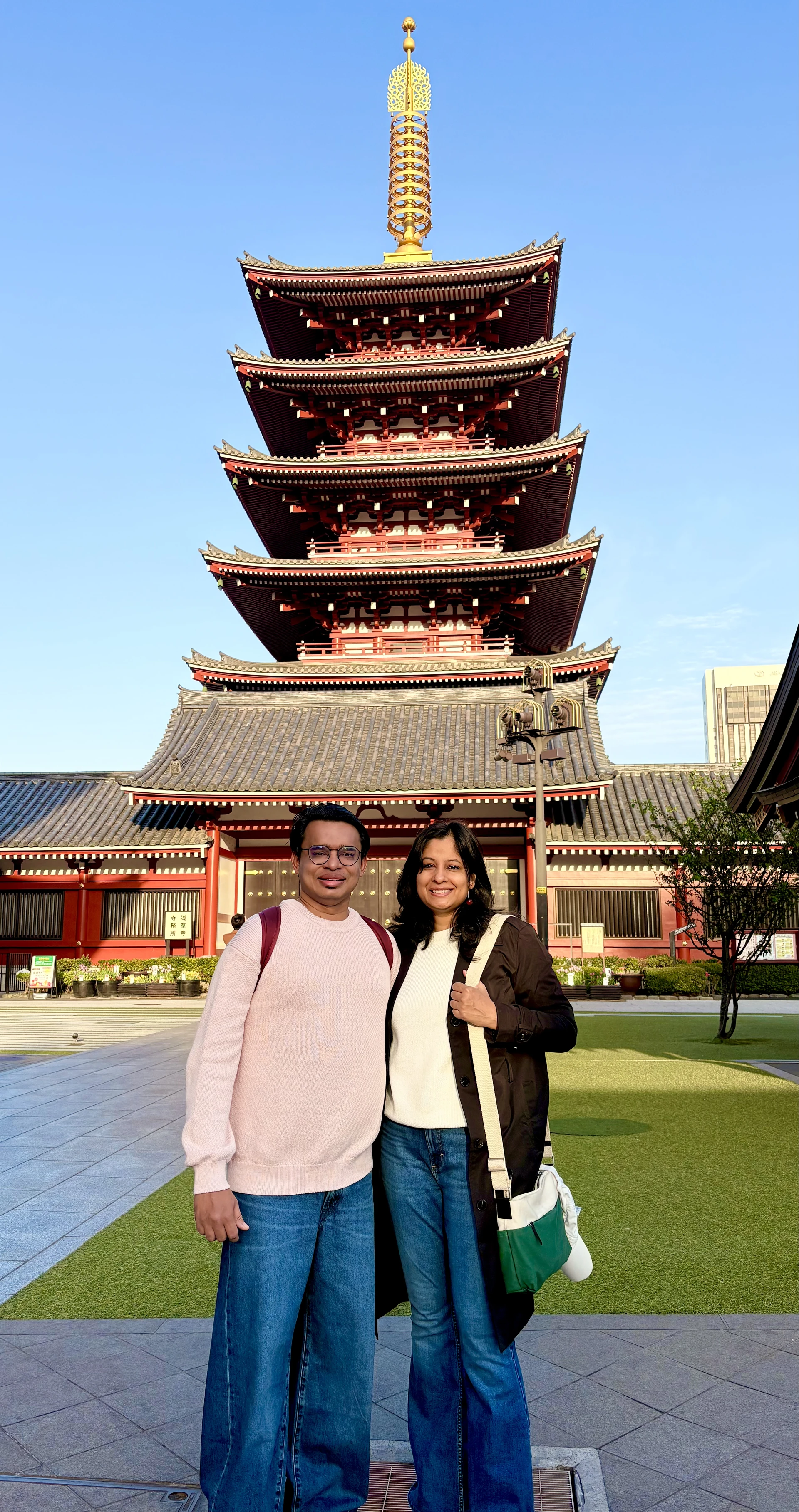
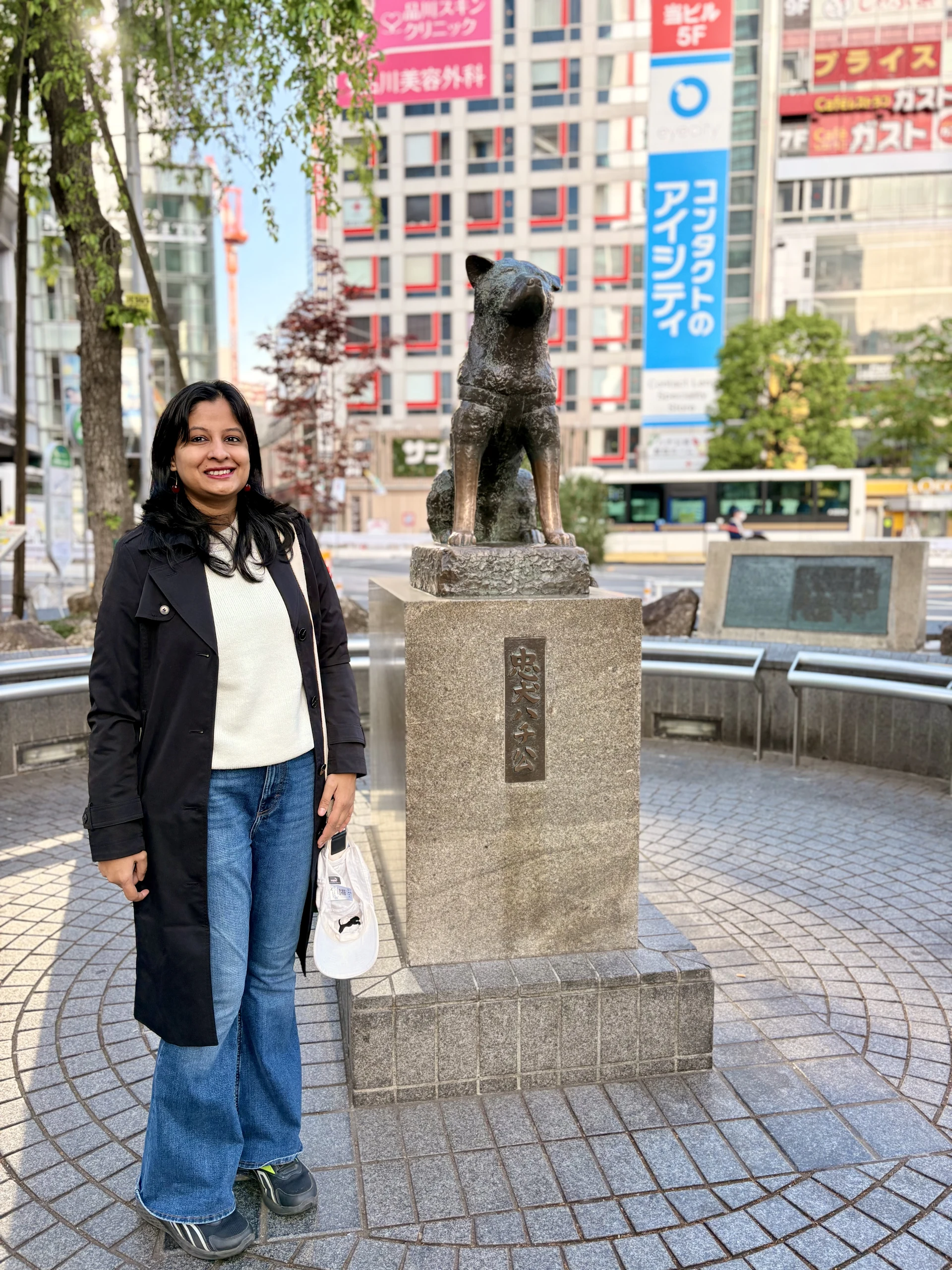
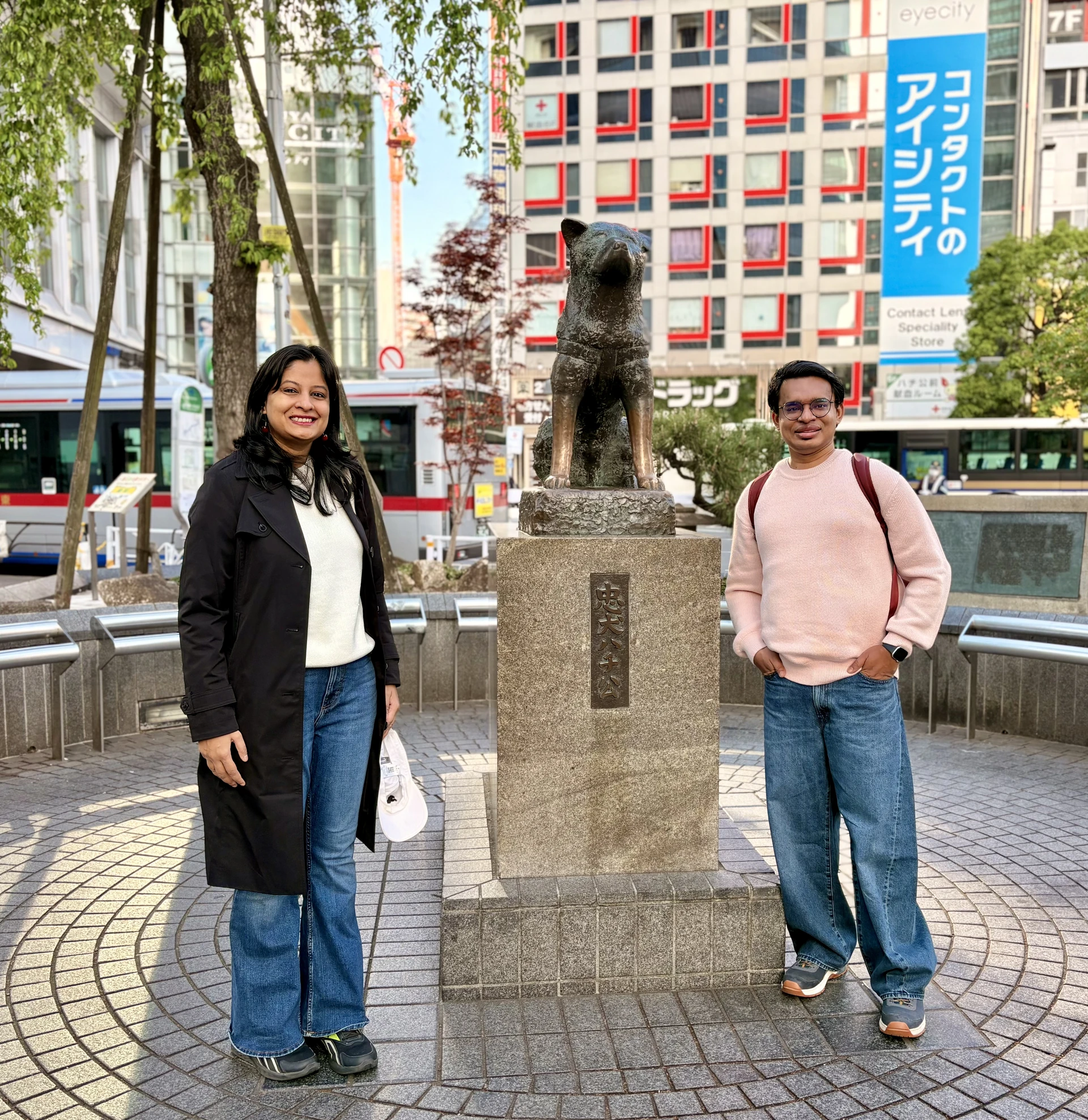
Up early for the highway bus. We pulled out the new clothes saved for this exact day — Fuji deserved its own outfit. We swung by the Lawson outside the hostel, did a small translation dance with the snack packaging, and ended up on the bus with seats not next to each other — the last-minute booking penalty. The early start did come with one unexpected gift, though: at 7:30am, Senso-ji had no crowd. After two days of failing to visit a temple twenty steps from our hostel, we finally saw it the way you're meant to — quiet, almost empty. We rode on through Shibuya, exited via the Hachiko statue for a quick photo, and headed for the bus pickup.
The pickup was on a very narrow street that absolutely did not look like a bus terminal. We circled, confused, until Harshit reread the email and found the magic line: 5th floor of the mall. It took us a beat to absorb that highway buses leave from the fifth floor of a shopping mall, and another beat to find the lift. We made it with ten minutes to spare.
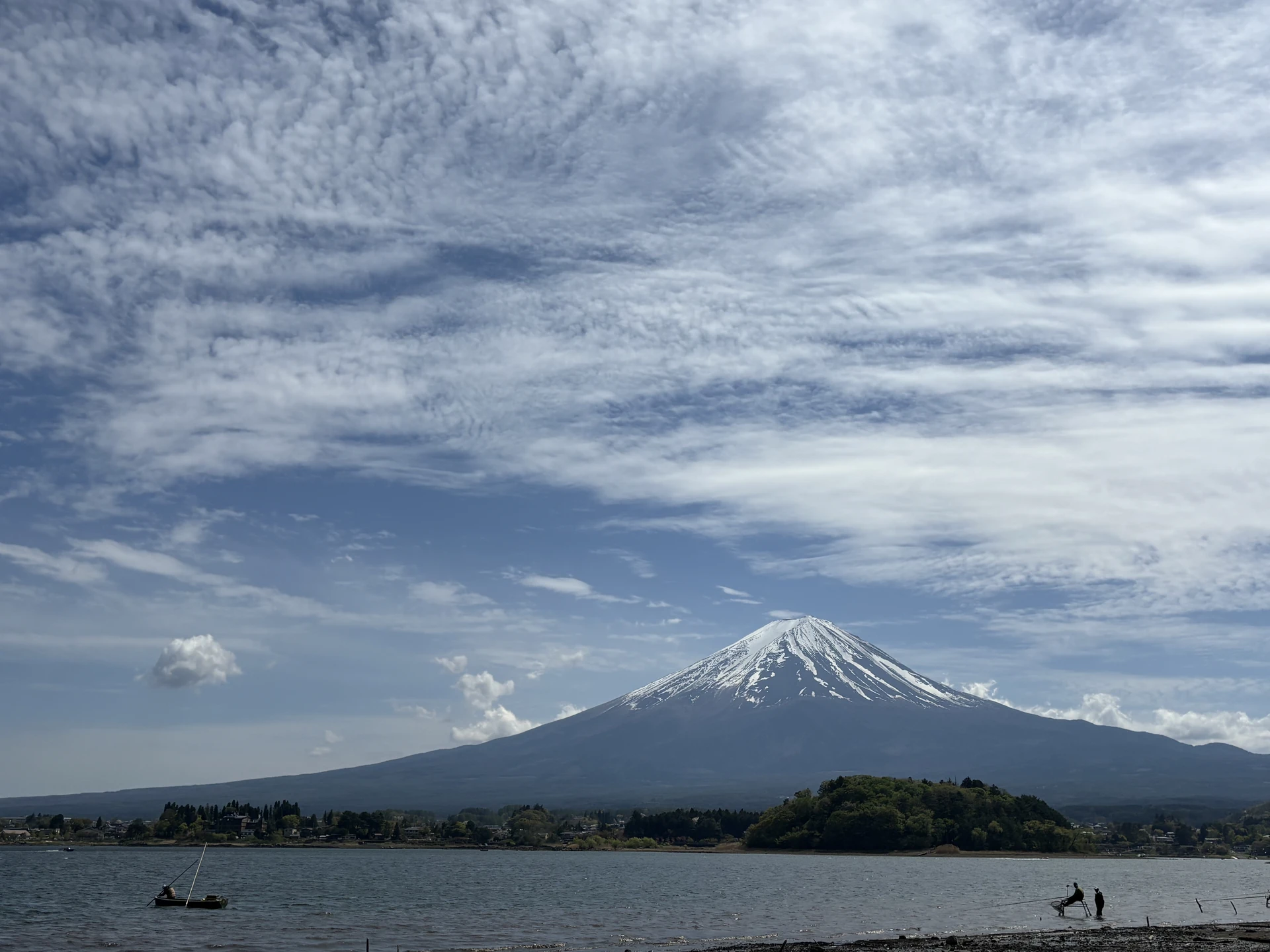
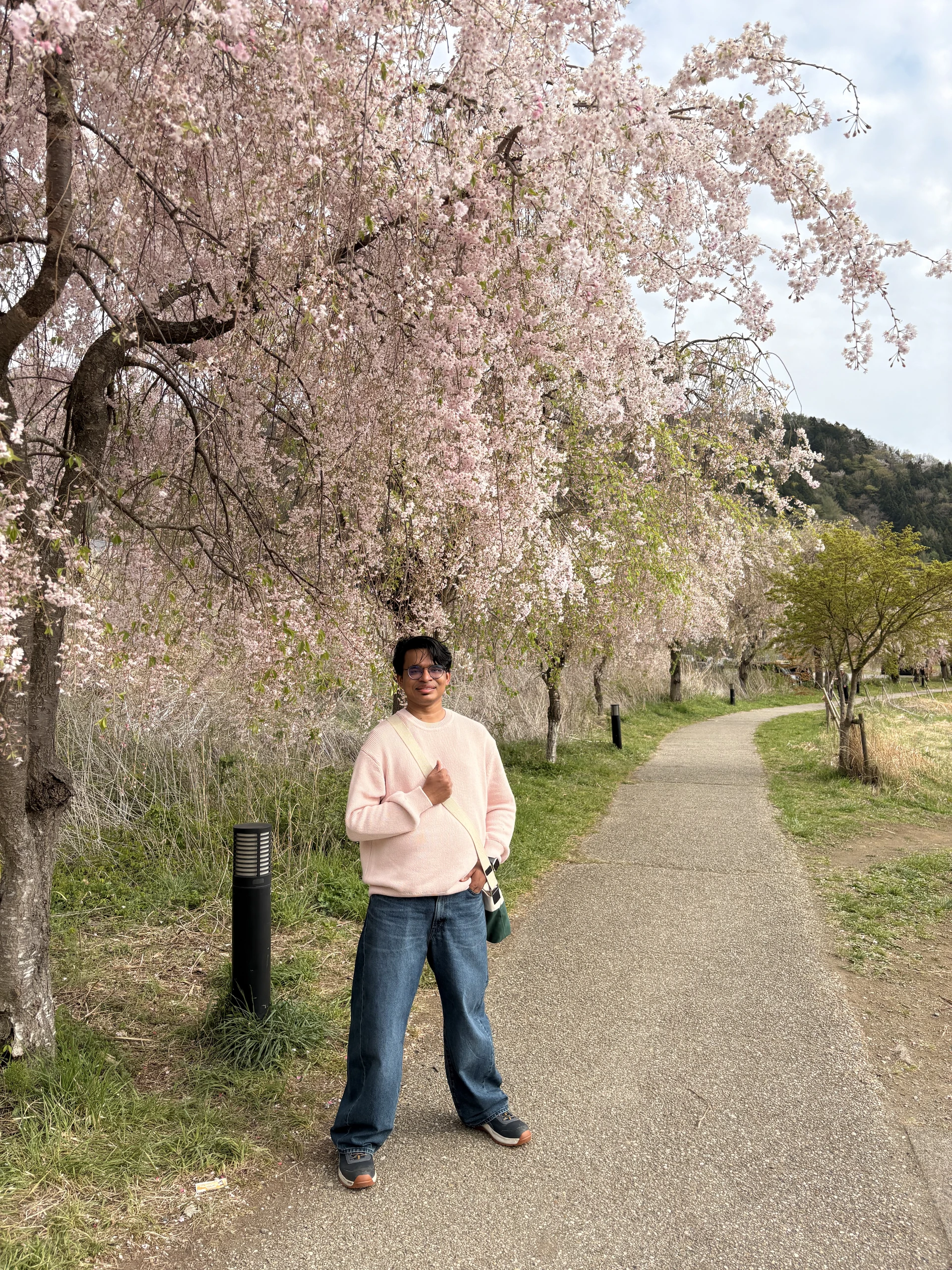
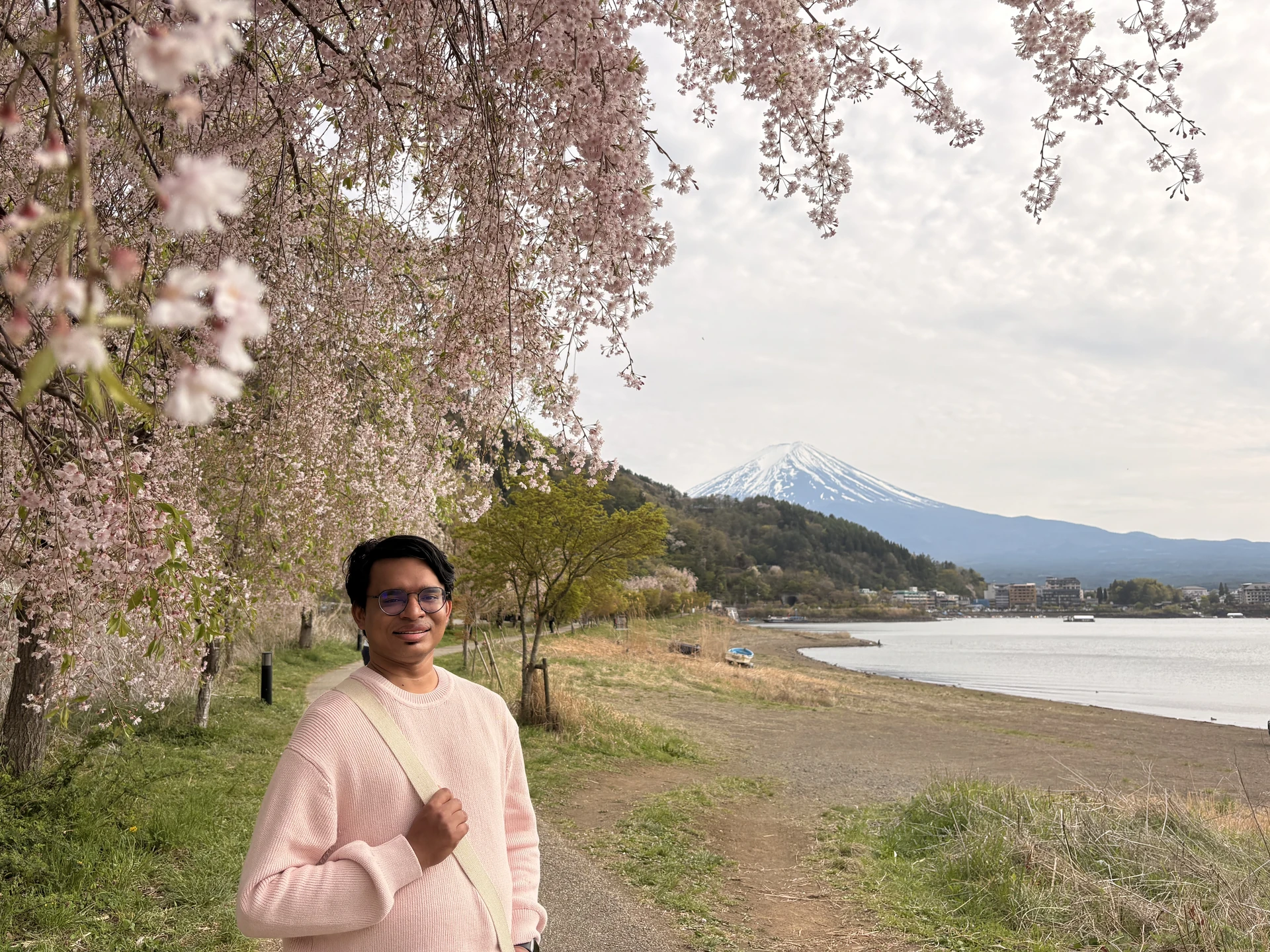
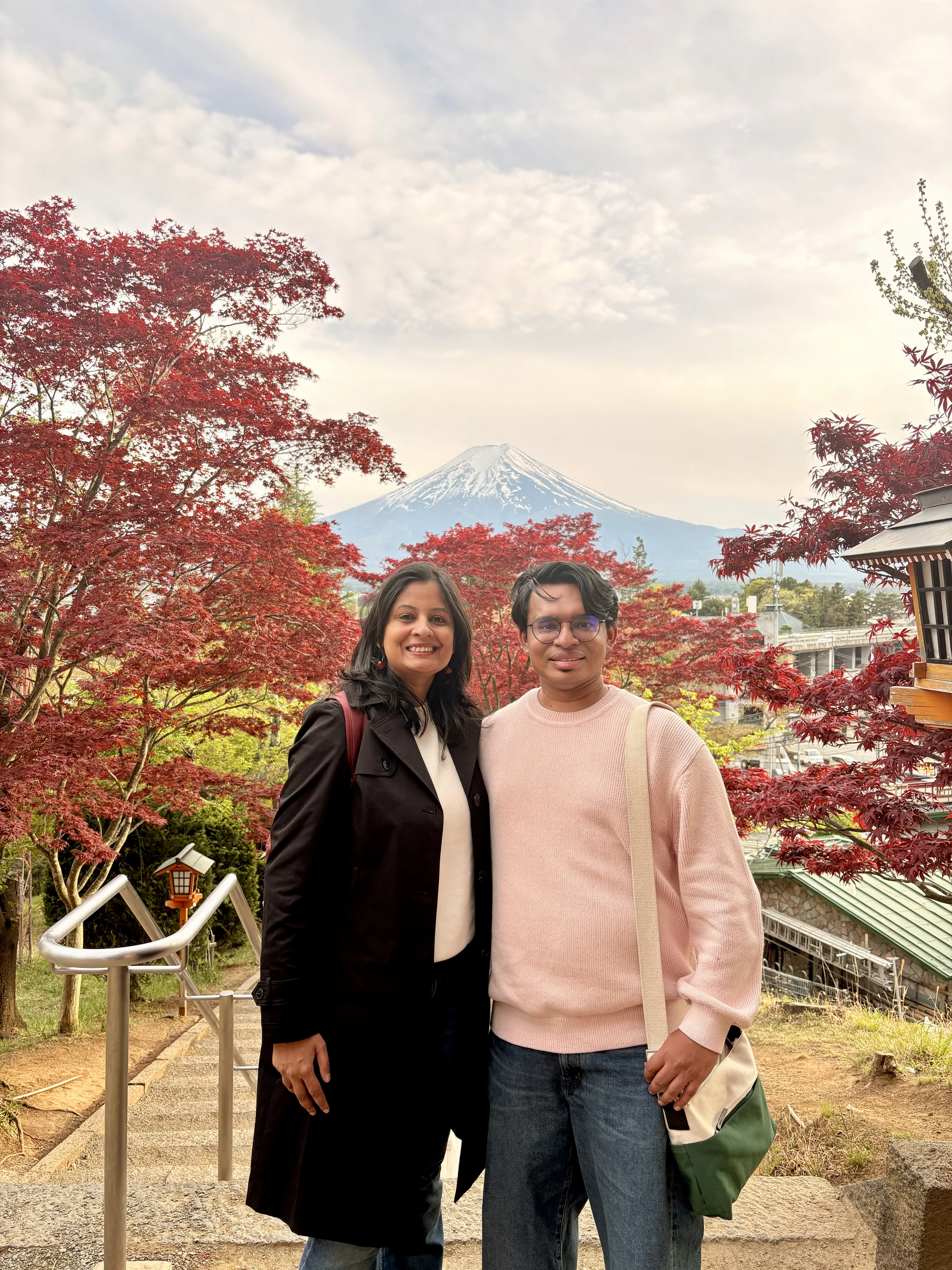
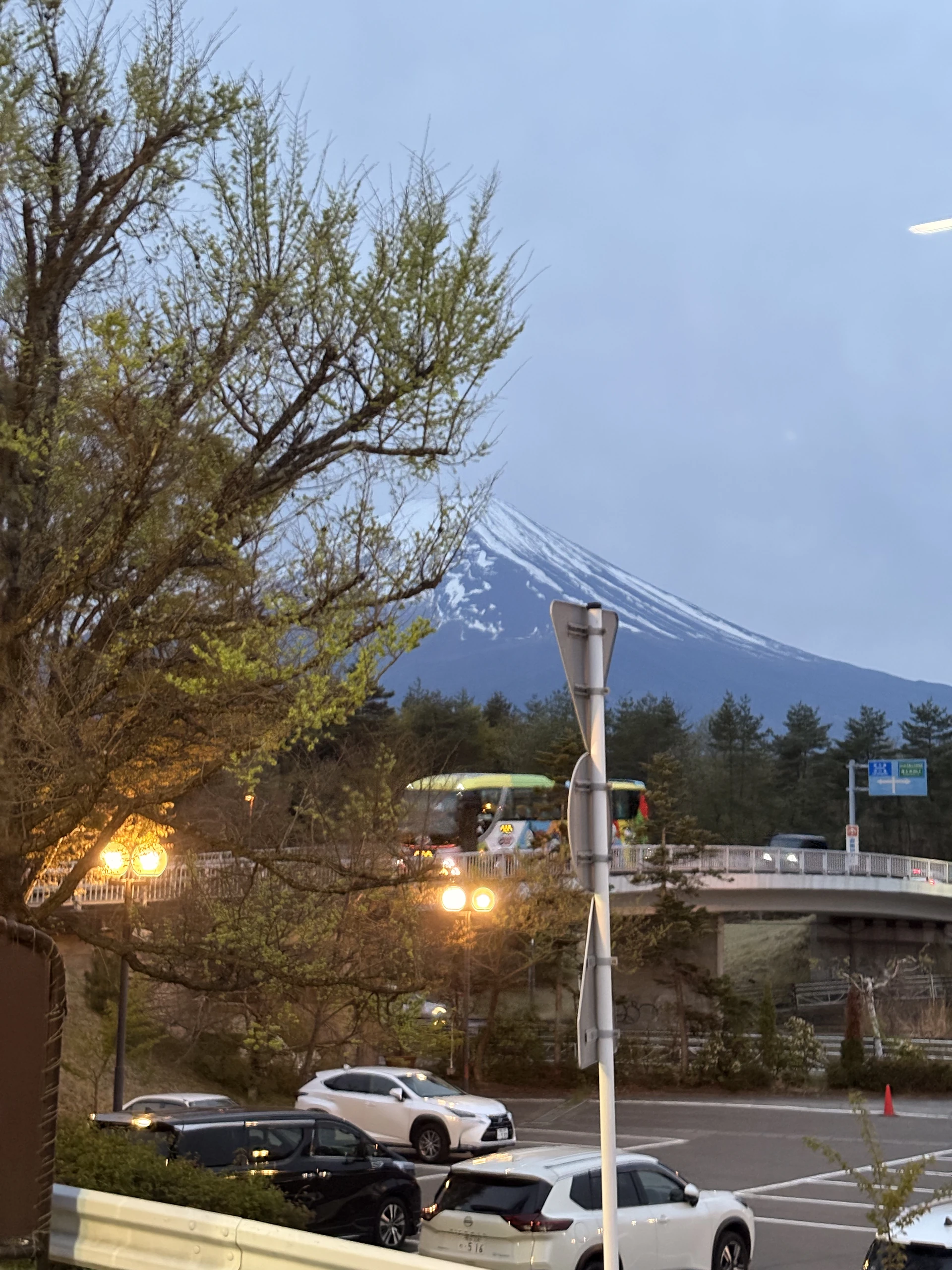
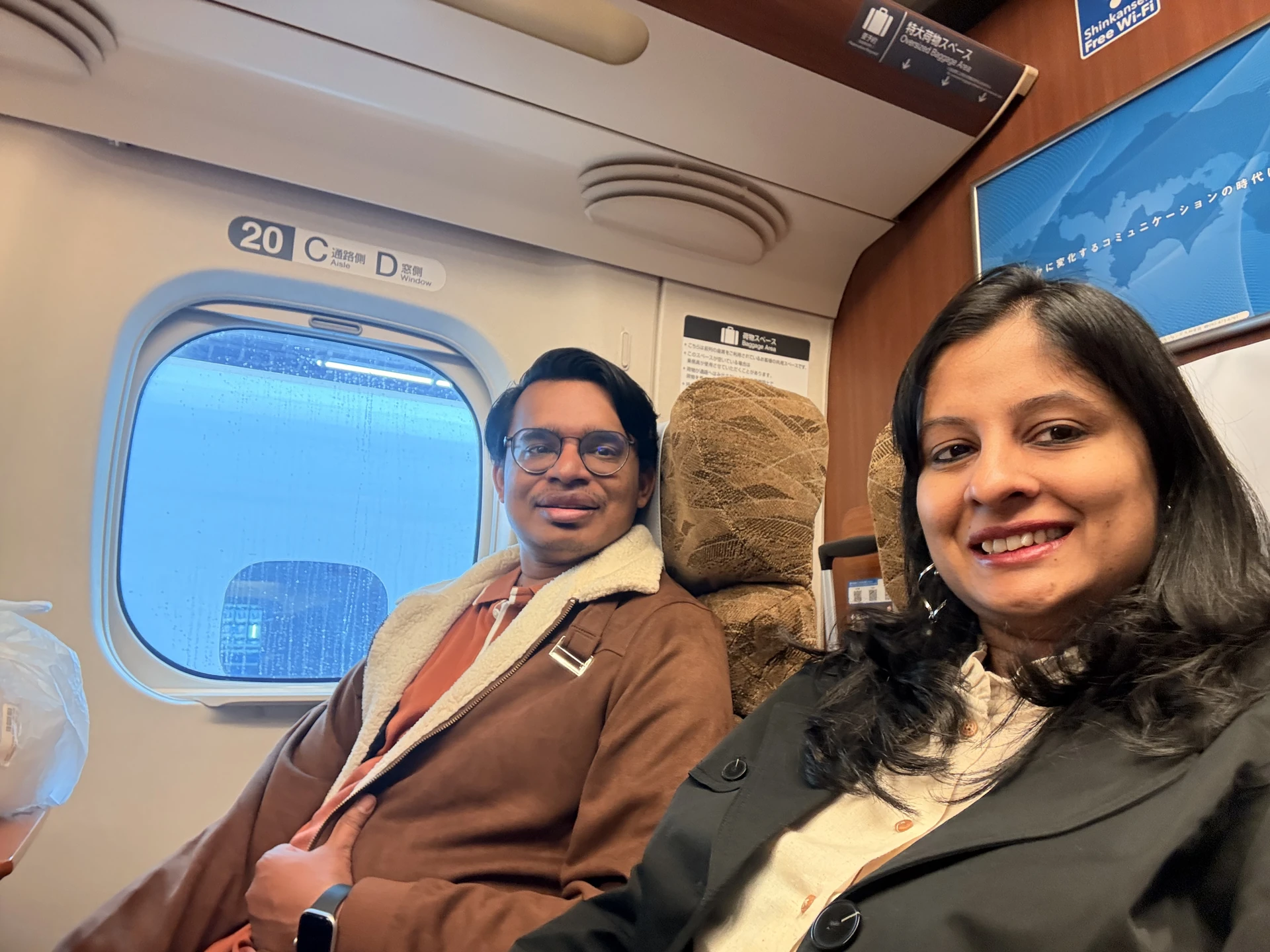
Seats apart, snacks in hand. The bus had free WiFi, but between the comfort of the Willer seats and our 4am alarm, I gave in to a long, easy nap. Harshit woke me up just before arrival to a window full of Mt. Fuji — and yes, every bit of the hype is earned. We rolled past Gotemba and pulled into Kawaguchiko station. On the way in, I'd booked the Fuji Bus ticket that loops around the five lakes — four routes, with the red route the most famous for its Fujisan views.
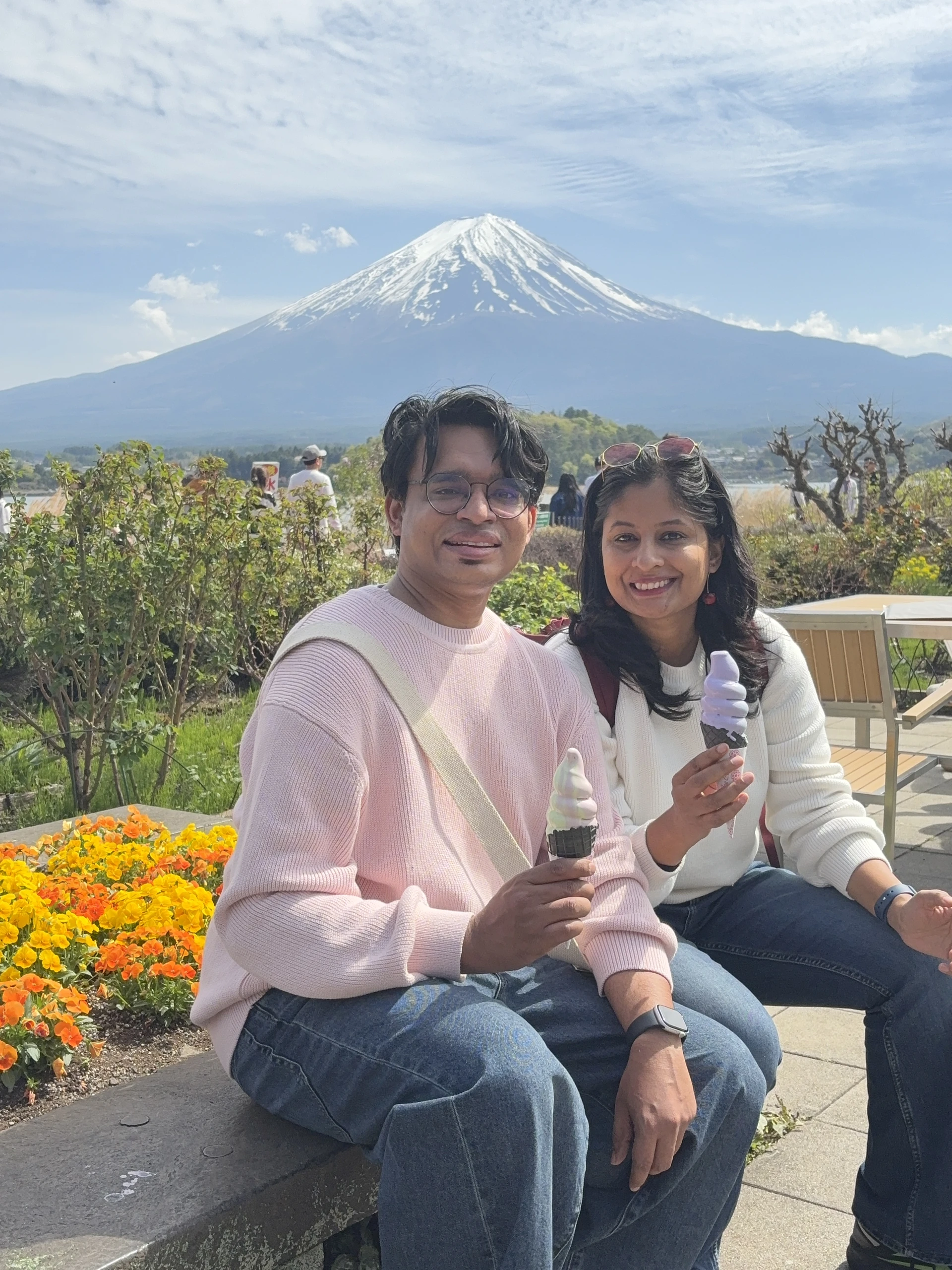
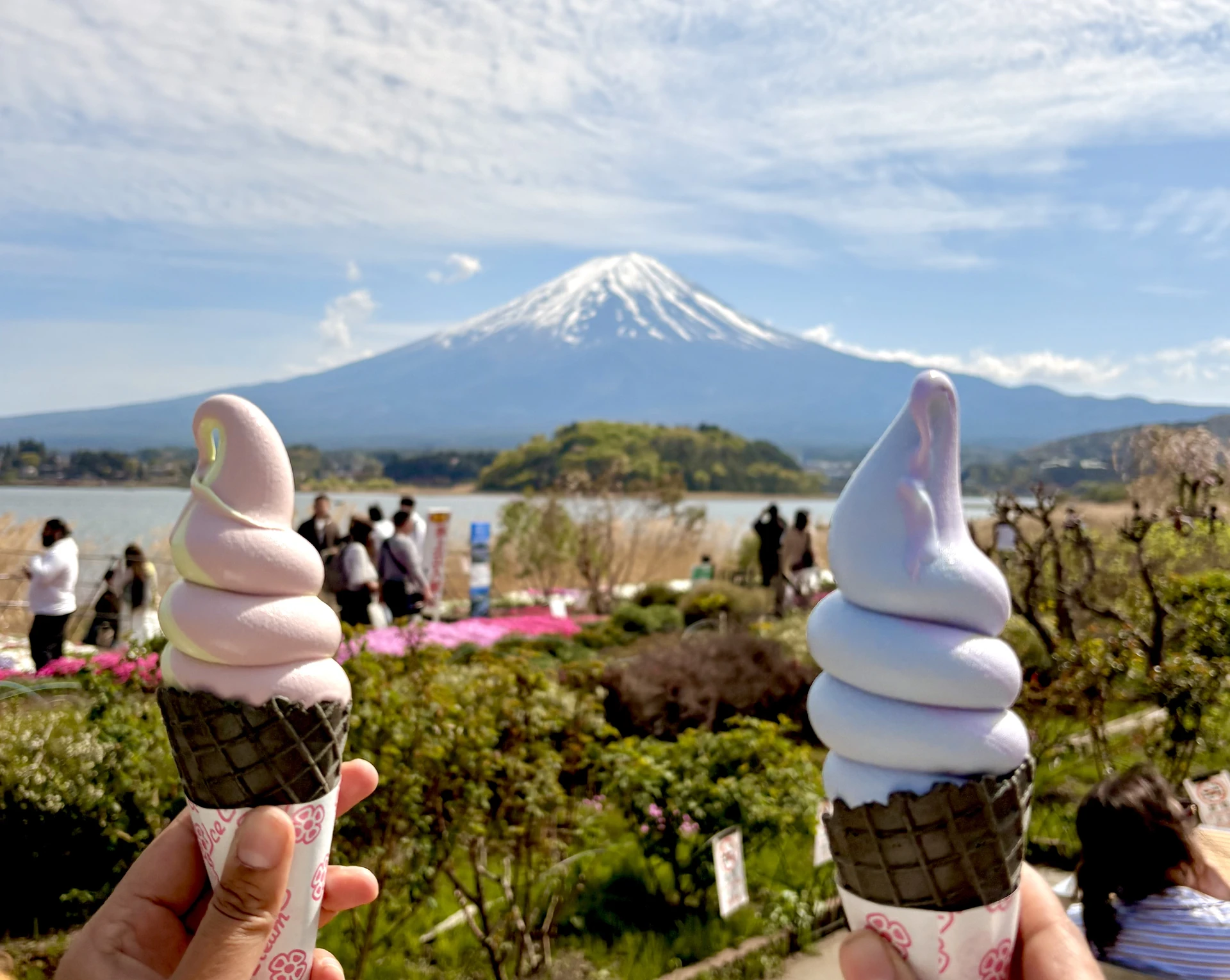
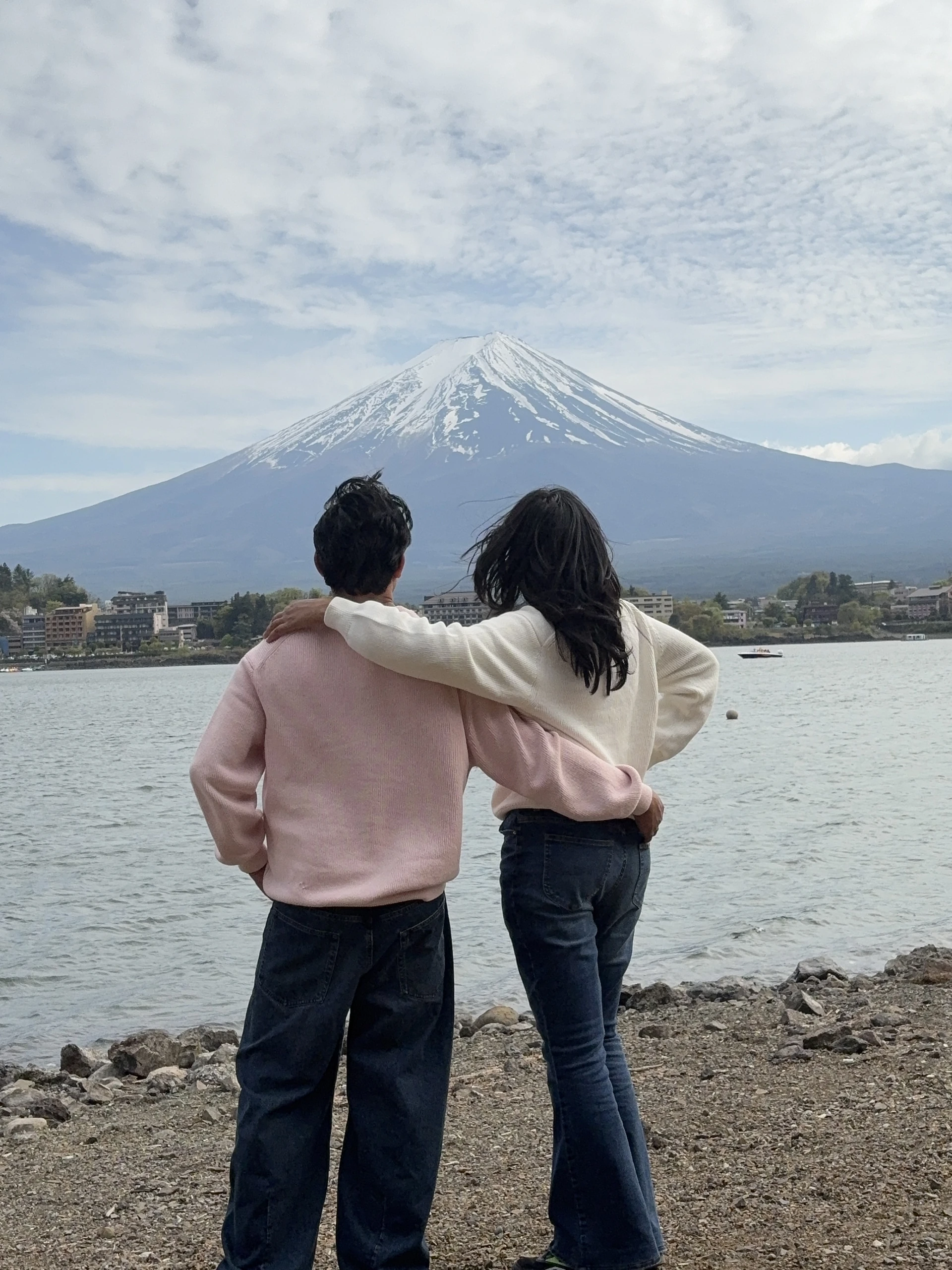
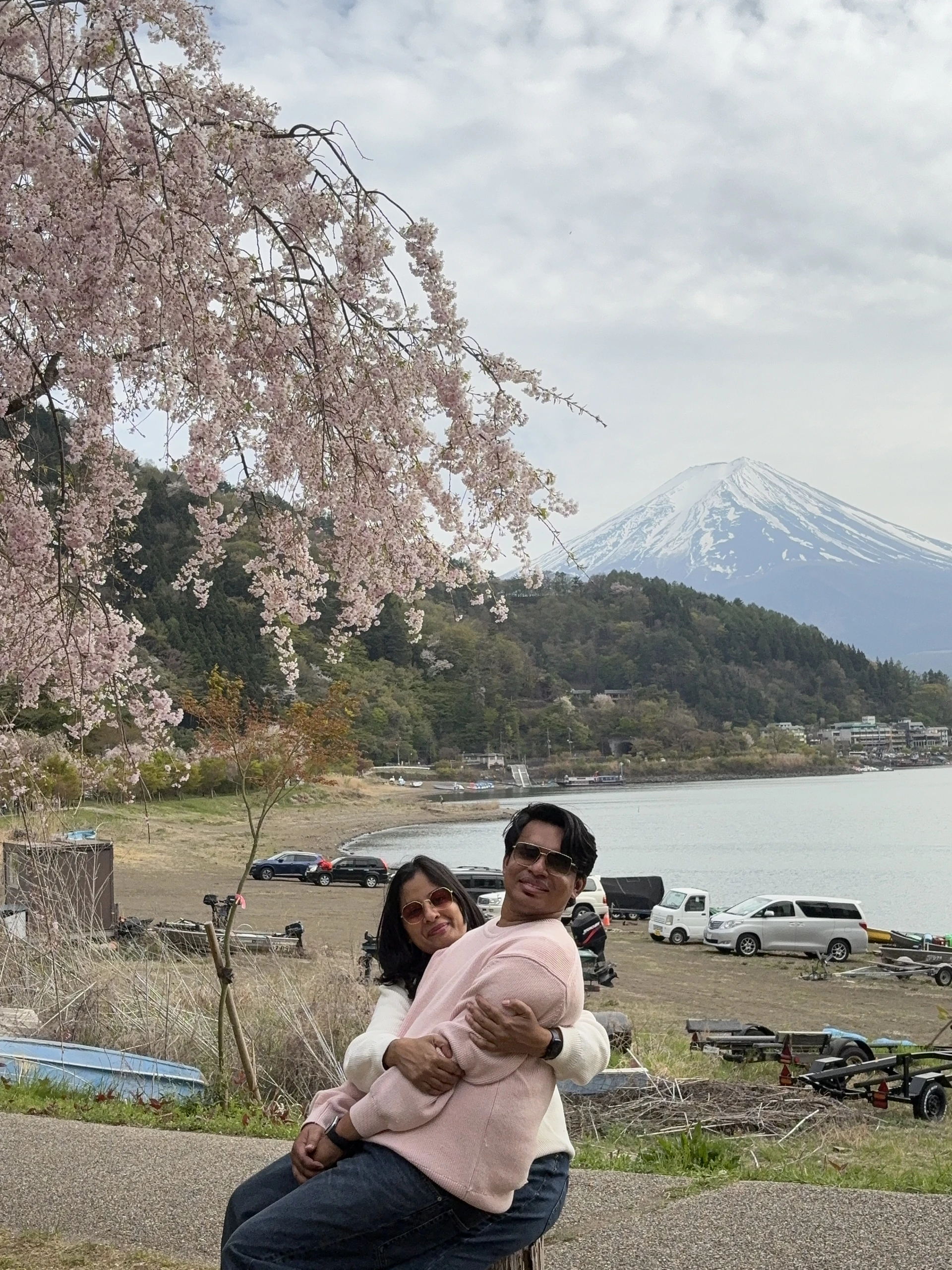
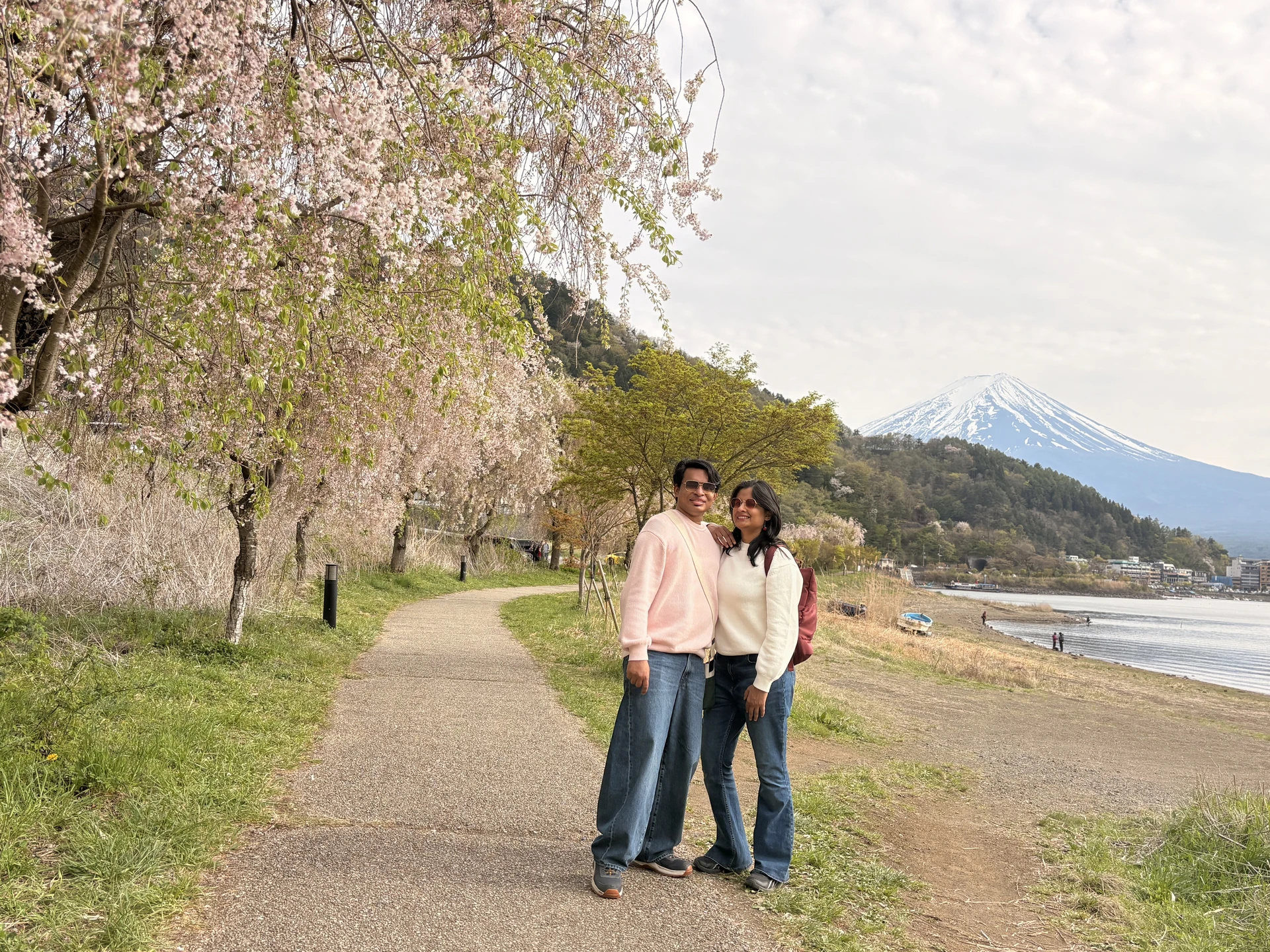
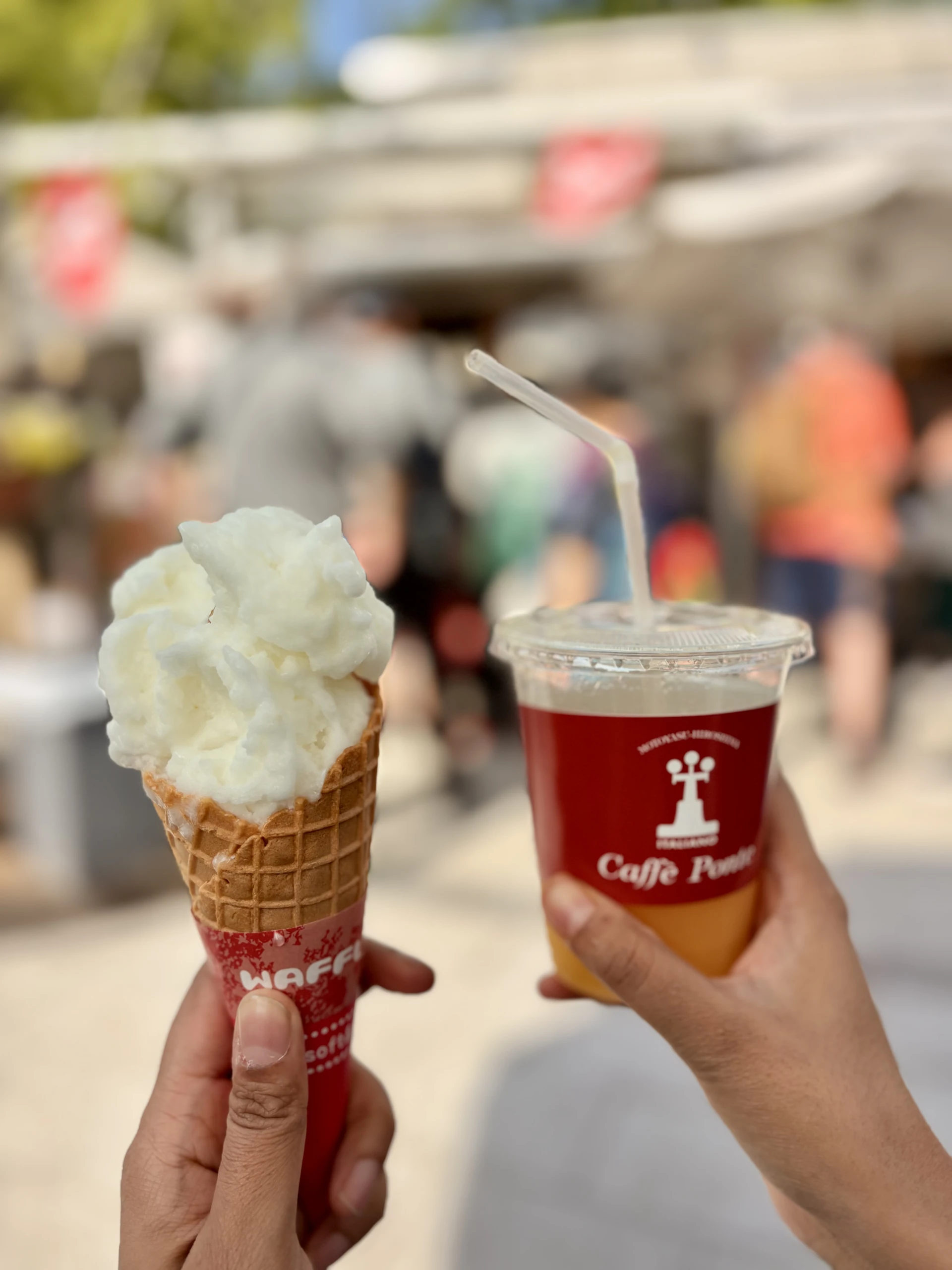
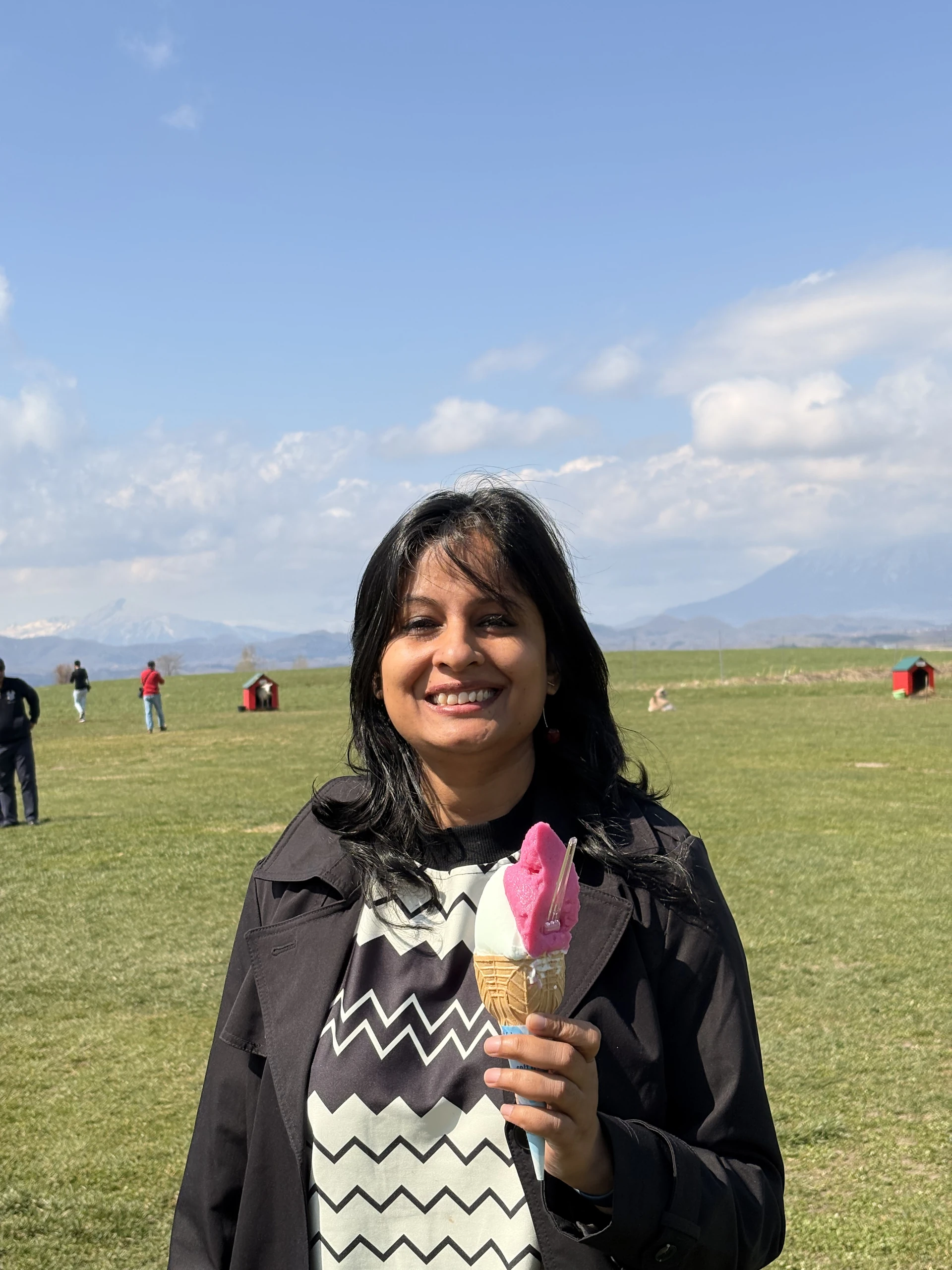
At the station, the red bus had a monster queue and the green route bus was sitting right there with its doors open, so we jumped on. The green loop was lovely, but Harshit kept feeling we were wasting time — he wanted Fuji properly framed, not glimpsed. After the green loop, he Googled the best viewpoints and we walked toward Lake Kawaguchiko — and Fuji was nowhere to be seen. The red bus eventually rescued us. We got off at Oishi Park, finally took the photos that justified the entire trip, ate the famous ice cream, and bought a box of cookies.
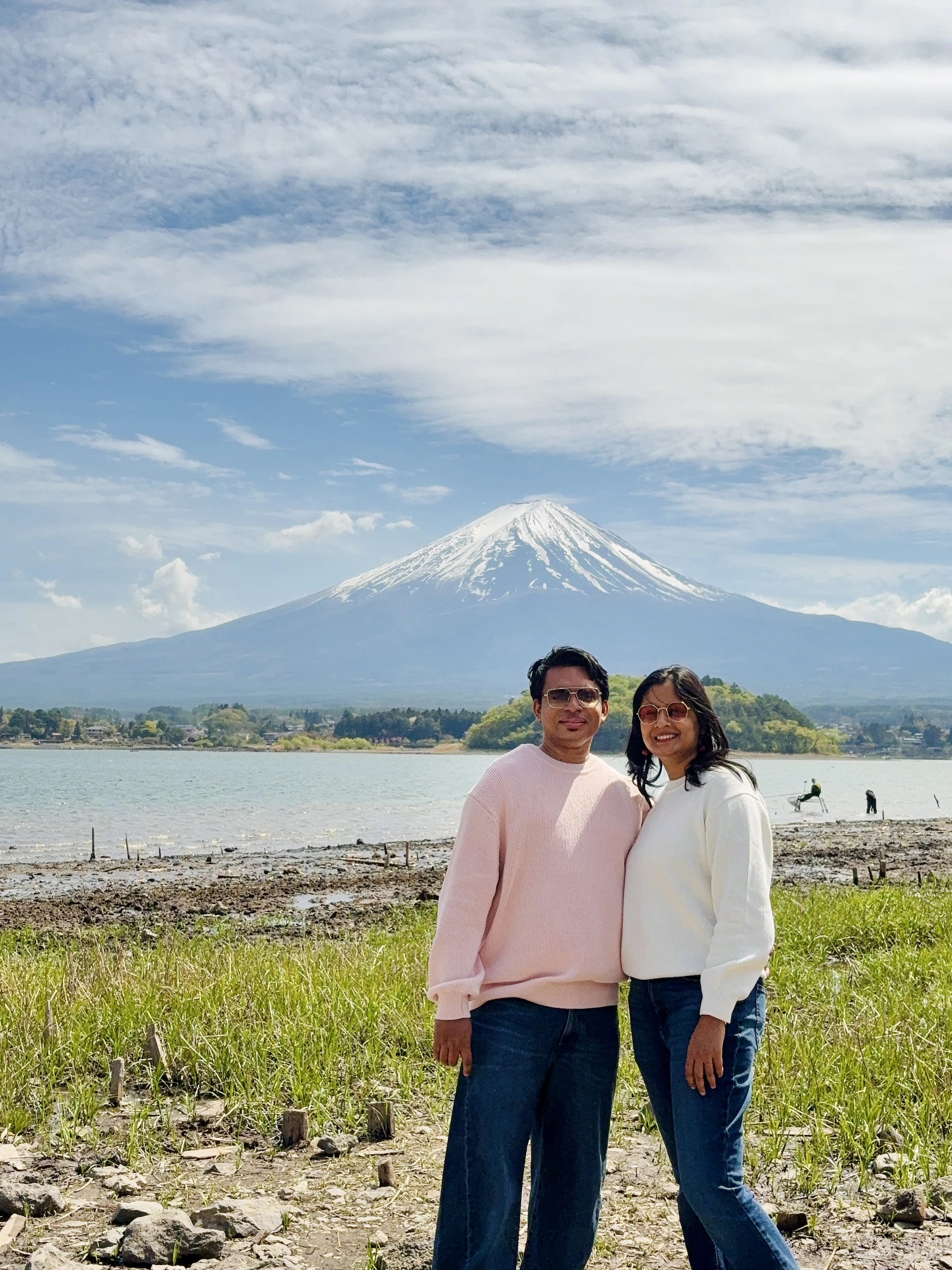
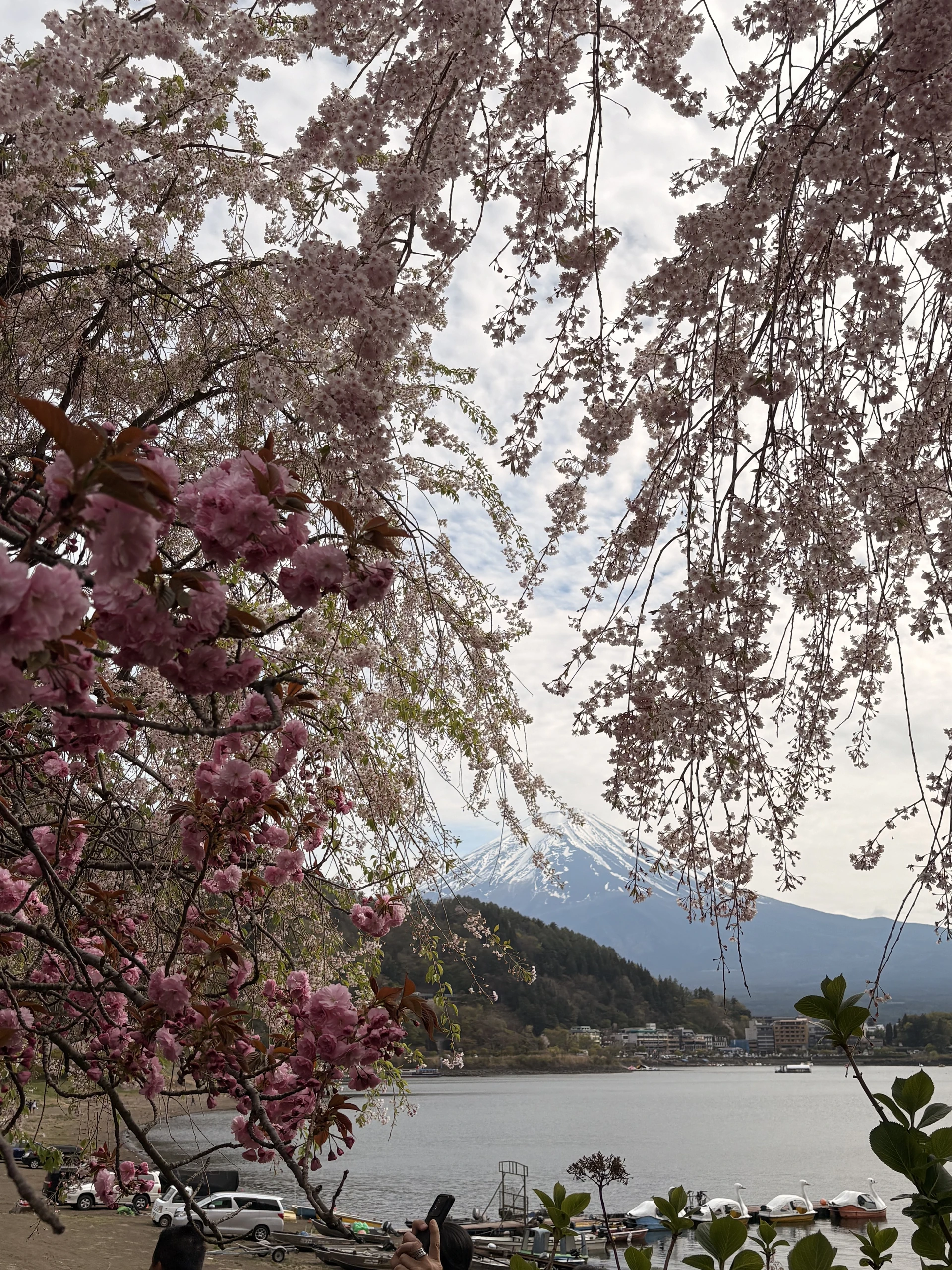
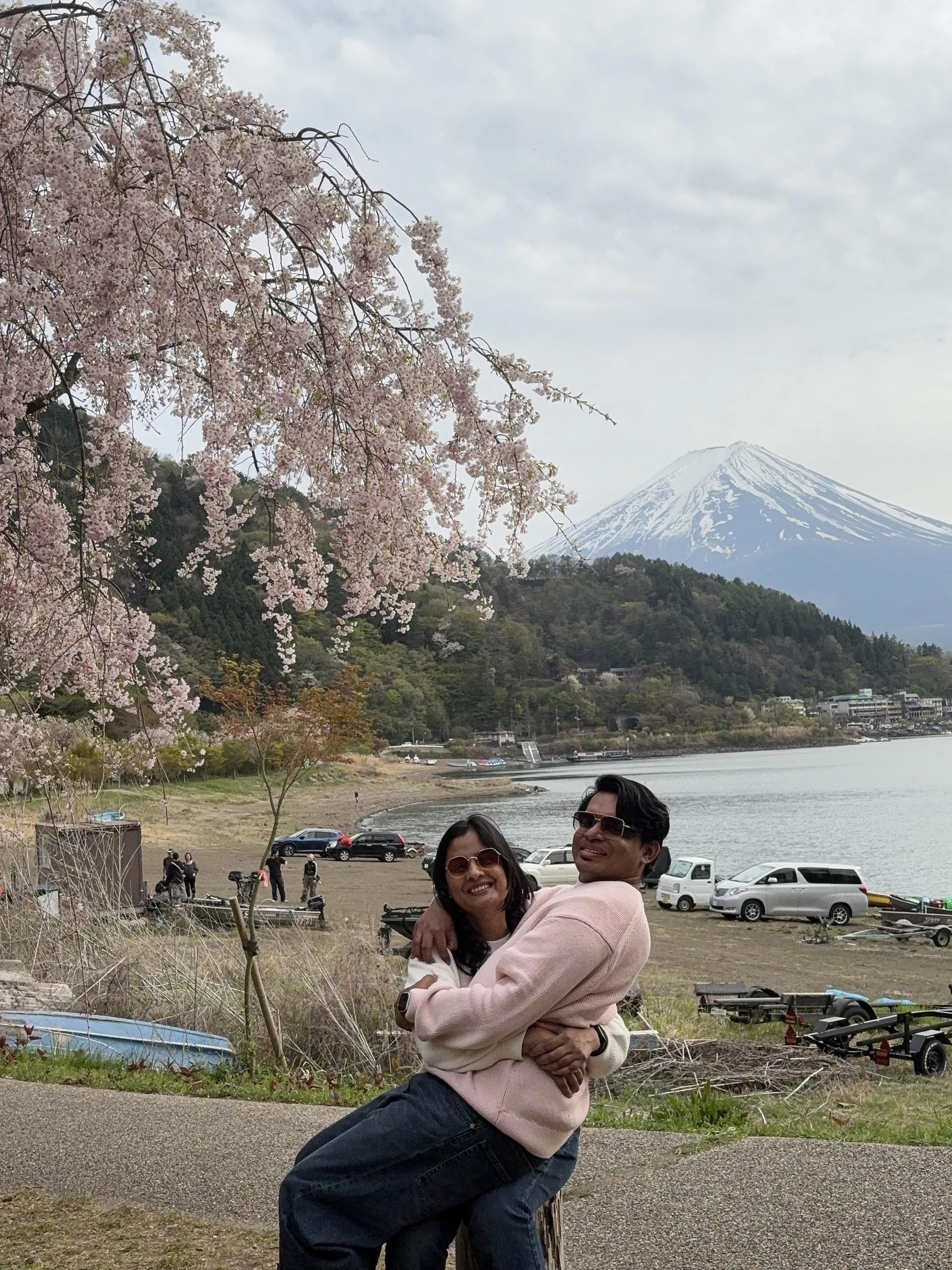
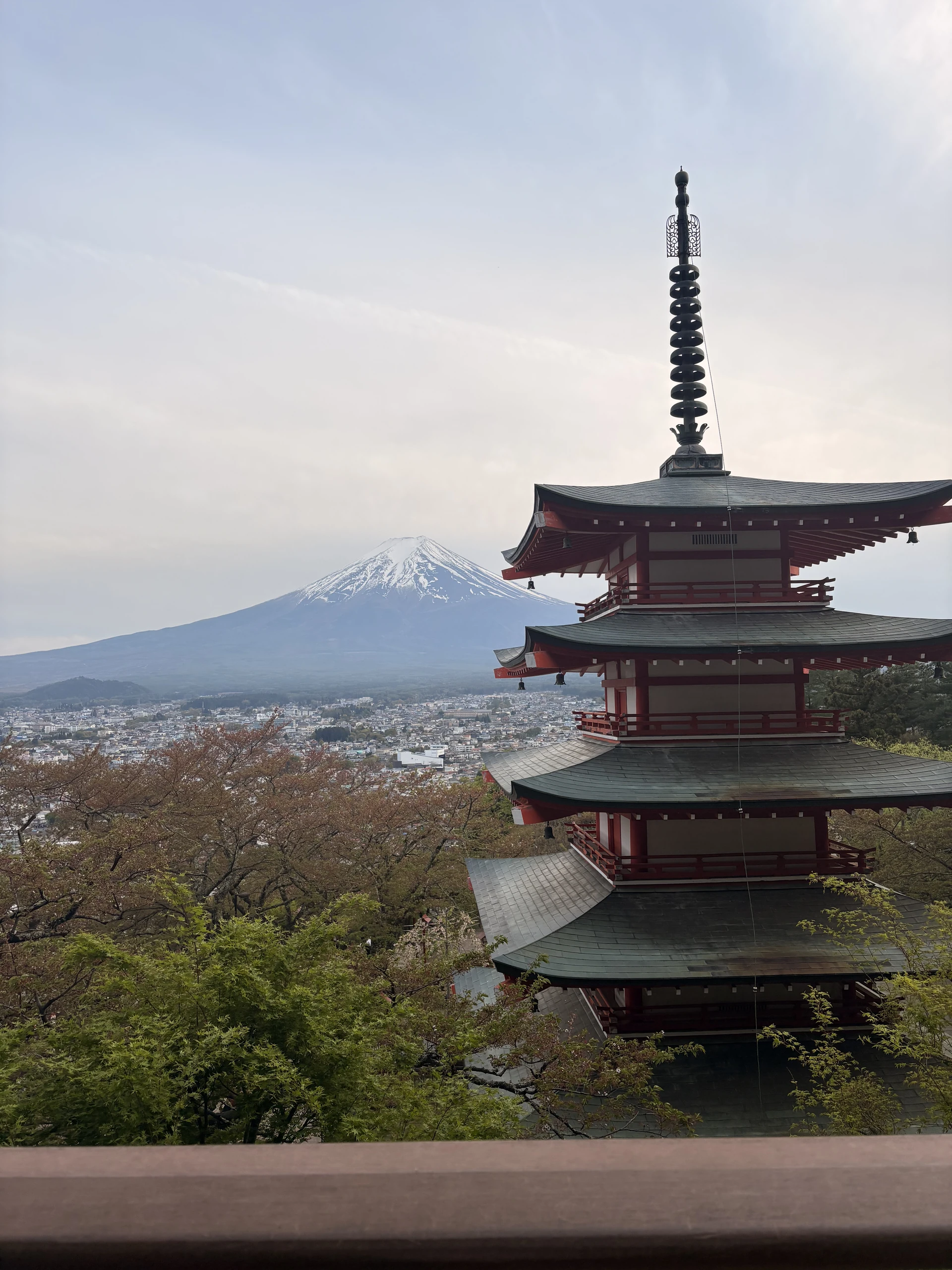
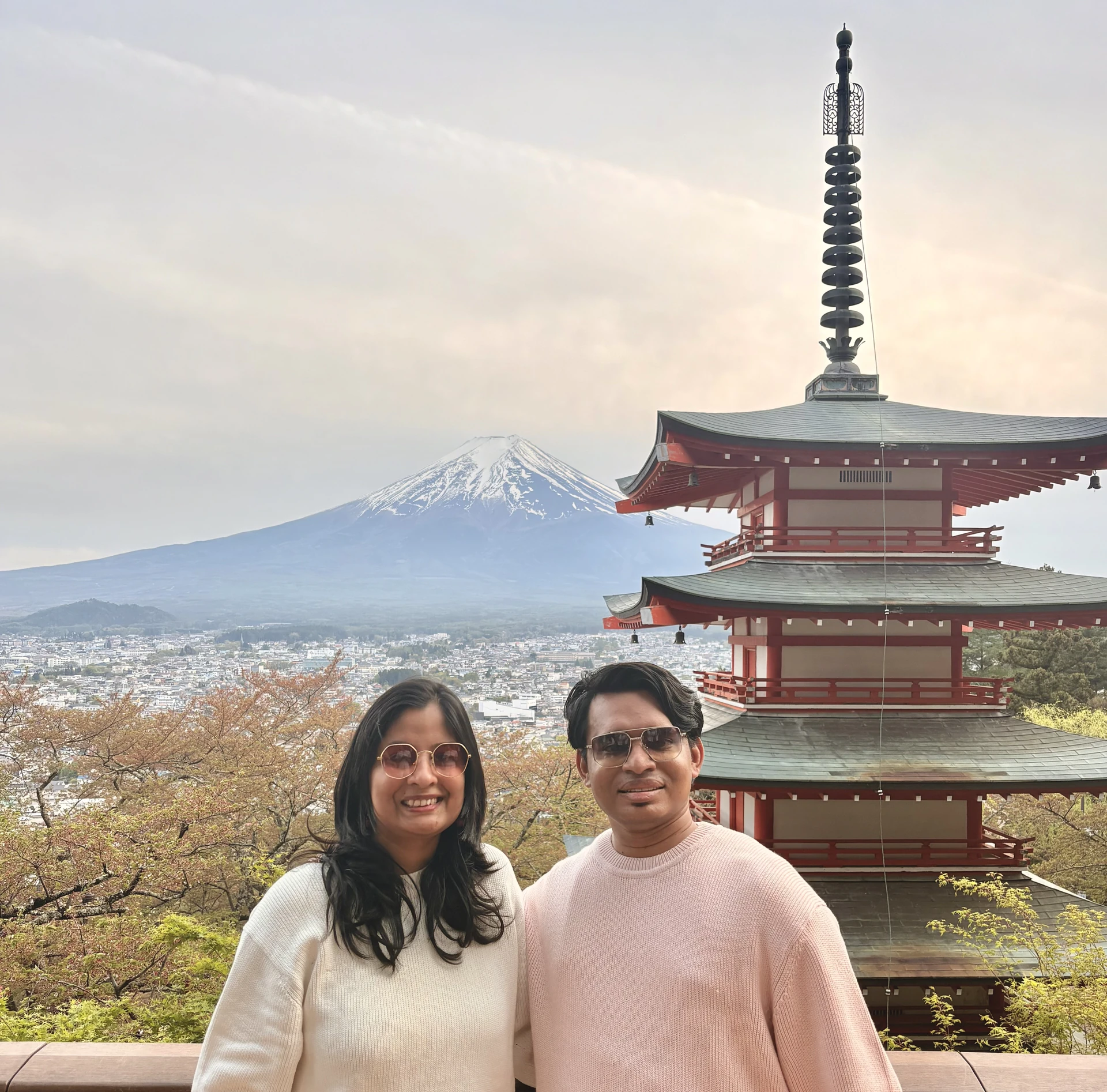
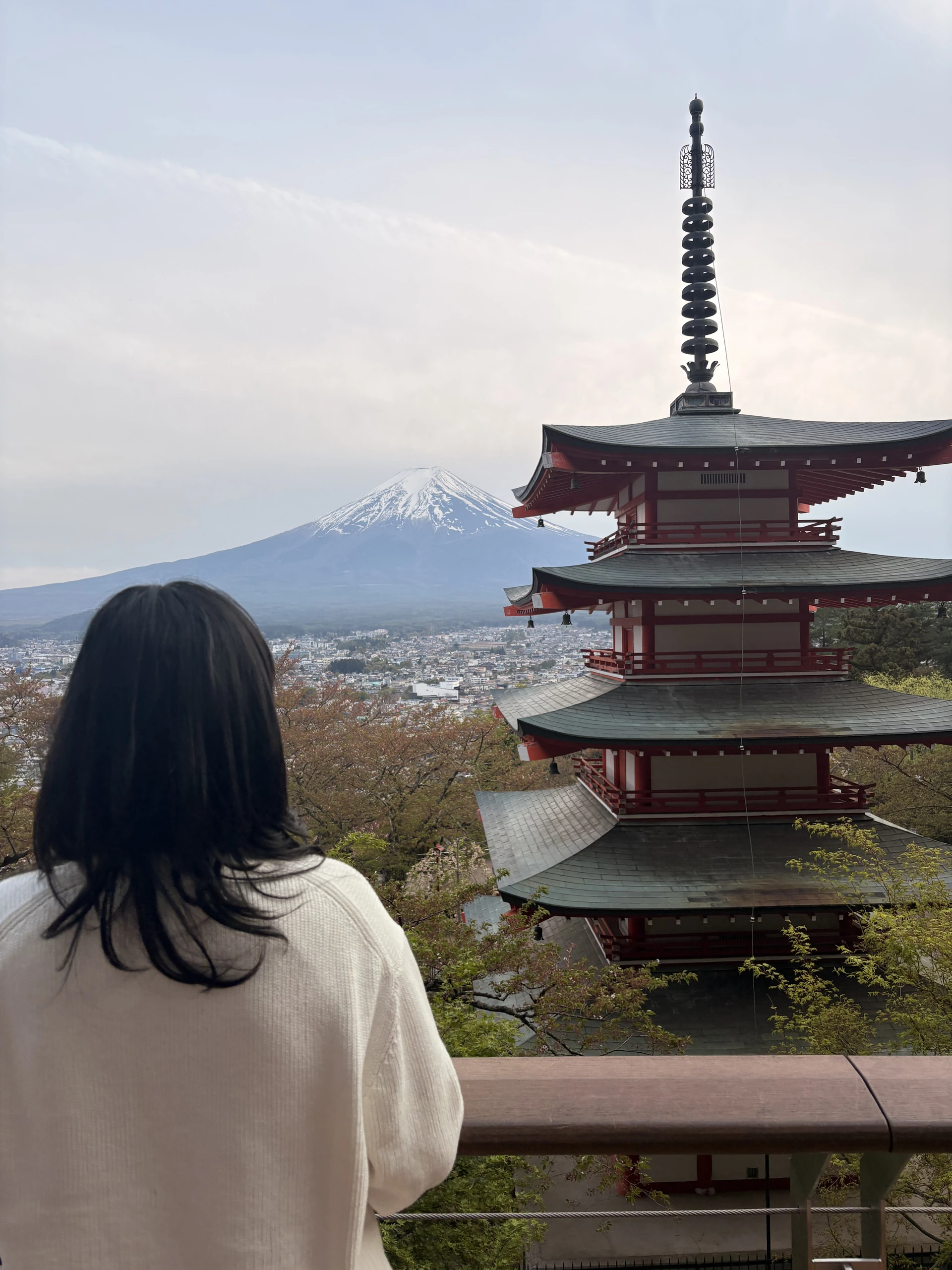
We told ourselves we'd skip Chureito Pagoda in favour of chilling. We caught the red bus once more, got off at a spot where sakura and Fuji framed each other perfectly, took another round of photos, and rolled back into Kawaguchiko around 3pm — three hours till the bus home. And then, in classic us fashion, we took the shot. We bought a separate train ticket, raced to Chureito, climbed the entire pagoda, got the postcard view, ran back down, and made it to the Willer bus with not a minute to spare.
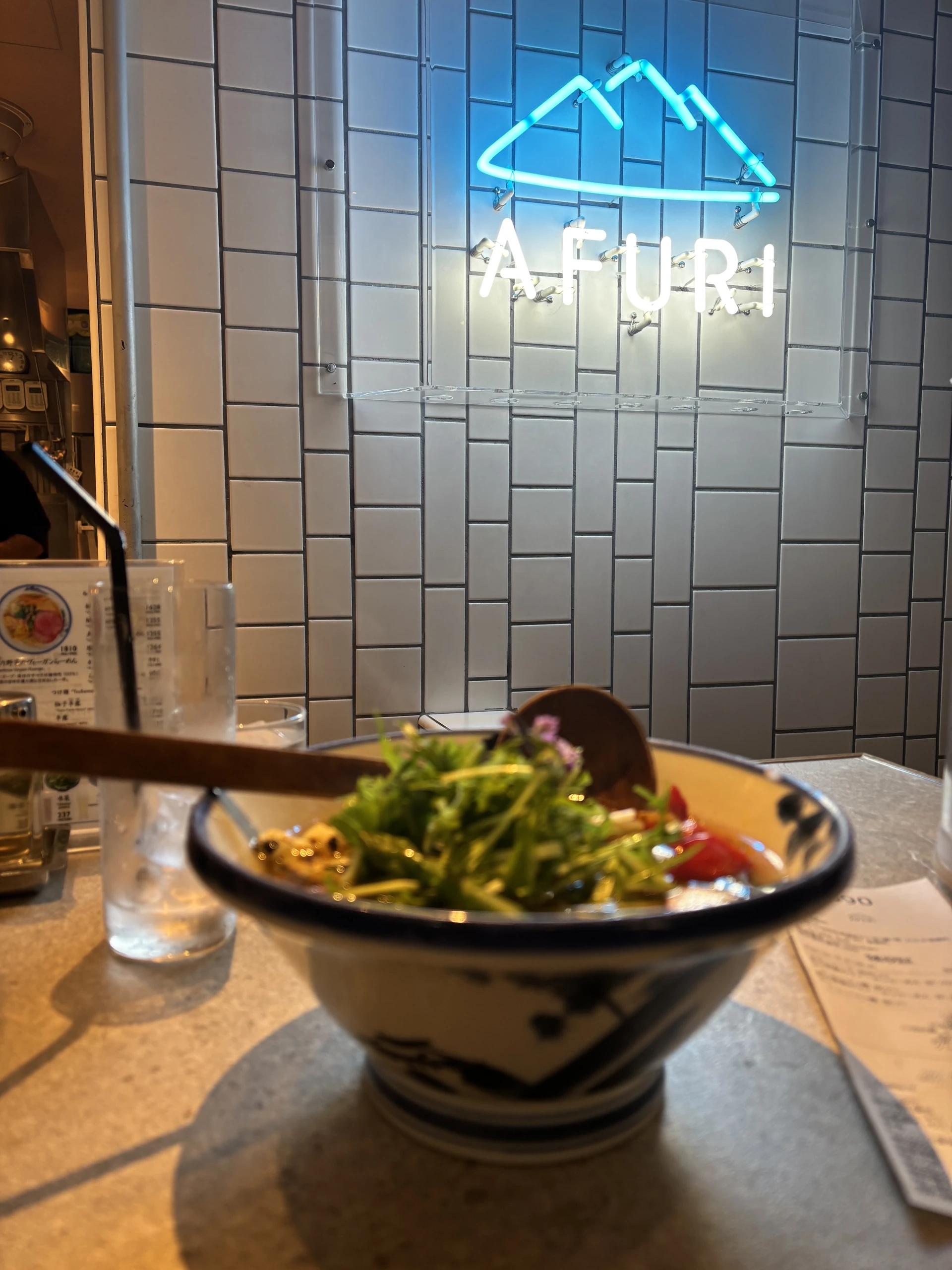
At the station, I noticed someone collecting stamps — and realised I hadn't picked one up in two whole days. That little discovery kicked off my stamp quest for the rest of the trip. The Willer bus dropped us at Akihabara and the dinner hunt began. I refused another Indian meal. By 9pm, most kitchens in Tokyo close, but we found Afuri and had our first proper ramen in Japan. I used a fork; Harshit handled chopsticks like a pro — he adapts effortlessly to these things. We finished slowly, equal parts tired and satisfied, replayed the day's wrong-bus, right-bus and sprint-to-the-pagoda detours one more time, and made the contented walk back to the hostel.
Snapshots from Day 3 — Mt. Fuji
Day 4: 20th April
Shibuya, Shinjuku & Harajuku
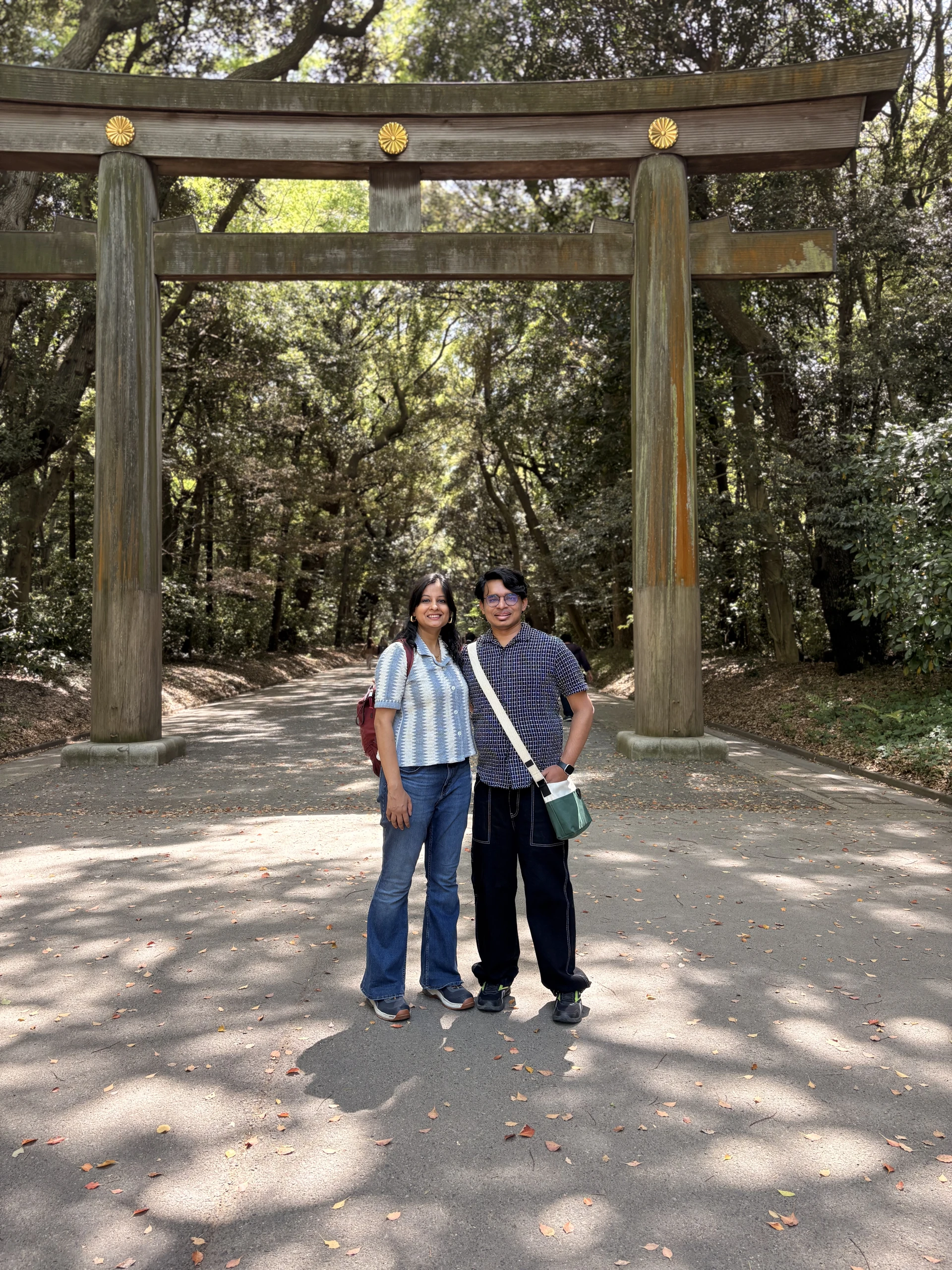
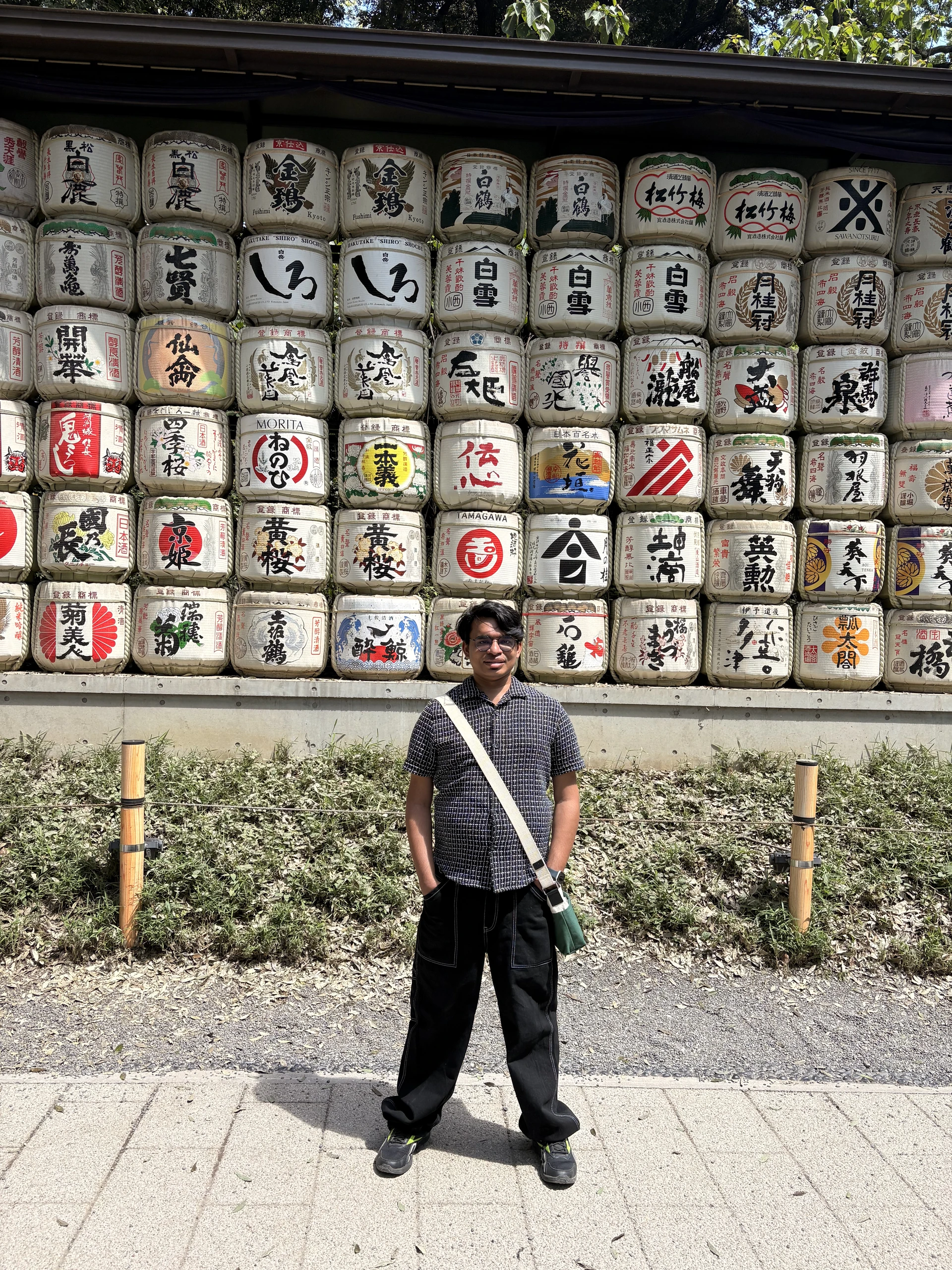
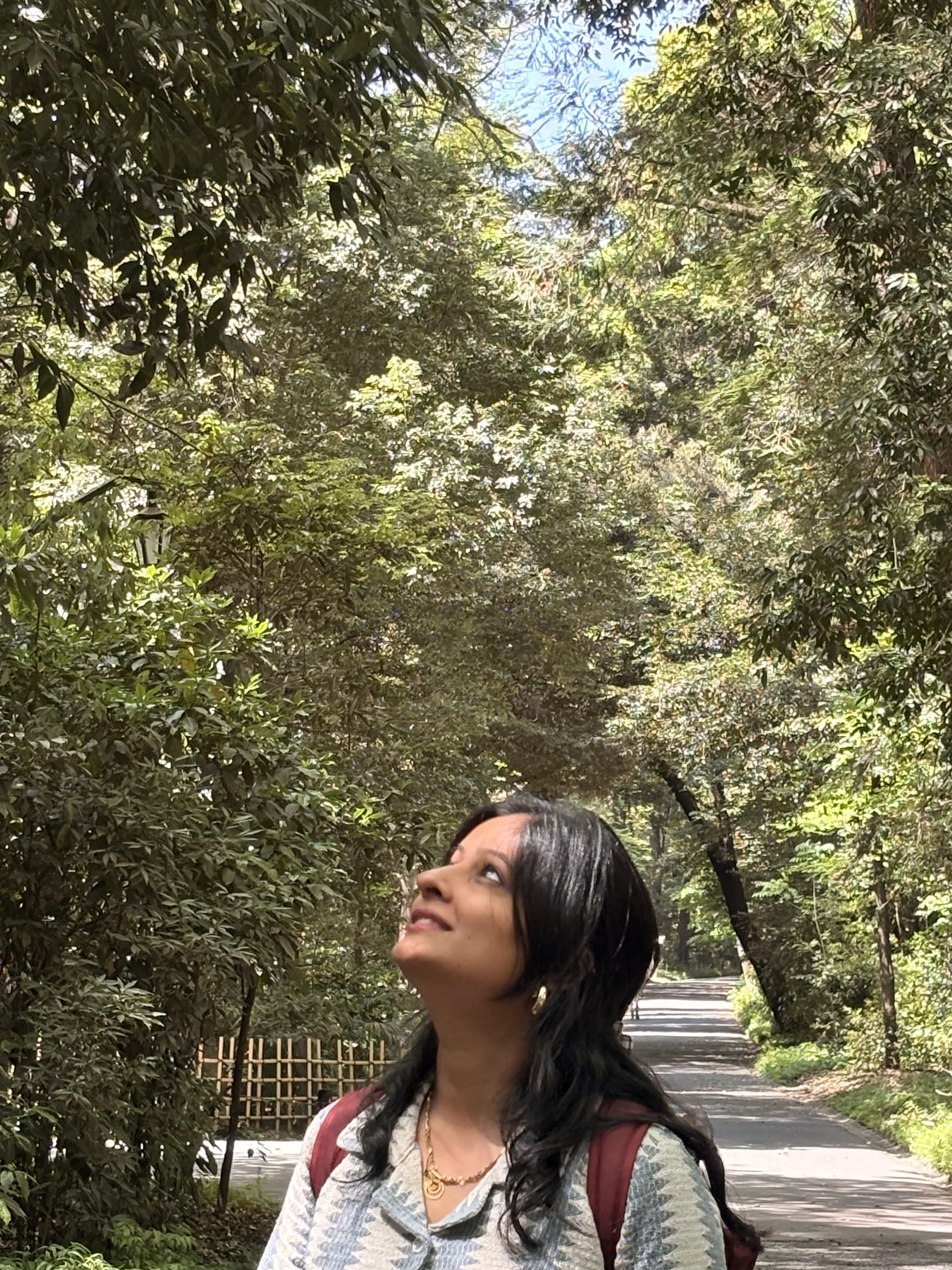
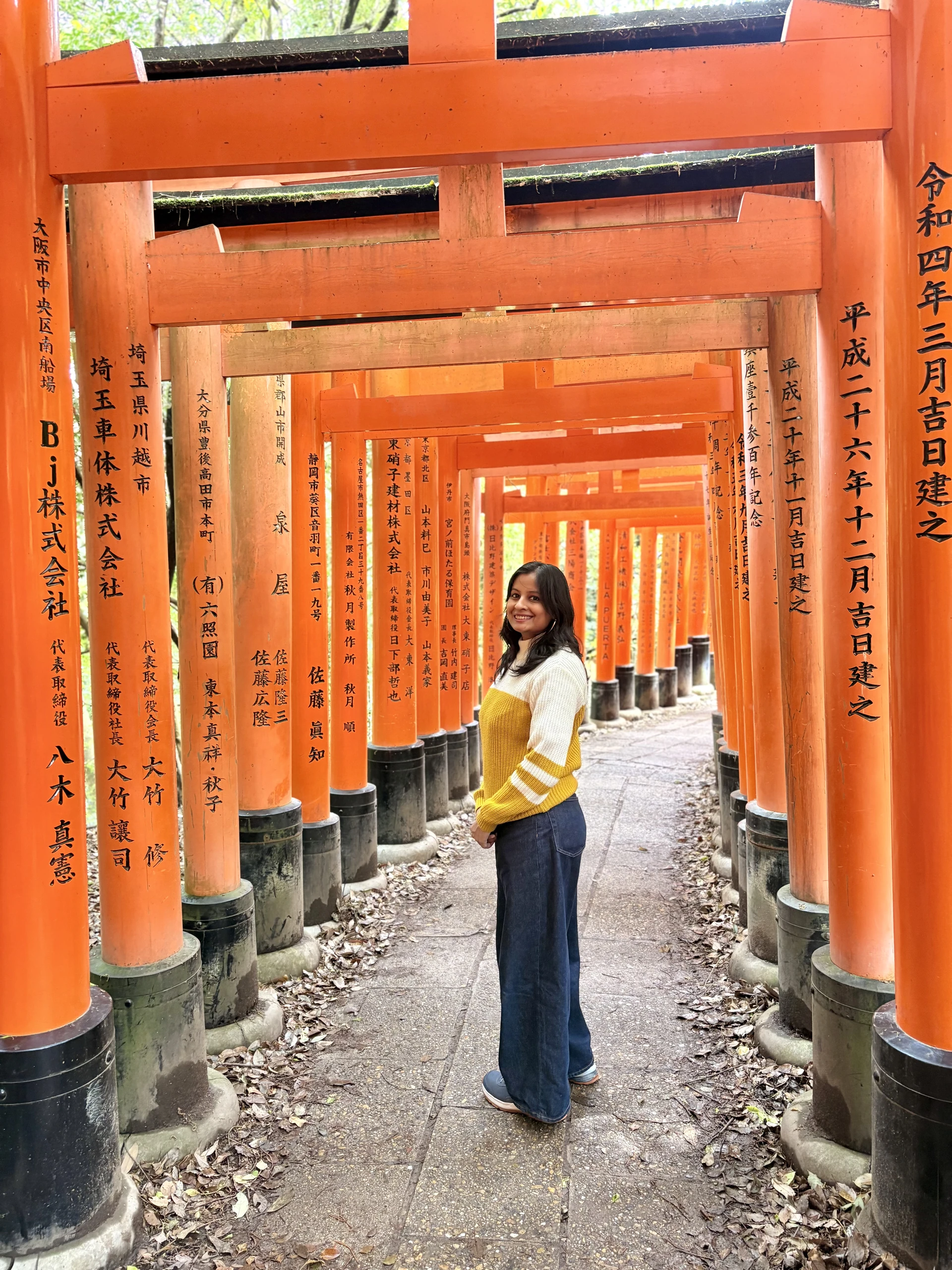
Today belonged to the famous trio: Shibuya, Shinjuku, Harajuku. We began at Meiji Shrine. Beyond its religious significance, the wonder of the place is that it sits inside a forest in the heart of Tokyo — a forest, in a megacity. Wine barrels lining the path, the oldest wooden Torii gate, and a hush that simply shouldn't exist this close to Shibuya.
In Japan you learn coexistence in the real sense — of human and nature, of modernity and cultural roots, of skyscrapers and shrines. Order inside chaos.
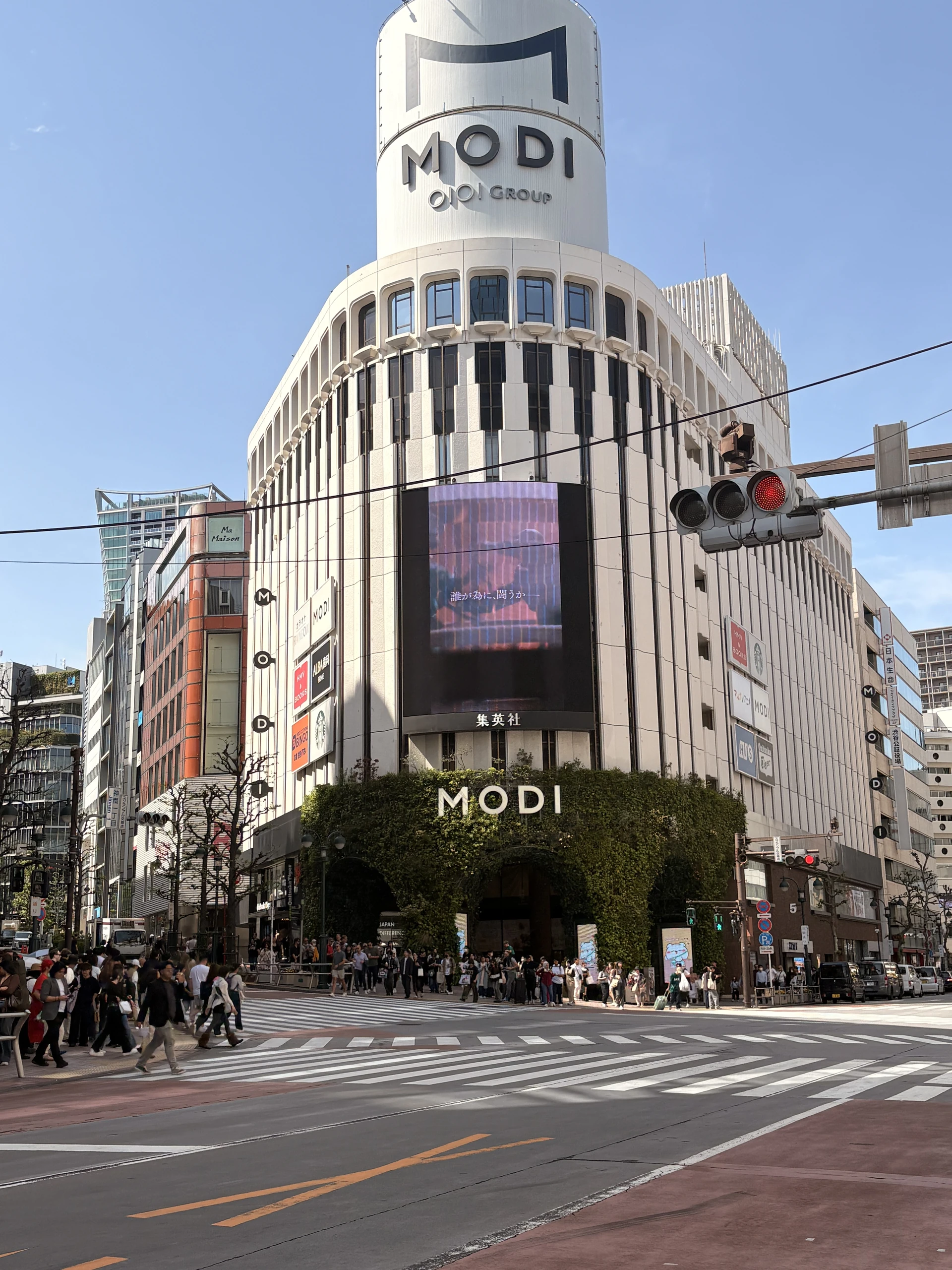
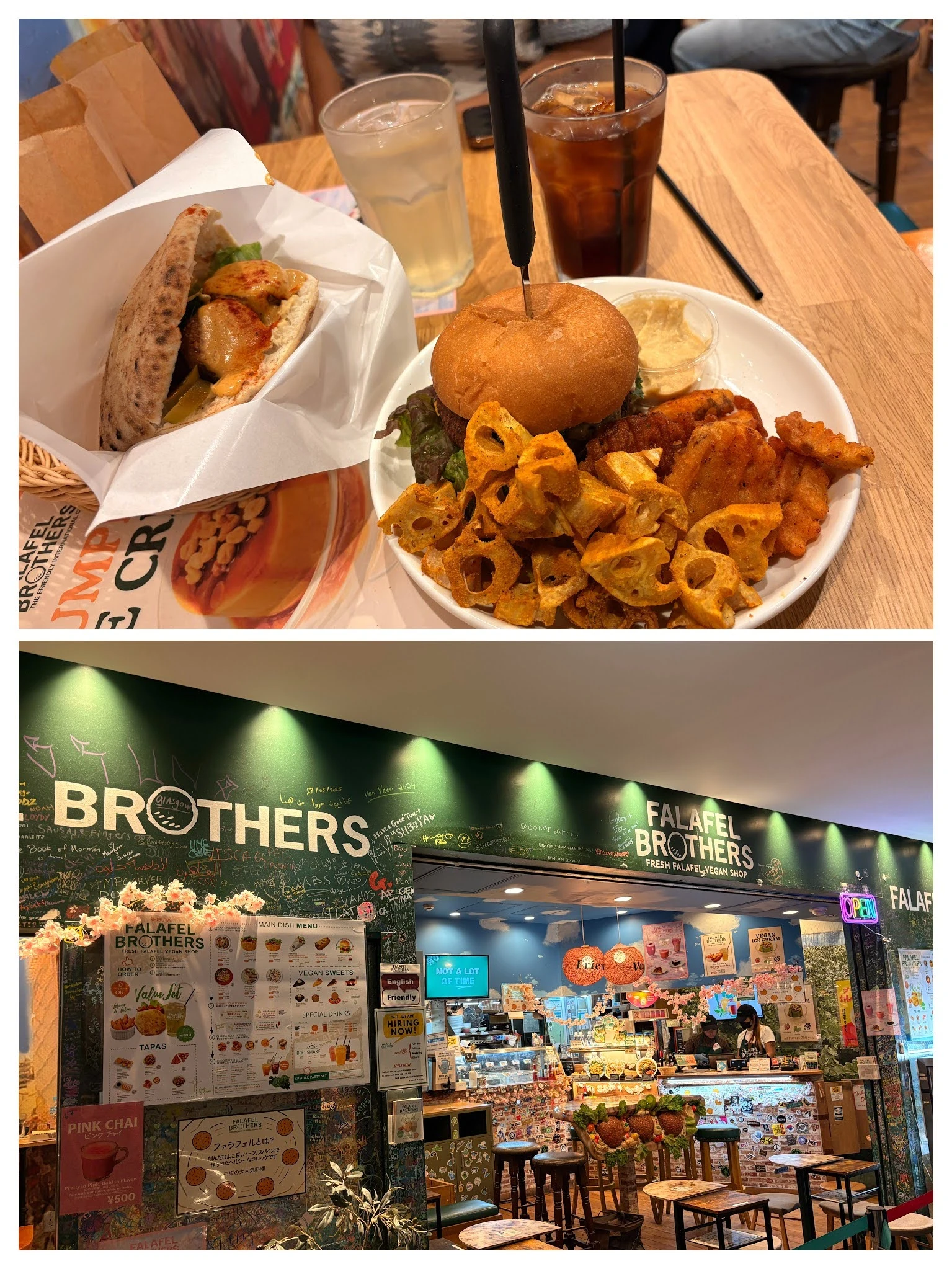
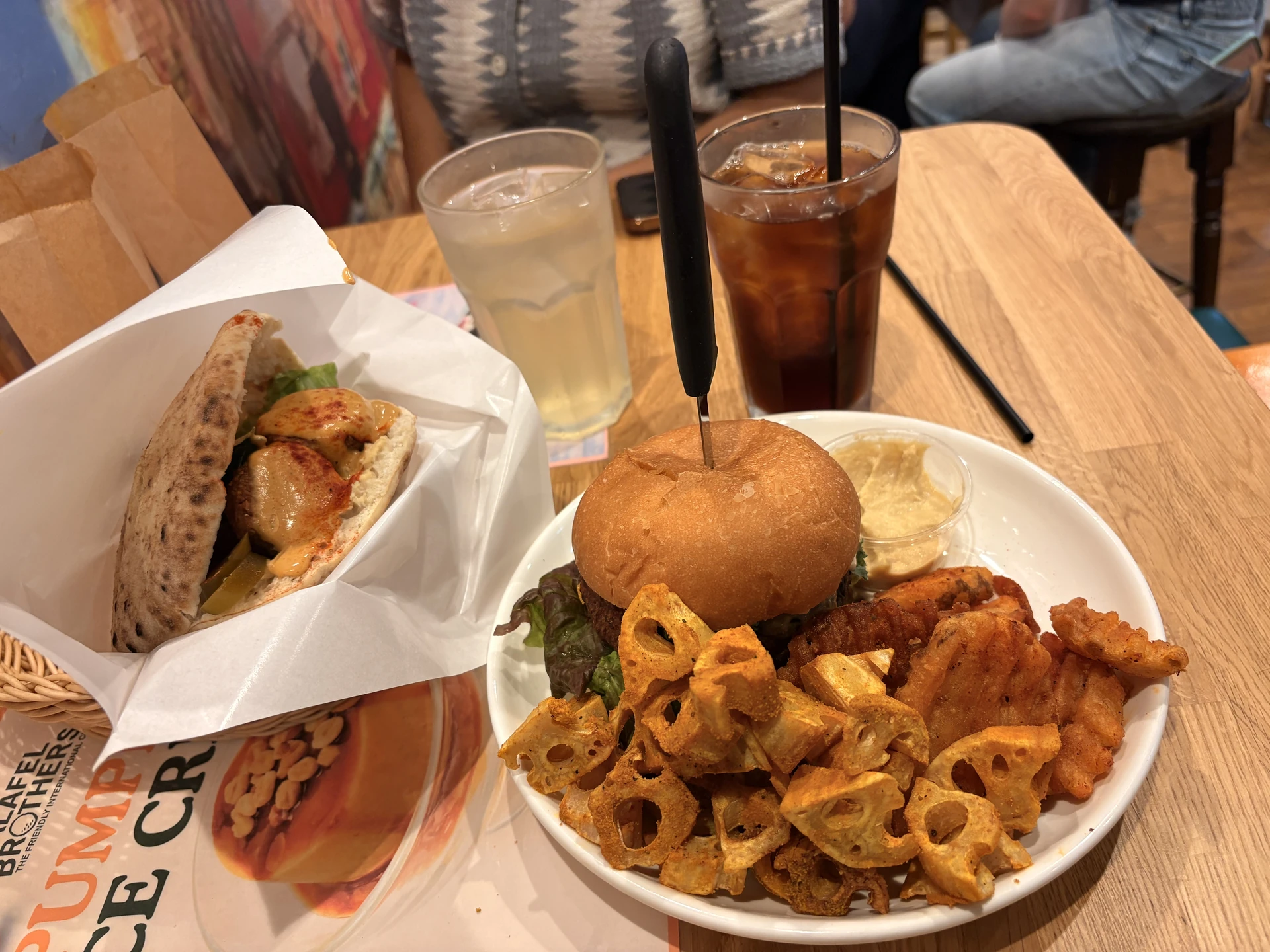
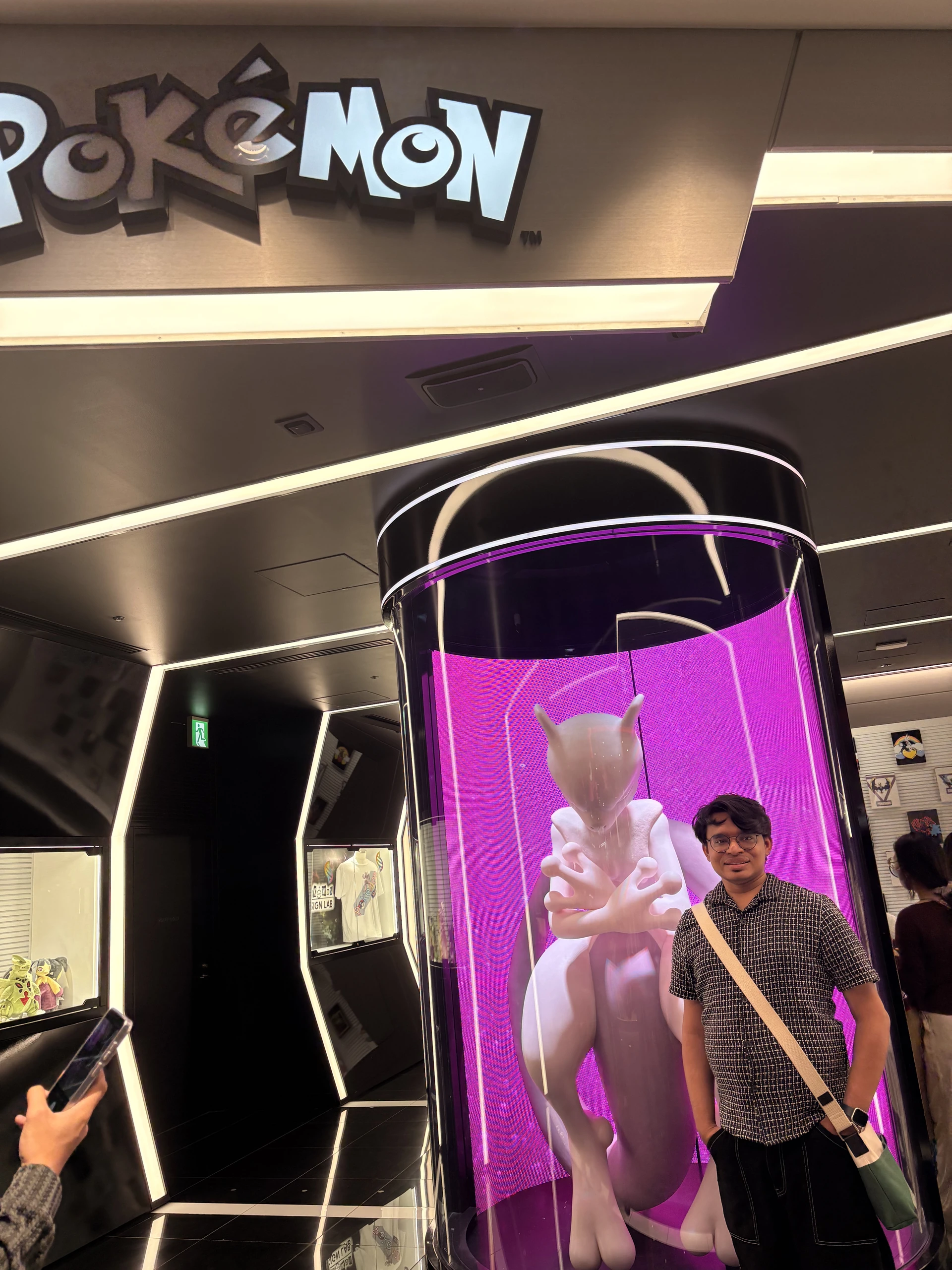
From the forest, we walked into the world-famous Shibuya crossing. We did the tourist ritual properly: crossed it over and over, shot videos from every angle, then went up for the free upper view from a mall. Lunch was at Falafel Brothers inside Parco. People will tell you vegetarian and vegan food is hard to find in Japan — it isn't, it's just slightly pricier, and that's the cost of travel. Mid-meal, we discovered Parco had a Pokémon Center and a Nintendo store one floor down. The craziness for those two on a packed weekday afternoon has to be seen to be believed.
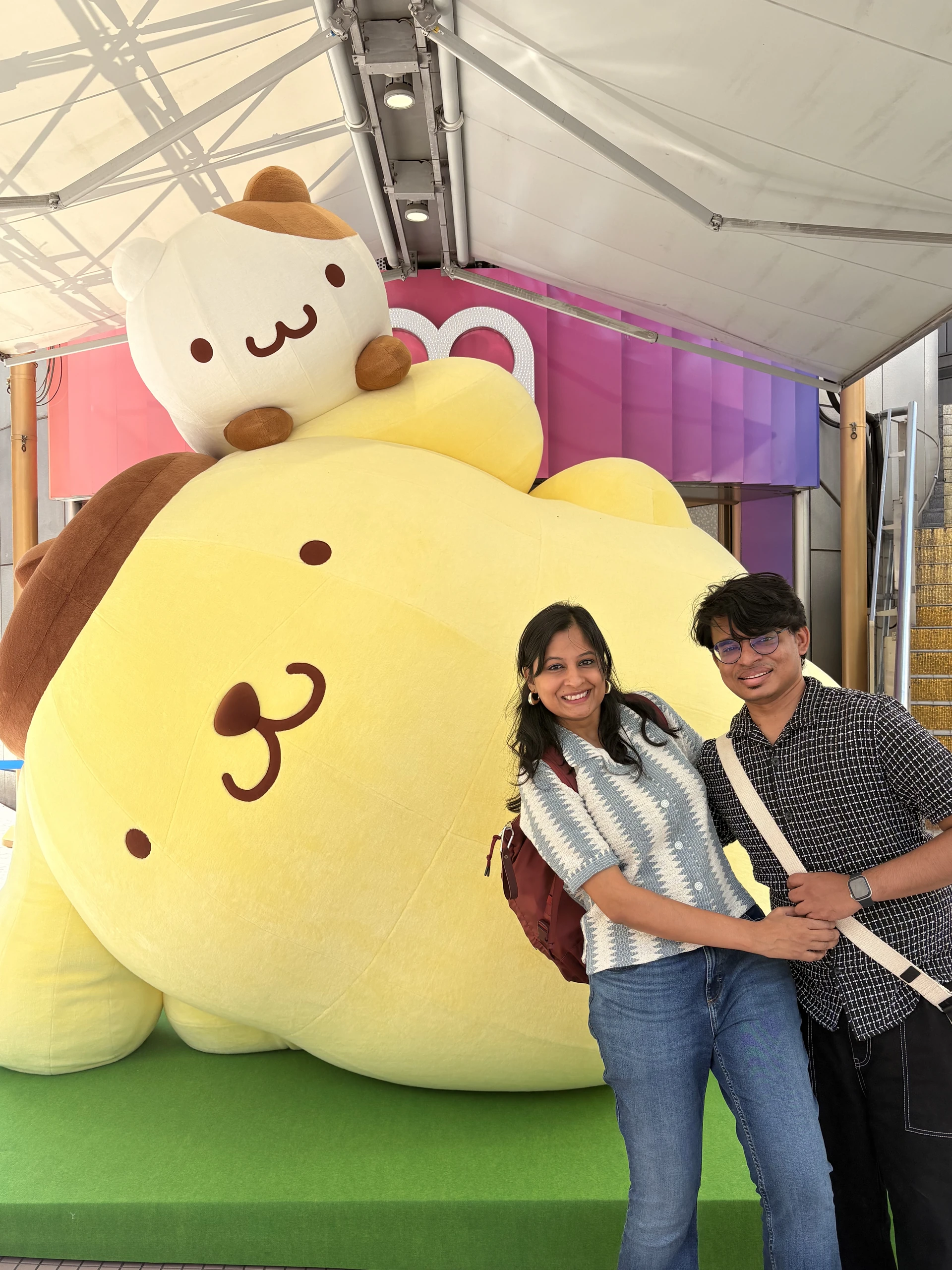
Snapshots from Day 4 — Meiji Shrine & Shibuya Crossing
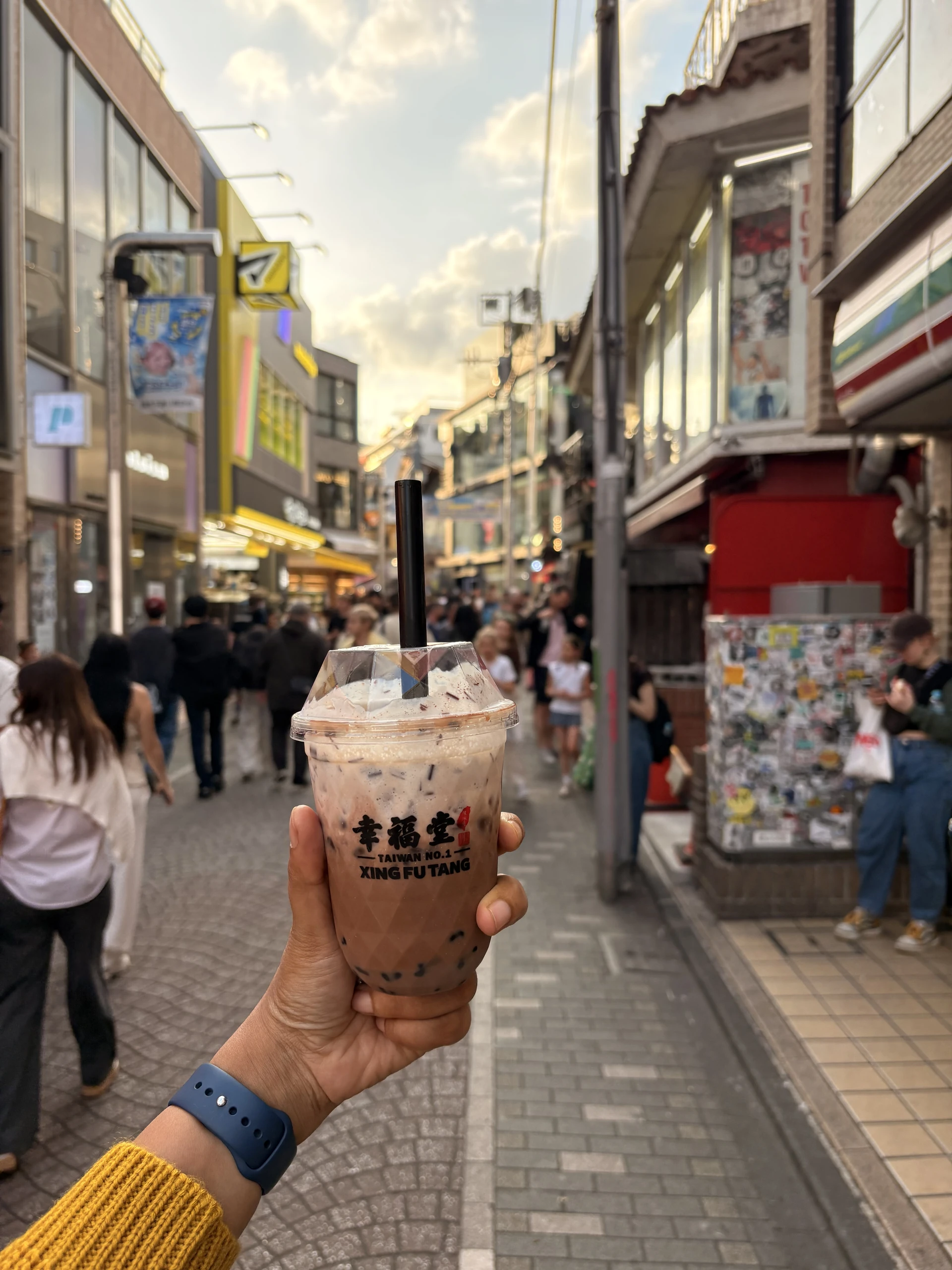
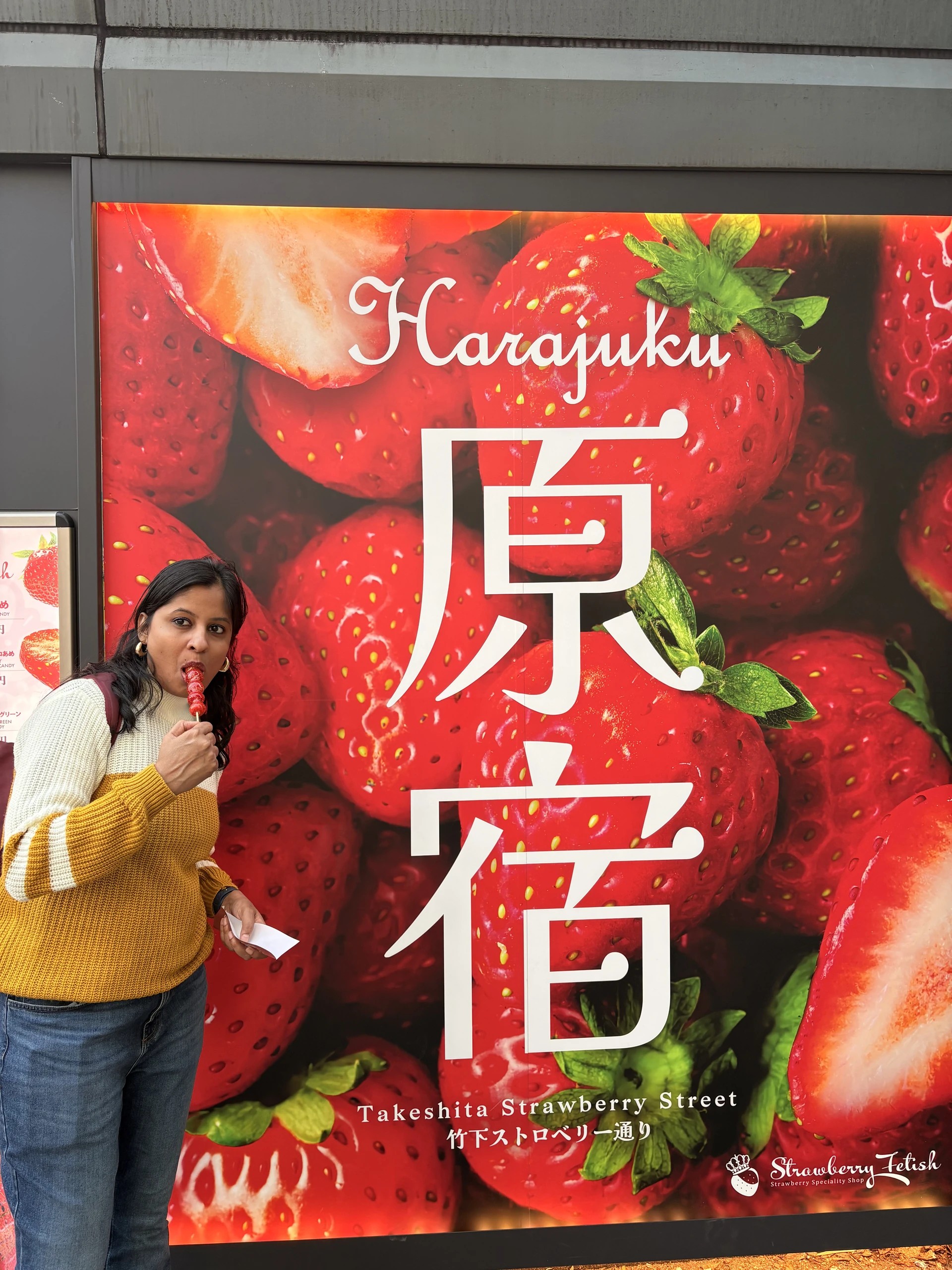
Then the great Shibuya shop-hop — Asics, ABC Mart, Shibuya 109, 2nd Street — and from there we drifted into Harajuku's Takeshita Street for snacks and boba tea, soaking in the loud, sticker-sweet teenage energy that gives the street its name.
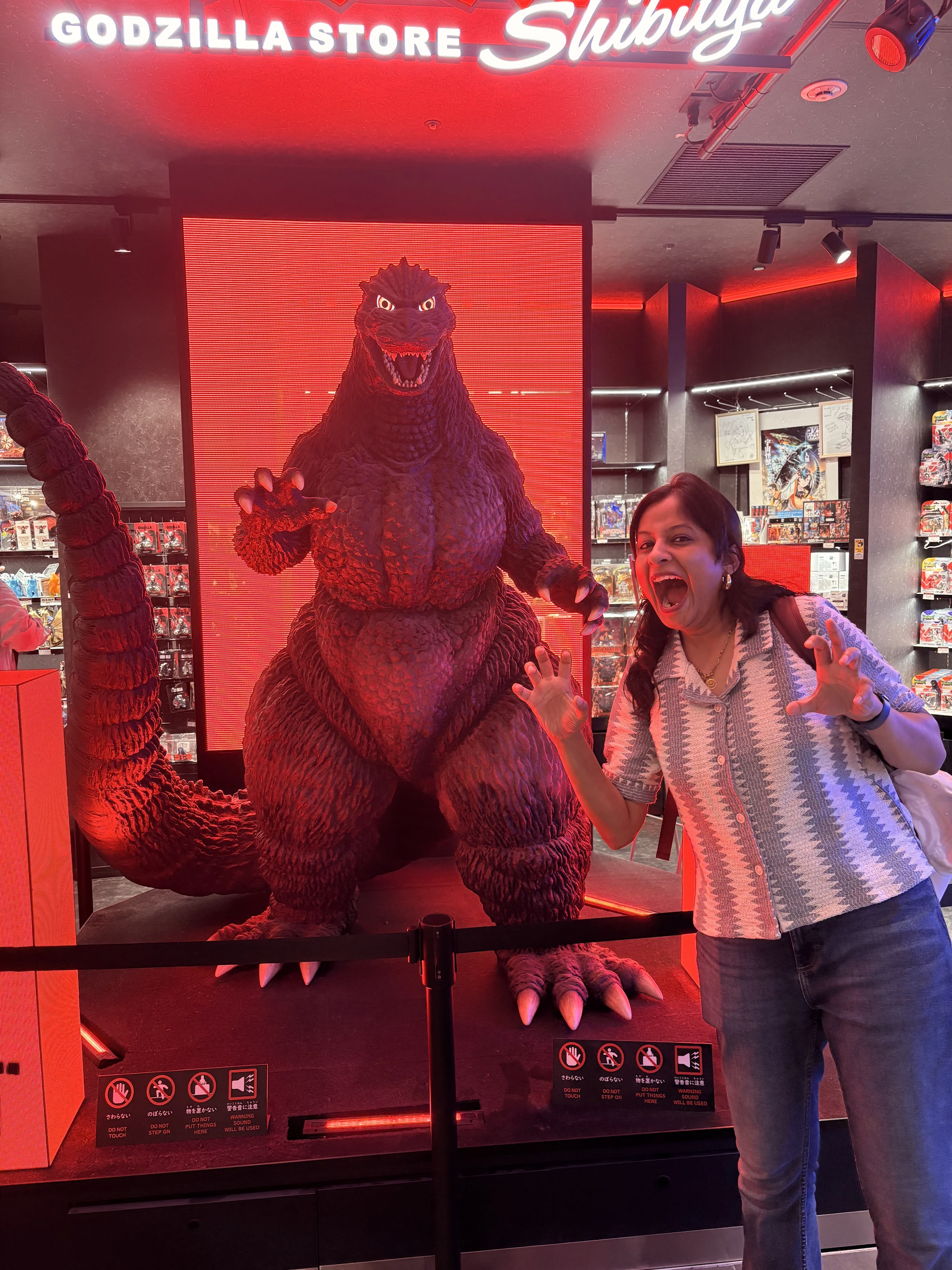
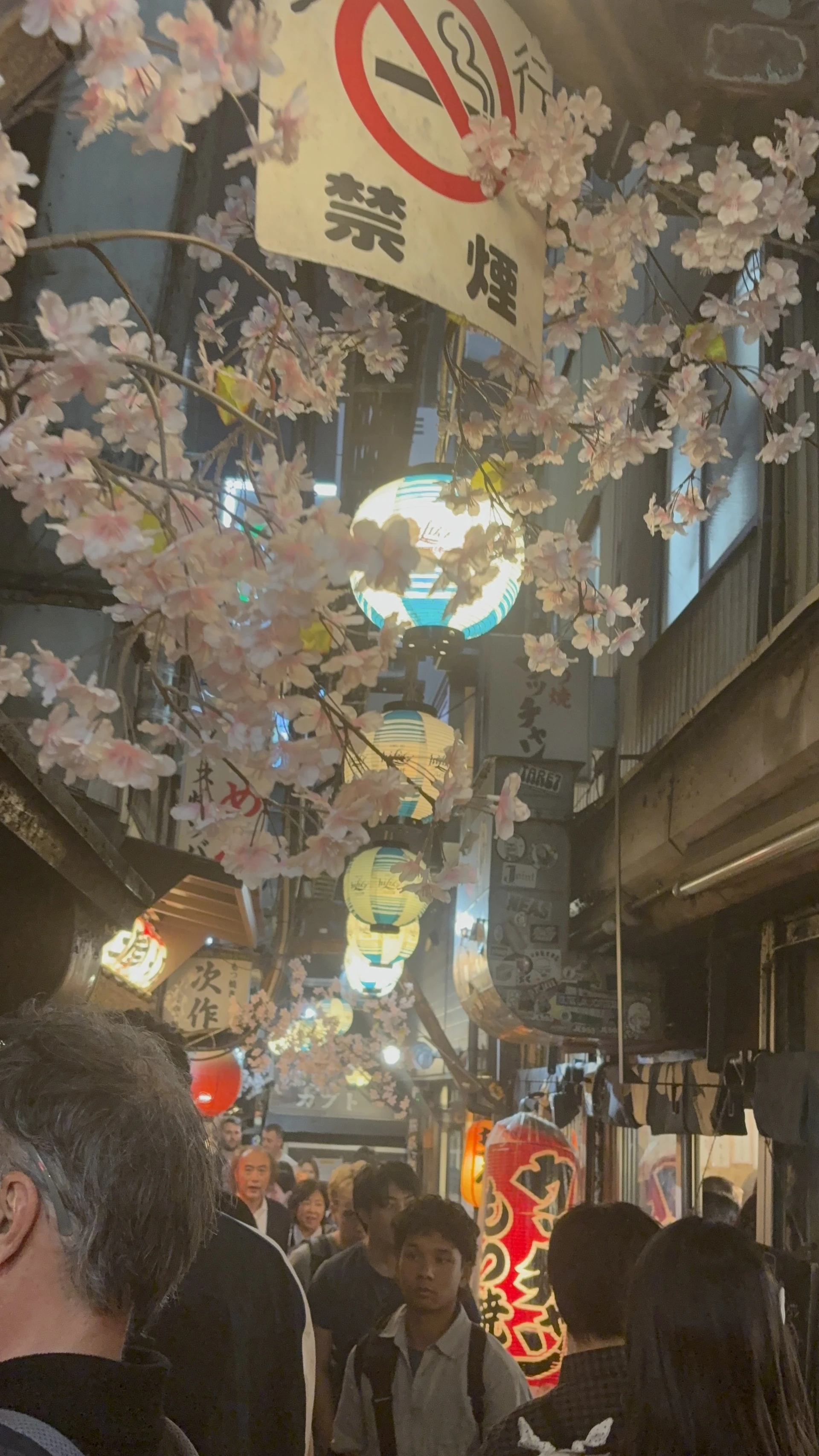
Evening was Shinjuku — neon lights, the cat billboard, the Godzilla head, and slow walks down Omoide Yokocho (Memory Lane) and Golden Gai. We couldn't find anything for us to eat in those tiny lanes, but the vibe alone was worth the detour: narrow alleys packed with people and tiny izakayas. It reminded us a little of Paratha Gali in Chandni Chowk, Delhi — except, well, much cleaner and much quieter. Even Tokyo's busiest streets don't feel noisy.
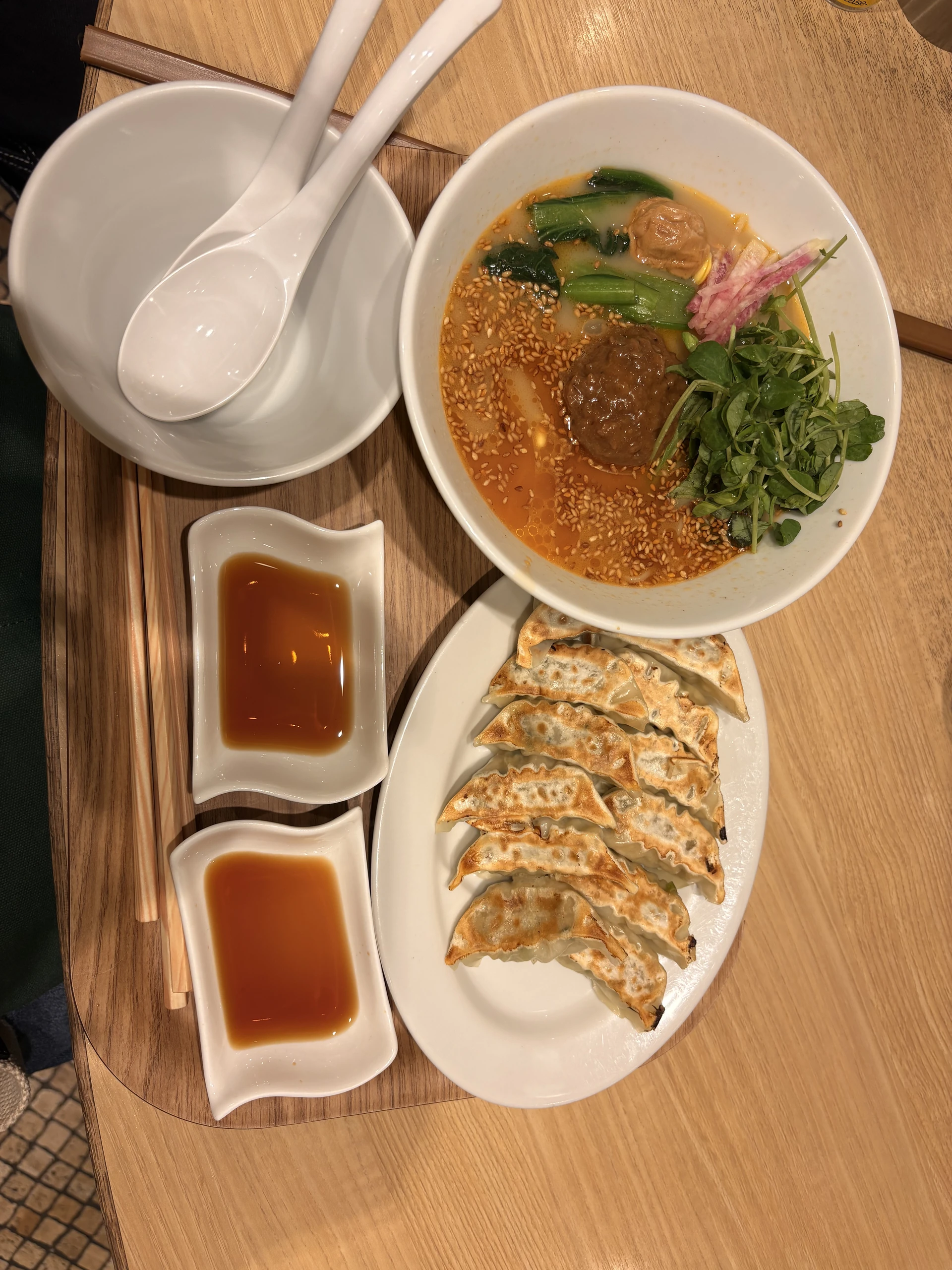
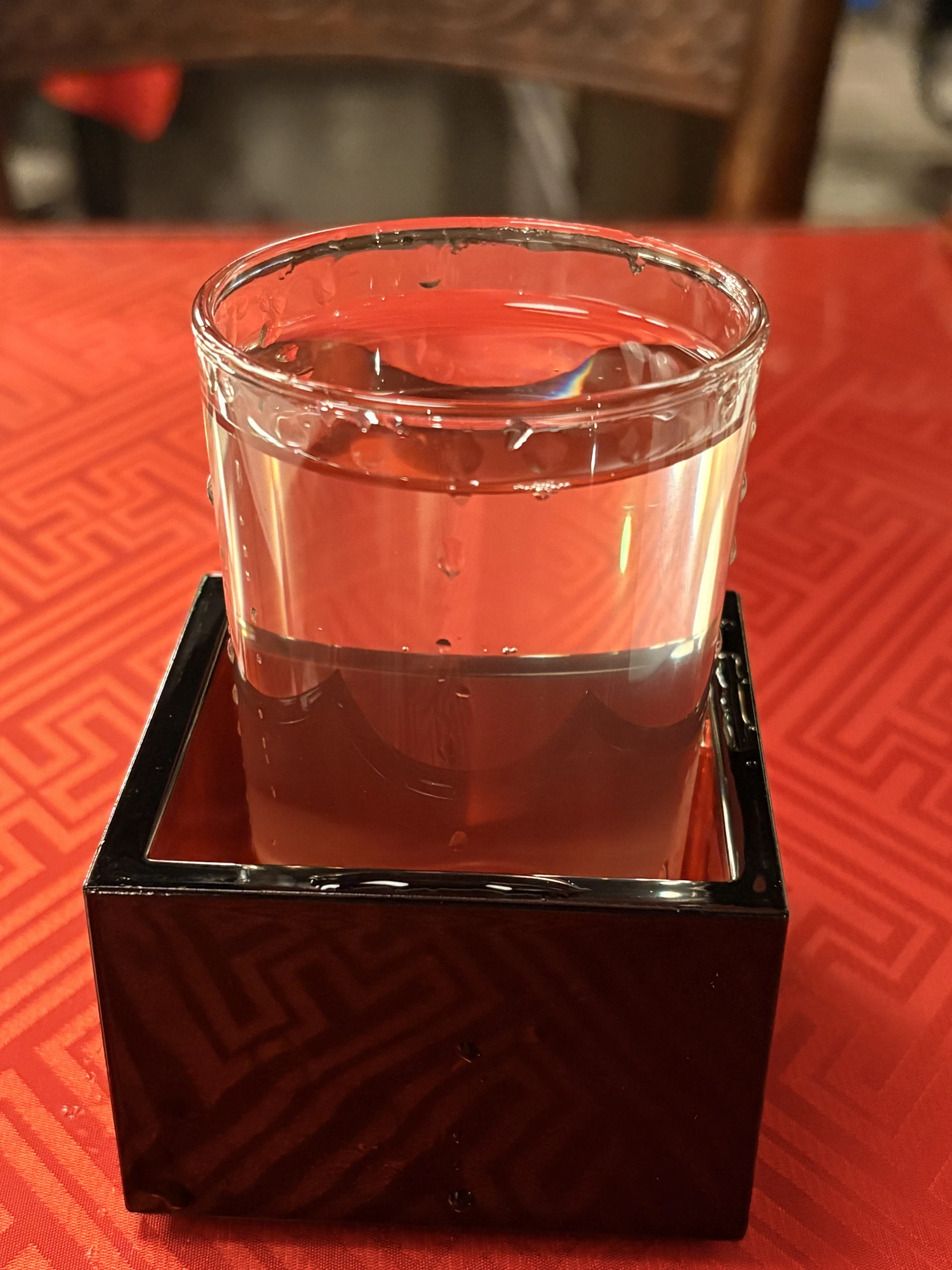
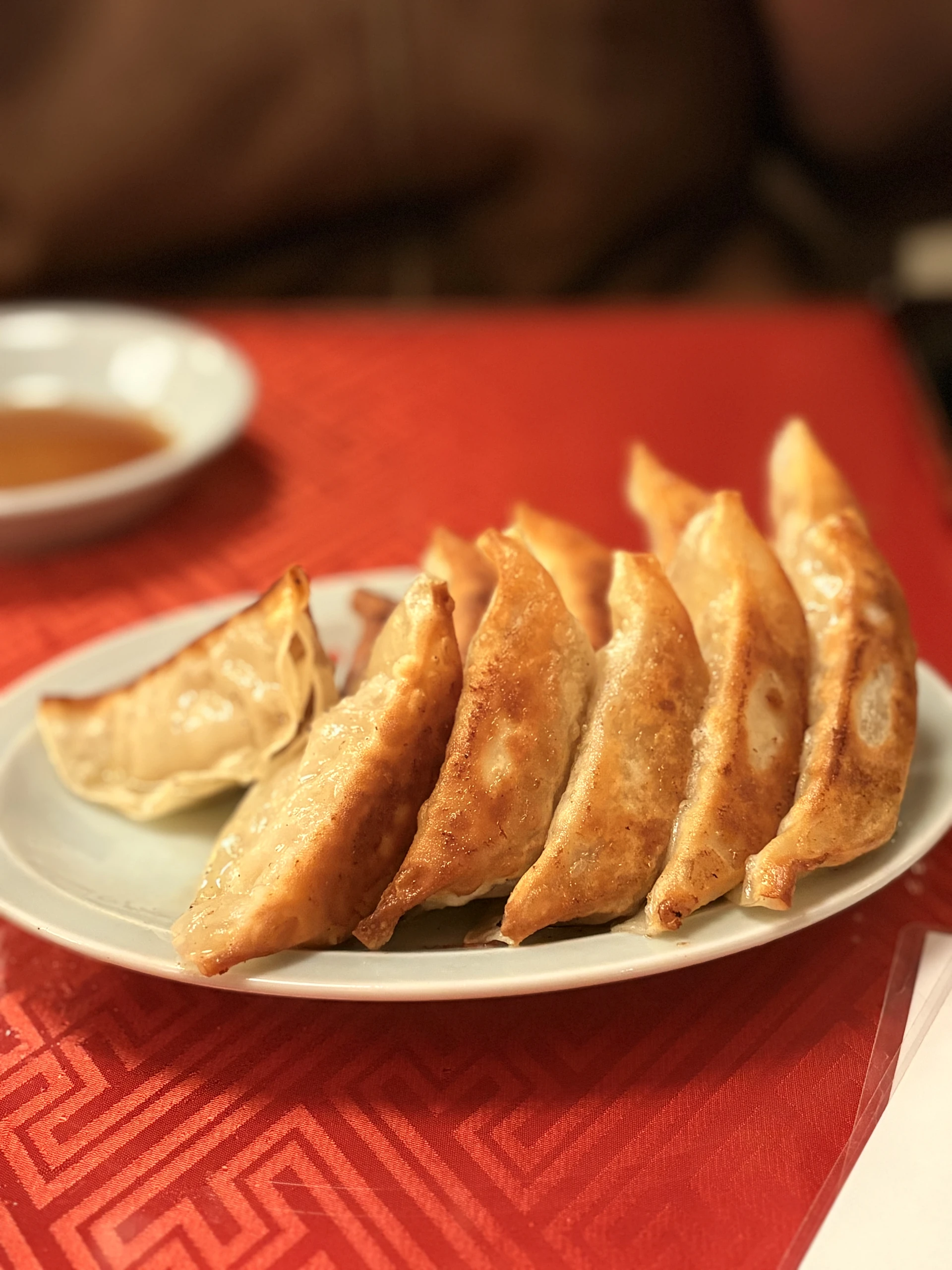
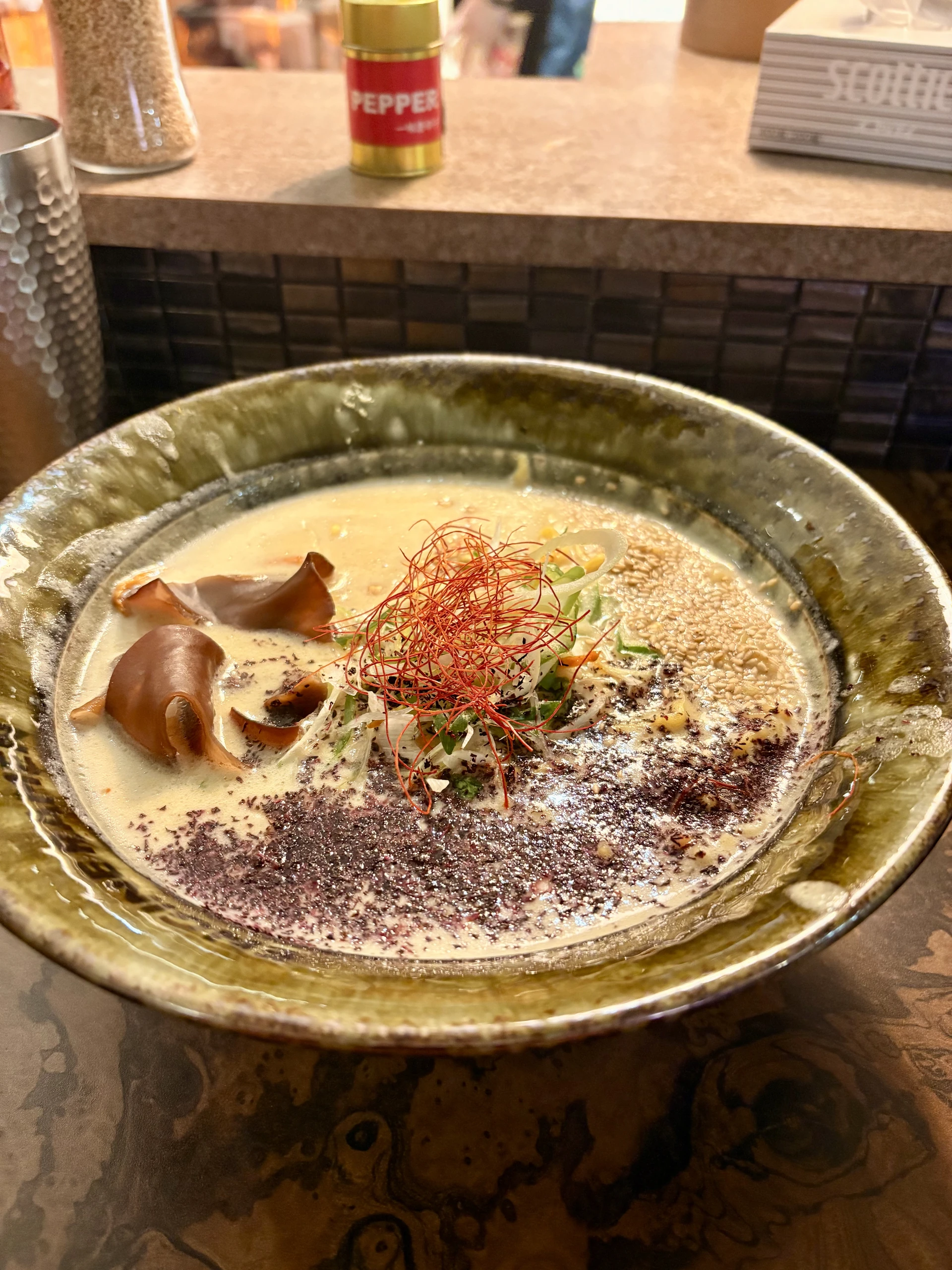
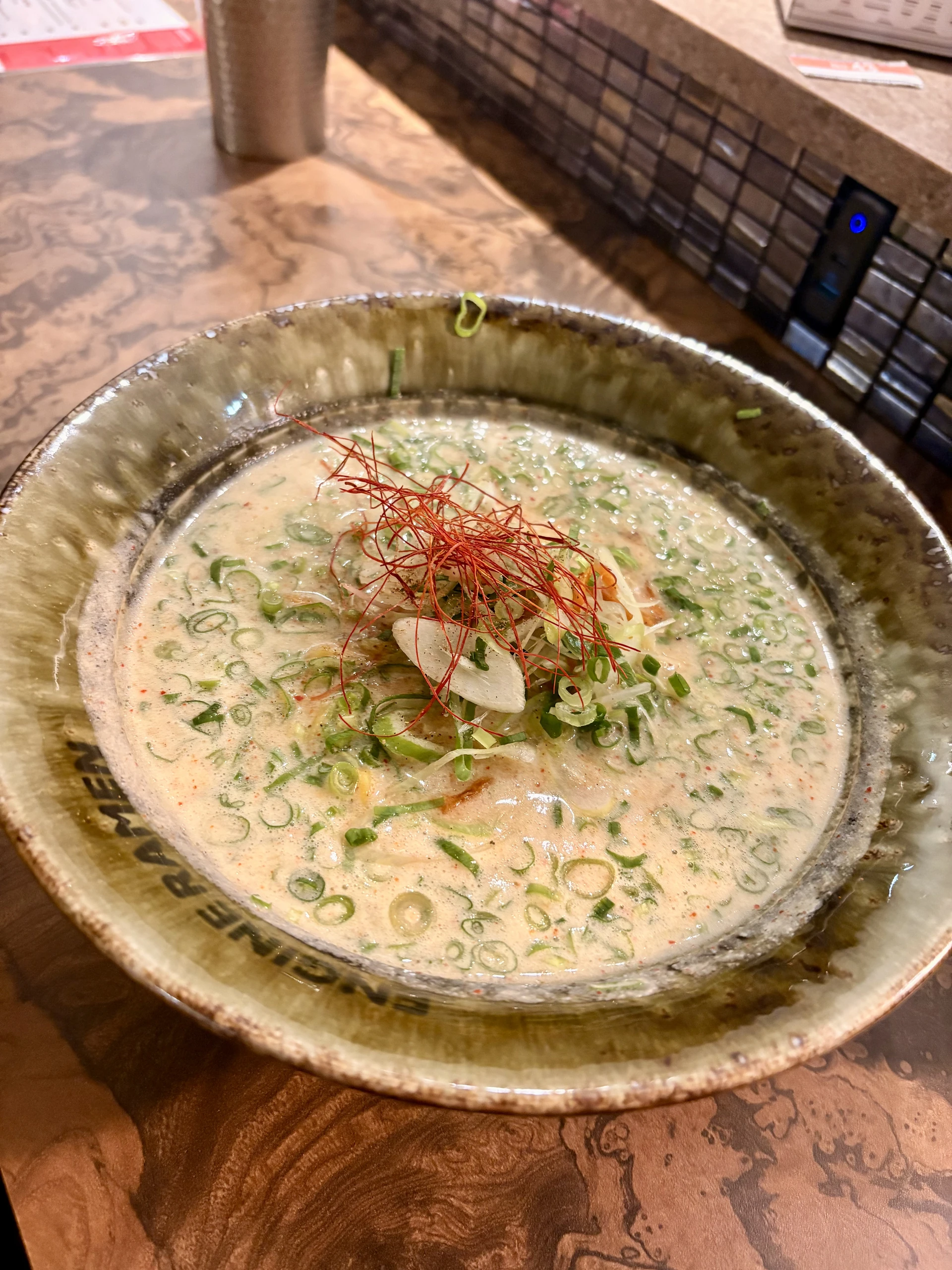
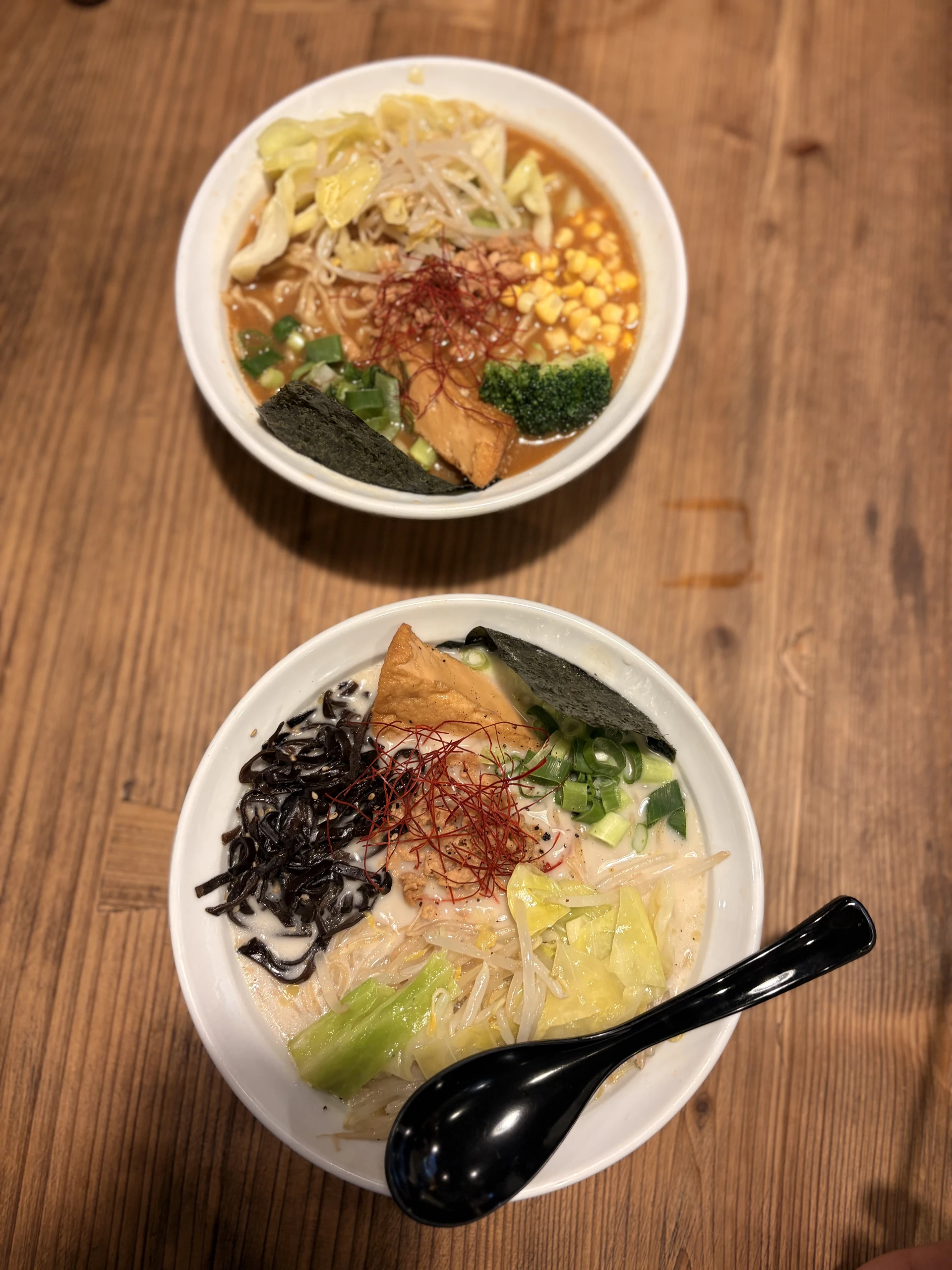
Dinner plan: T's TanTan, the famous vegan ramen counter at Tokyo Station. Getting there is its own quest. We pulled into Tokyo Station at 7:30pm and only reached the restaurant at 8:30pm — despite it being inside the station. Tokyo Station is a literal maze: not just a station, but underground streets for food, groceries, restaurants, shopping — every other big-city station we've ever known feels small in comparison. We got lost. A nearby restaurant owner heard us mangle the name; his English was limited, so he found someone else, walked them over, and that person personally led us not just to the restaurant but to the right queue line, so we wouldn't get lost again. People go out of their way for you in Japan, and you never forget it. The ramen, when it finally arrived, was every bit worth the maze — gyoza first, then steaming bowls of TanTan, eaten slowly because our legs were begging us to. We hobbled out happier than we had any right to be after walking three neighbourhoods in a single day, and rode the metro home half-asleep.
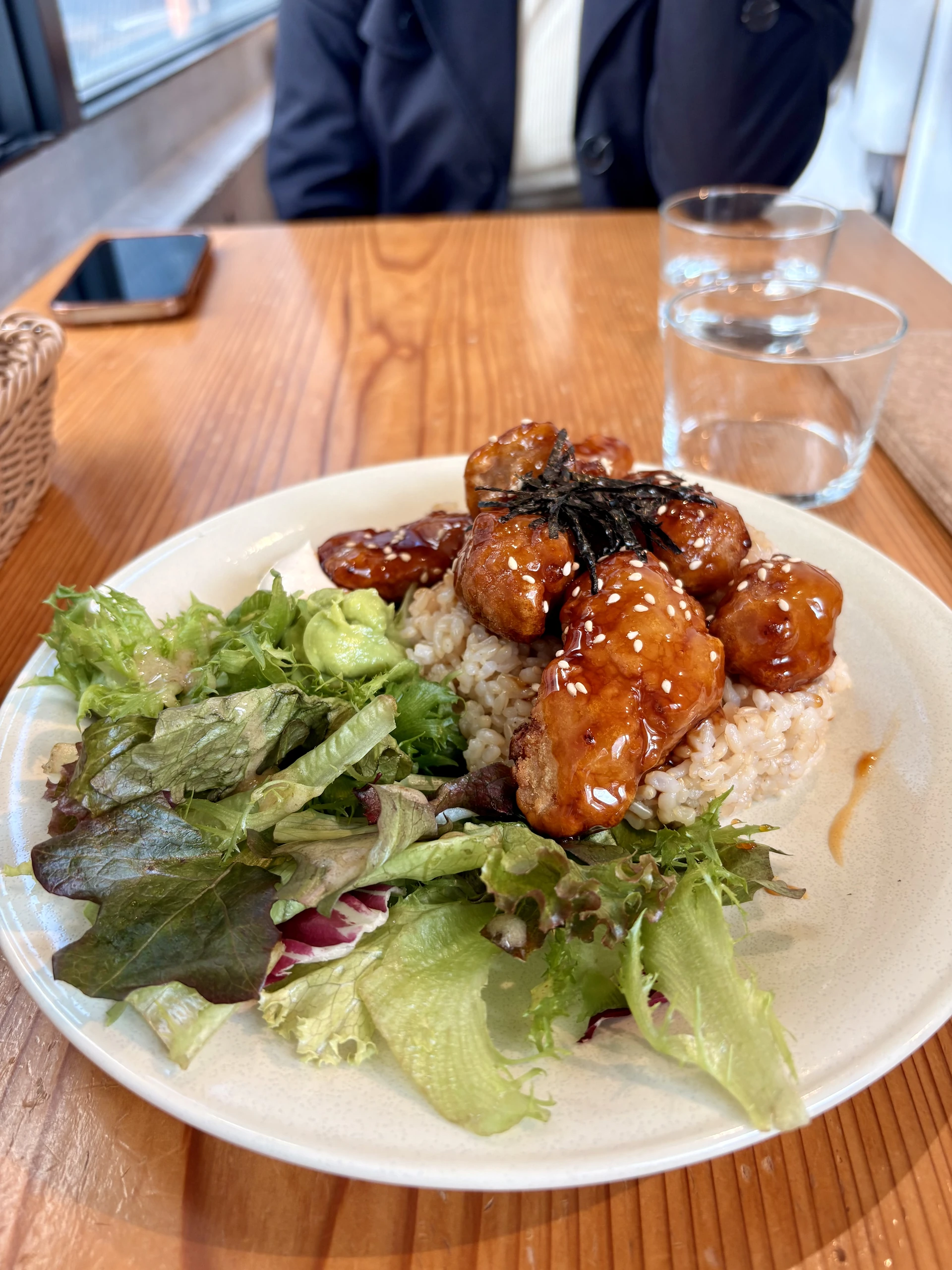
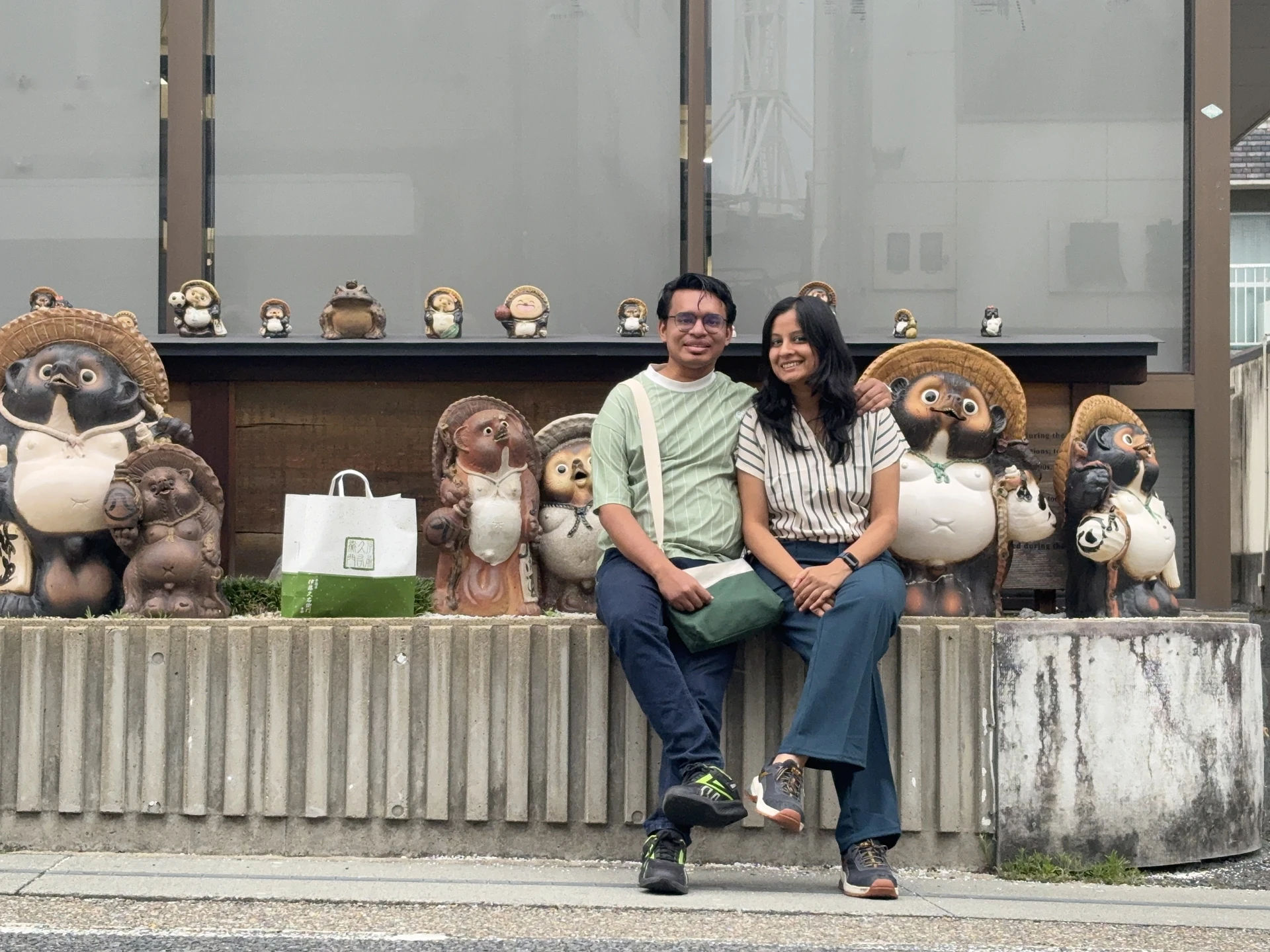
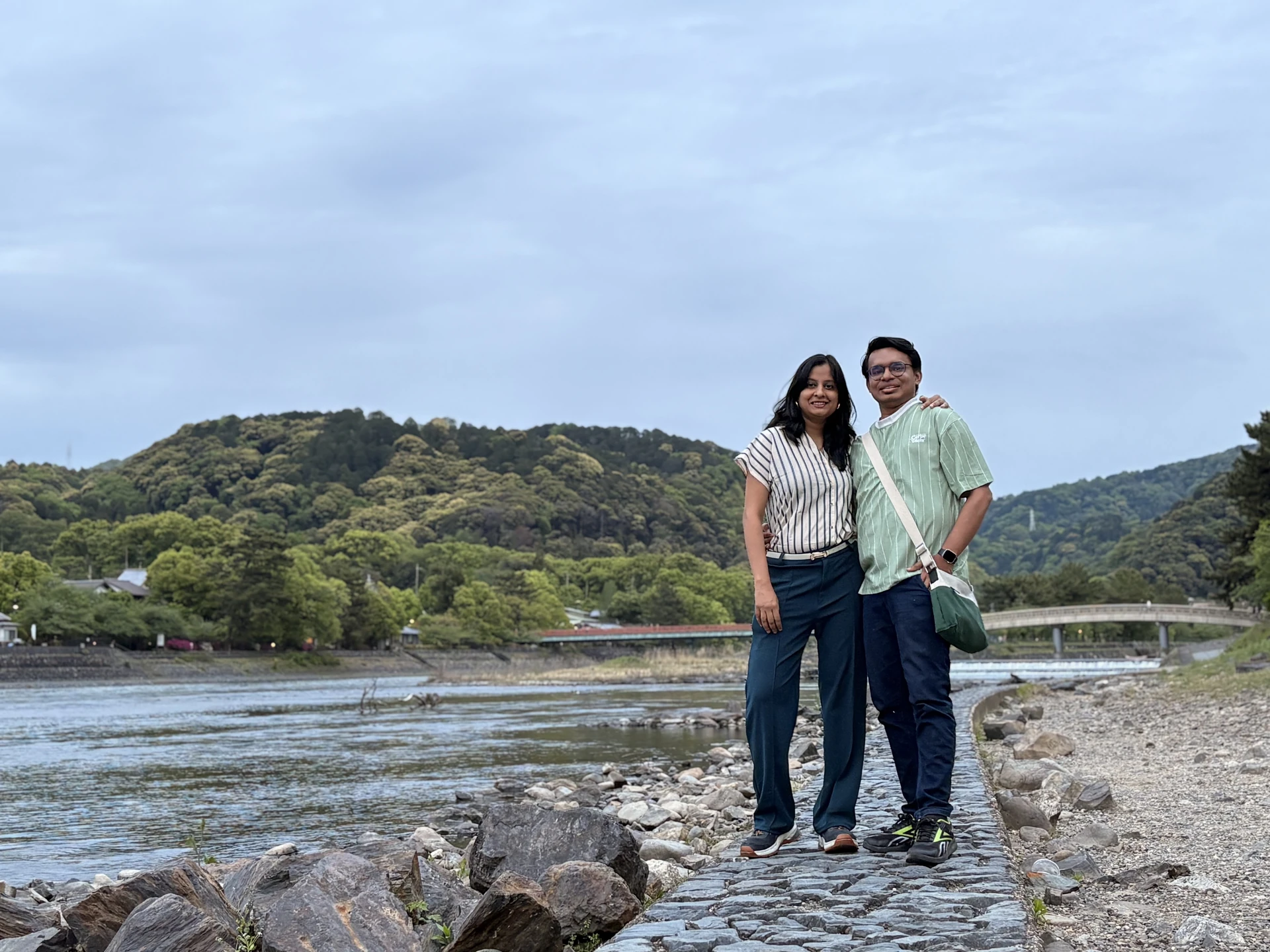
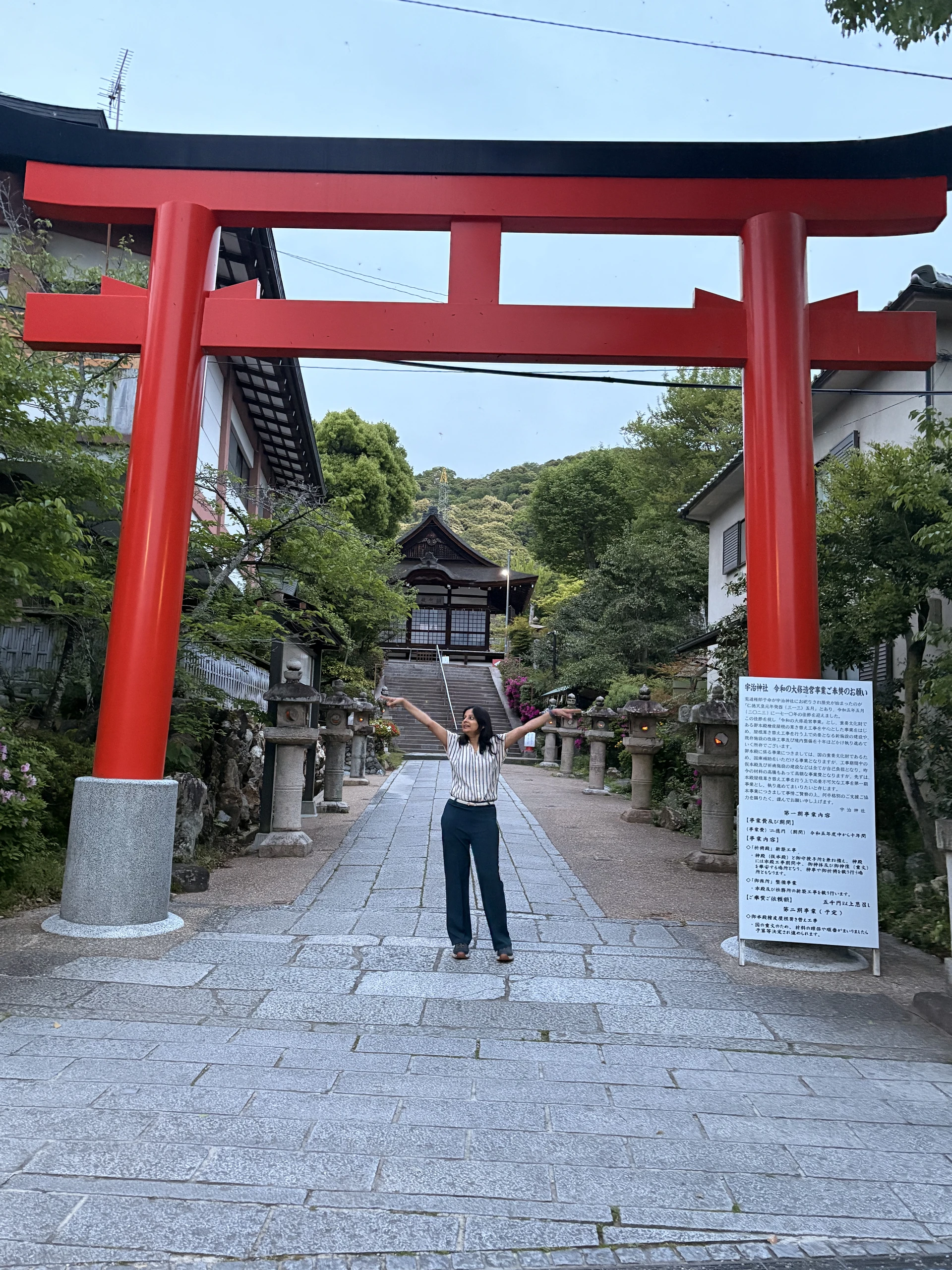
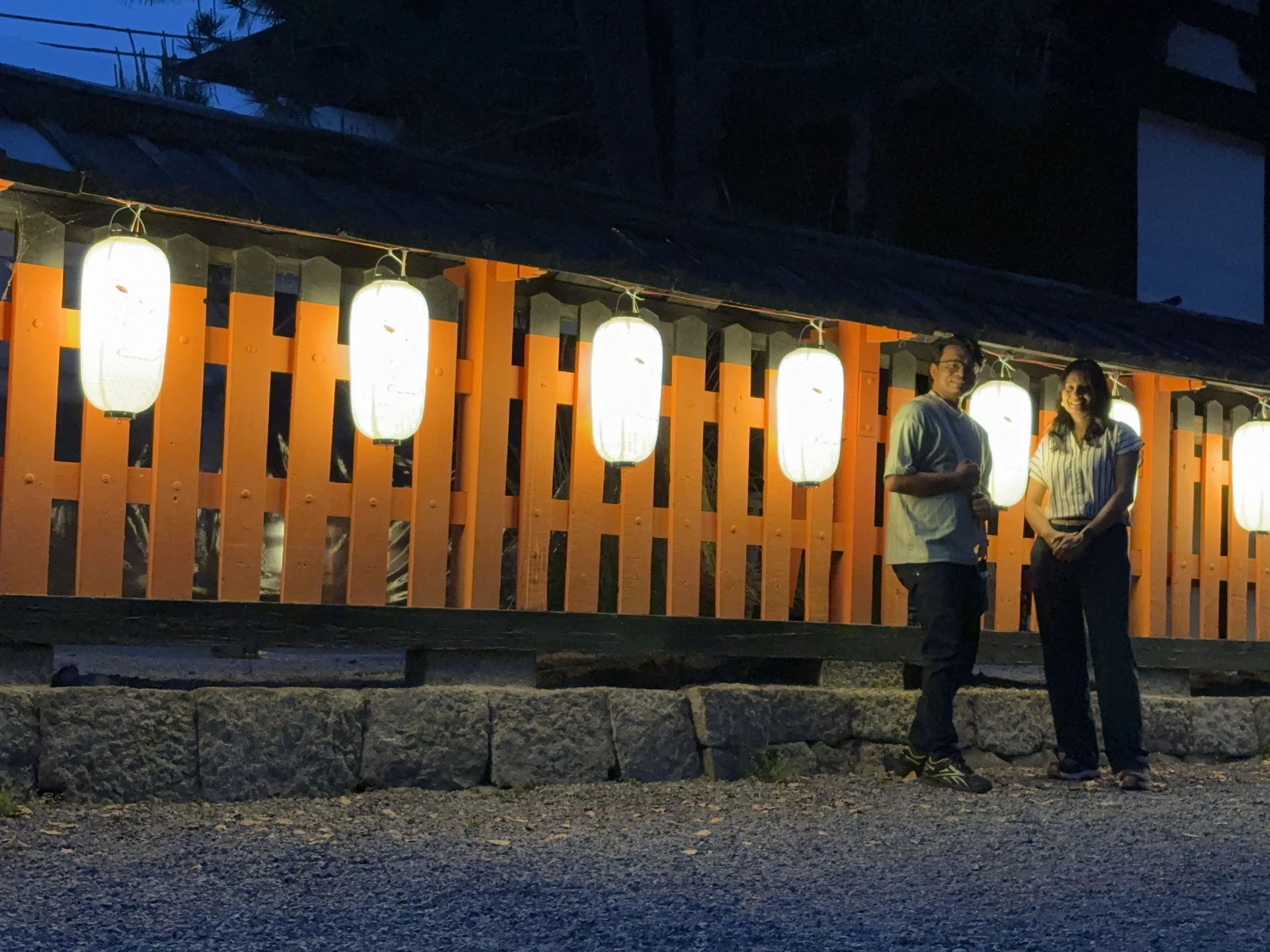
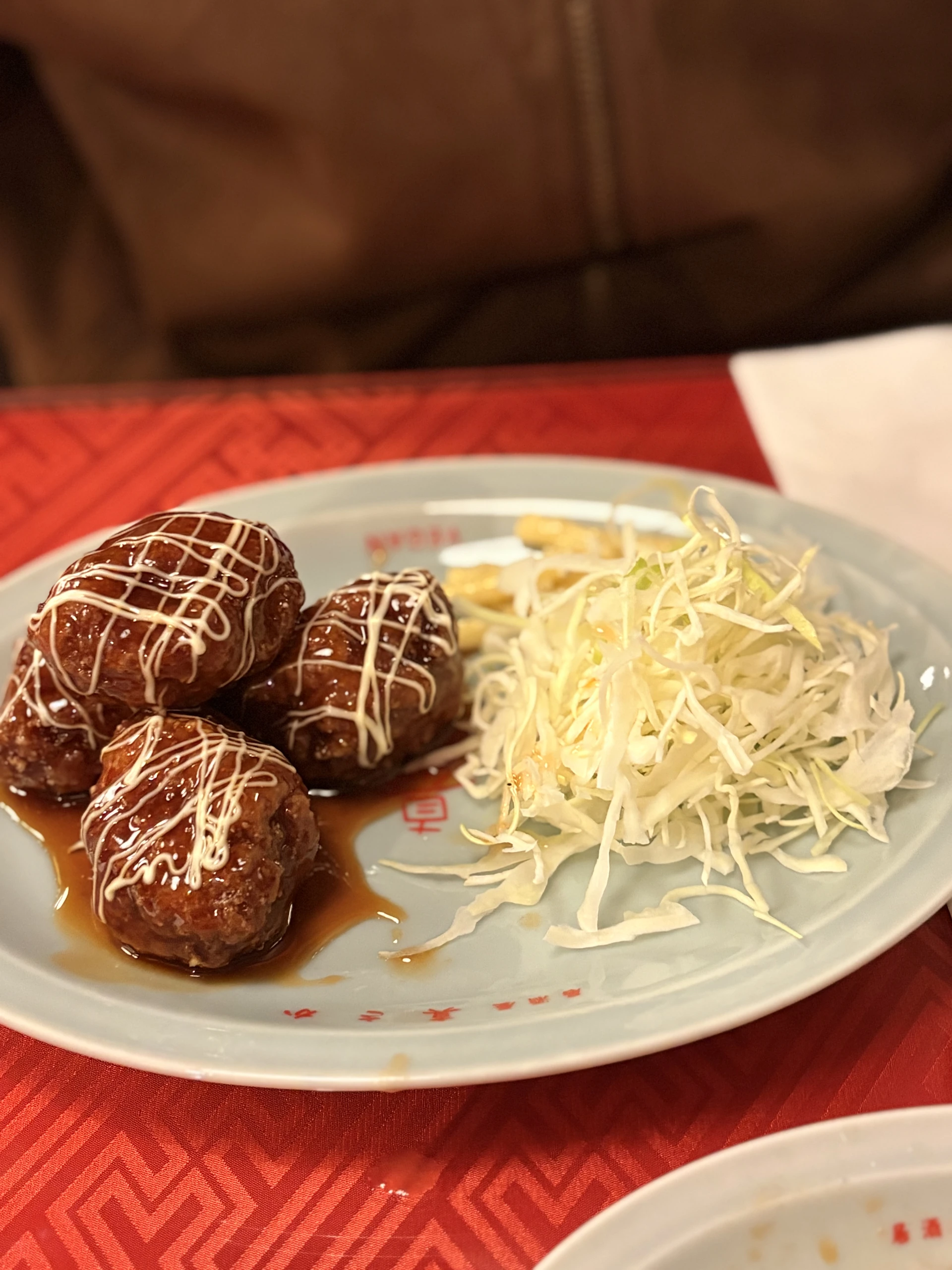
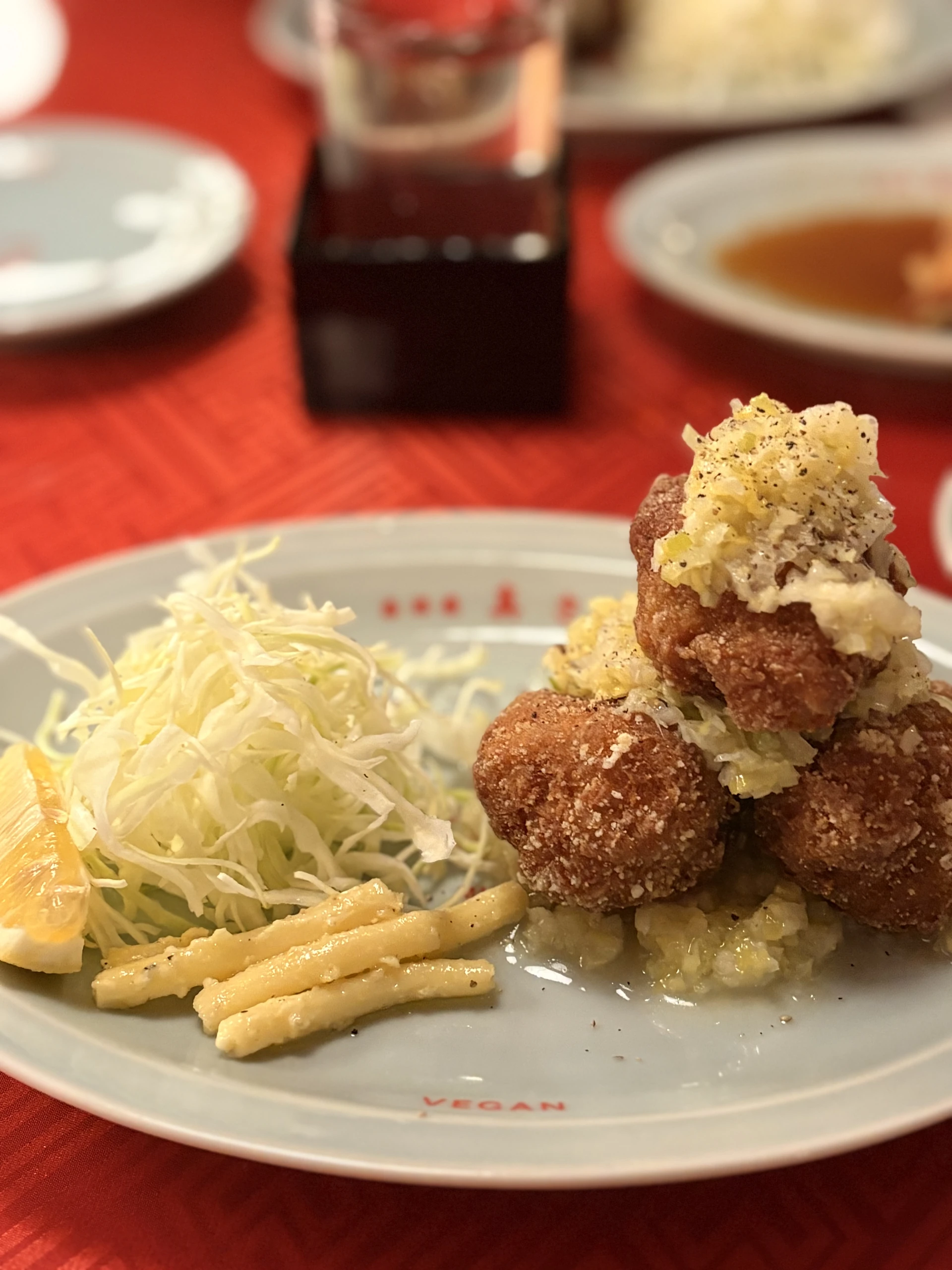
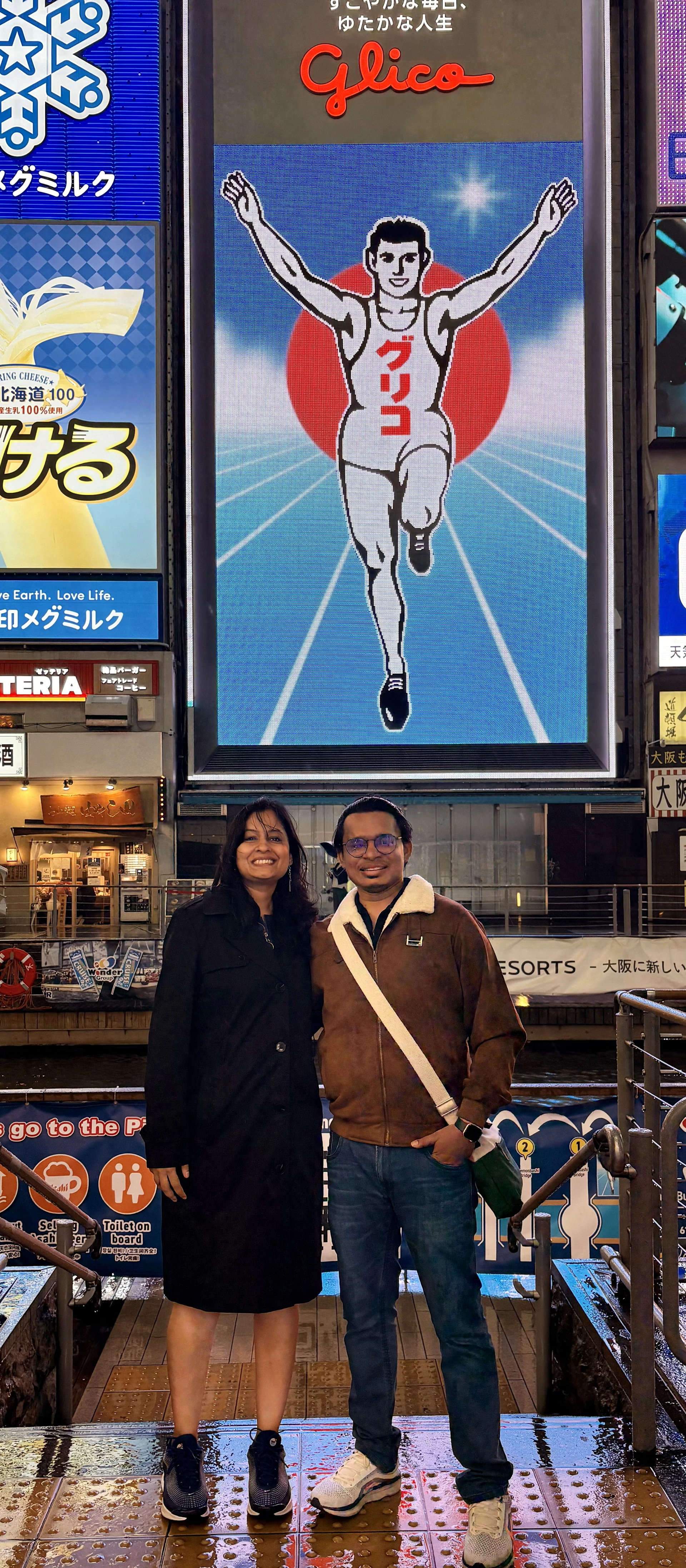
Snapshots from Day 4 — Shibuya shop-hop, Harajuku, Shinjuku & T's TanTan
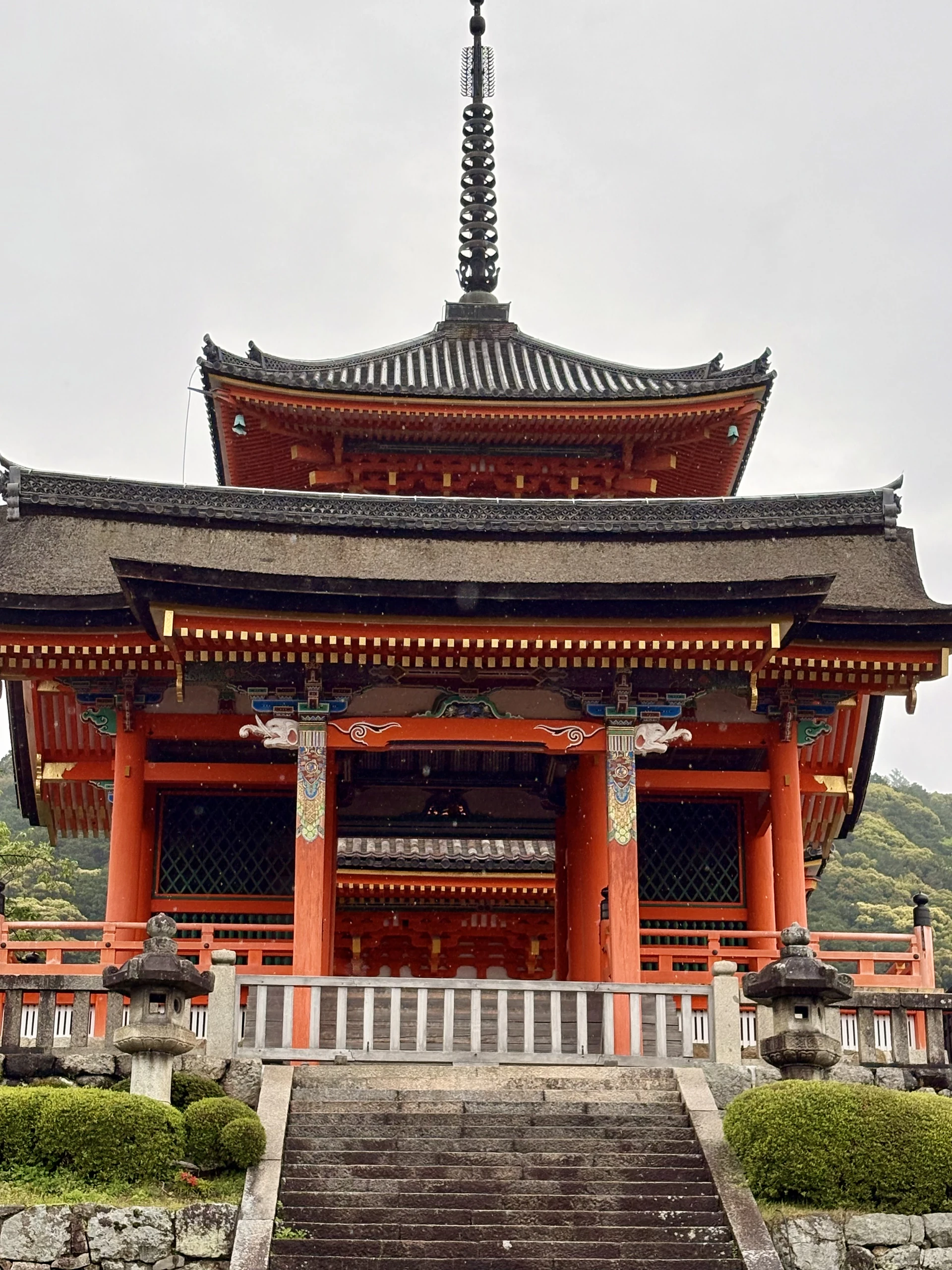
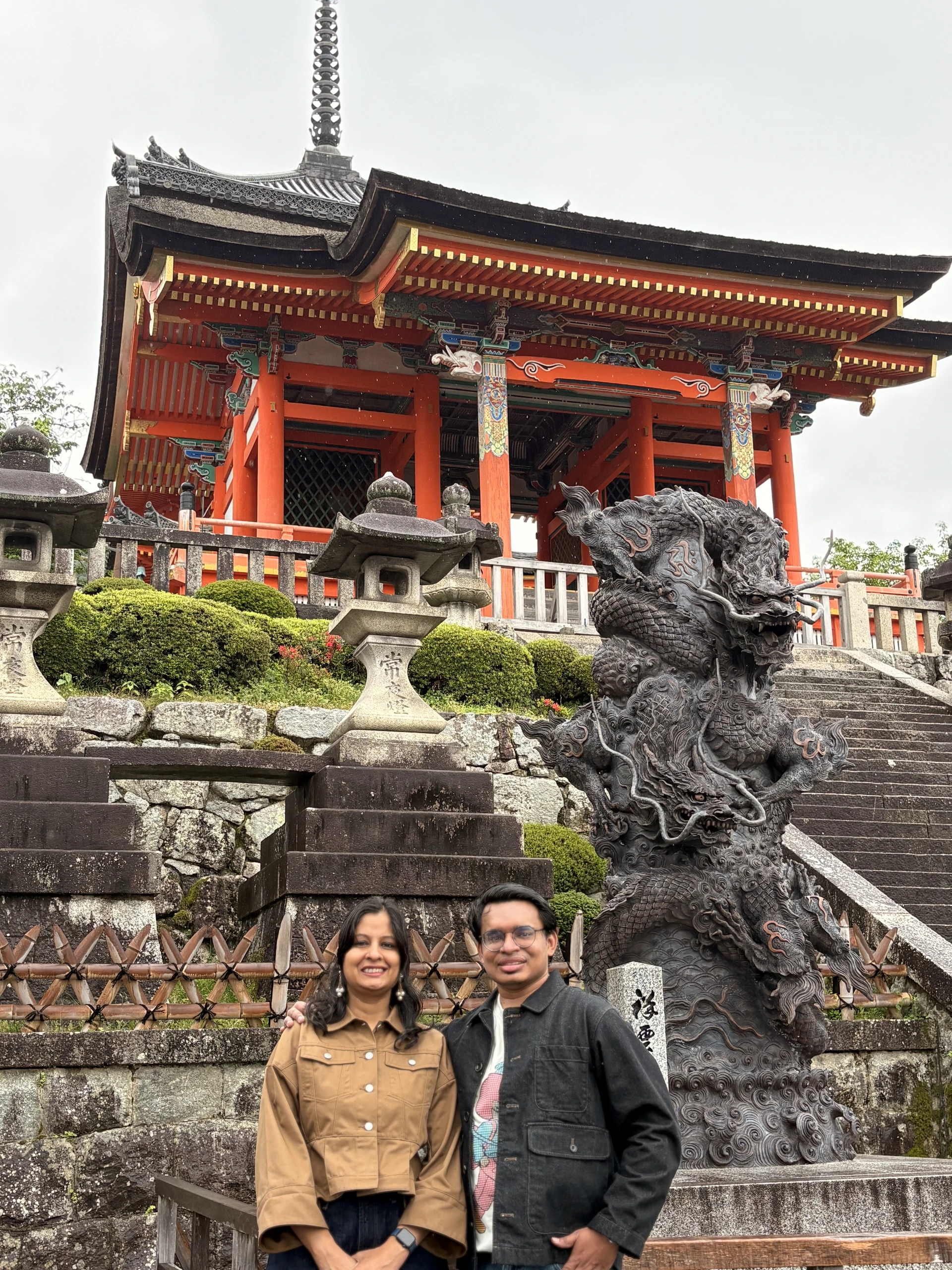
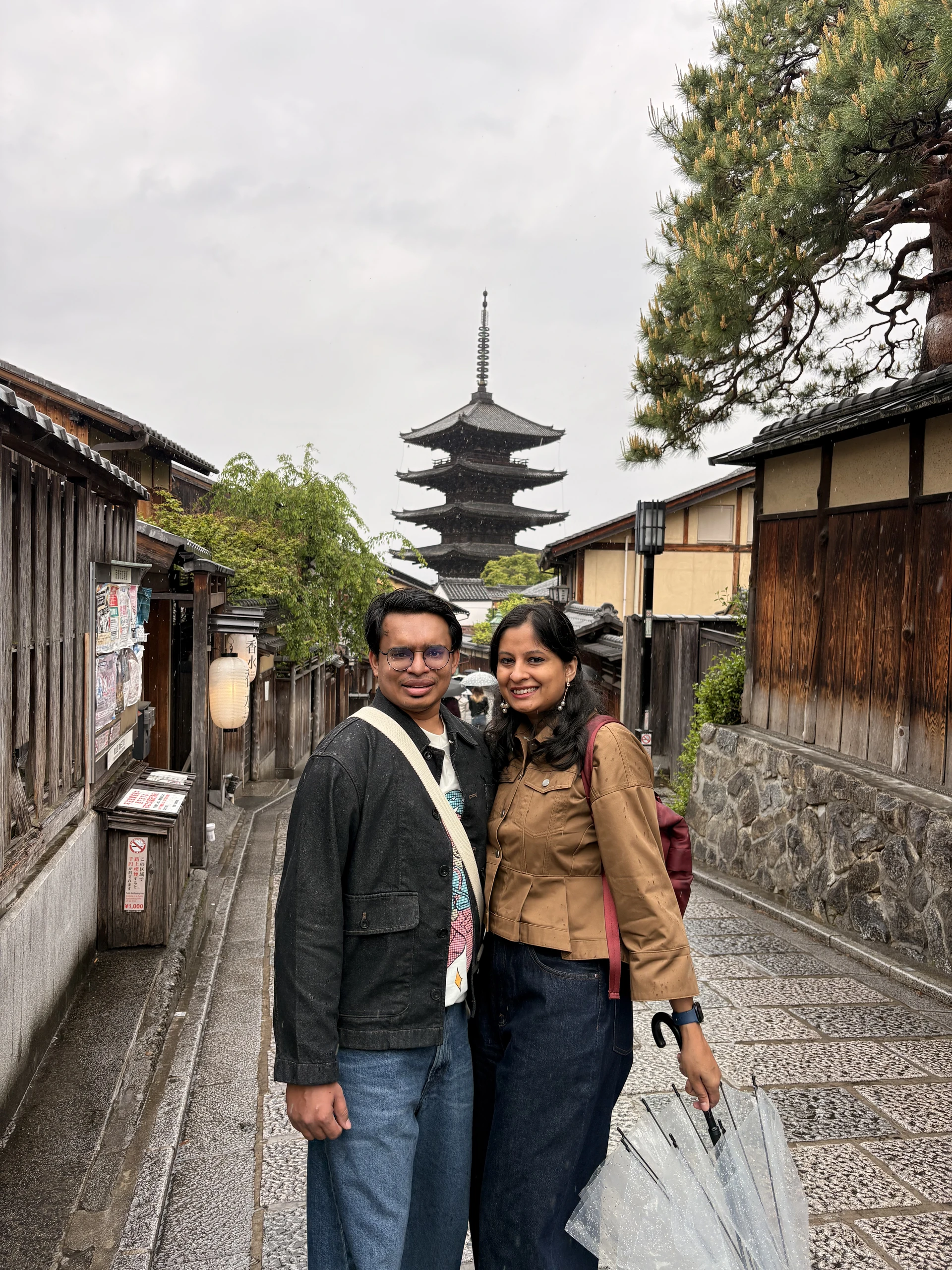
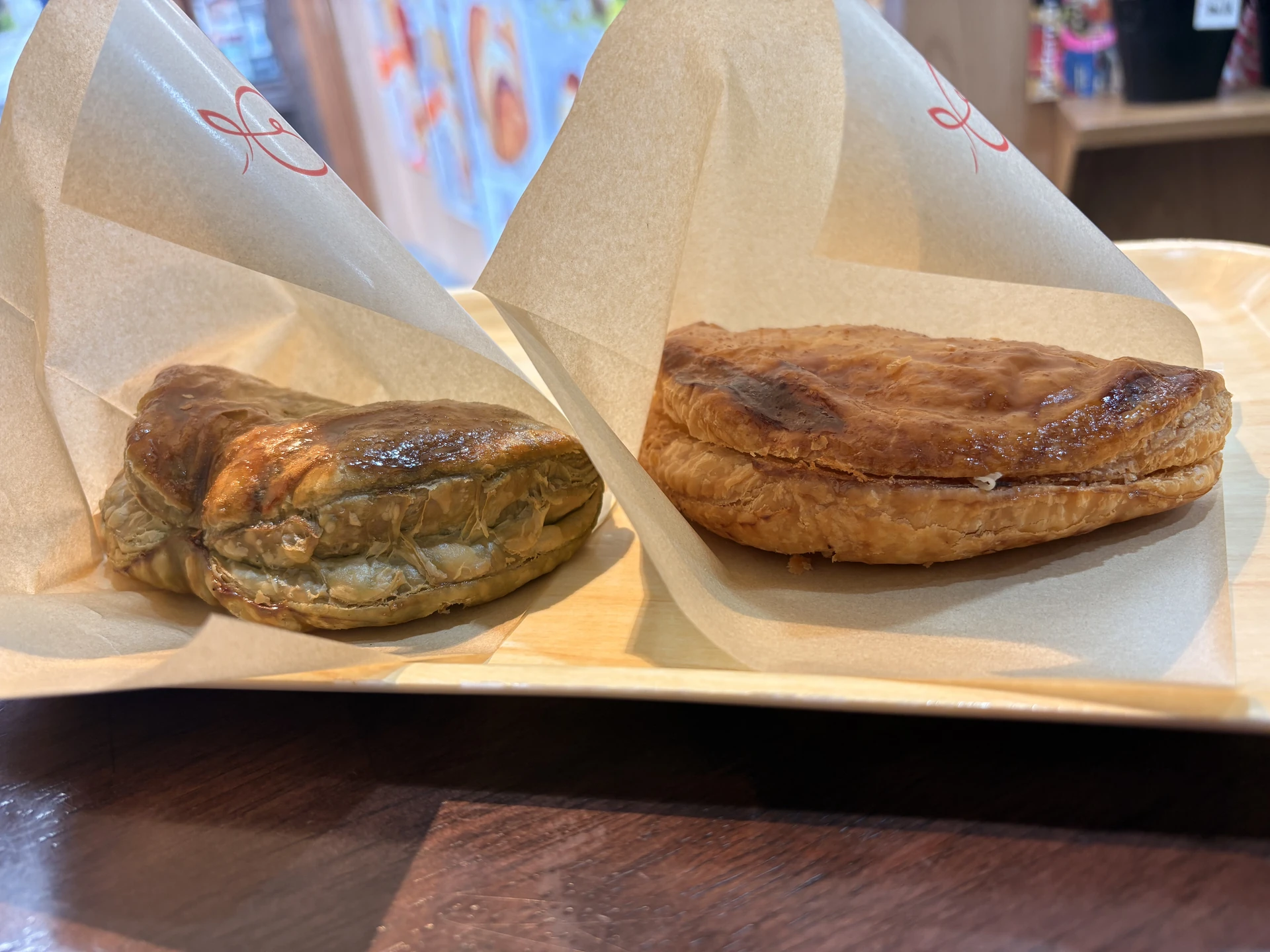
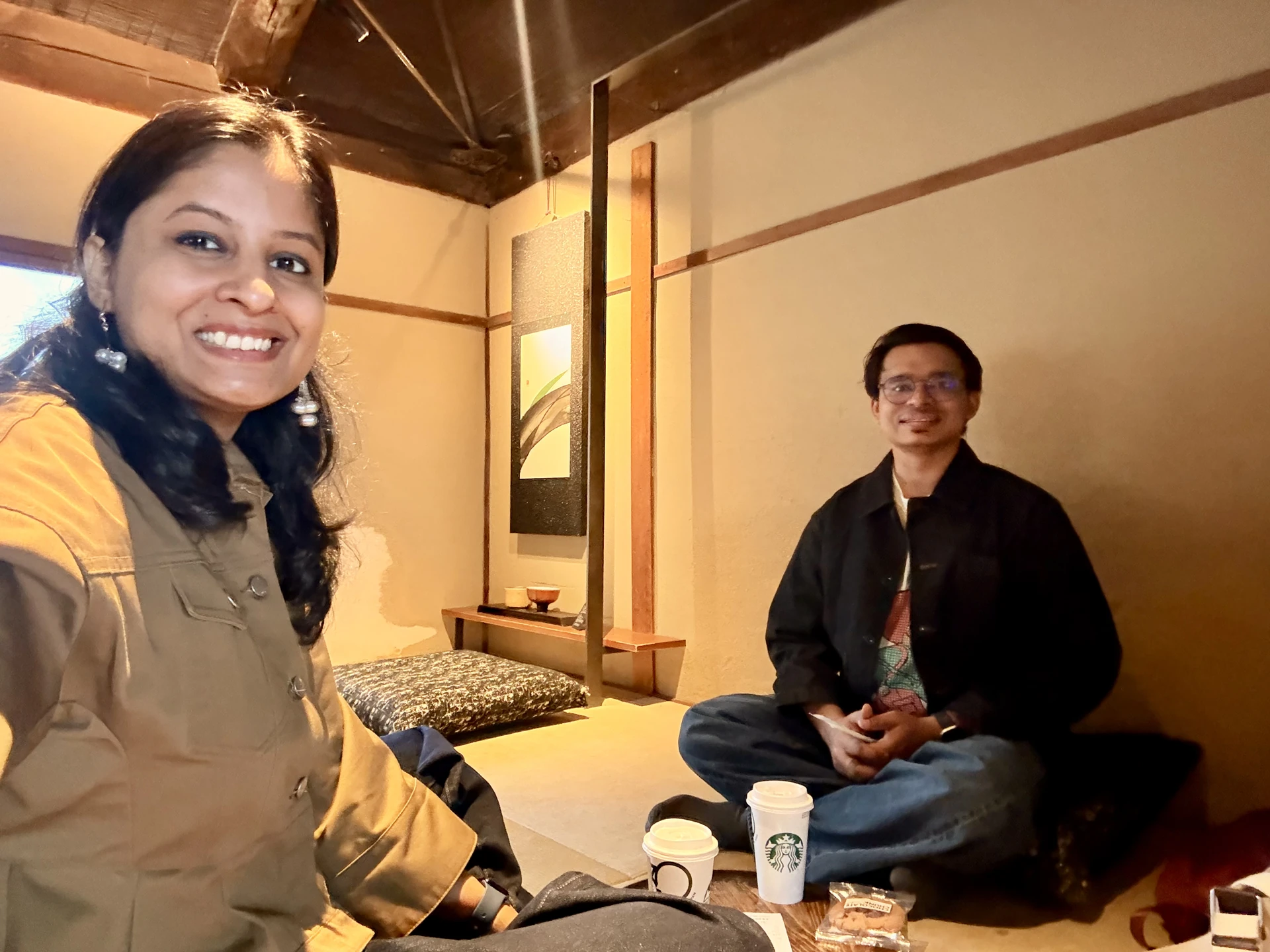
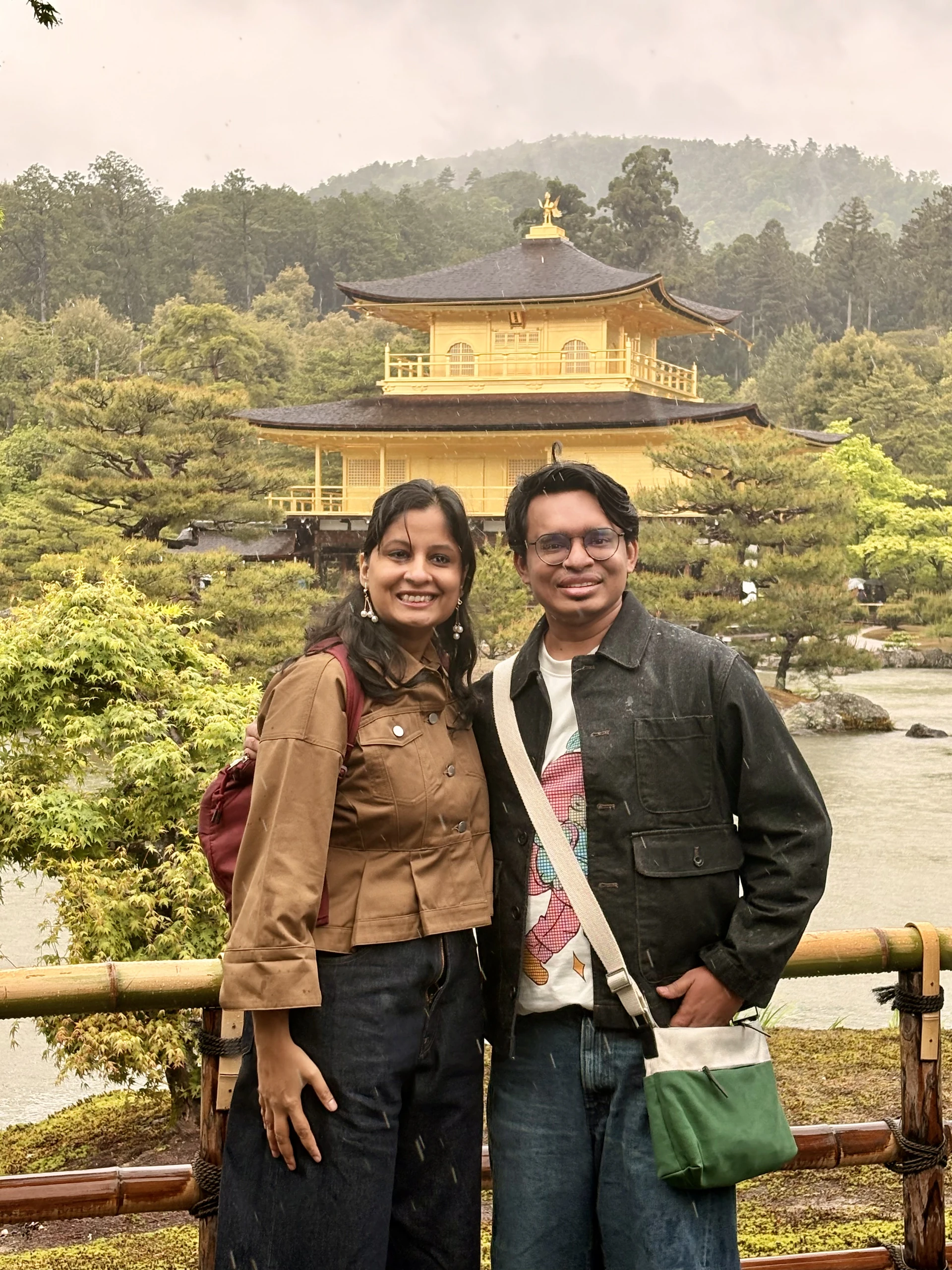
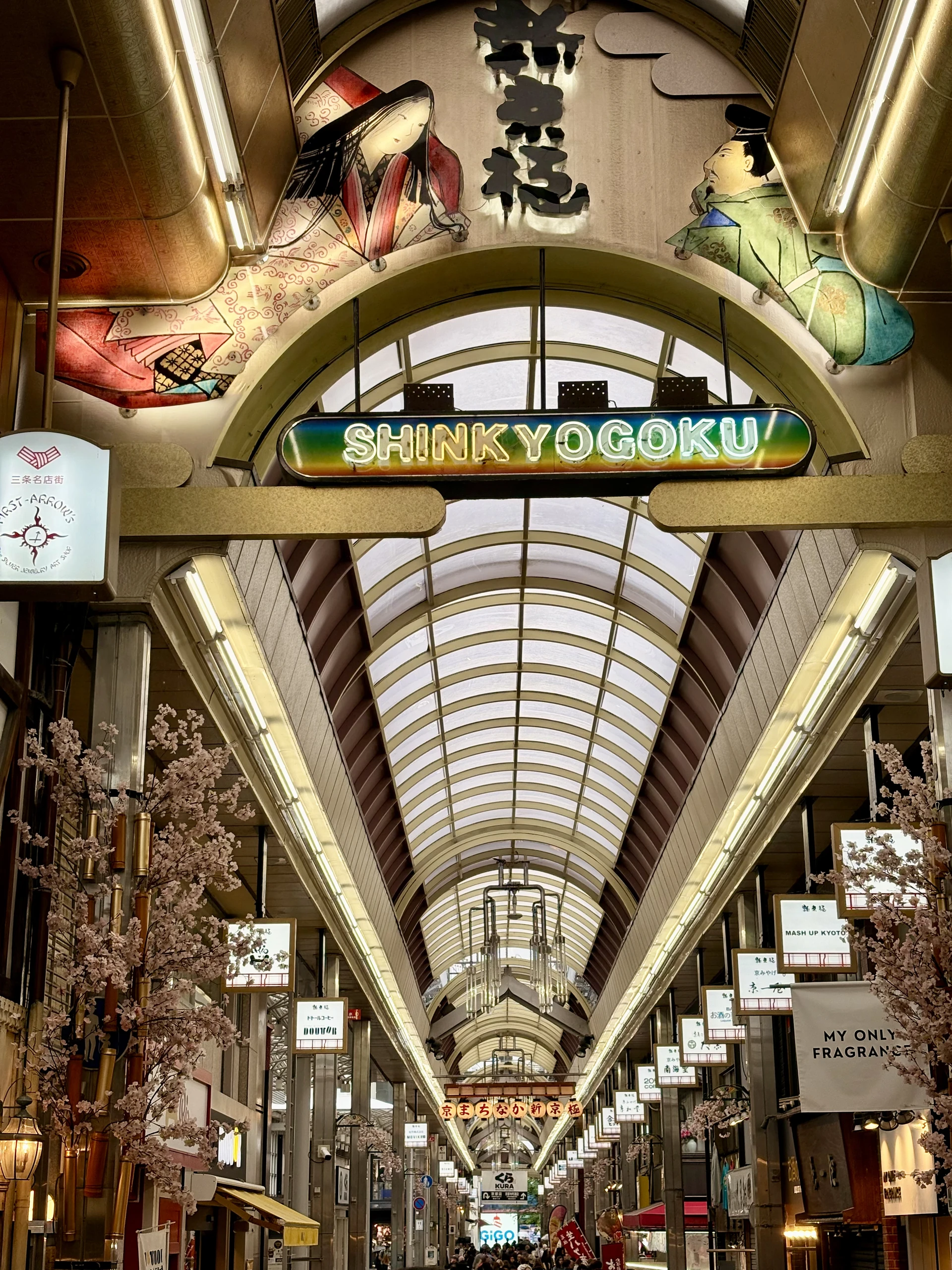
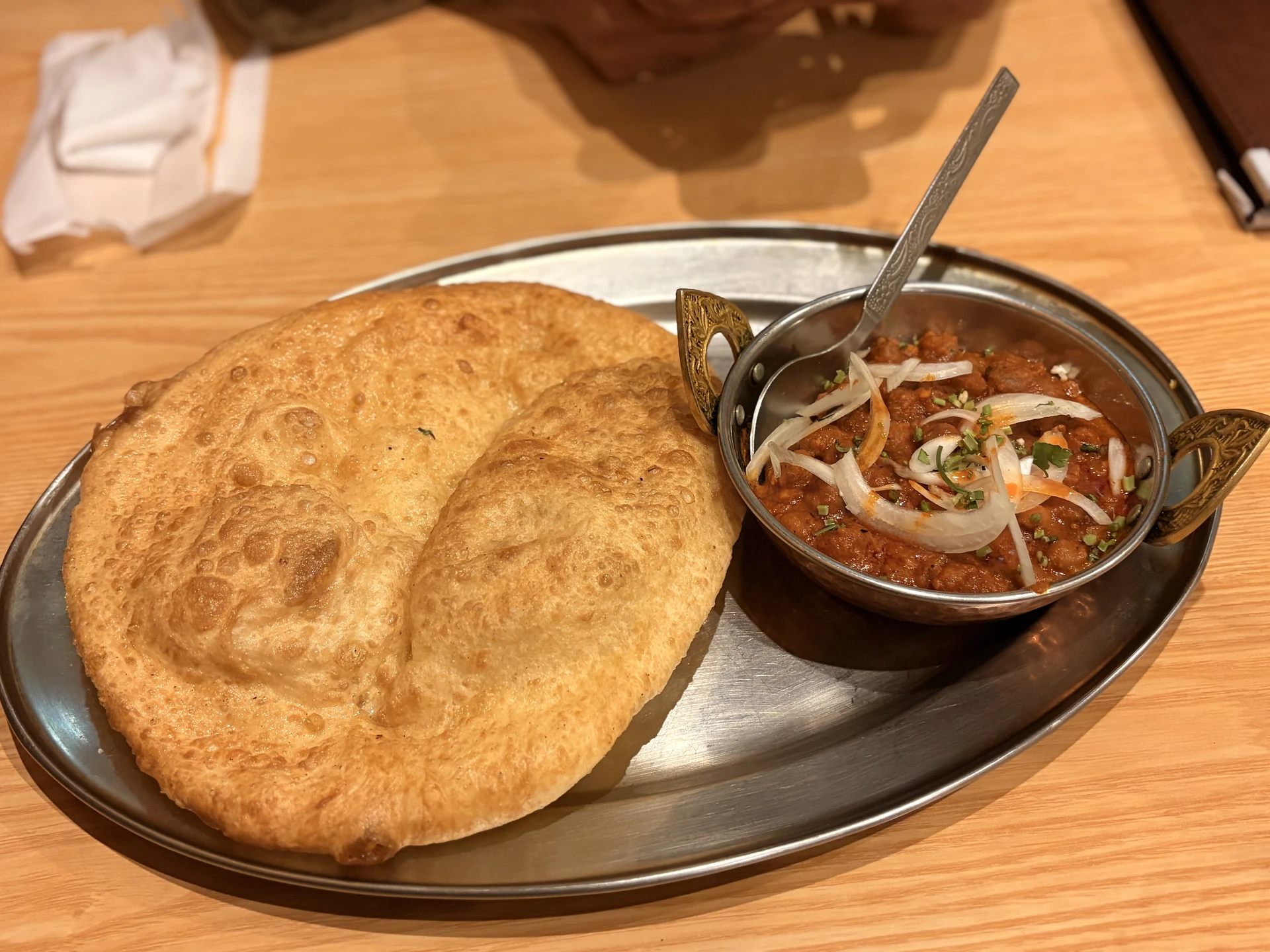
Day 5: 21st April
Asakusa Snacks, Jimbocho Books & the Overnight Bus
Vacating day. The overnight bus to Kyoto was at 9:40pm, and the hostel agreed to hold our luggage for free until 6:30pm, with 1,000 yen per half hour after that. We packed up everything we'd accumulated (a lot), did the formalities by noon, and stepped into a breezy, slightly cloudy Tokyo morning.
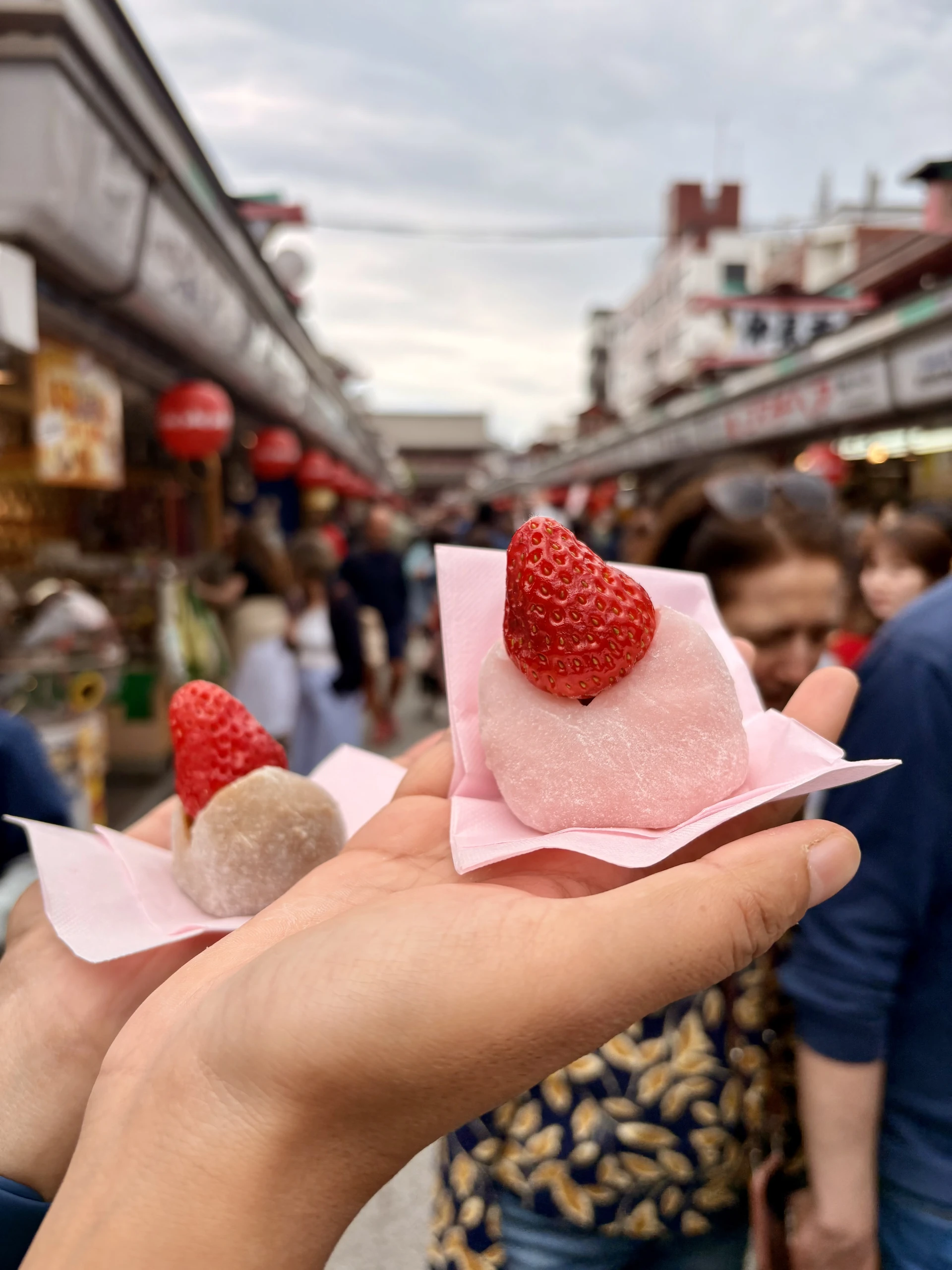
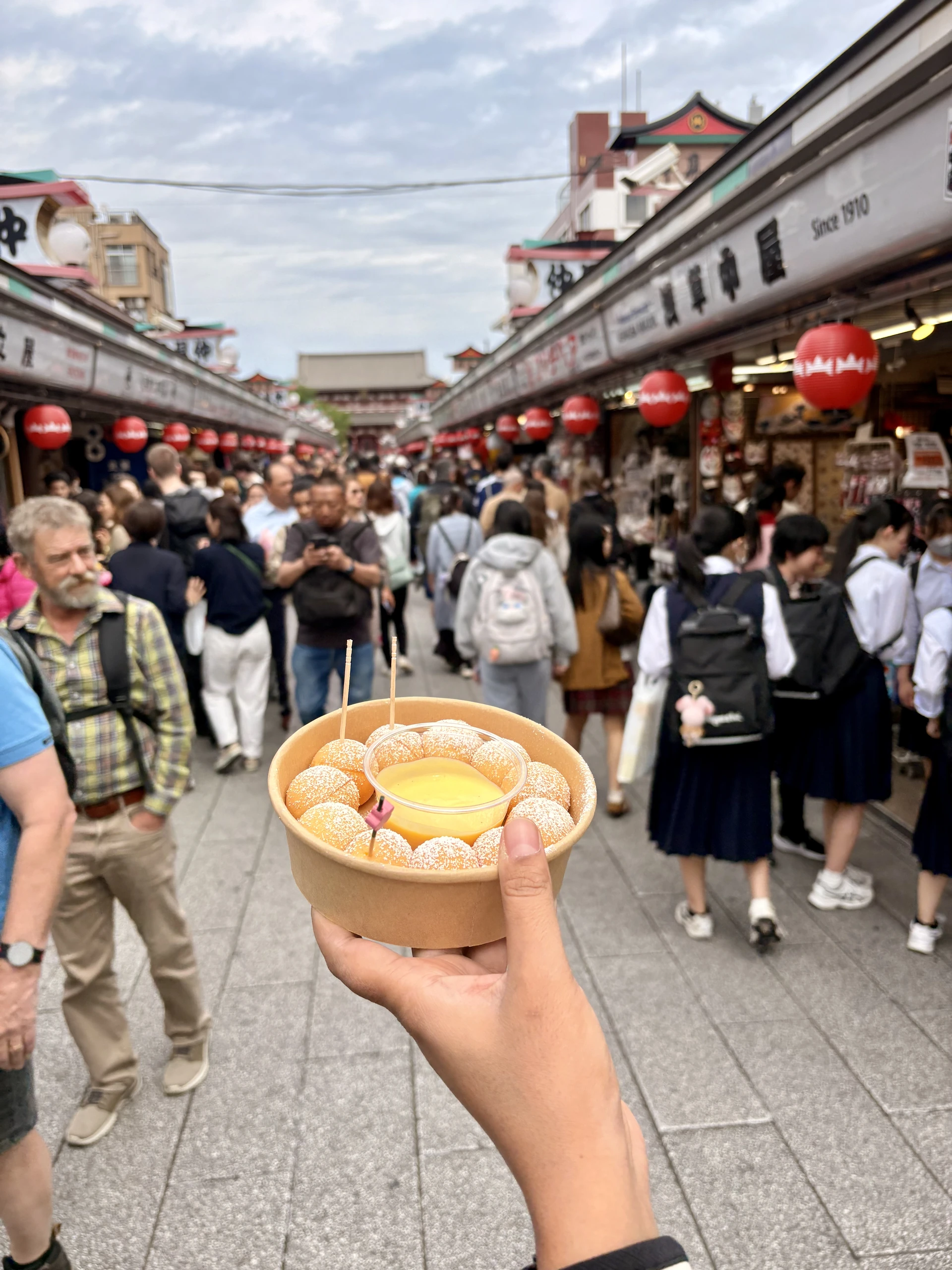
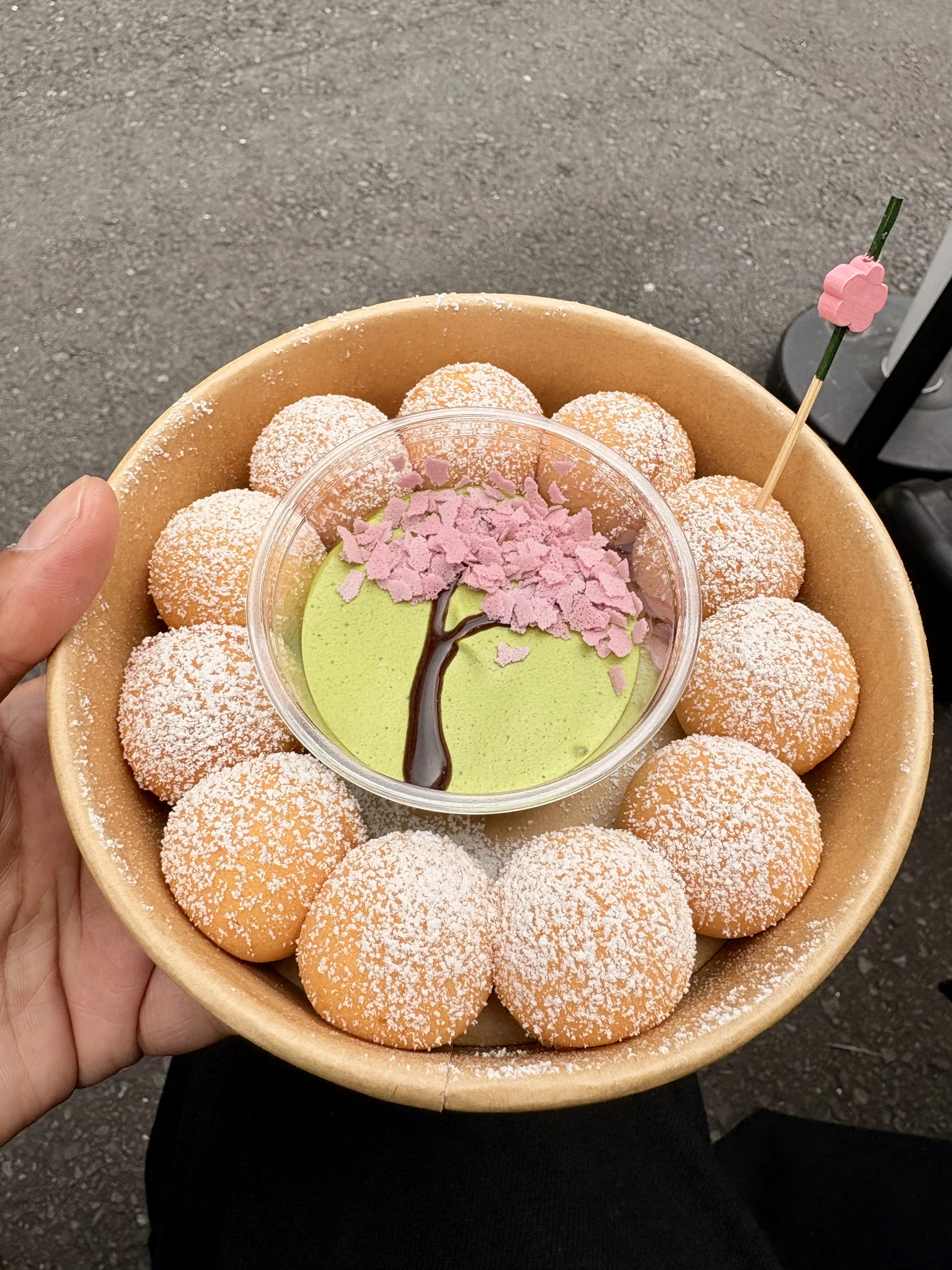
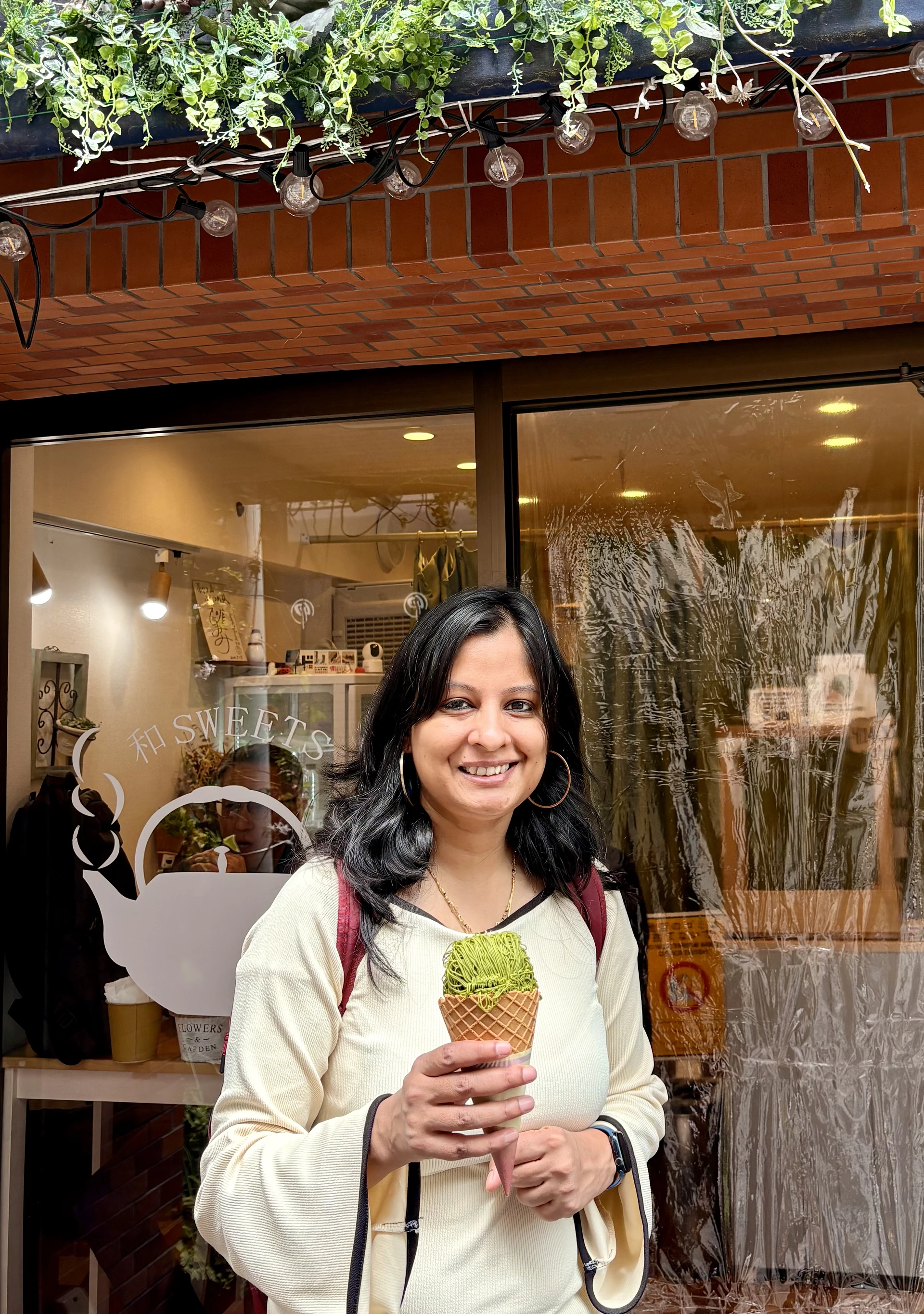
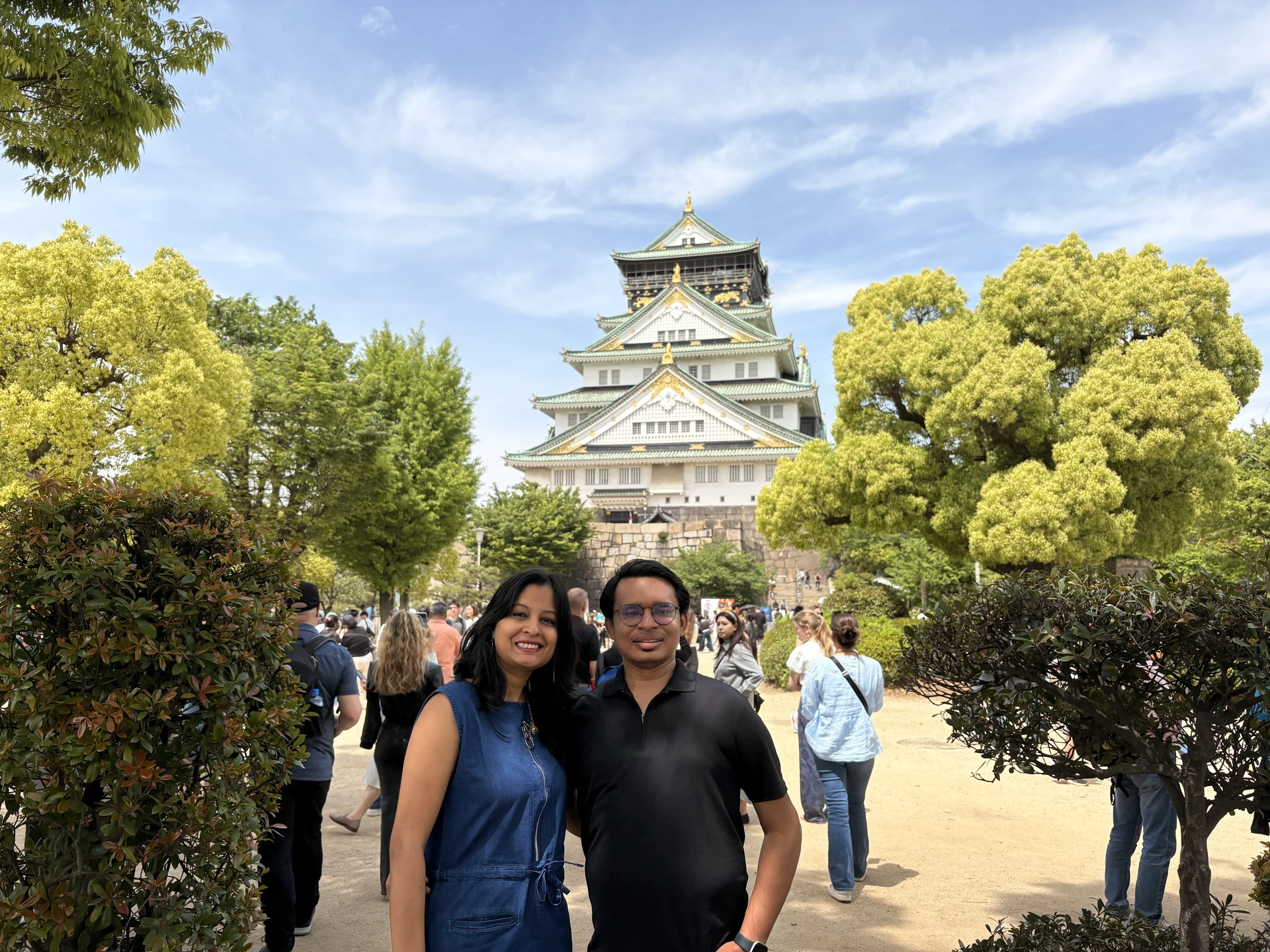
We'd lived in Asakusa for four full days and barely seen it, so today the plan was the Asakusa market and the much-anticipated Jimbocho, Tokyo's books district. The Asakusa market is enormous, and we worked our way through every snack on the list — daifuku, baby castella cakes, matcha ice cream — before circling back to Senso-ji for a round of photos, this time with the crowds it deserves.
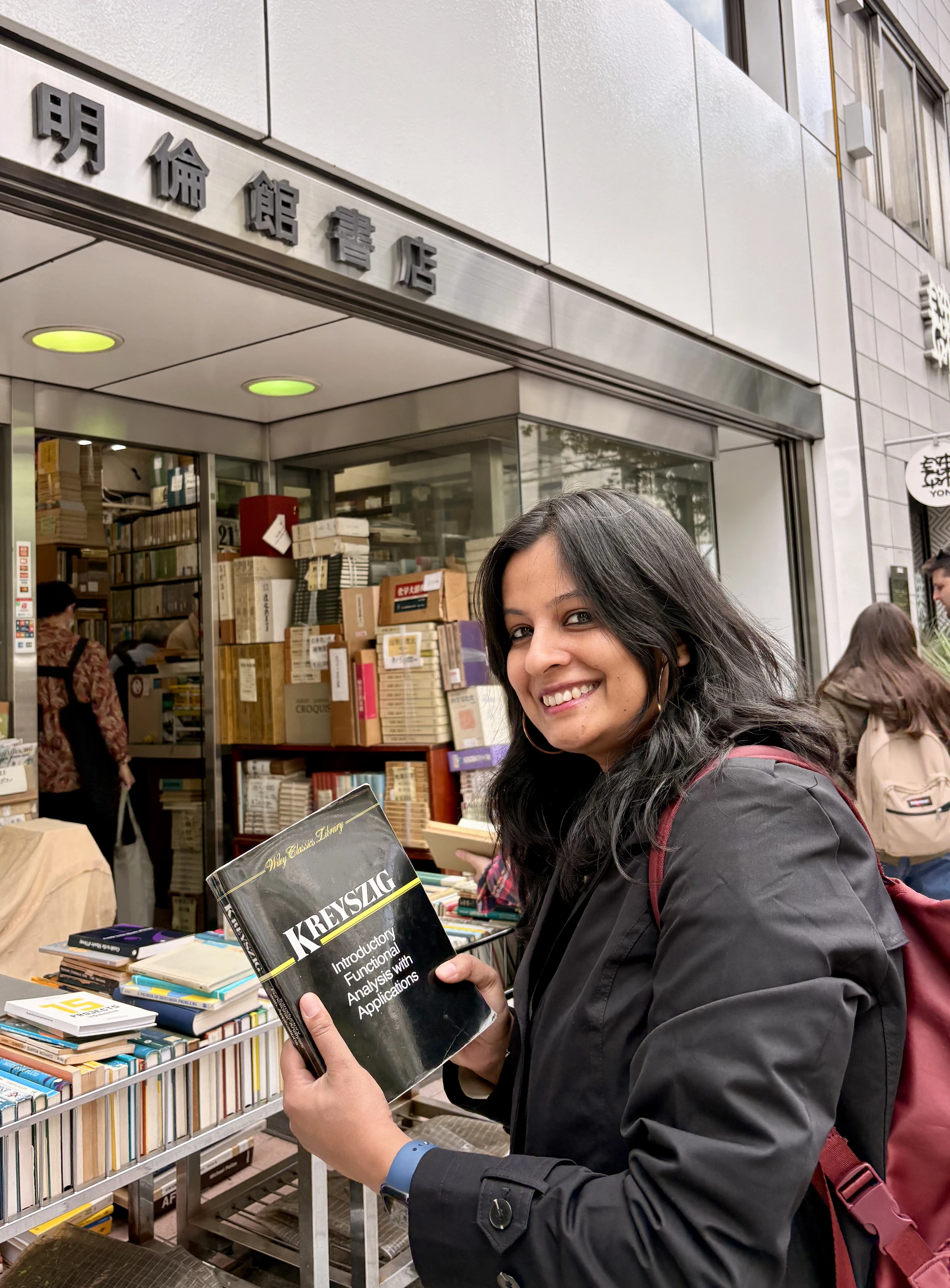
Jimbocho was both magical and humbling. So many books — almost all of them in Japanese. We hunted down the stores with English translations while Harshit researched titles for me, and with the options that thin, I almost walked out empty-handed. We were already discussing giving up Jimbocho and trying one more bookstore in Ginza, plus the famous stationery temple Itoya. And then, just as we were leaving Jimbocho, I spotted a shelf of physics books, and on it — Kreyszig. I cannot put that feeling into words. To find, on a side street in Tokyo, the very textbook that walked me through my BSc Honours Physics years in India. It is surreal that some concepts get learned worldwide from the same author. I stood there for a long minute, just grinning.
At Ginza, we ate at Ain Soph and quietly abandoned the Itoya plan. Then more GU — yes, again. Shopping had become our quiet daily ritual on this trip; not a single day went by without something landing in a bag, and Ginza GU on a weekday afternoon was just too good to walk past. From there we wandered into a Daiso, the kind of stop that turns a quick browse into an hour. We came out with stationery for both of us, snack souvenirs for back home, a couple of household oddities we didn't know we needed until we saw them, and a few small gifts for family. On the walk back, we passed Sanseido, a big publishing-house bookstore. Harshit talked me into finally buying — and I am quietly grateful for the way he does that, the same way he'd convinced me to grab the DIY kits at BIC Camera. I walked out with Klara and the Sun and Butter. Books I will cherish forever.
Back to the hostel by 6pm-ish, paid for the extra half hour, and packed. Two suitcases, one backpack — we had flown into Japan with the empty black suitcase nested inside the red one to save baggage on the way in, and we'd been quietly piling every shopping bag into it as the days went by. Now that they finally had to come out as two separate bags, the bill of all that shopping became suddenly, physically real — both of them were heavy. Bus and metro to the bus terminal. The bus dropped us right outside the metro station, but the platform was up a flight of stairs. With bags this heavy, we spotted a lift across the road, crossed over, took the lift up — and discovered we were on the wrong platform, with no internal exit. So now we had to climb stairs, walk across, and climb stairs back down. Some shortcuts lead to long cuts. 😔
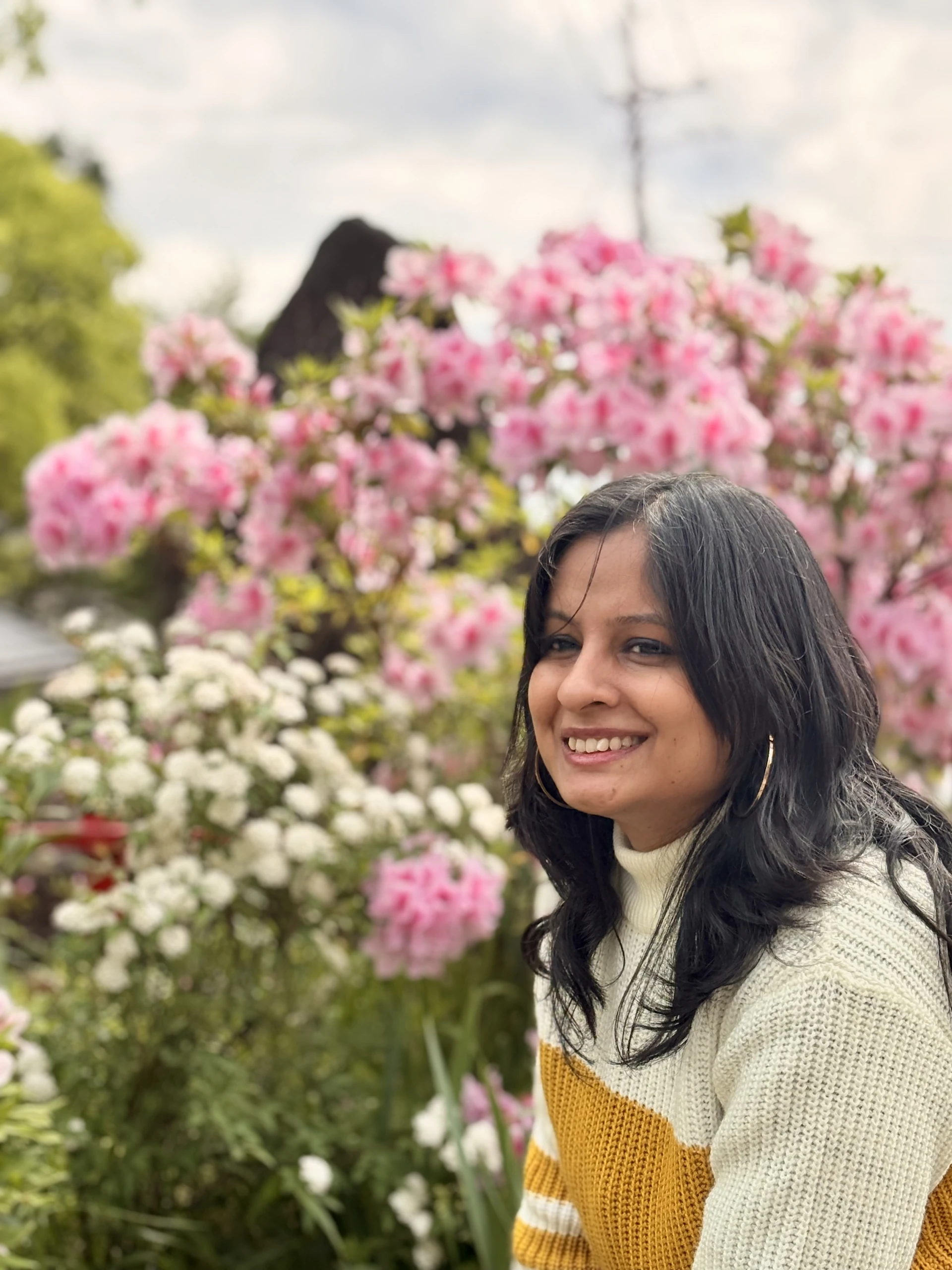
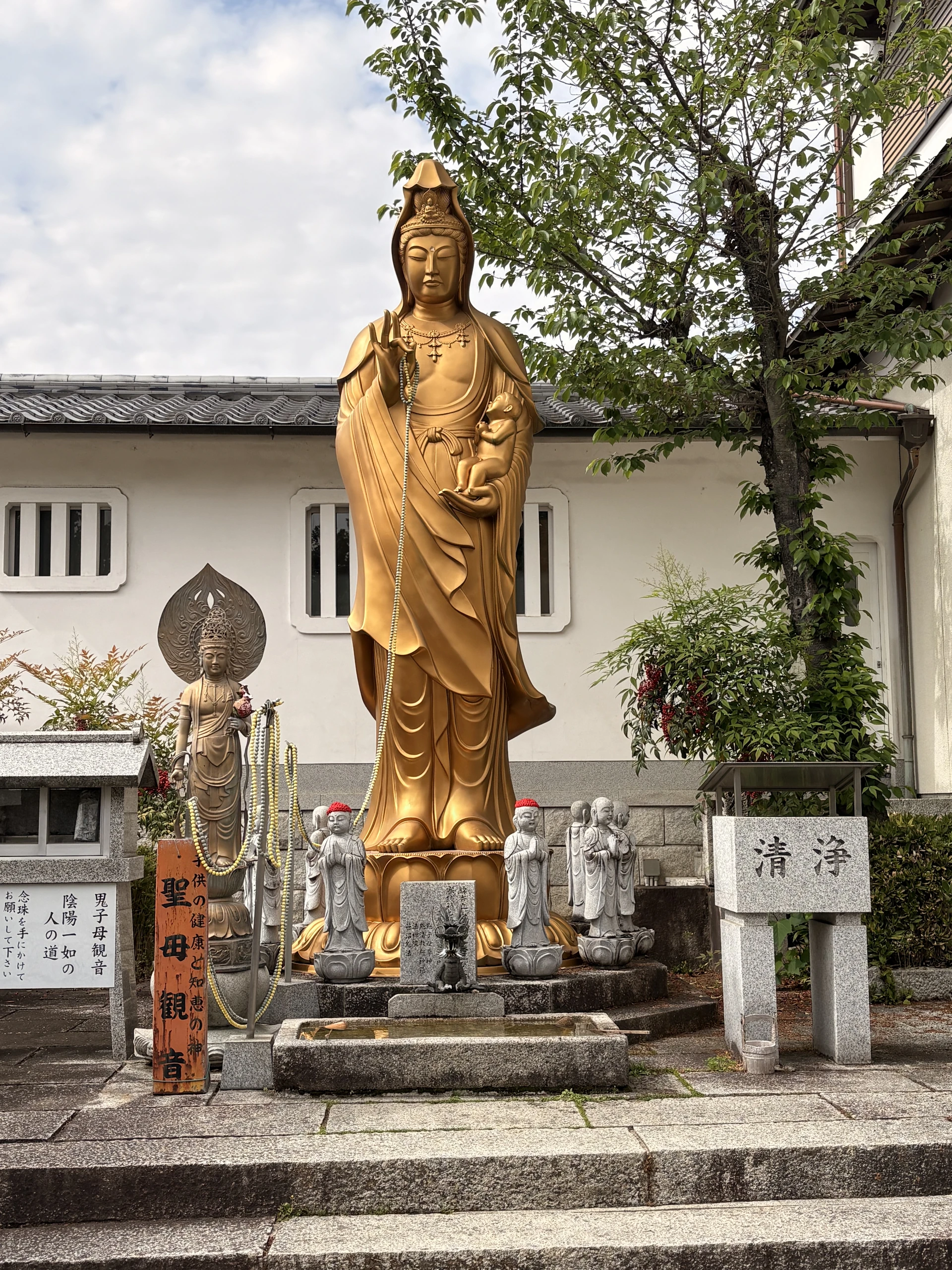
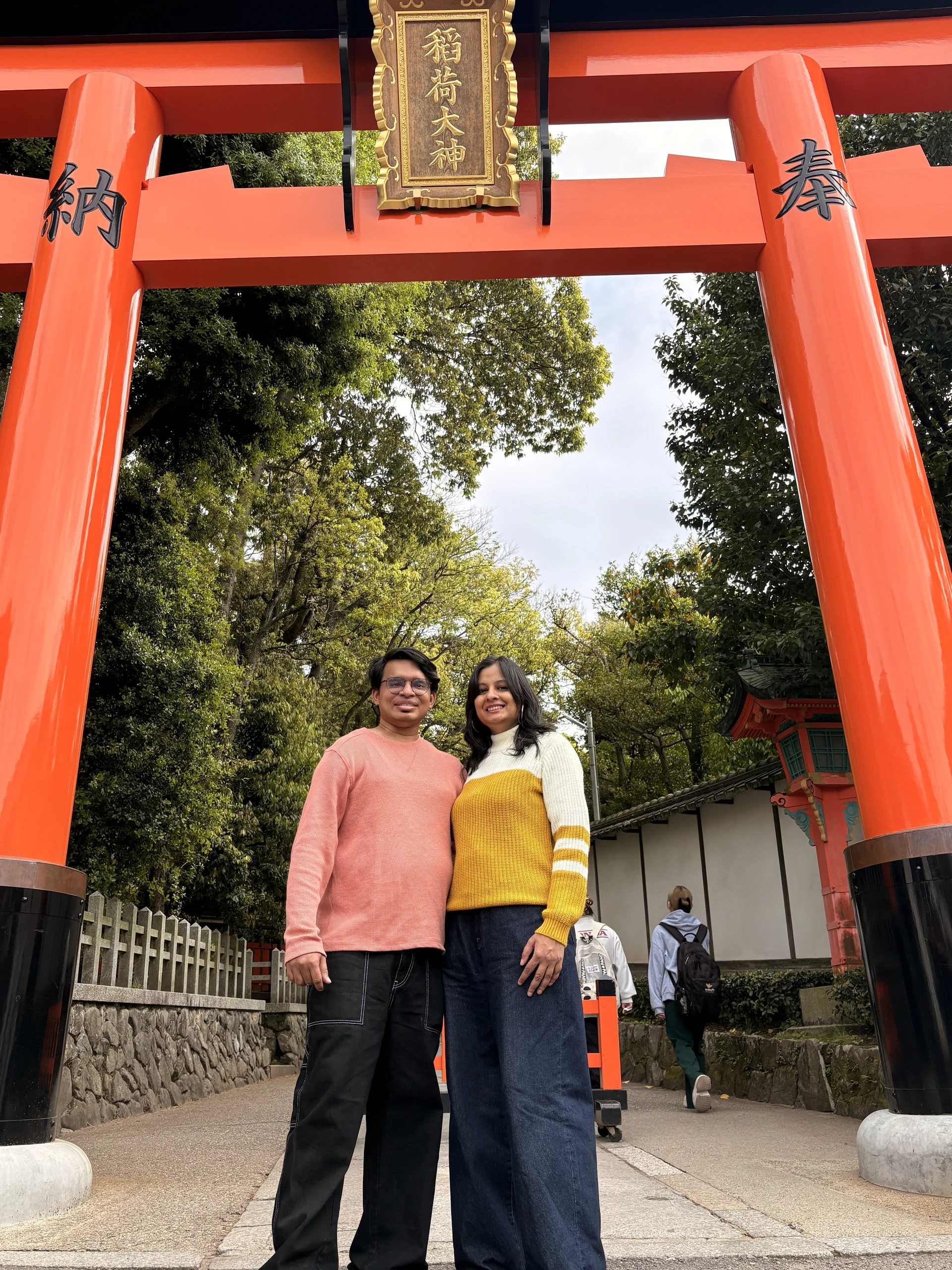
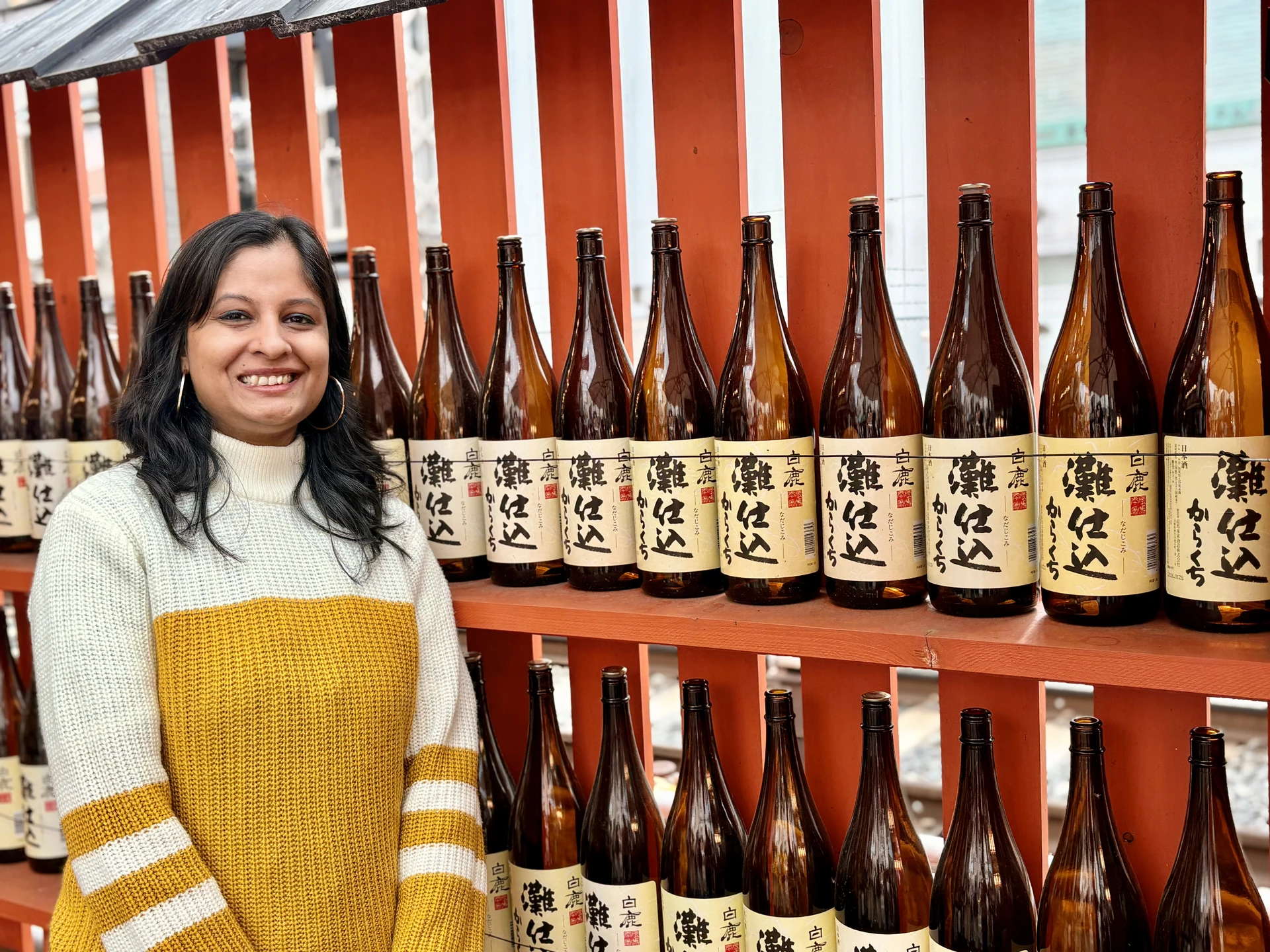
Snapshots from Day 5 — Asakusa market, Jimbocho & Ginza
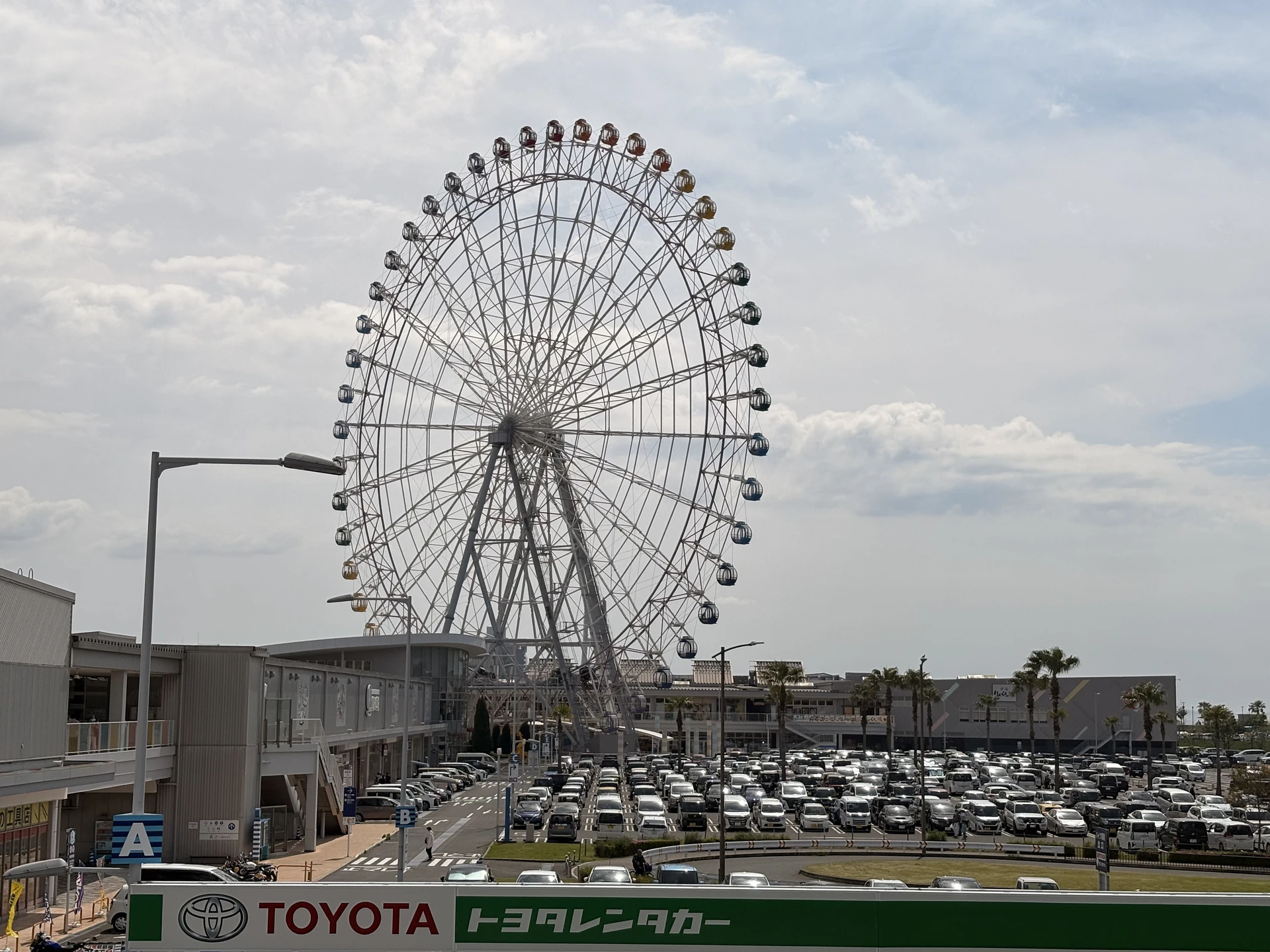
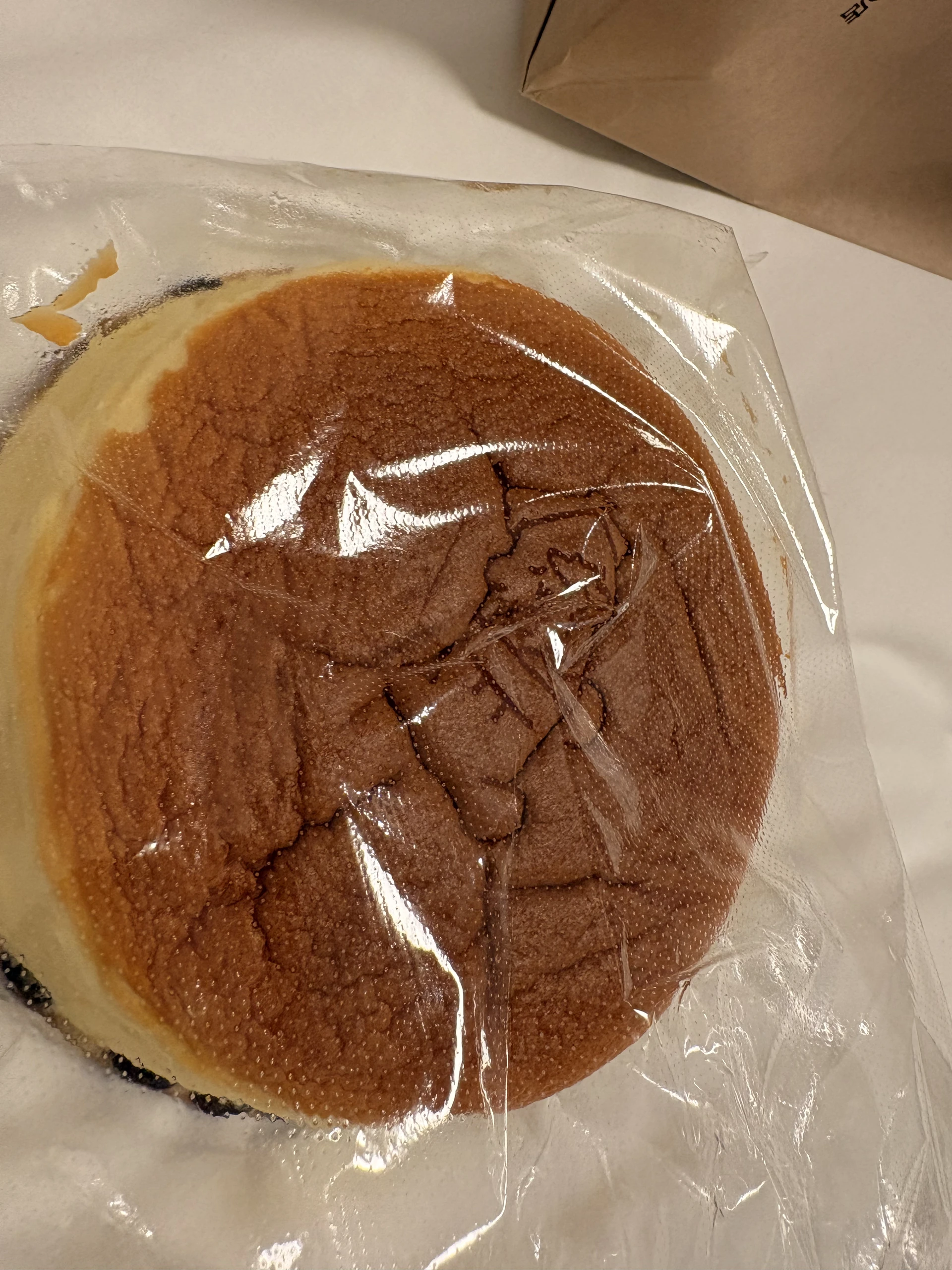
🎒 Tokyo Overnight-Bus Tips (Willer)
- Hostel luggage hold is usually free till early evening — confirm cutoff or you'll pay by the half hour.
- Willer > Flix on comfort — but seat partitions only really work if you're travelling solo.
- Stock dinner first. Eateries near bus terminals fill fast; a 7-Eleven run is the dependable backup.
- Plan station lifts in advance — crossing the road for an accessible platform can land you on the wrong line.
We reached the terminal with 45 minutes to spare. Bombay Sizzler nearby had a long wait, so we grabbed a few things from 7-Eleven instead. First-ever Willer Bus: seats directly behind the driver. Verdict — definitely better than Flix, but the seat partitions are only really useful if you're travelling solo. Snacks down, eyes closed, Kyoto in the morning.
Must-Do in Tokyo (the first 5 days)
- Senso-ji at 7:30am: Before the tourist tide arrives.
- Mt. Fuji Day Trip: Book Willer Bus from Shibuya — totally worth it.
- Shibuya Crossing: Cross it multiple times. Get the upper view.
- Akihabara: BIC Camera + Yodobashi — budget your time wisely!
- Meiji Shrine & Forest: A forest inside a megacity is surreal.
- Shinjuku at Night: Neon lights, Golden Gai, Omoide Yokocho.
- Kappabashi Kitchen Street: Knife enthusiasts will go crazy.
- T's TanTan at Tokyo Station: Best vegan ramen — Google Maps it first.
- Jimbocho: Heaven if you read — bring patience for the Japanese-only shelves.
- Fujifuku, Asakusa: A single owner-chef, a set course, an evening you won't forget.
Day 6: 28th April
Back in Tokyo — Hotel, Komeda, Pizza in Bed
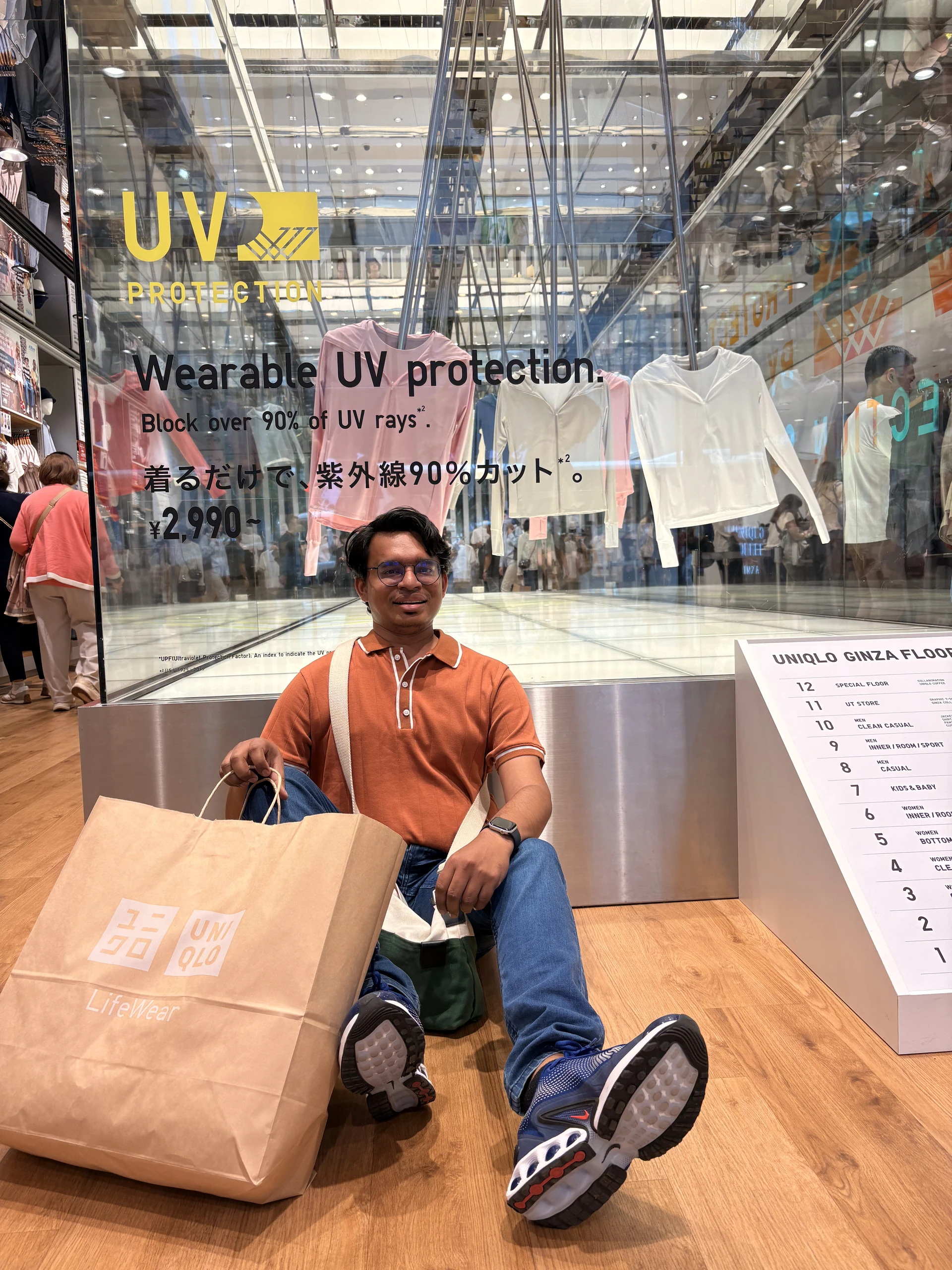
Tokyo Station: still a maze. We worked out the route to our hotel — Almont Inn — and rolled in way before check-in. They held our luggage. We finished off whatever was still hanging around in our Lawson and supermarket bags from the overnight bus, and because we still weren't sleepy, did what one does in Ginza on a weekday afternoon: more Uniqlo shopping. The store wasn't crowded — the perfect window — and we picked things for us and a few for family. (You go to Ginza, you come back carrying bags. It's a law.)
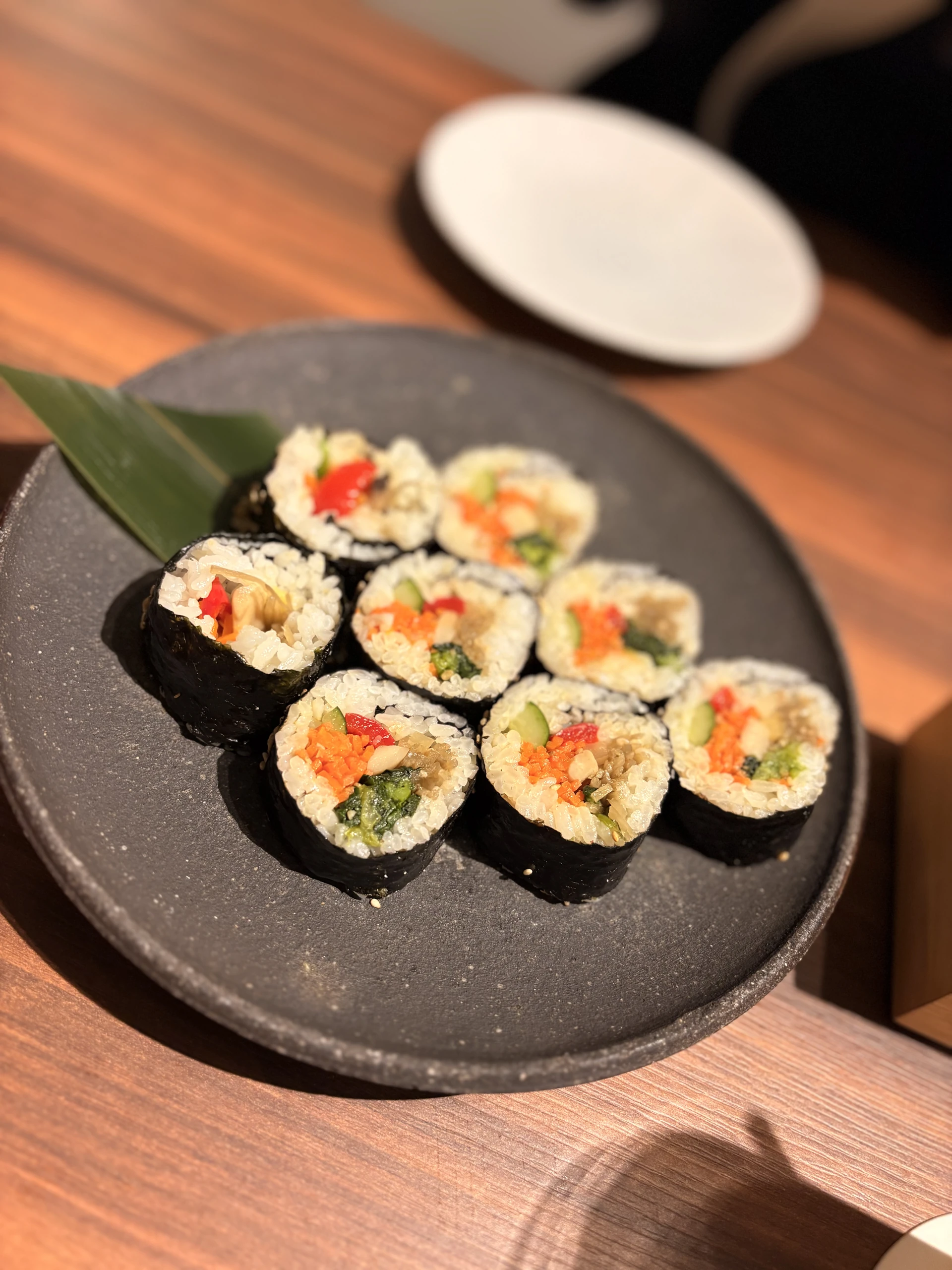
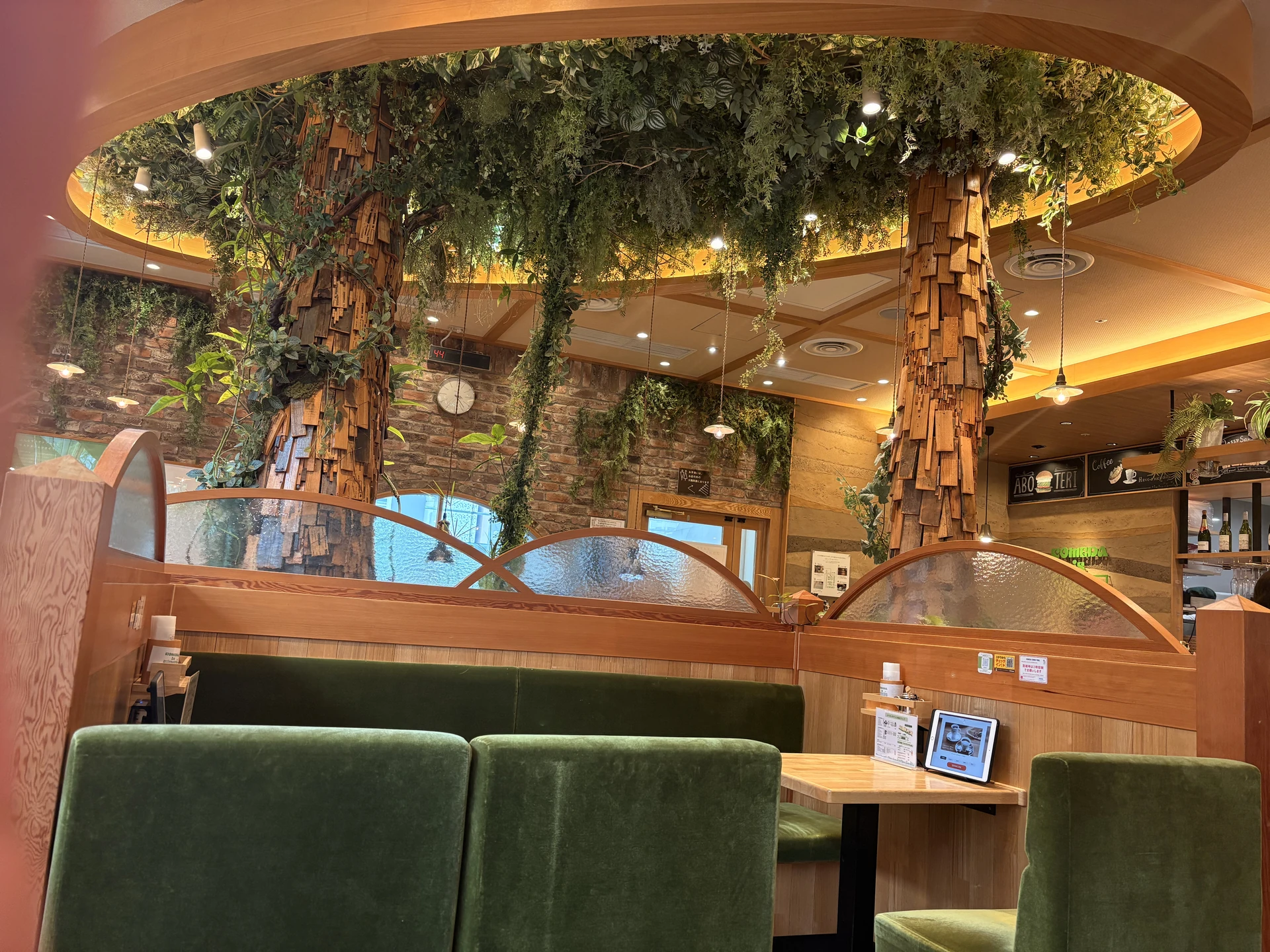
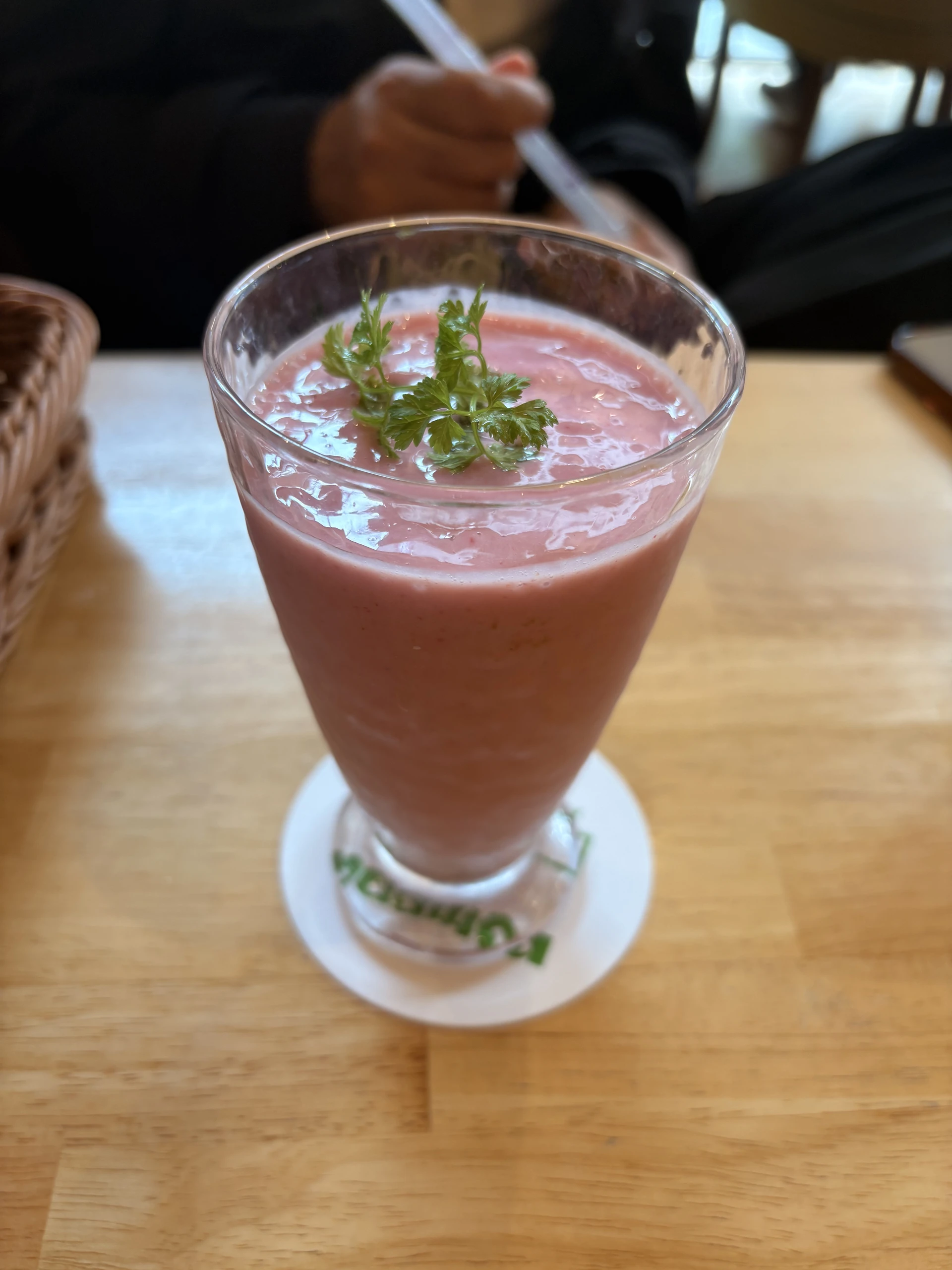
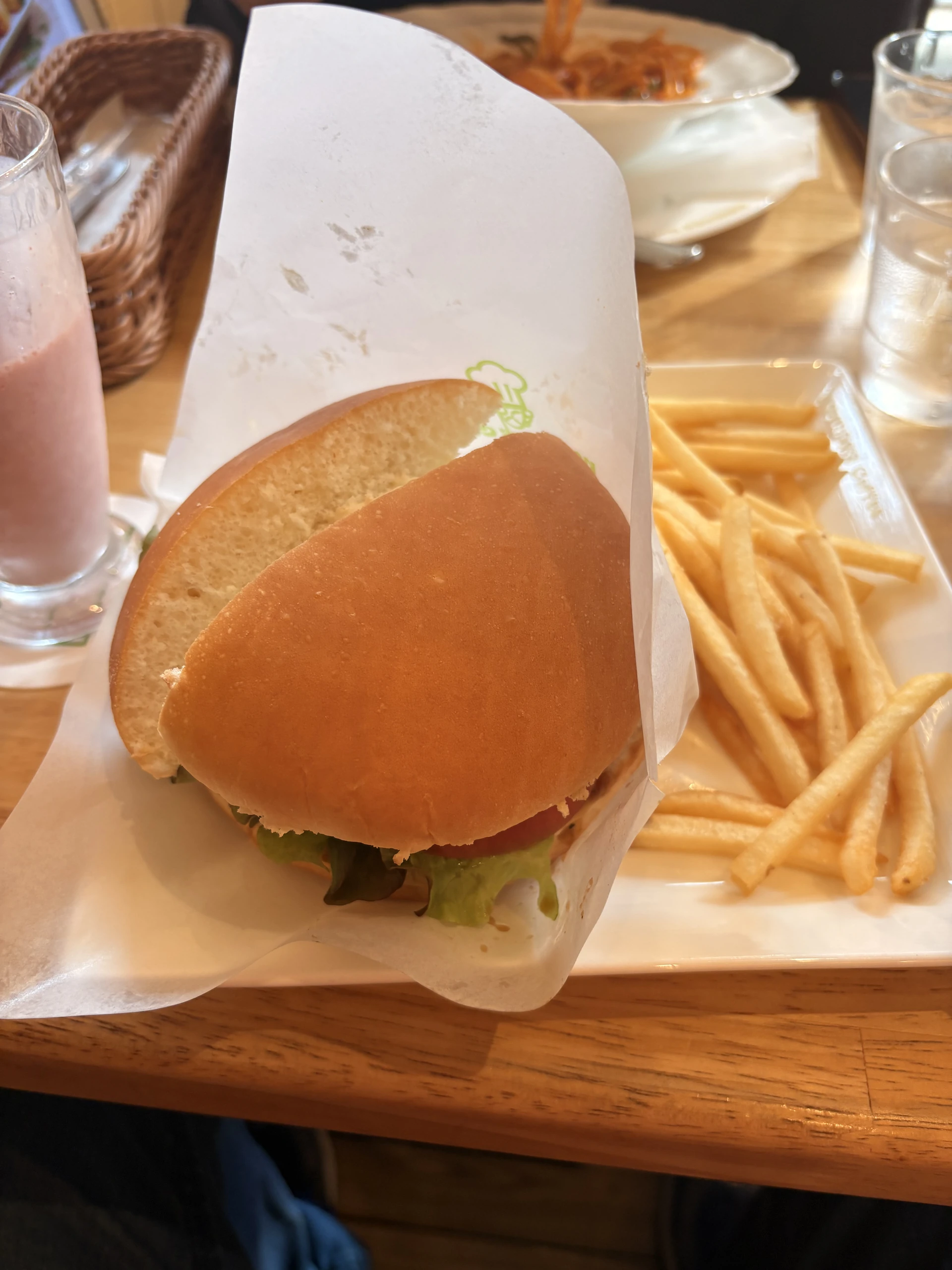
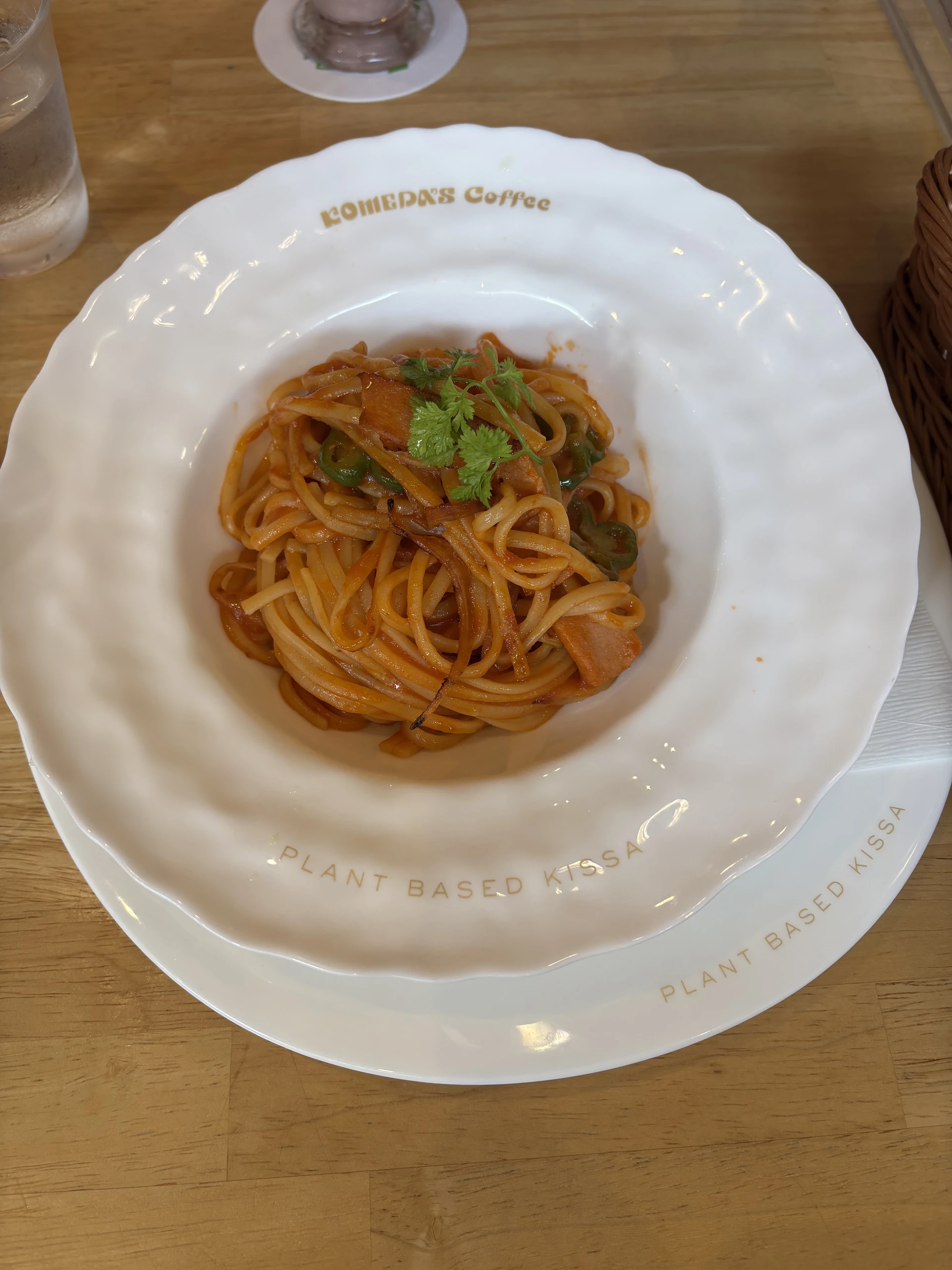
By midday we were properly hungry. The veg-burger hunt failed at three different shops in a row, until Harshit pulled another rabbit out of his café-research hat: Komeda's Café — Plant-Based Kissa. The food was excellent, the drinks even better, and by the time we walked out, the overnight bus from Hiroshima had finally caught up with us. We dragged ourselves to the hotel by 4pm, checked in, and slept off the rest of the afternoon.
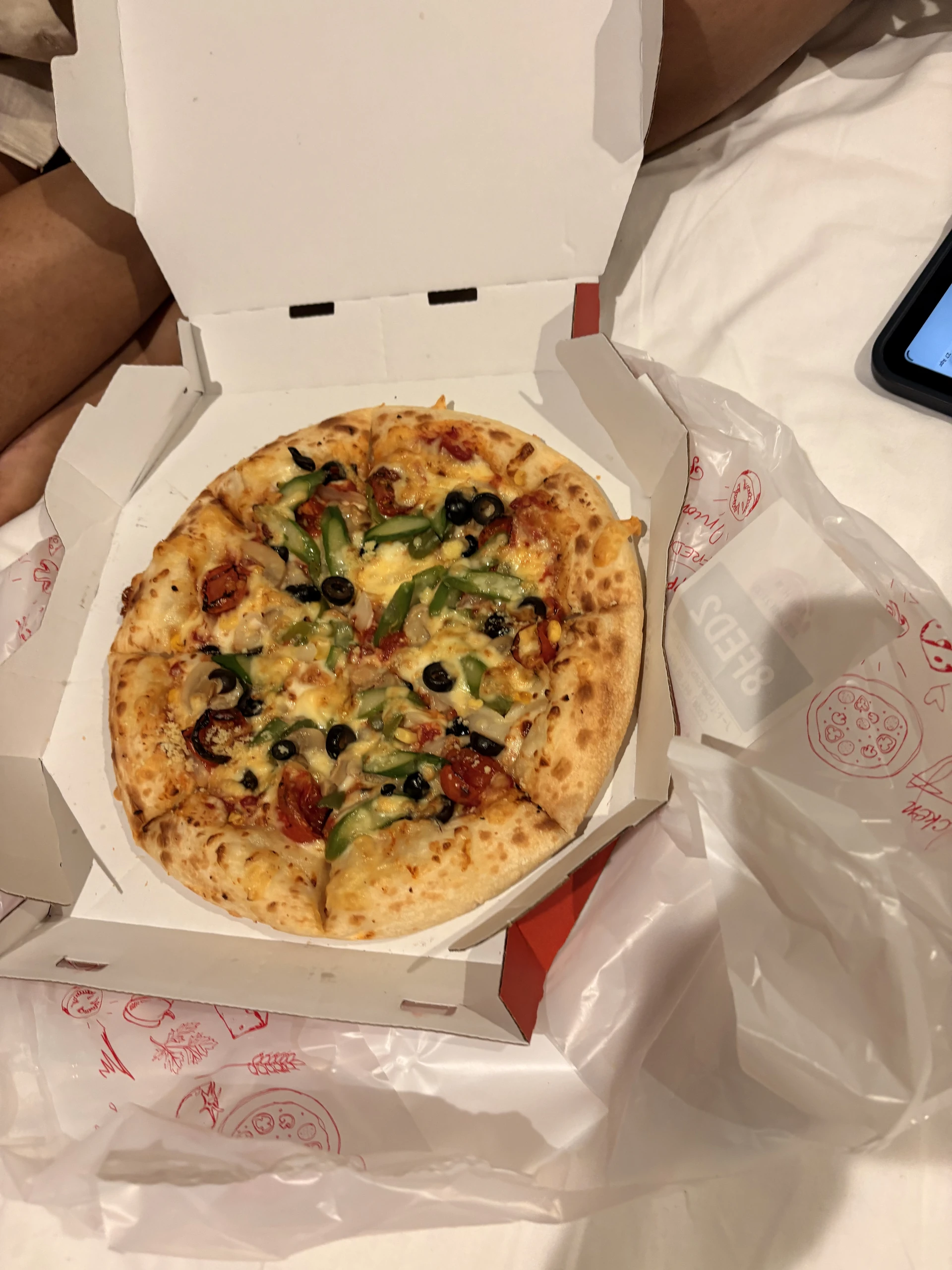
We had a 7:20am flight to Sapporo the next morning, so this stop was always going to be a quick pit-stop — wake up around 7pm, no appetite for stepping back out, order pizza on Uber Eats, pack one backpack for Sapporo and leave the rest in the suitcases. The hotel agreed to hold them for the two days we'd be away, since we'd be back to the same room. Then sleep, again.
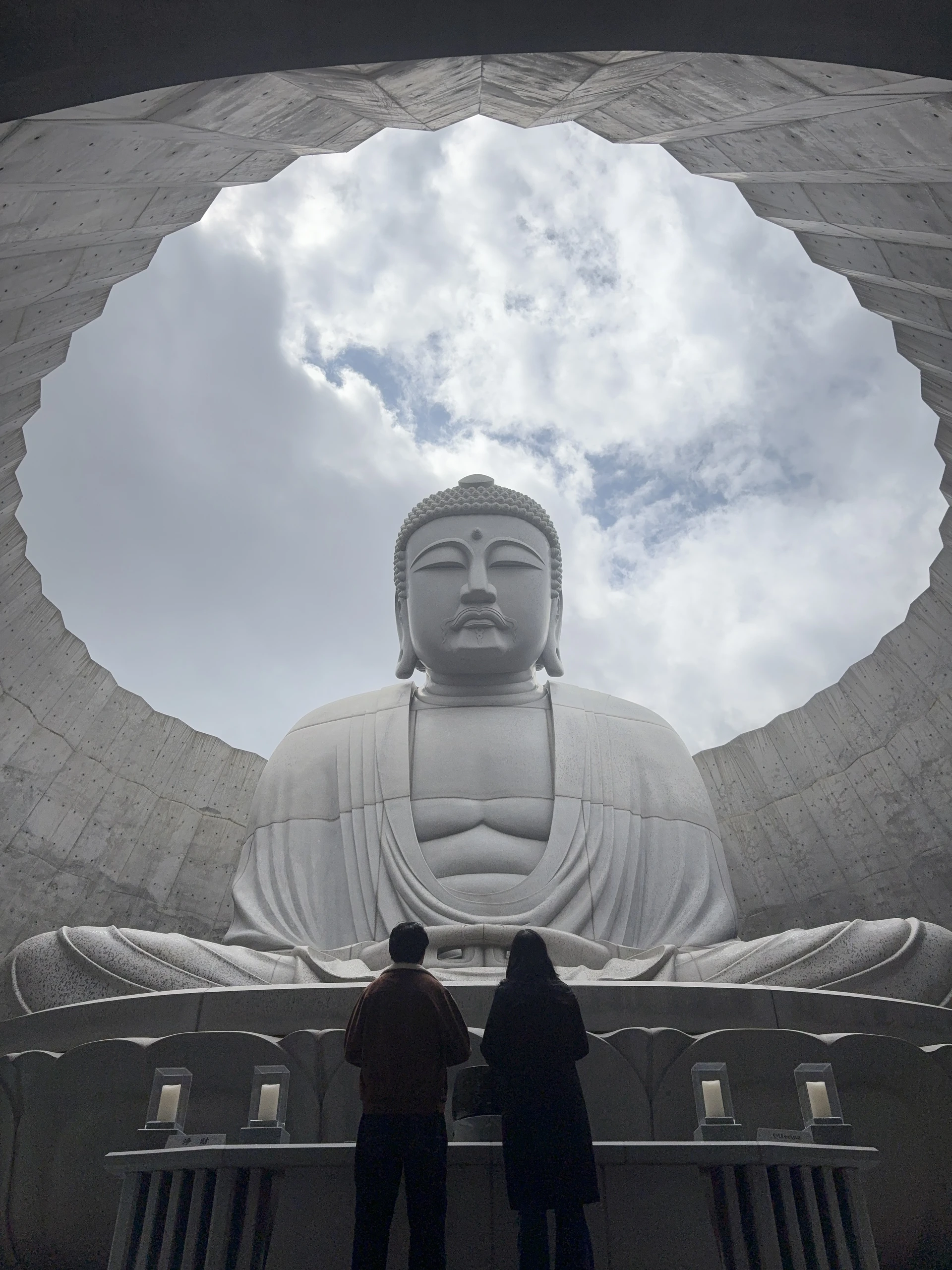
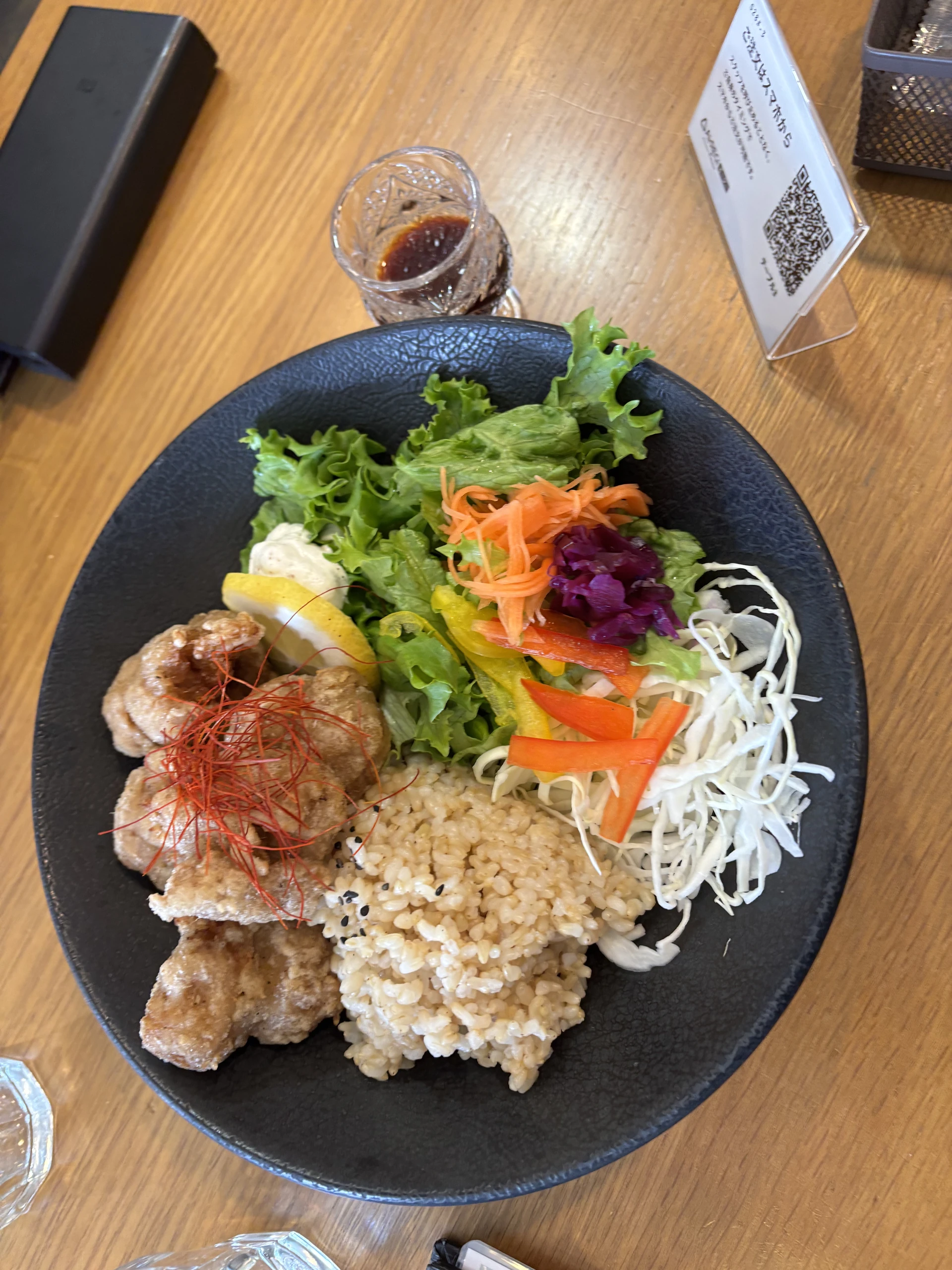
Snapshots from Day 6 — Tokyo Station, Komeda's & Almont Inn
Day 7: 1st May
The Final Day, the Rain & the Lawson Incident
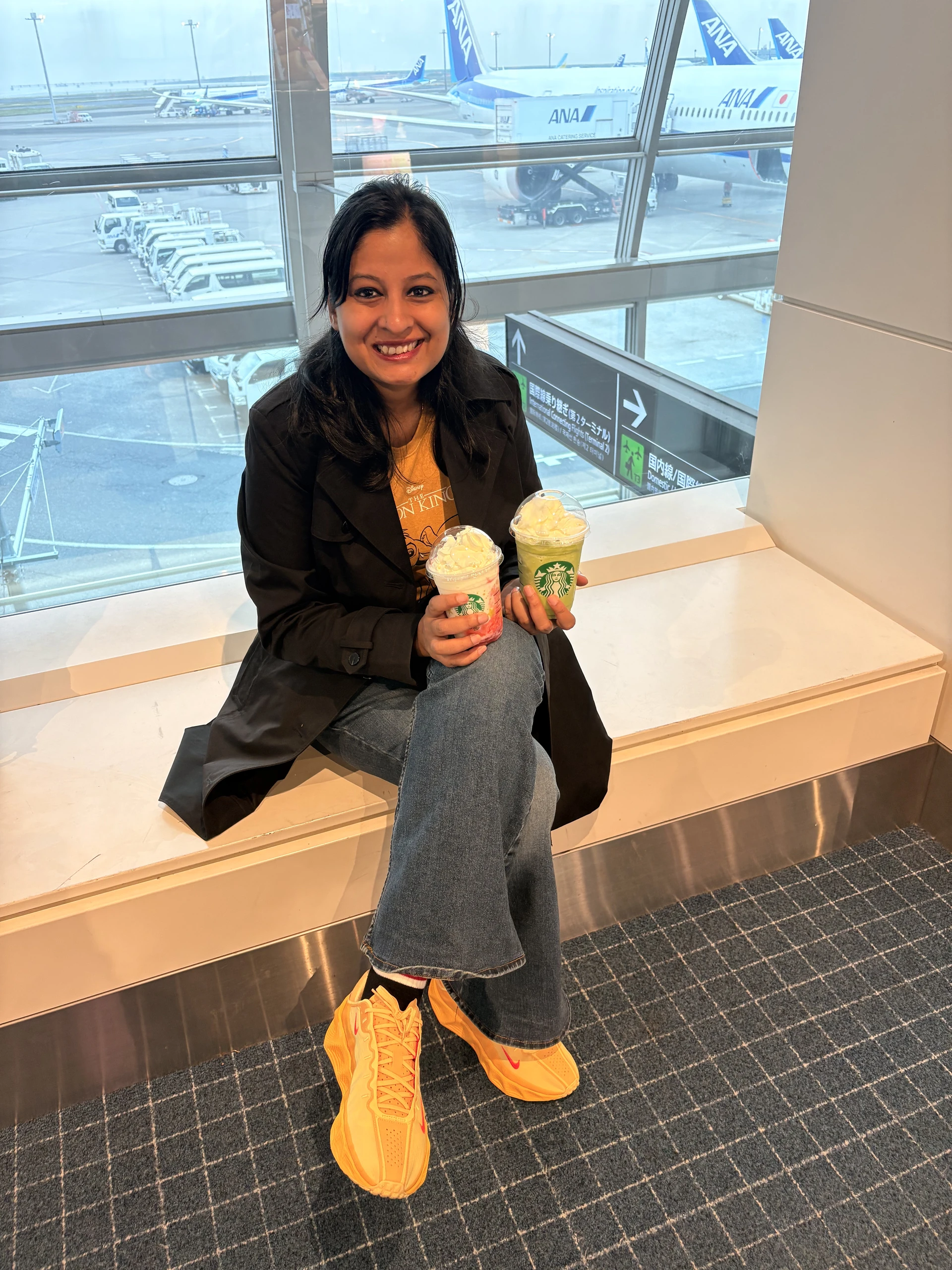
Last day of the trip. The plan: fly back from Sapporo, push on to Yokohama. We were up at 4am in Sapporo, on the Limousine Bus to New Chitose Airport. At the gate they announced heavy rain in Tokyo and offered to reschedule. We didn't. The plane was nearly empty so I claimed three seats and slept across them. Tokyo was a wall of rain when we landed — safe, but soaked. Yokohama got quietly binned.
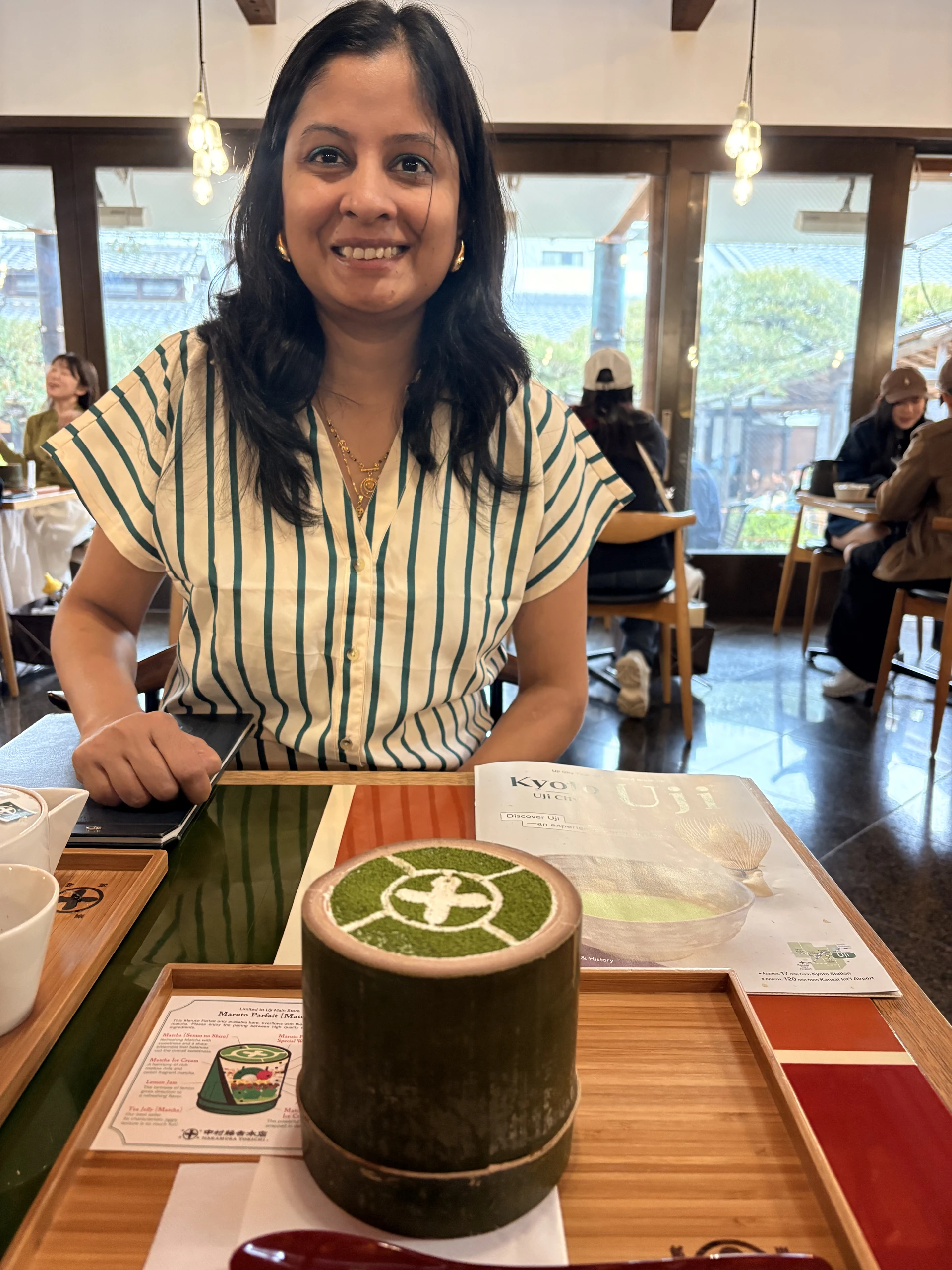
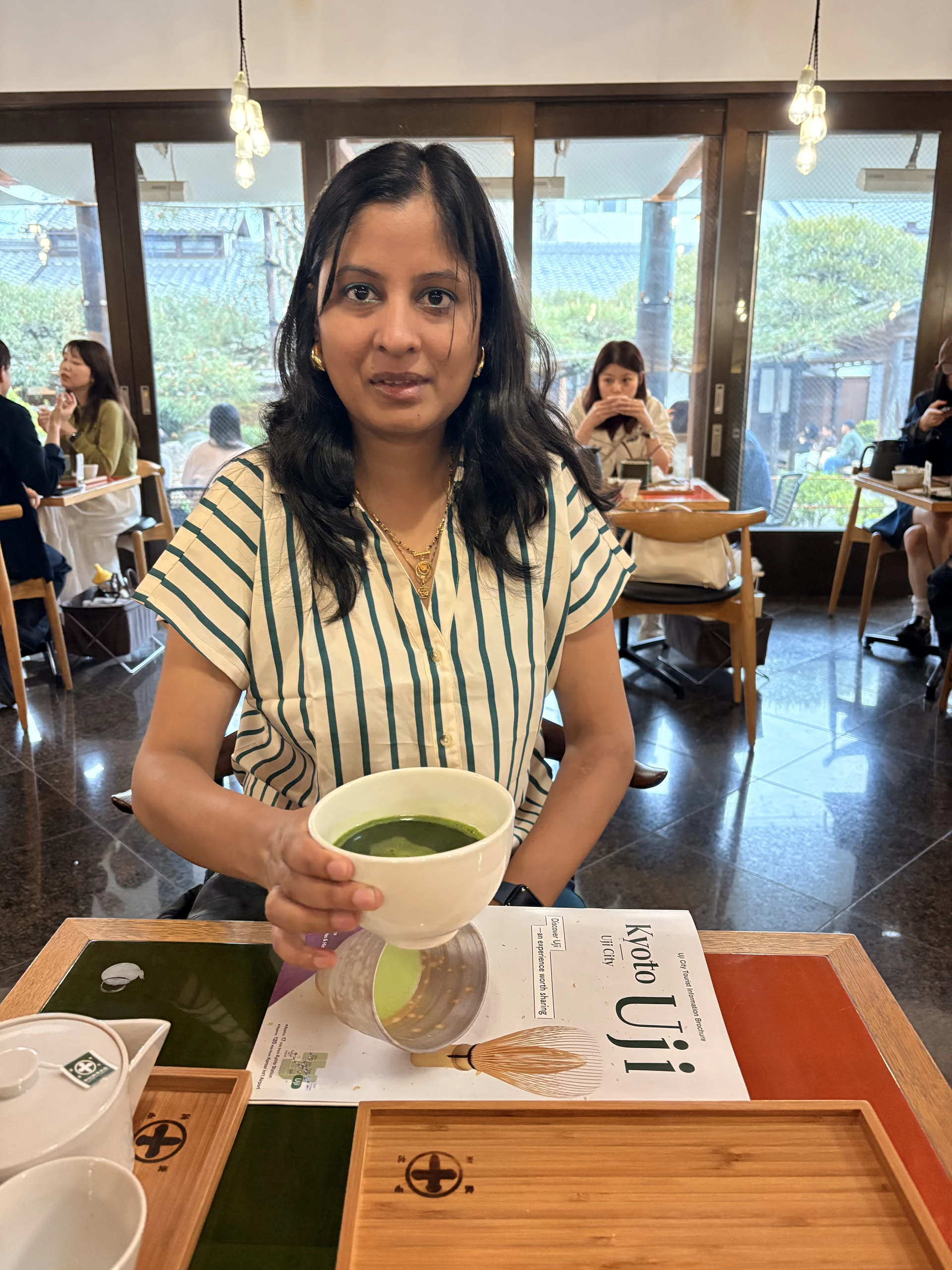
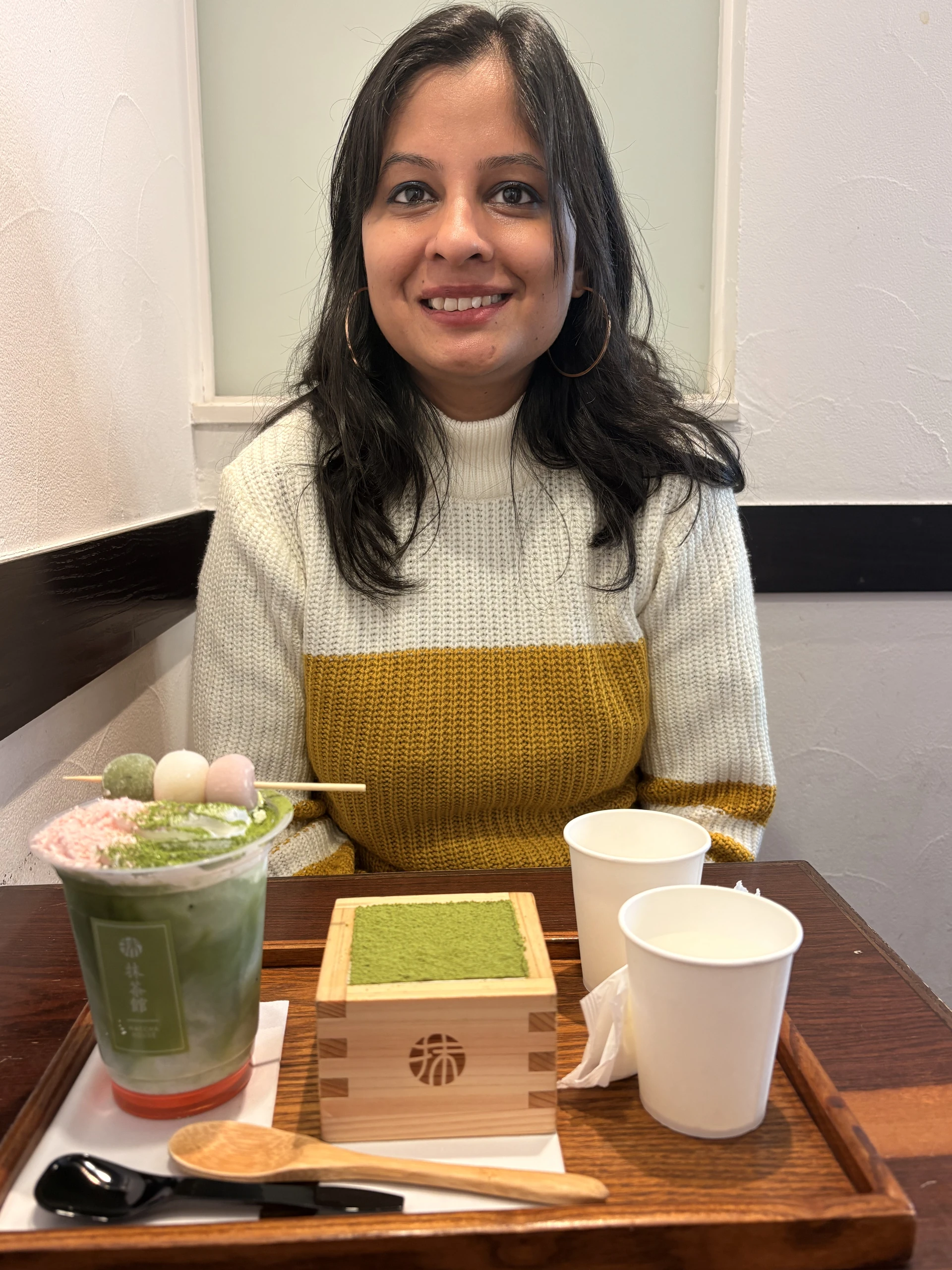
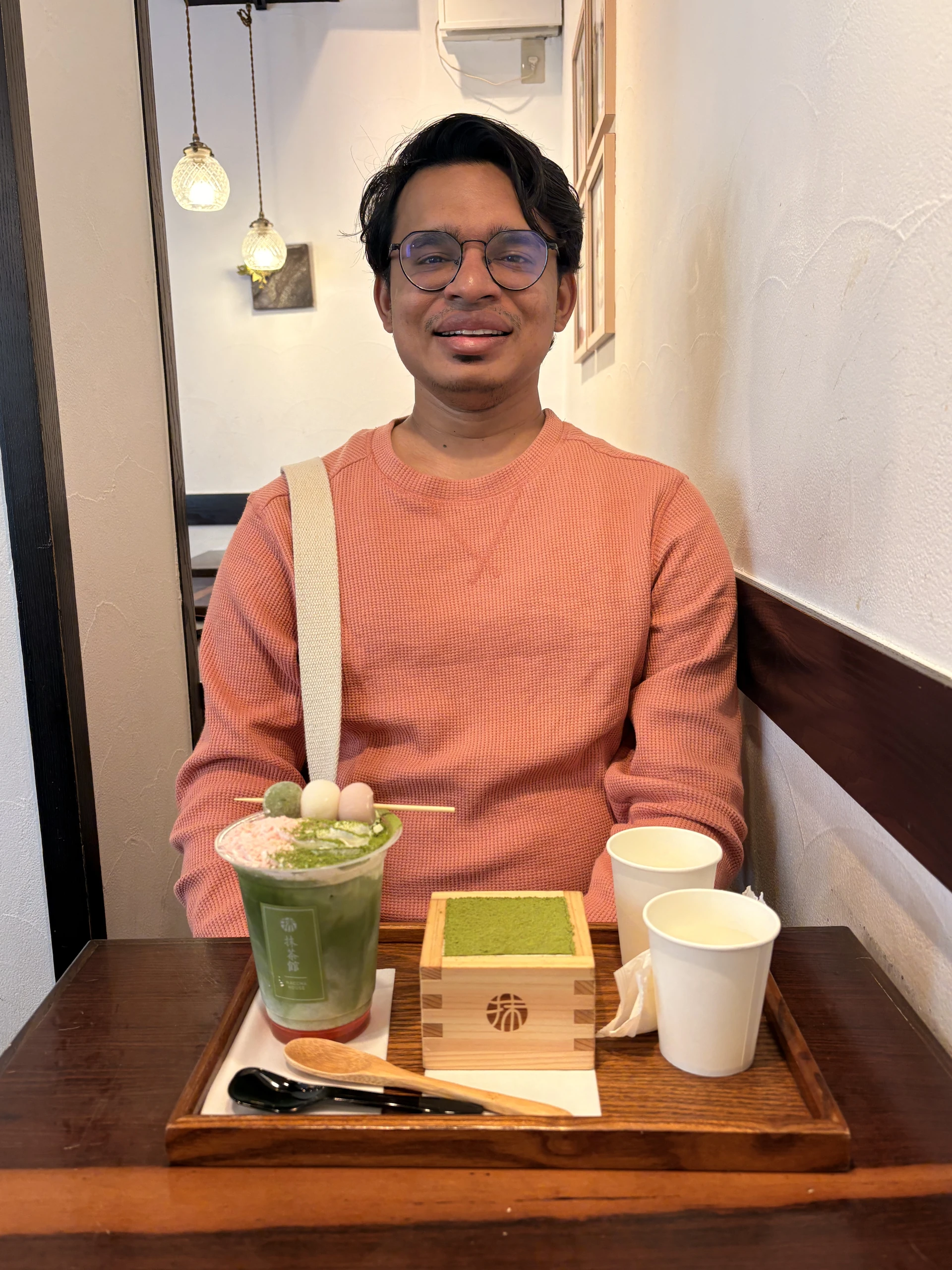
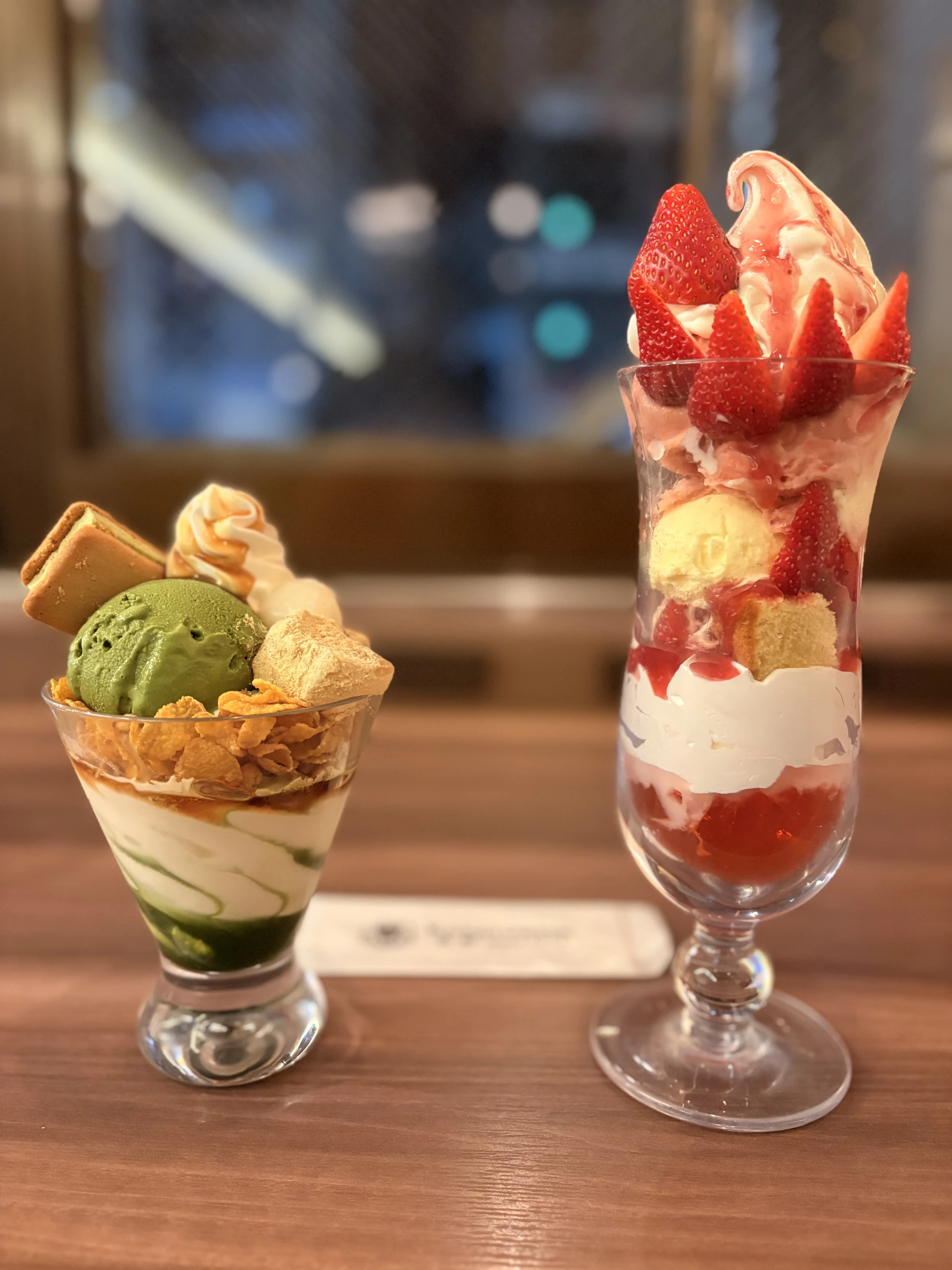
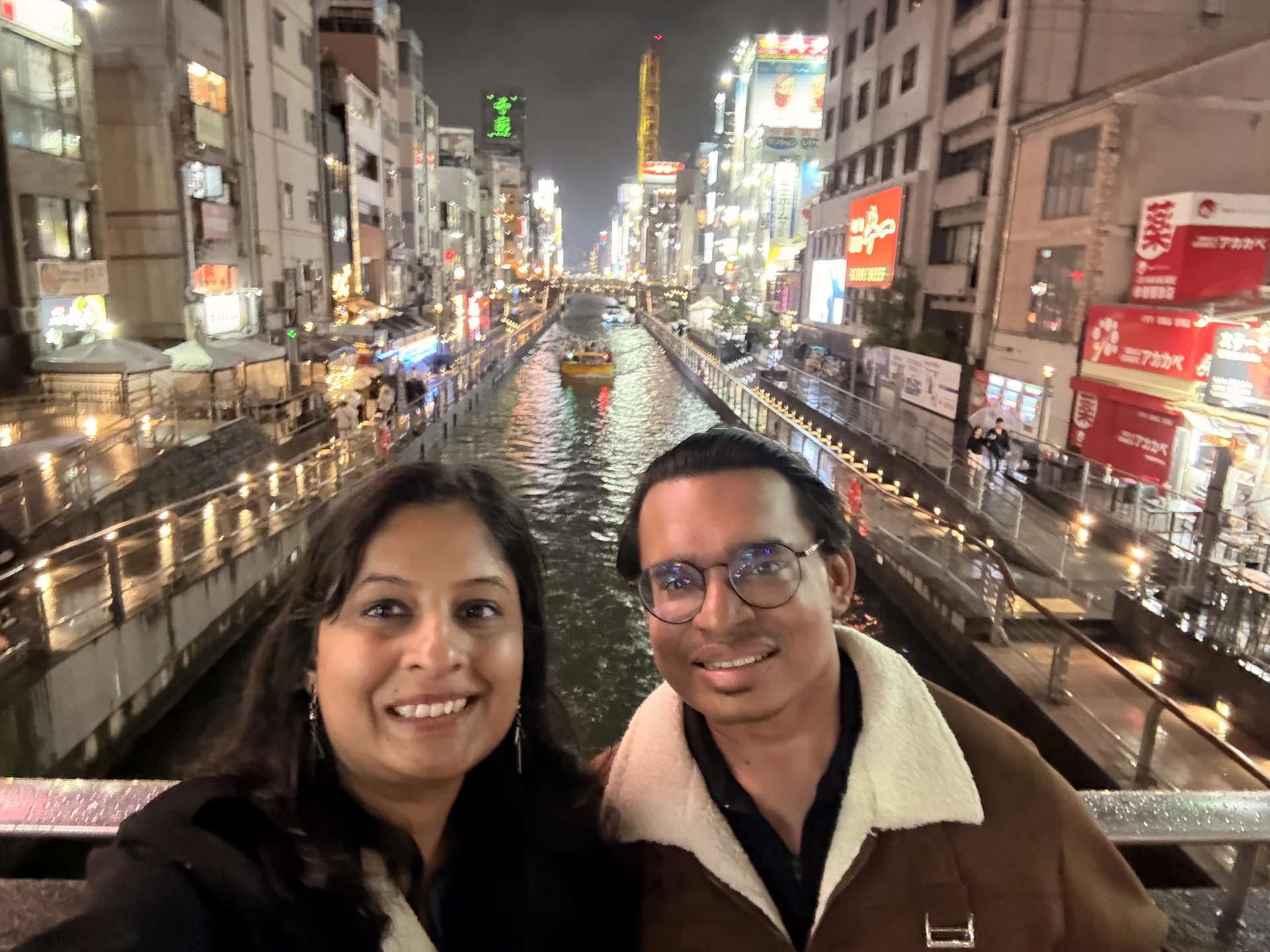
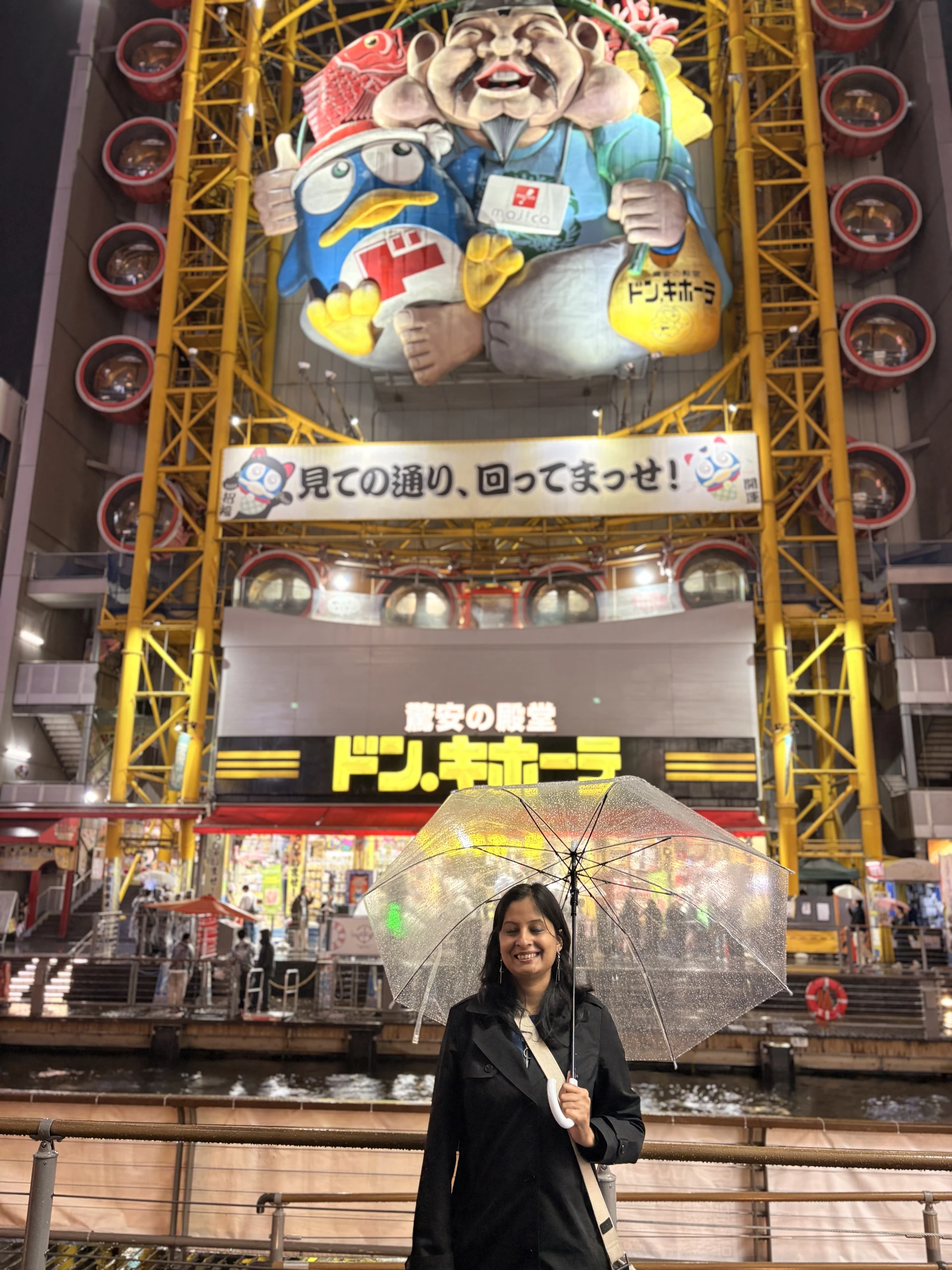
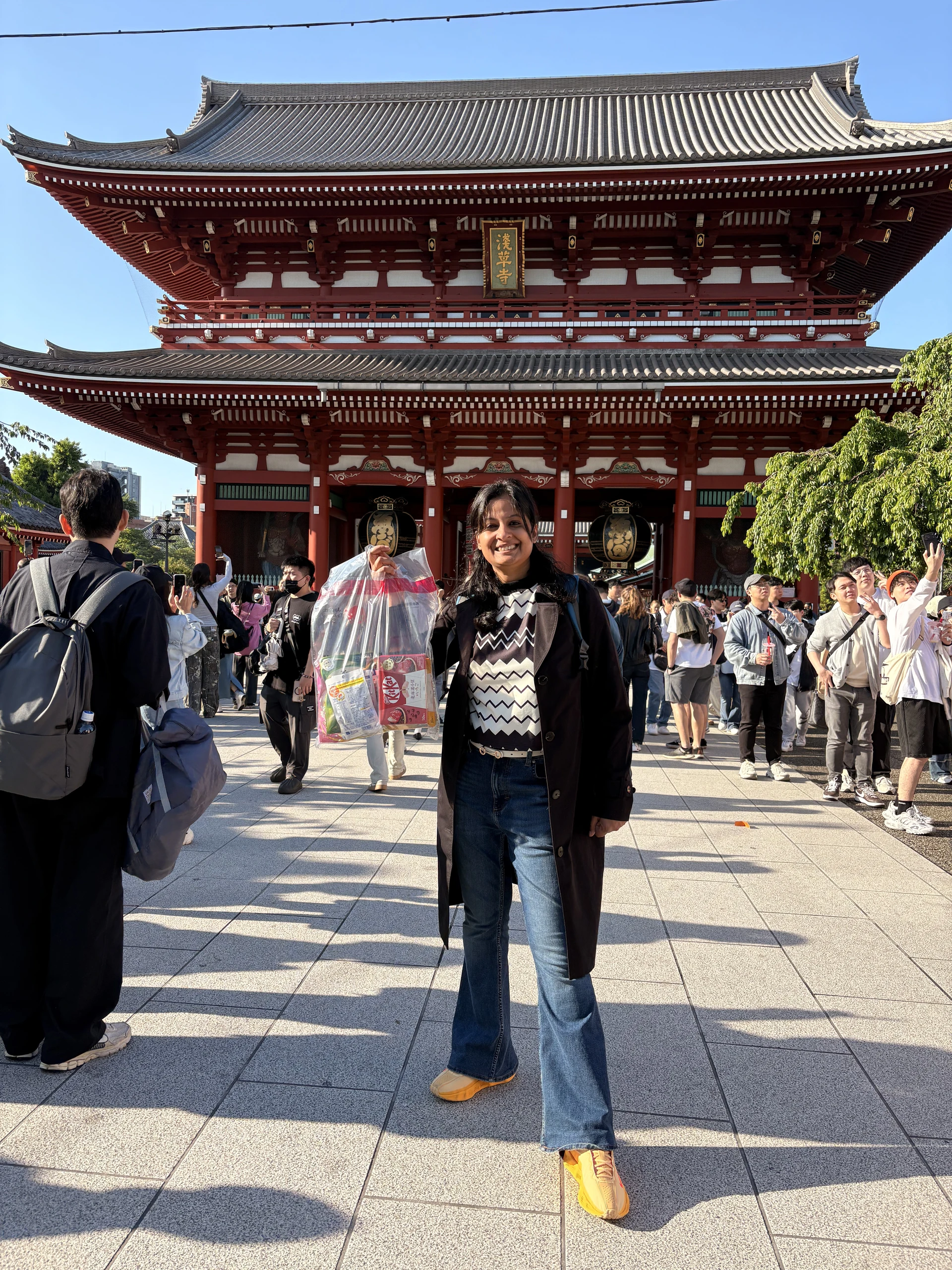
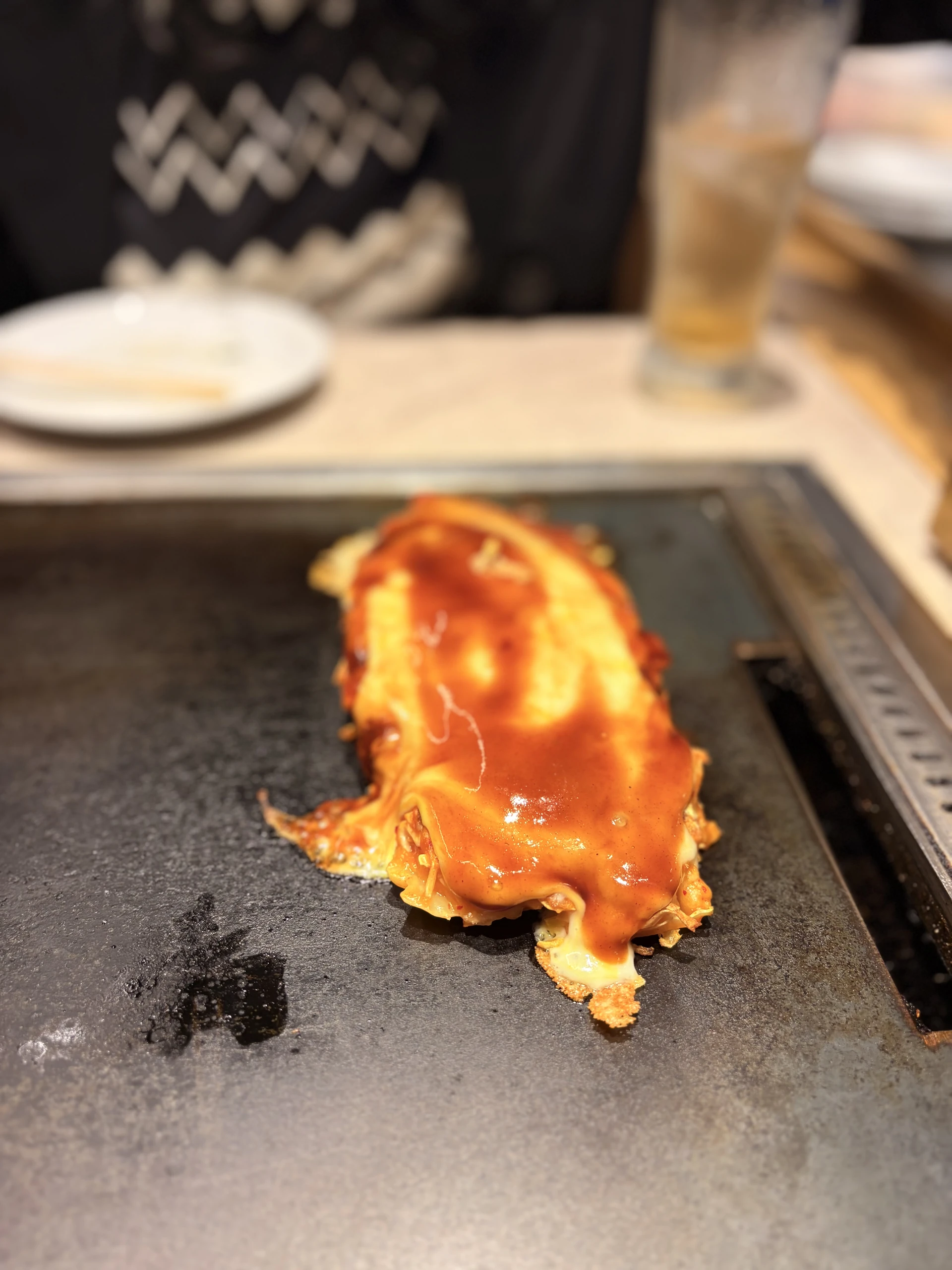
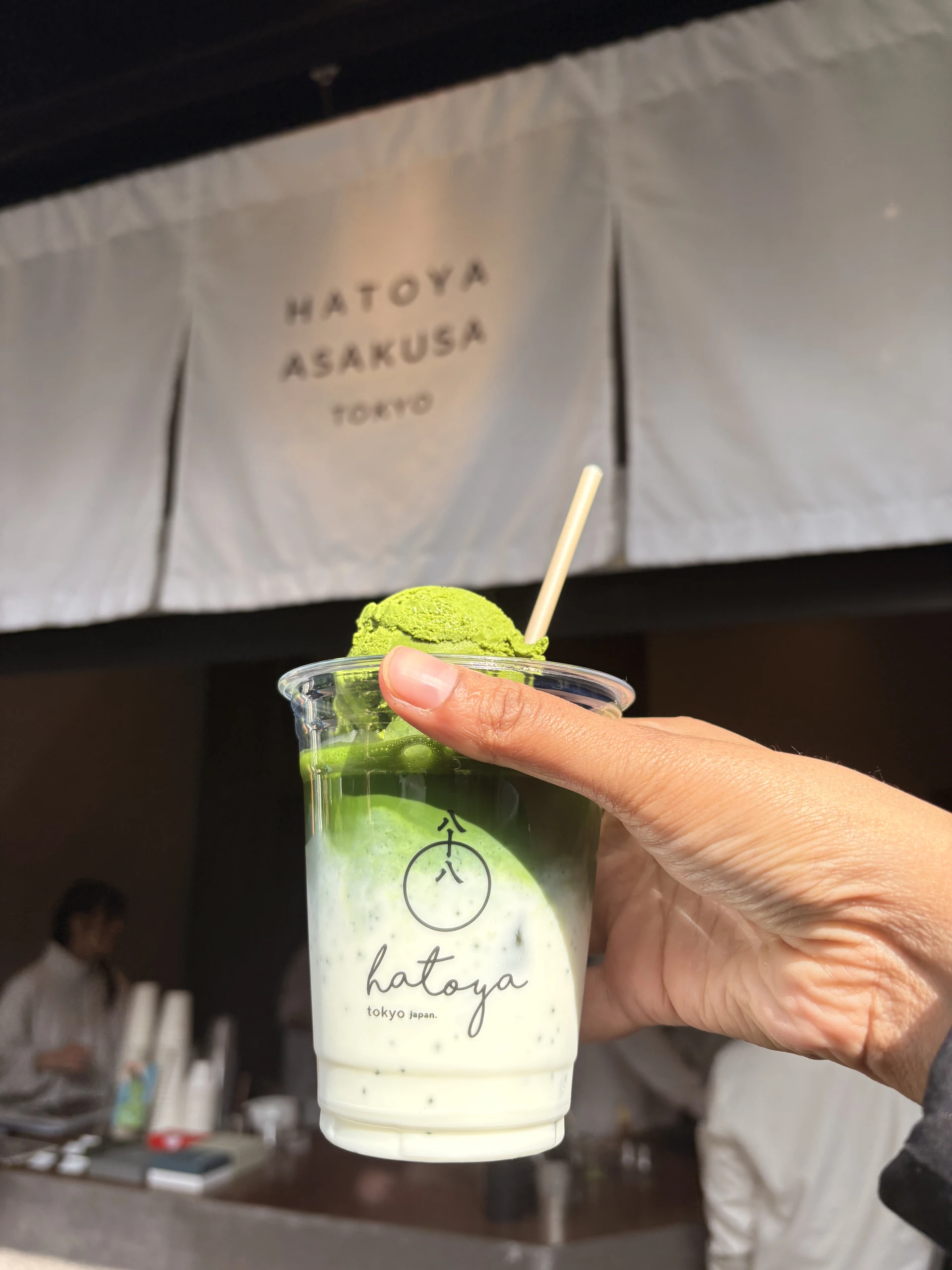
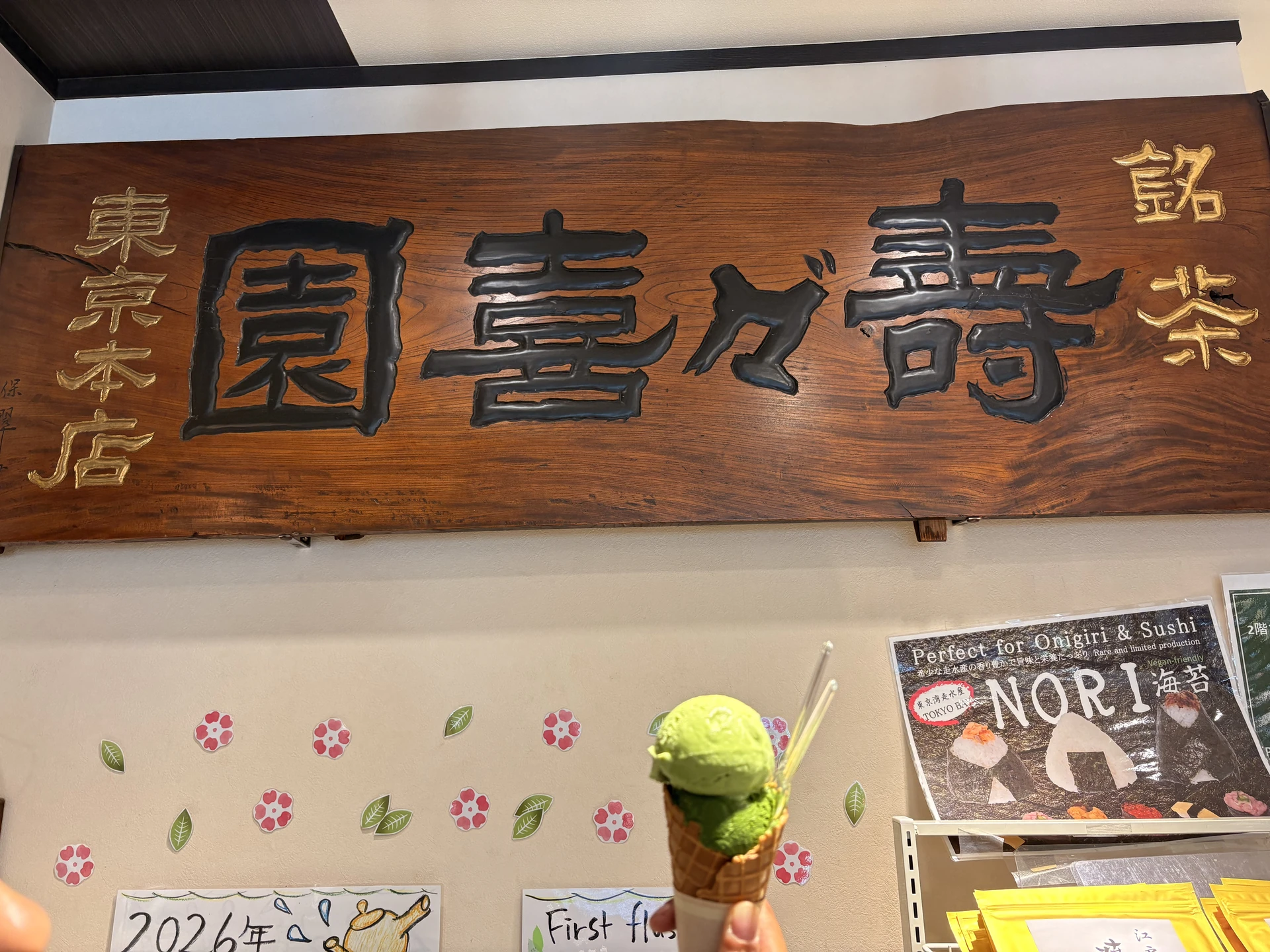
So what now in Tokyo? We hadn't tried okonomiyaki yet, and a quick search threw up options in Ginza and Asakusa. Asakusa won — there was always more to eat and see there, and we'd started this trip in Asakusa too. We worked our way through okonomiyaki at a small Asakusa spot whose name I have already forgotten (the food, I haven't), our first careful sips of plum wine, and another wander through the market, and then we surrendered to a small matcha pilgrimage: a parfait at The Matcha House, tea at Hatoya Matcha, and a matcha ice cream at Maccha House — the purest form of matcha we tasted anywhere in Japan. One last round of skincare shopping between OS Drug and Matsumoto Kiyoshi, and then back to Senso-ji for the final time. This time, we played the omikuji — the paper fortune game. Asakusa to Asakusa. The trip closed itself off neatly.
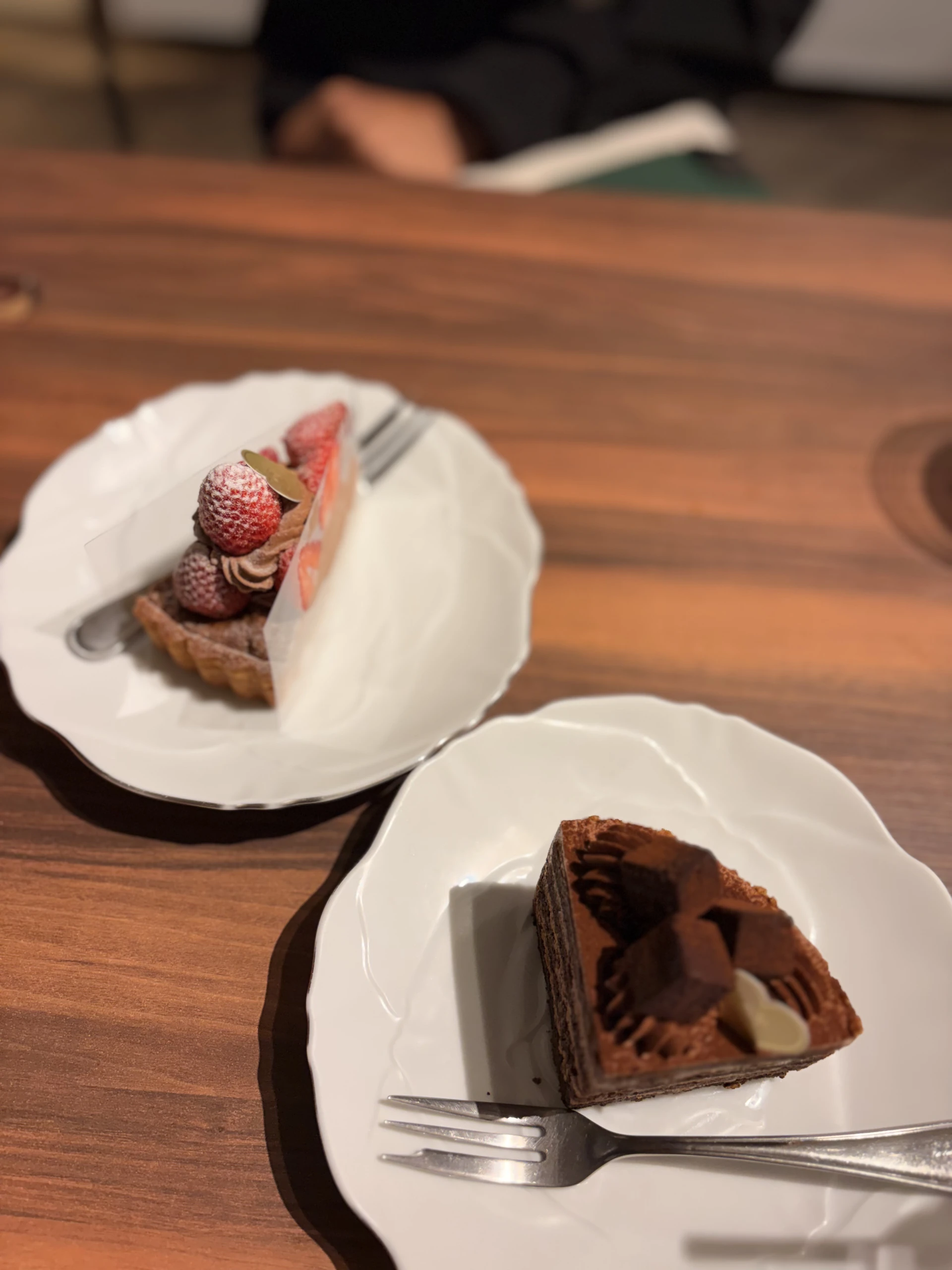
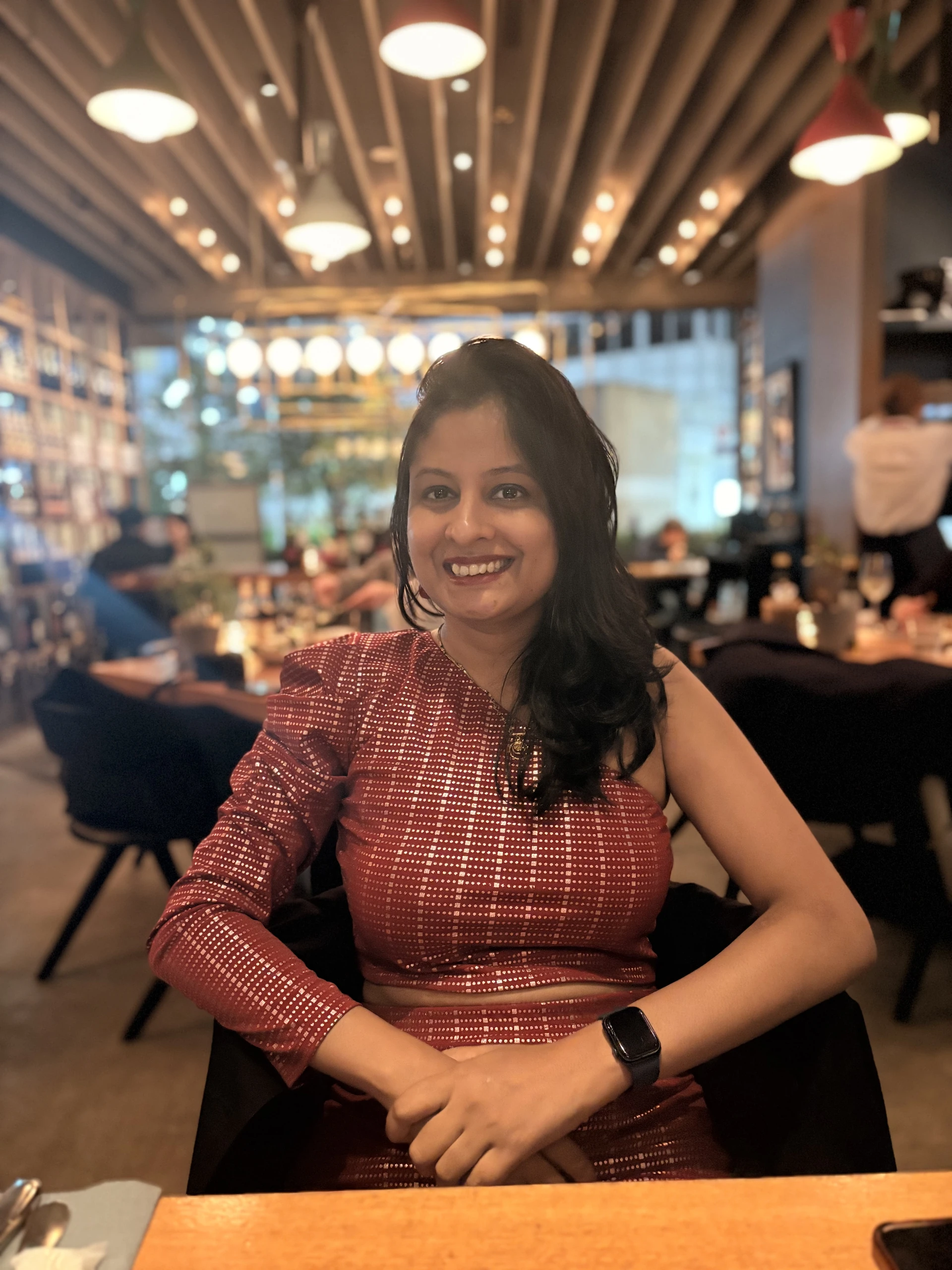
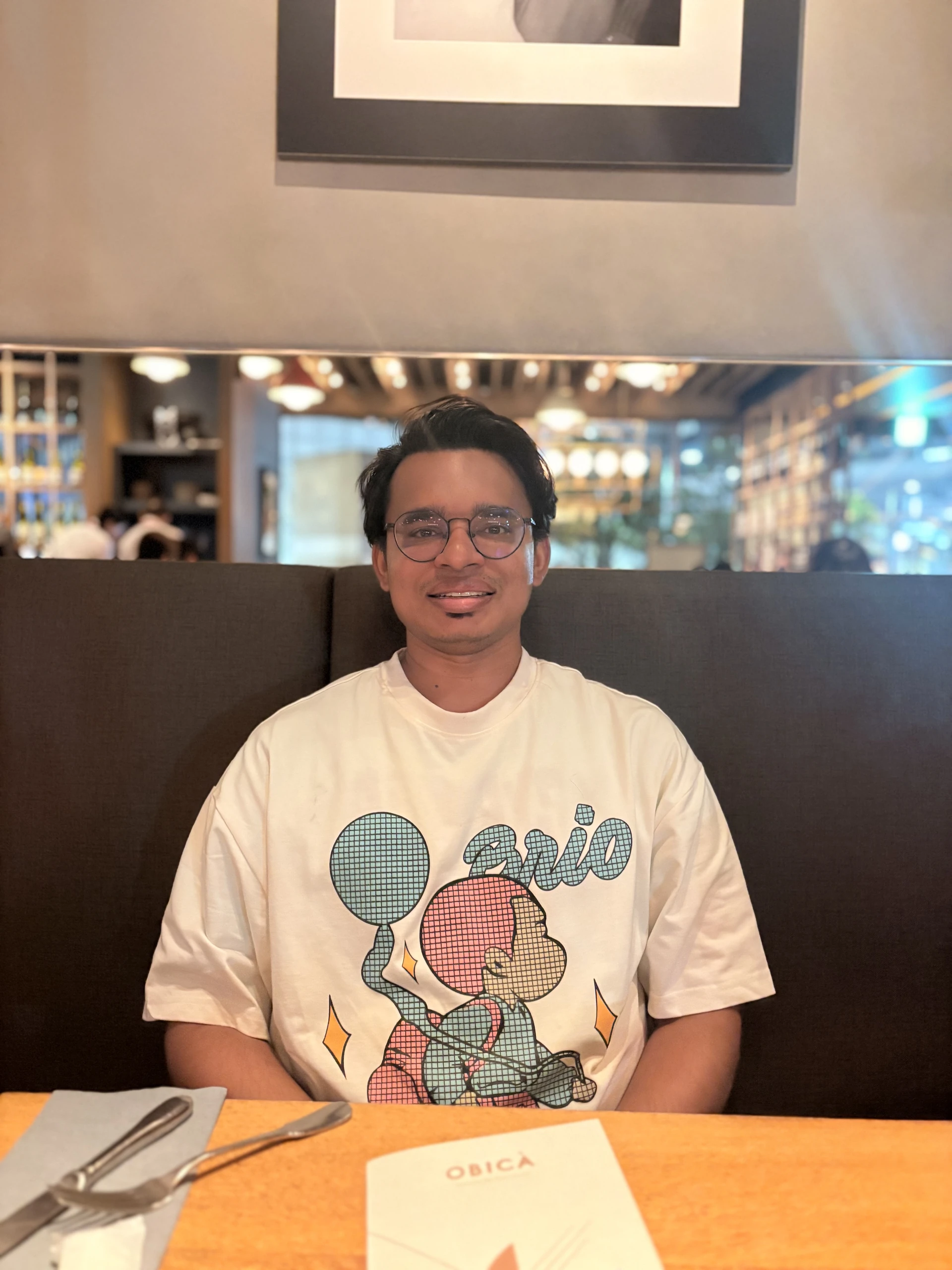
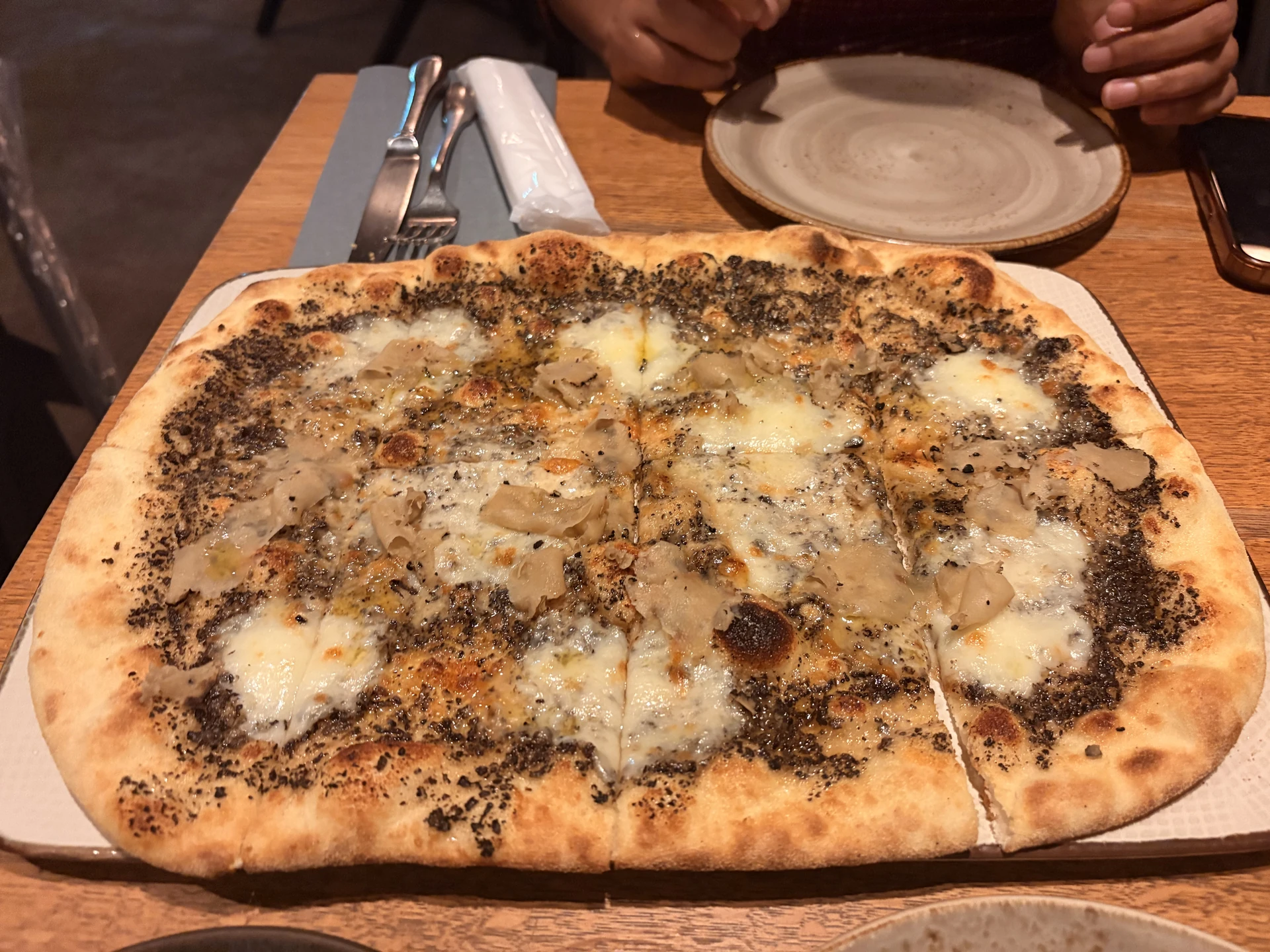
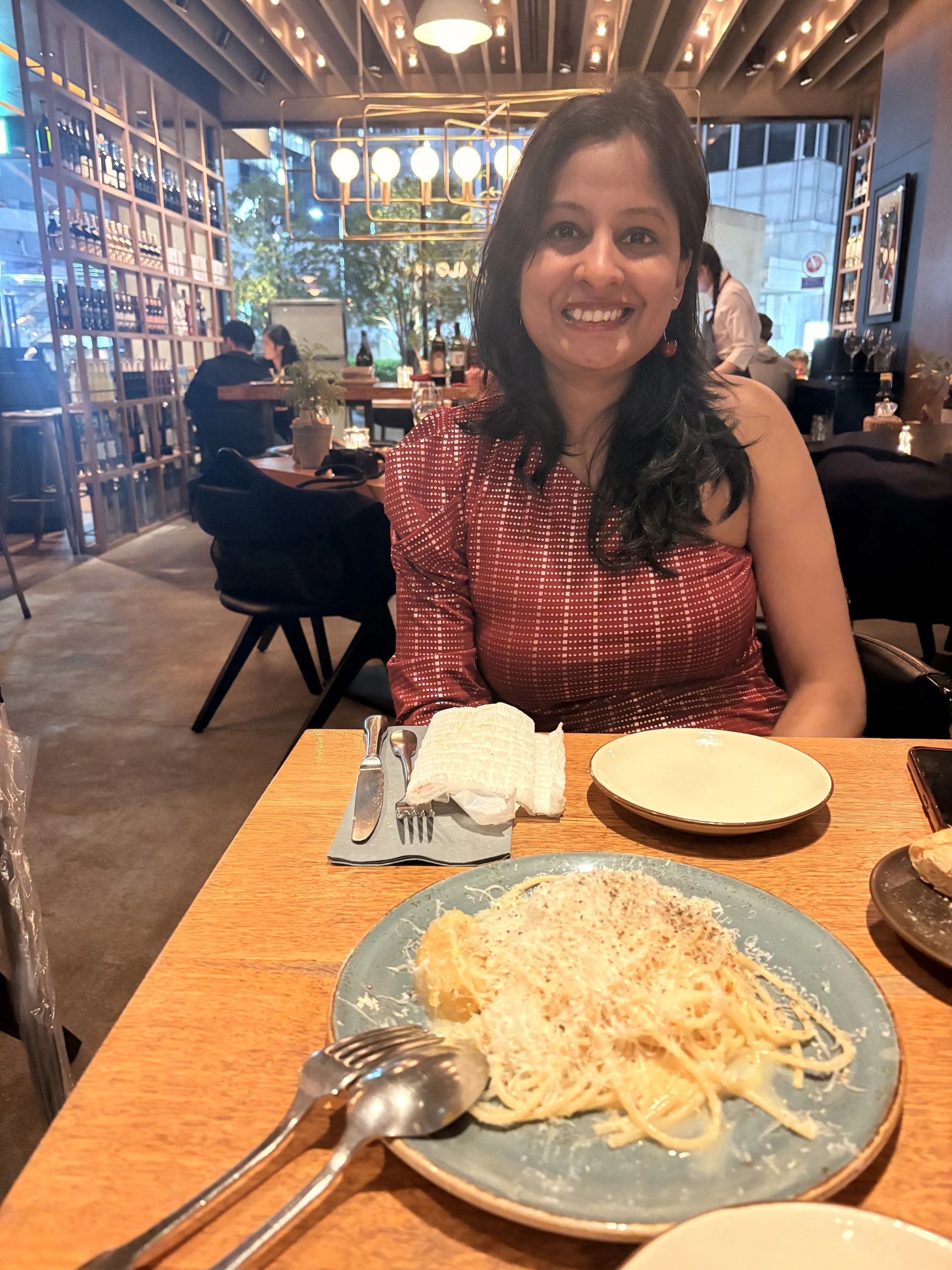
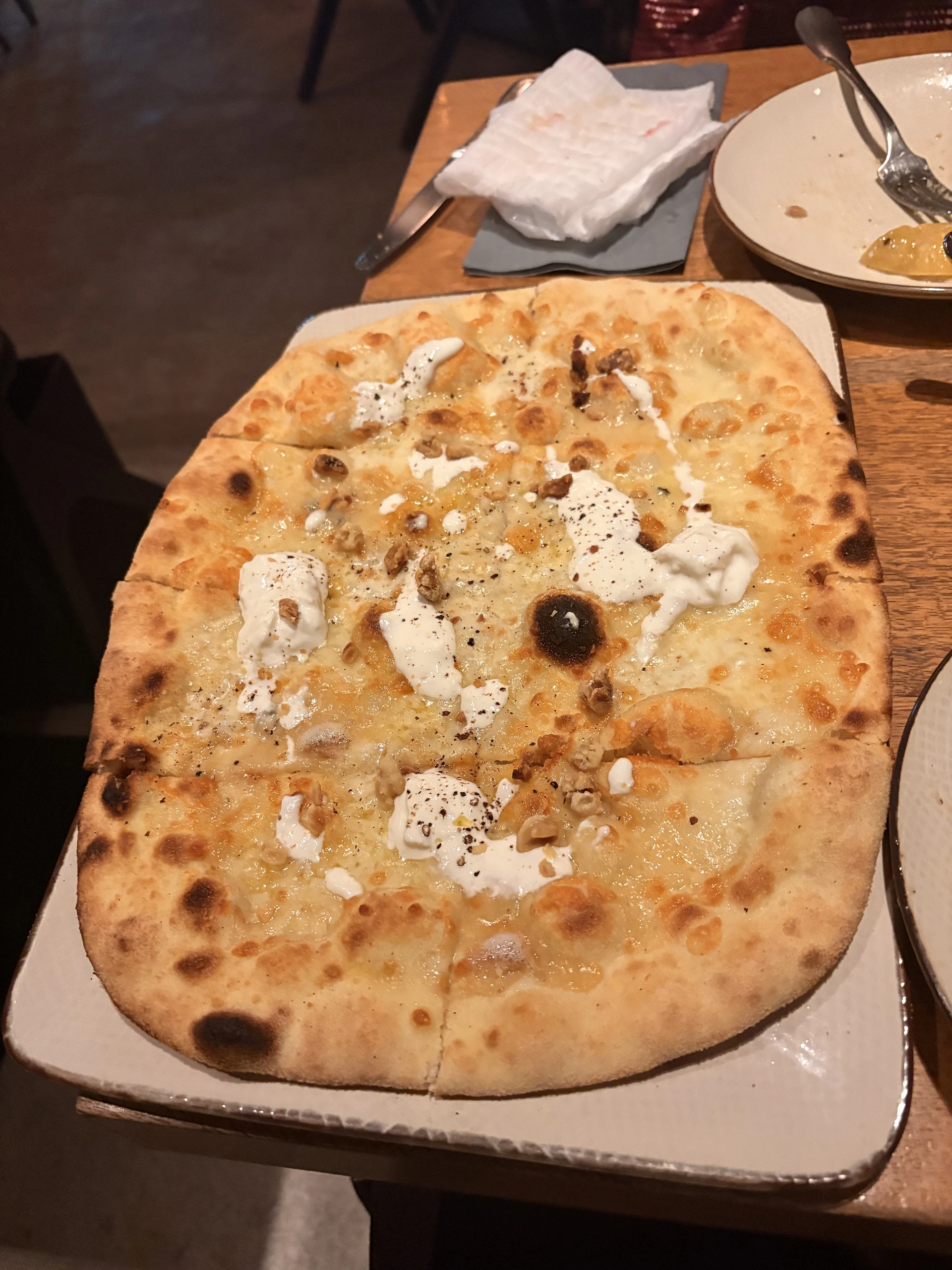
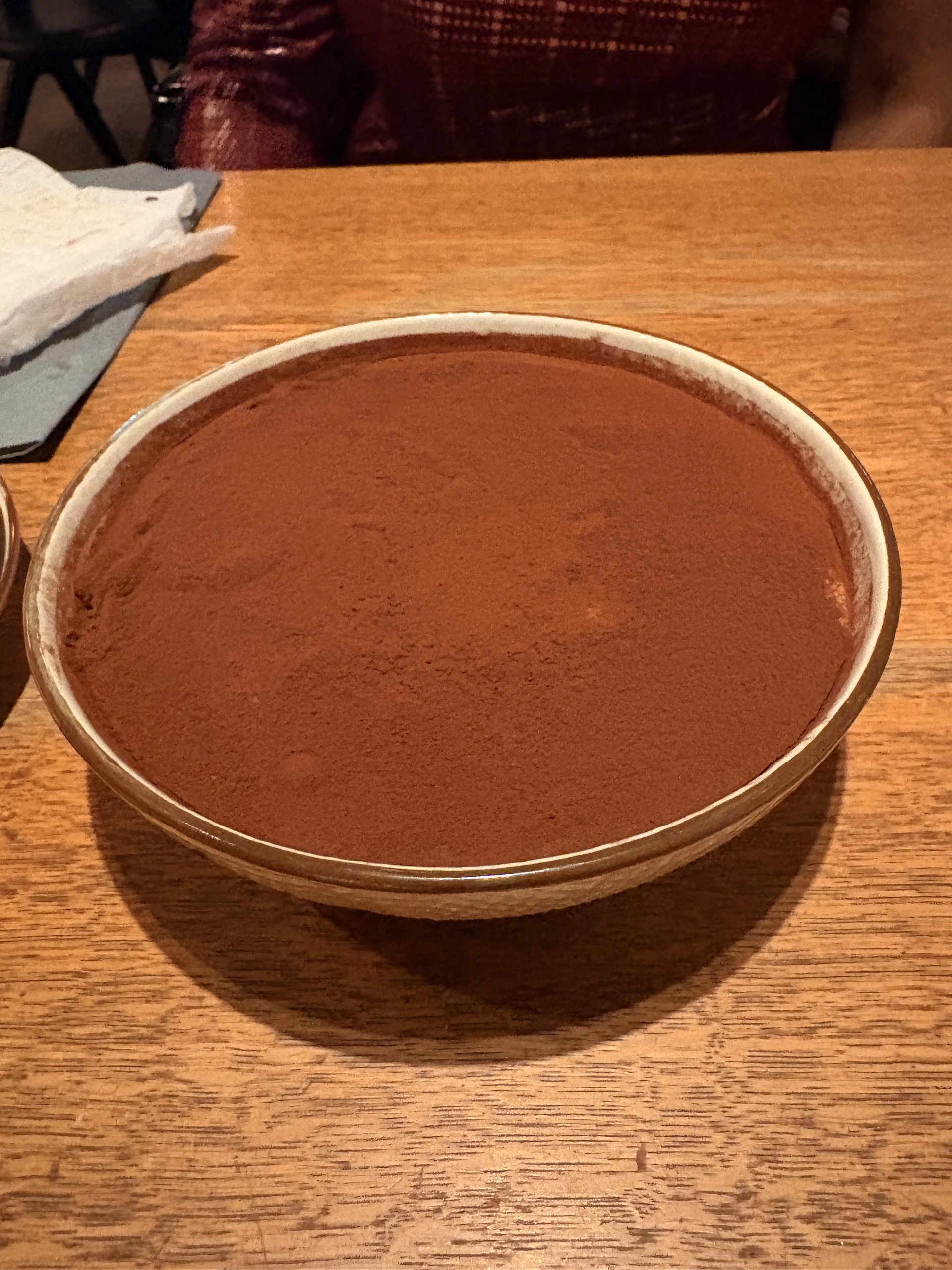
Back at the hotel, suitcases reunited, the rain still drumming against the windows. For dinner we wanted one of the famous pizza places we'd been saving, but Friday night in Tokyo had every single one of them full. We pivoted to an Italian spot — OBICÀ — tucked into one of those polished, lantern-lit Tokyo streets that come alive on a Friday night, lined with quietly buzzing wine bars, izakayas, and small restaurants spilling laughter onto the pavement. Exactly the kind of pocket of the city you'd want to spend a date night in. We dressed up for it. I always pack one dress for date night and almost never use it, but Harshit pumps me up for these things. The place was lovely, the food was excellent, the tiramisu was unreal and the drinks were great. They charged extra for cutlery, and when the owner explained it almost apologetically and we told him it's exactly the same in Italy, he lit up. He sources his olive oil directly from Italy. We talked about wanting to spend weeks in Sicily and Tuscany one day. We talked the whole Japan trip over and quietly realised how much of it would live in us forever.
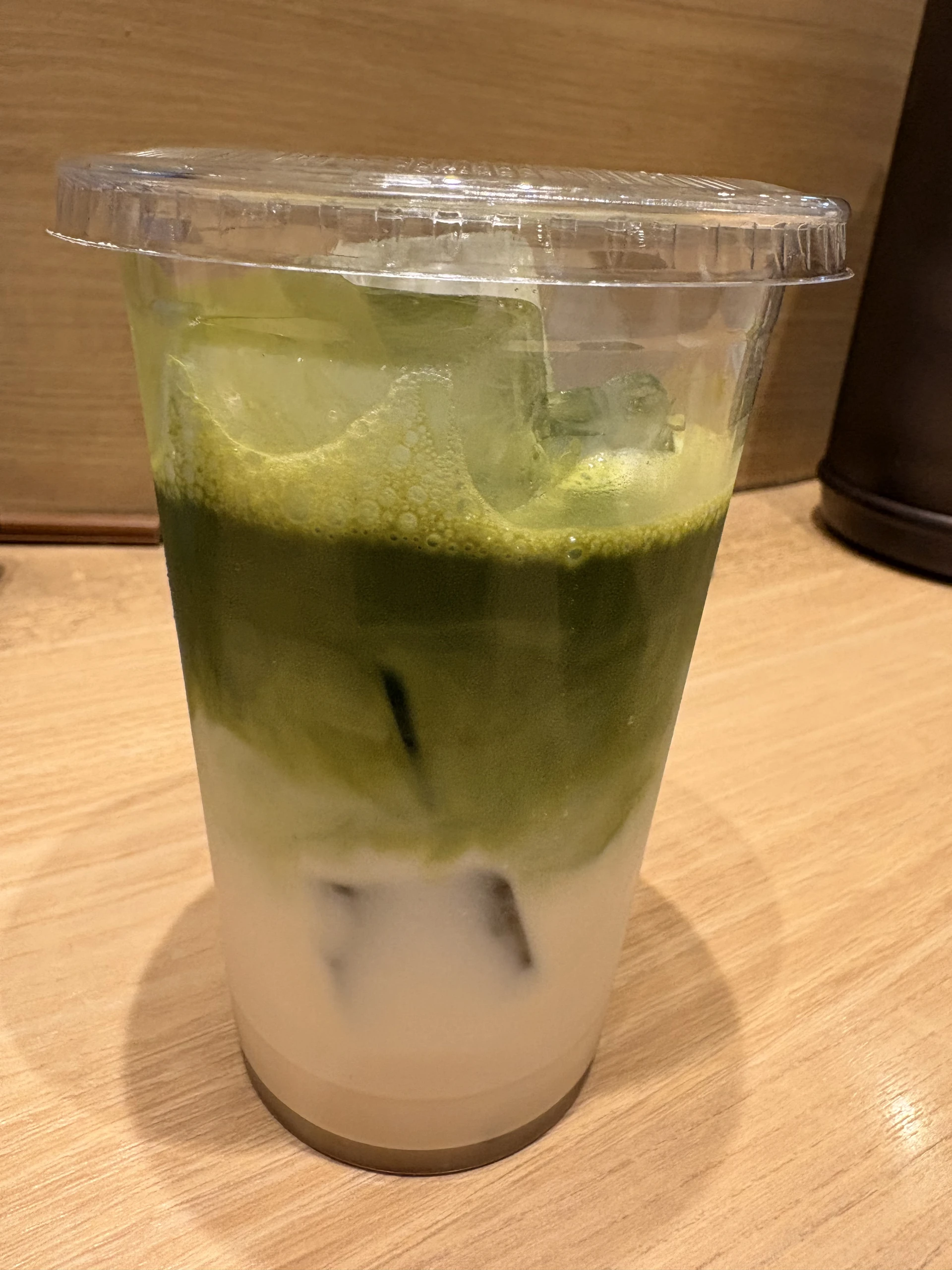
And then — the legendary Lawson Incident. We had a few yen left across our Suica cards and a small pile of cash, and we wanted to spend the whole lot before flying home. Lawson takes Suica, so in we went. Harshit picked up a matcha latte. Now in his head, the plan was perfectly clear: pay from the first Suica, then the second Suica, then cash, then a fourth method if anything was still left to clear — four payment splits for one matcha latte. I do not think a single payment machine on this planet has been built for that combination. And I think that, apart from me, there is now exactly one other person in the world who will always remember Harshit — the cashier whose neurons he gently damaged that night.
In the cashier's head, the plan was simpler: one Suica, the rest in cash. He swiped a Suica, asked for cash — we didn't have enough. And once a Suica is swiped, that money is gone; you cannot reverse it, you have to complete the transaction. After much back-and-forth, the cashier put in his own money to close the bill, then asked Harshit to repay him from the second Suica, assuming there would be enough on it — and we promptly got stuck in the exact same loop again. Eventually he gave up on us entirely and just pushed the latte across the counter. So then, like the deeply responsible humans we are, we tried to buy other things we didn't even want, just to balance the books. Even writing this now, my stomach is hurting from laughing — I doubled over outside the store and laughed until it ached. Some moments simply don't translate to the page; this one will live in my head forever. We walked back to the hotel still chuckling, did the final pack, weighed our suitcases on the hotel scale, and slept.
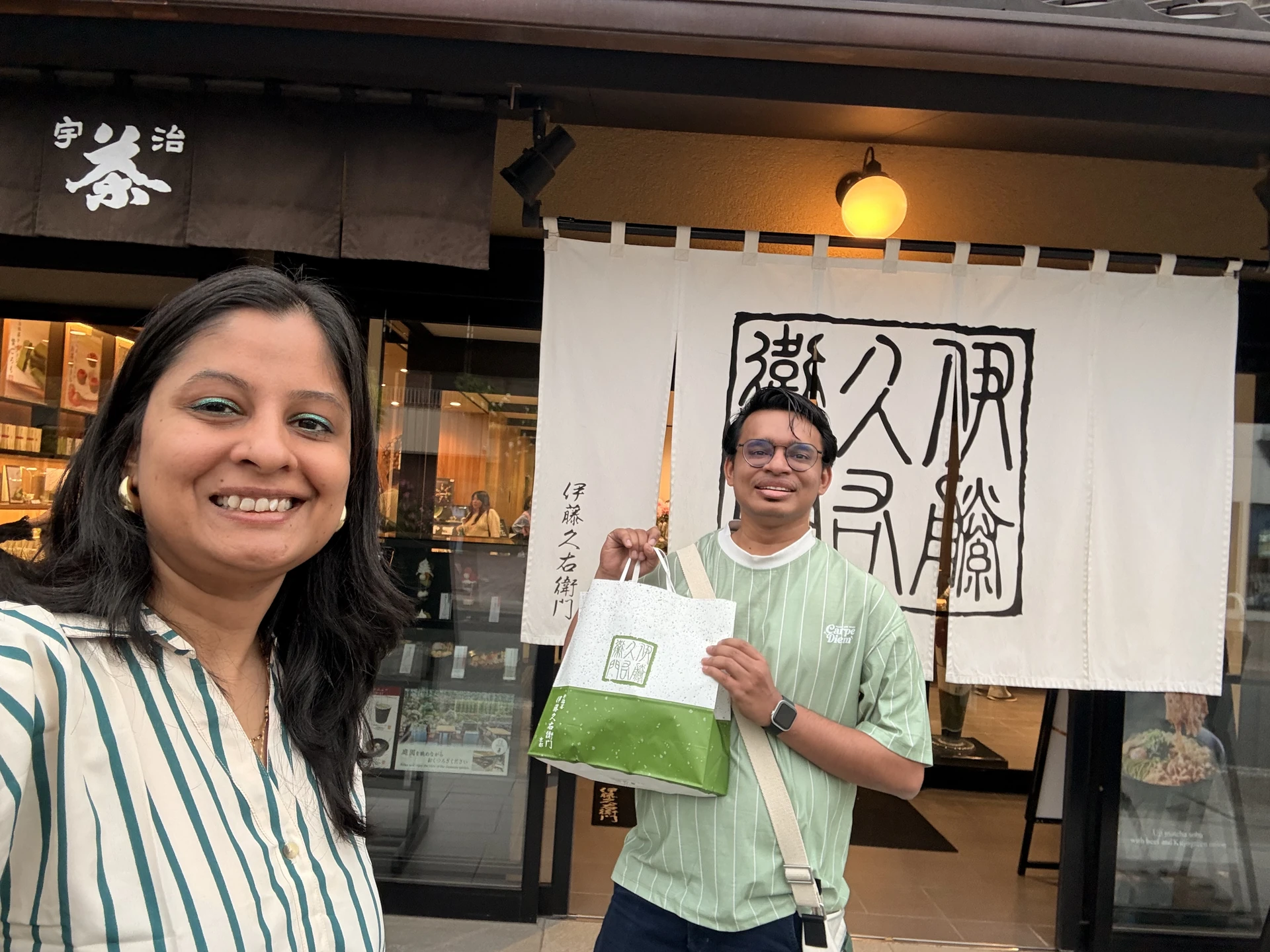
Snapshots from Day 7 — the rainy Asakusa pilgrimage, OBICÀ & the Lawson incident
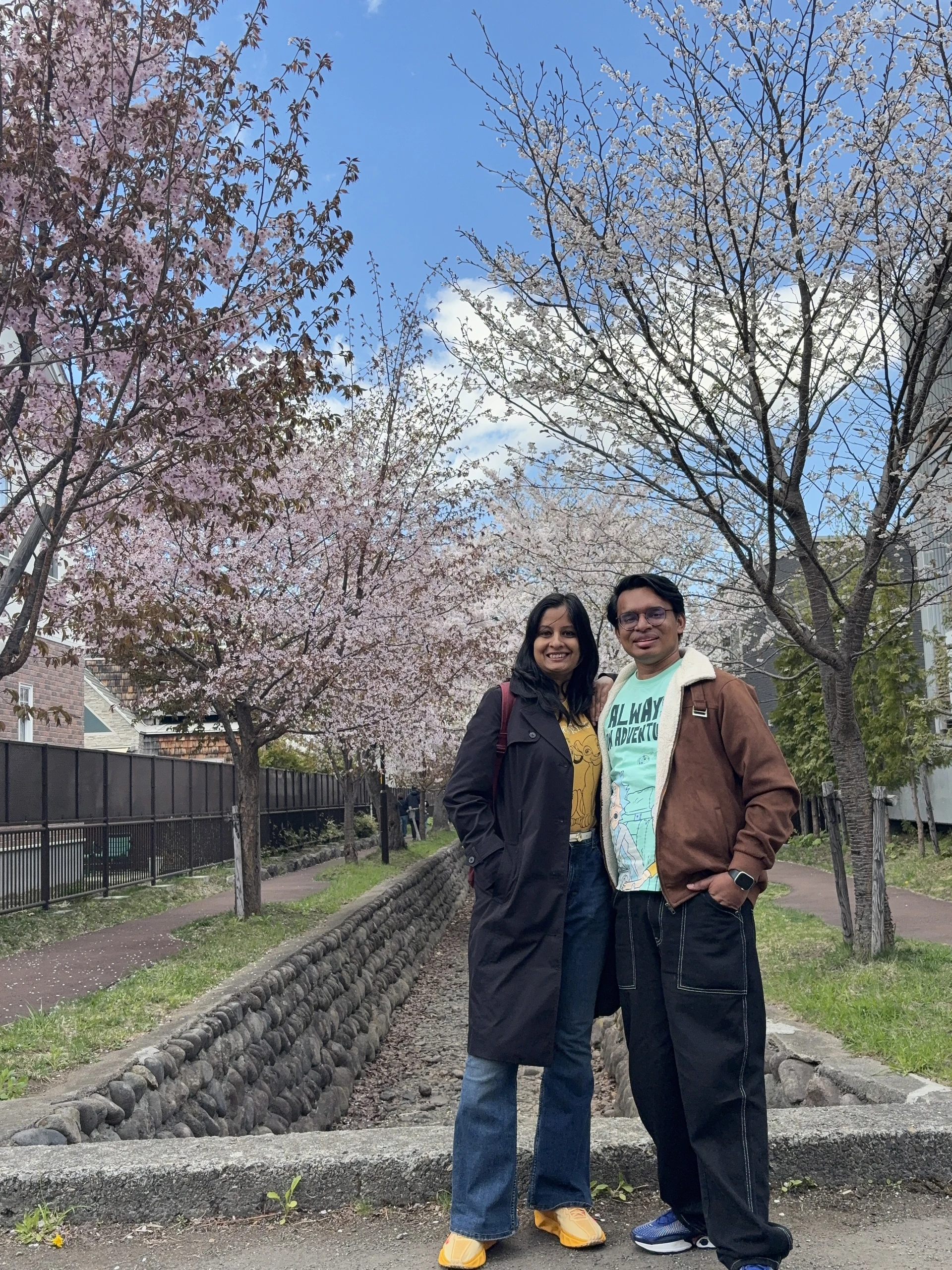
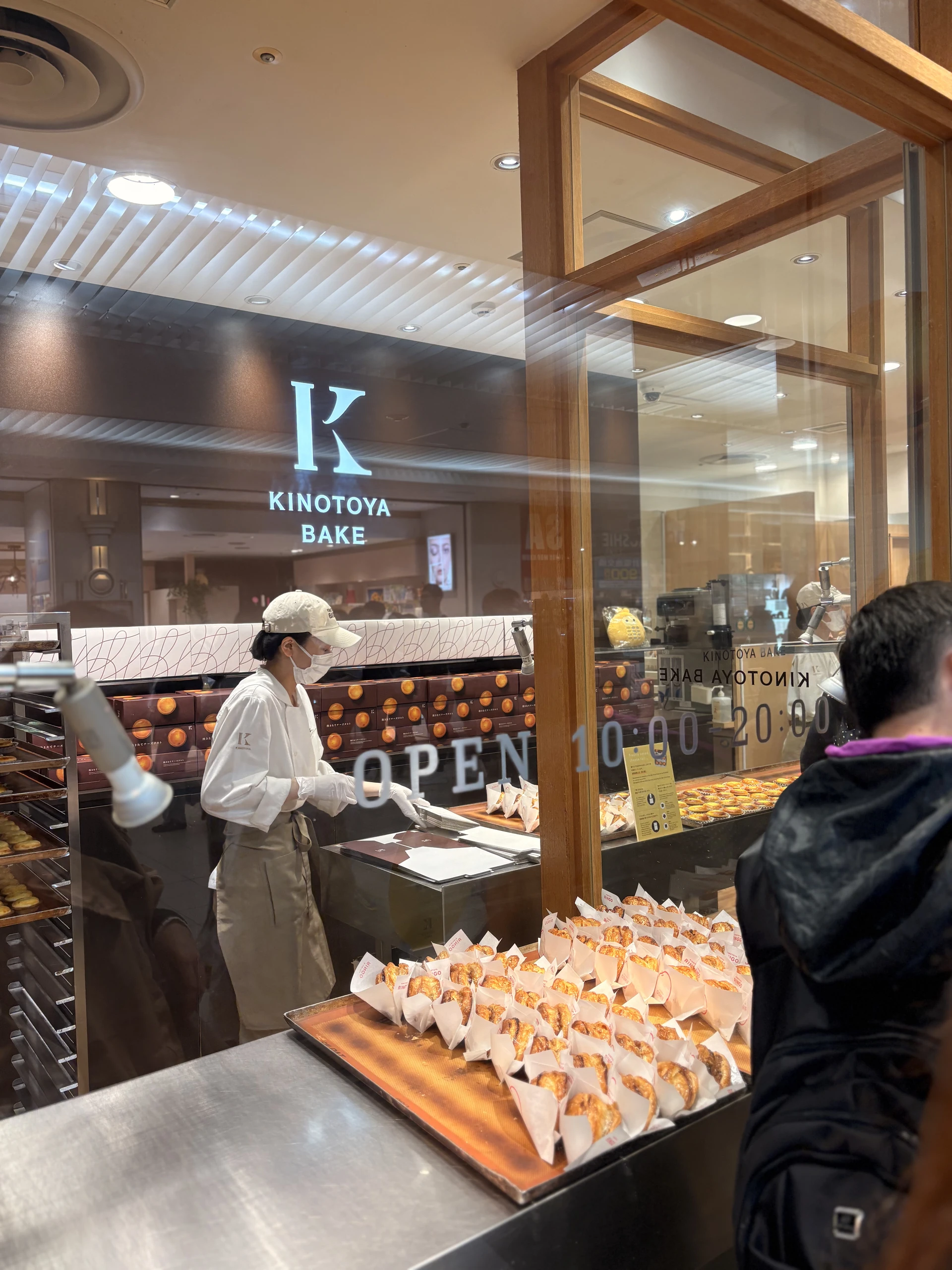
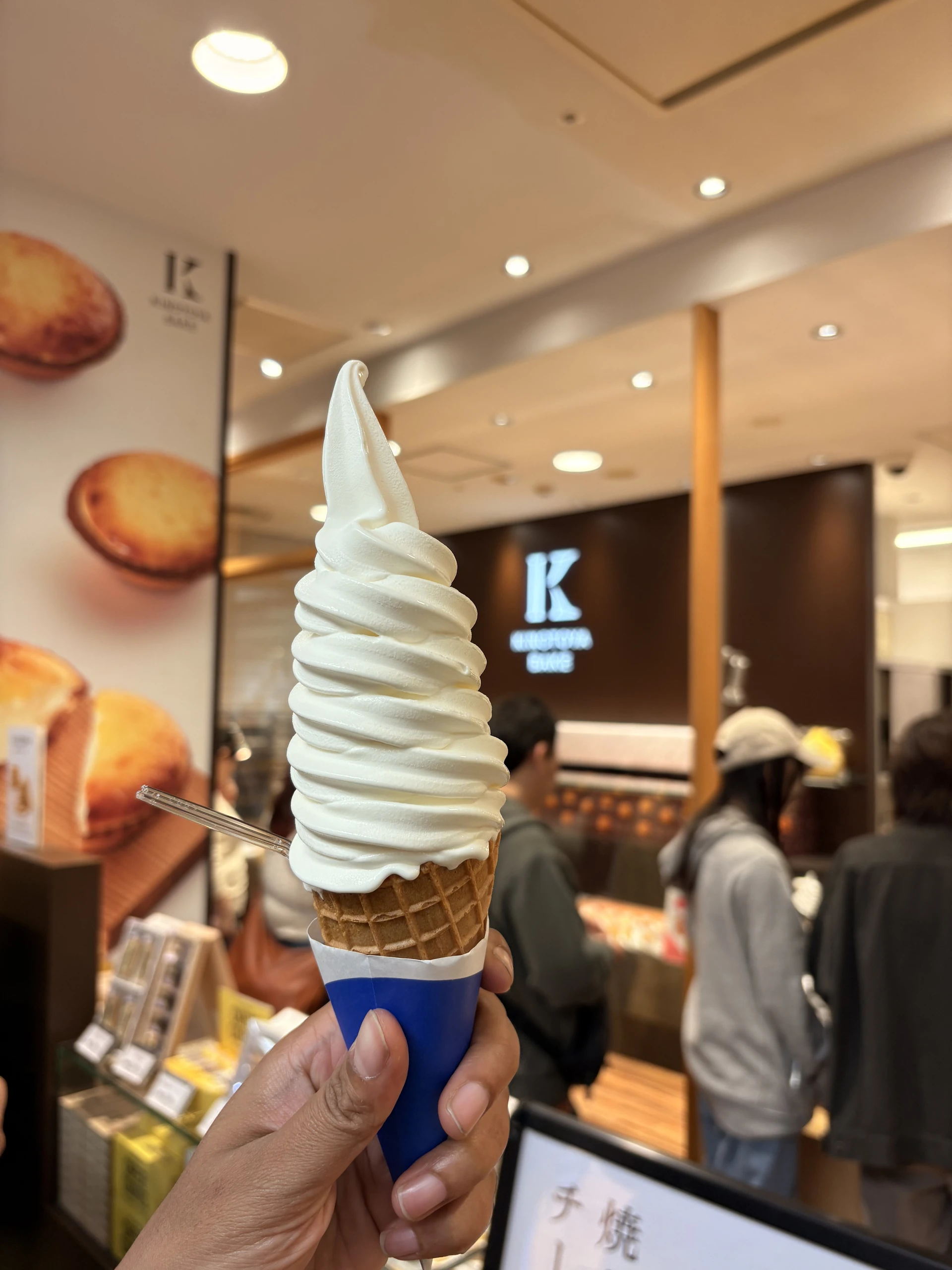
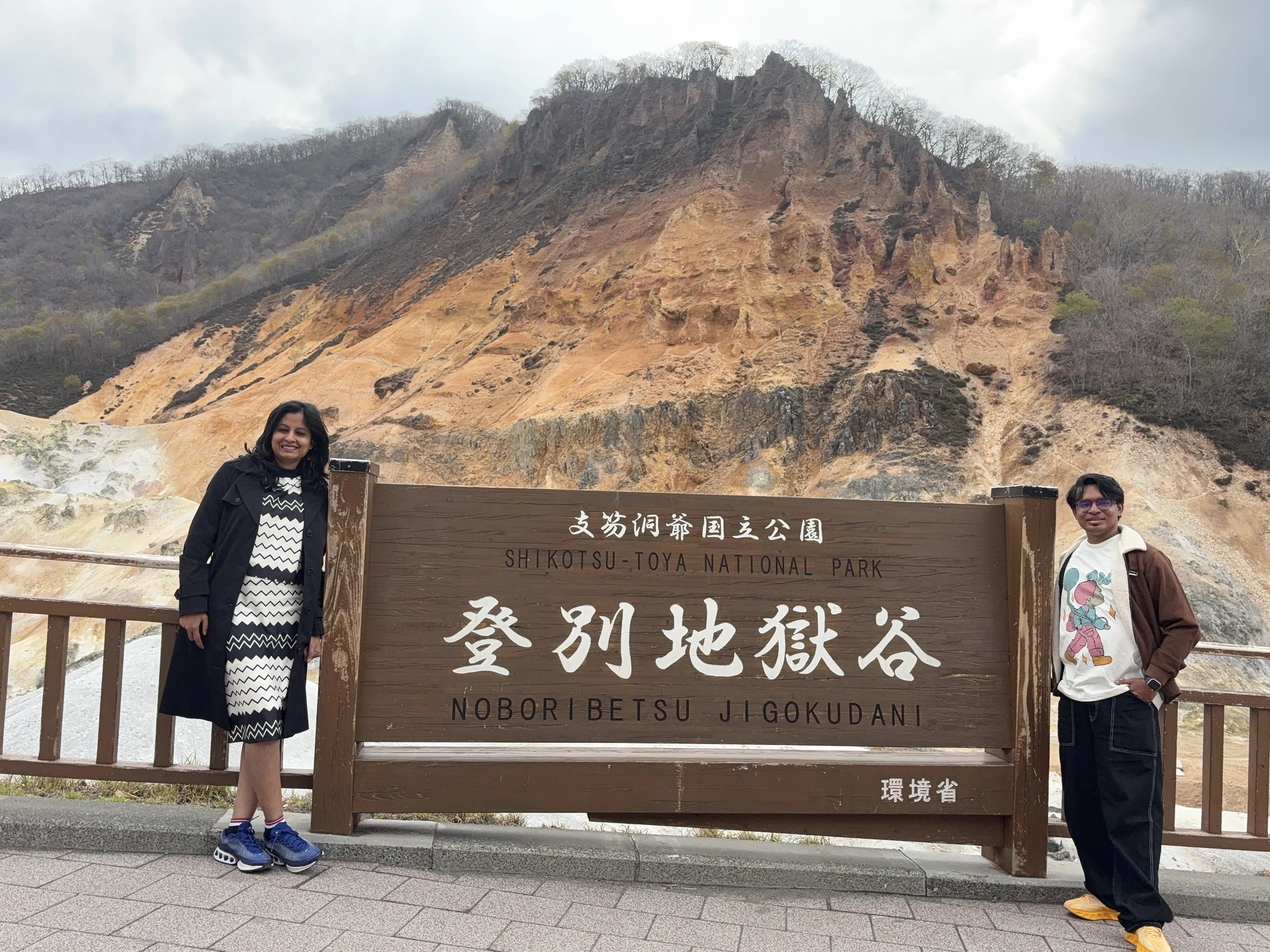
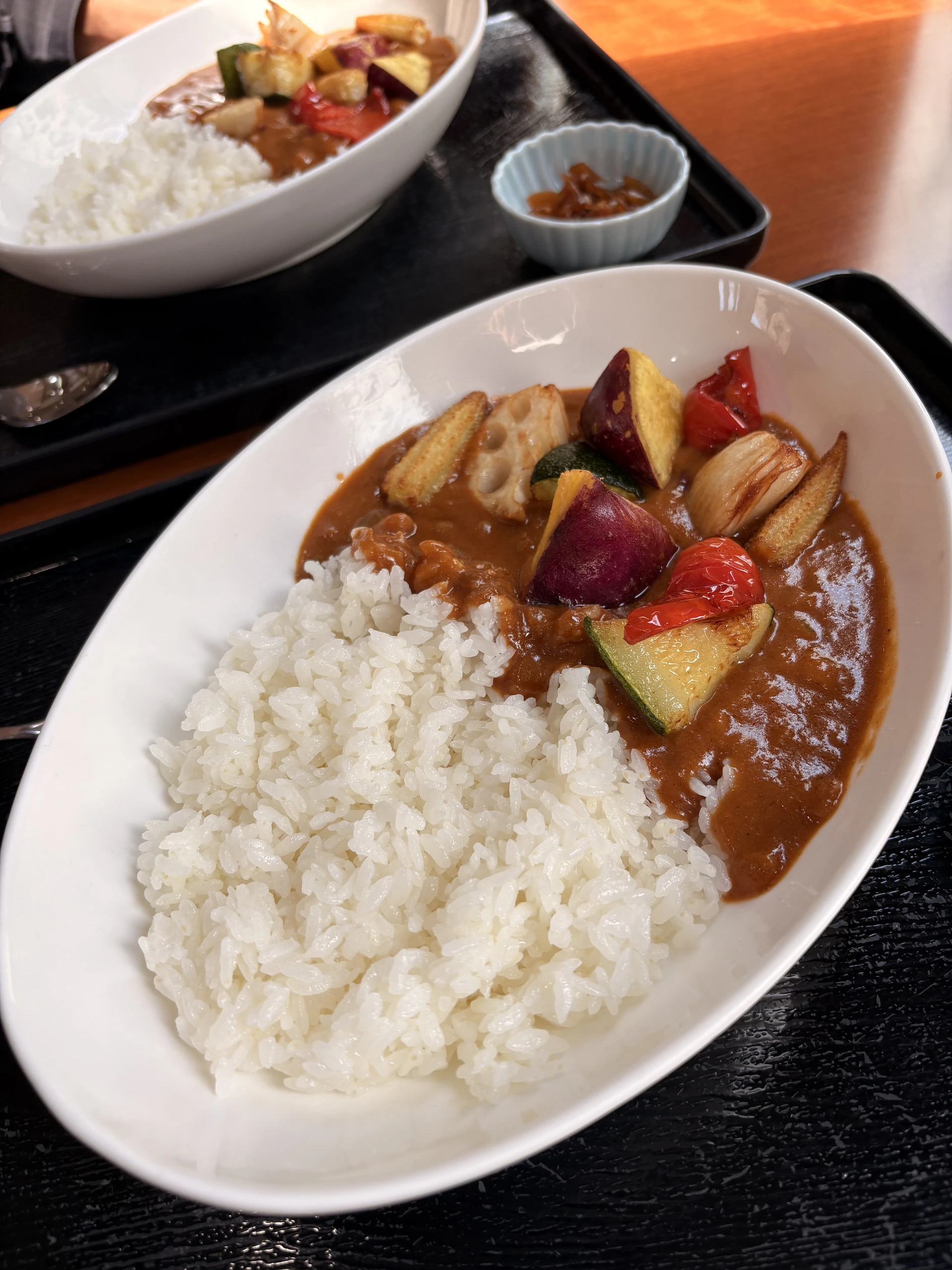
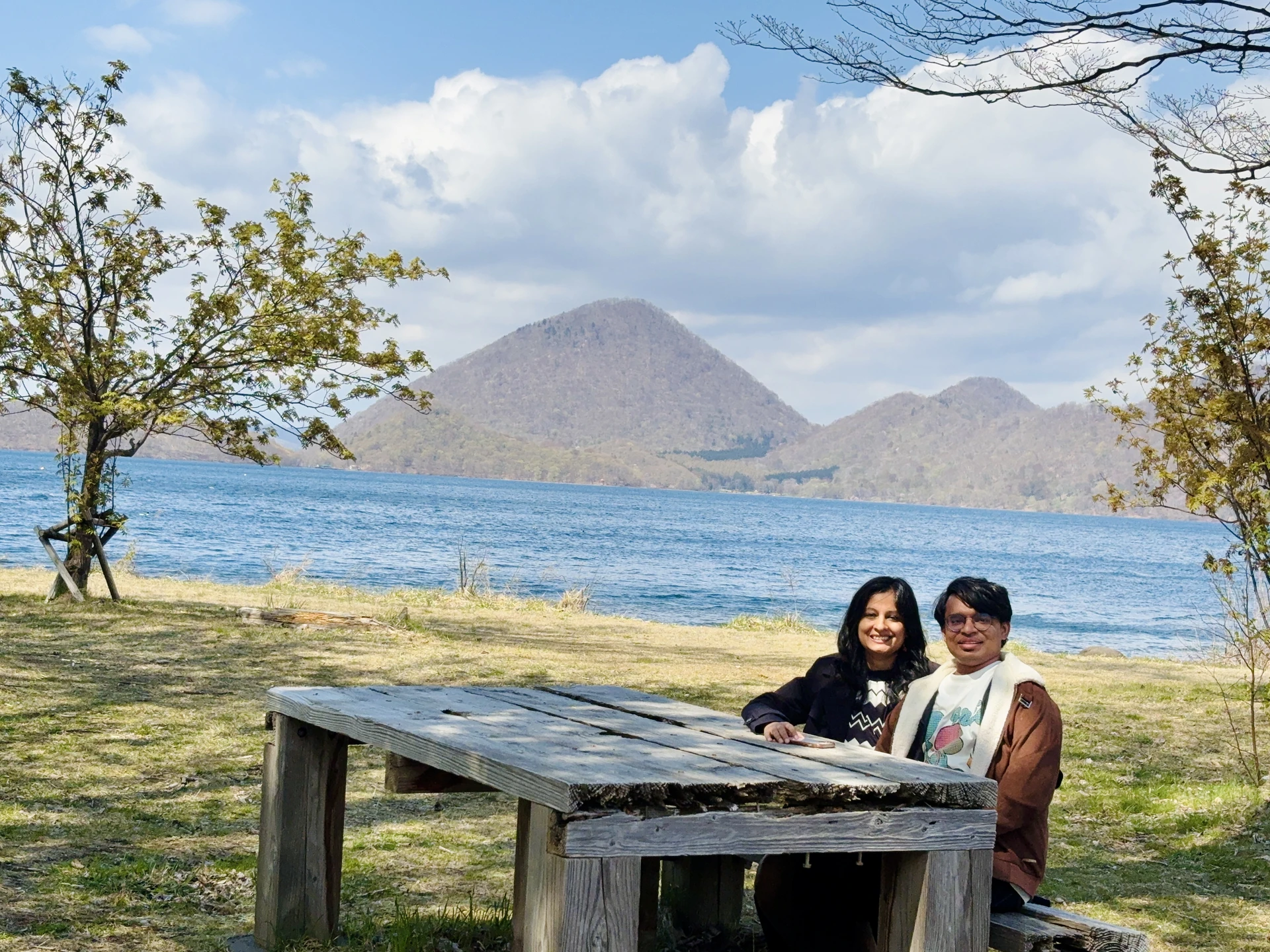
Tokyo is not one city. It's many cities stacked inside each other — each neighbourhood a different world, each street a different story. It doesn't overwhelm you; it invites you. And when you leave, you already know you'll come back.
Prefer a leaner read? Try the lighter, text-first edition.
⬇ Download Japan PDF — Lighter Edition
Join the conversation
Have a question, a tip, or a memory from the same place? Drop a comment below — no signup needed.